African Health Researchers Bypass Local Journals Due to Prestige Pressures
A new study reveals how institutional agreements and the pursuit of high-impact metrics drive scholars toward Western publishing platforms.
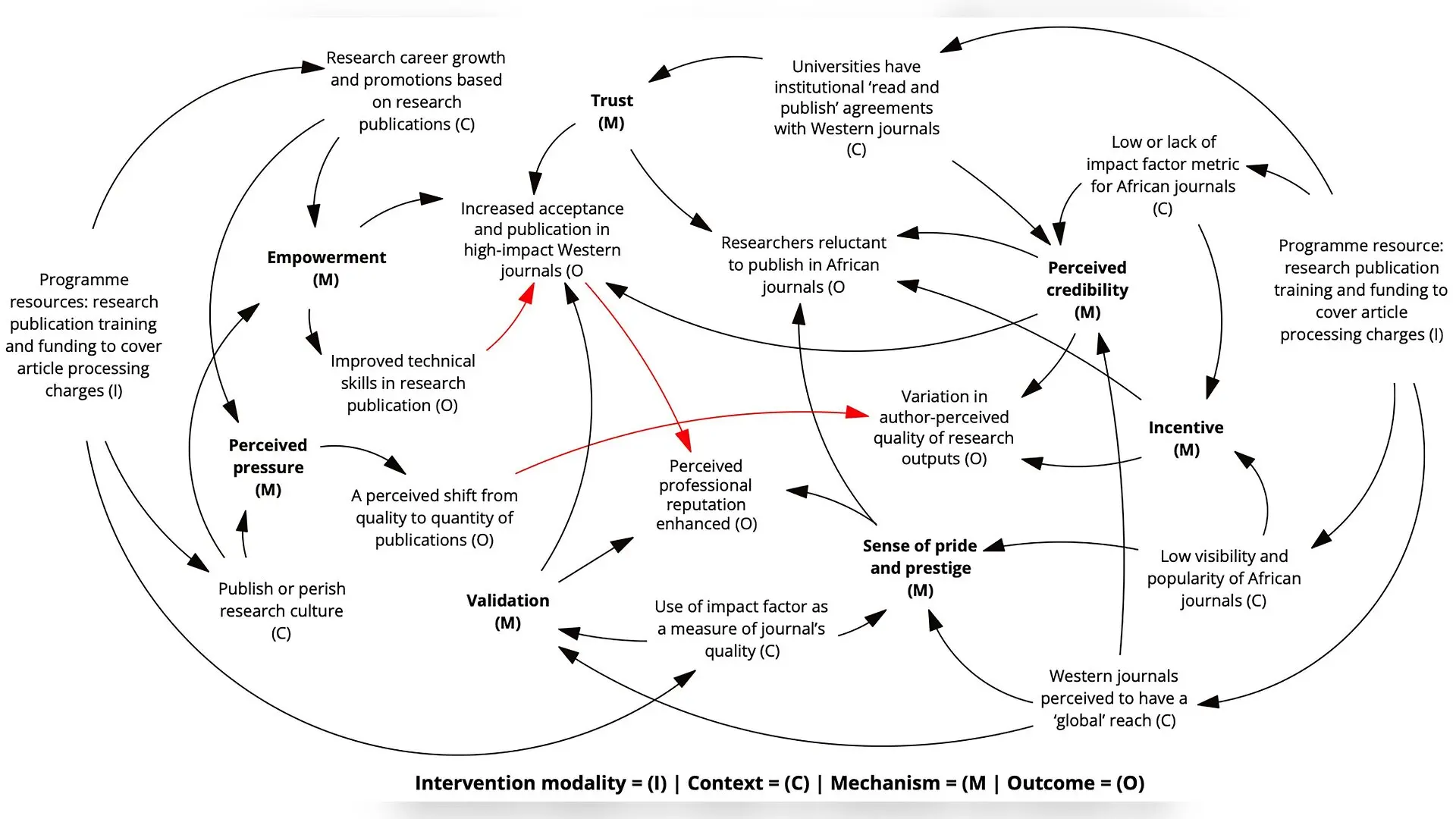
University-based African health researchers often bypass local academic journals in favor of Western publications due to institutional pressure and the perceived prestige of high-impact metrics, according to a recent qualitative study. The investigation, published in PLOS One, examined the publishing behaviors of 19 academics across three African research project teams.
Led by Meshack Nzesei Mutua and colleagues, the research addresses a longstanding tension in academia. Scholars face immense pressure to secure promotions and funding through frequent publication in internationally recognized journals. This publishing culture can overshadow the need to address local health challenges.
How Institutional Pressure Drives Publication Volume Over Quality
The authors utilized an Indigenous realist evaluation approach to understand why researchers make specific choices about where and what to publish. They evaluated data from project teams located in universities spanning different economic contexts and funding levels. The investigators conducted semi-structured interviews with three principal investigators, 11 senior supervisors, and five mid-career research collaborators.
Participants noted that institutional requirements directly tie career advancements to publication records. While capacity-strengthening workshops successfully equipped researchers with technical writing skills and financial resources for article processing charges, they also amplified perceived workplace stress. Researchers described feeling compelled to maximize their publication output, which they admitted could occasionally compromise the depth of their scientific work.
The Allure of Western Prestige and Institutional Agreements
The investigation revealed that the widespread use of journal impact factors as a proxy for scientific quality creates significant behavioral incentives. Many academics associate Western journals, which typically boast higher impact metrics, with global reach and peer-validation. Publishing in these outlets fosters a sense of professional prestige and reassures researchers of their competitiveness.
Furthermore, institutional read-and-publish agreements heavily favor Western publishers. At one participating university, roughly 98 percent of the journals included in such institutional agreements were based in the Global North. These agreements provide free or discounted publishing access, actively steering researchers away from homegrown alternatives that lack similar indexing visibility or impact metrics.
Why Local Journals Struggle to Attract Top Tier Research
A striking finding from the study is the conscious stratification of manuscripts by authors. Several interviewees acknowledged a tendency to submit their highest-quality findings to high-impact Western journals, reserving secondary or rejected manuscripts for African-based journals. Even when offered 100 percent fee waivers on regional platforms like Open Research Africa, some researchers hesitated to publish there due to concerns that unranked or unfamiliar platforms would fail to impress tenure committees or peers.
The authors noted several limitations to their work. The study relied on a small sample size of 19 health researchers and did not independently evaluate the objective scientific quality of the published papers, depending instead on the participants’ personal perceptions. Additionally, because the work focused exclusively on health research teams in select African universities, the findings may not generalize across all academic disciplines.
Ultimately, the study points to deep-seated structural inequities within global scientific publishing. Overcoming these barriers will require African universities and funding agencies to decouple career promotions from impact factor metrics, actively support regional indexing infrastructure, and value research for its direct contribution to society.
The research was published in PLOS One on November 18, 2026.
This article has been fact checked for accuracy, with information verified against reputable sources. Learn more about us and our editorial process.
Last reviewed on .
Article history
- Latest version
Reference(s)
- Mutua, Meshack Nzesei., et al. “Theorising research publication practices among African university-based researchers.” PLOS One, vol. 21, no. 11, November 18, 2026, pp. e0363169 Public Library of Science (PLoS), doi: 10.1371/journal.pone.0363169. <https://doi.org/10.1371/journal.pone.0363169>.
Cite this page:
- Posted by David Anderson