Mild Anemia Linked to Higher Three-Month Mortality Risk in Severe Stroke Patients
A nationwide study of over 8,000 severe acute ischemic stroke cases reveals that even slight drops in hemoglobin threaten recovery.
Even mild anemia significantly raises the risk of death and vascular complications within three months for patients suffering from severe acute ischemic stroke, according to a large nationwide study. Researchers evaluated health records from thousands of individuals requiring neurocritical care to understand how blood oxygen-carrying protein levels influence stroke recovery.
The retrospective study analyzed data from 8,615 patients admitted with severe acute ischemic stroke, defined as a score above 15 on the National Institutes of Health Stroke Scale, across 18 academic hospitals in South Korea between January 2011 and April 2023. The findings were published in the Journal of Korean medical science. The research team categorized patient hemoglobin concentrations at hospital admission into four distinct groups, ranging from moderate-to-severe anemia to normal levels and polycythemia.
How Low Hemoglobin Threatens Brain Recovery
Hemoglobin is the iron-containing protein in red blood cells responsible for transporting oxygen from the lungs to tissues throughout the body, including the delicate brain tissue affected by a stroke. When an ischemic stroke occurs, a blood clot blocks an artery, depriving a region of the brain of blood and creating a vulnerable zone known as the penumbra. Reduced hemoglobin levels diminish oxygen delivery to this already fragile tissue, potentially accelerating brain cell damage and swelling.
While general intensive care units commonly follow restrictive blood transfusion practices, tolerating lower hemoglobin counts, the brain may react more sensitively to mild reductions. The authors noted that previous investigations often focused on general stroke populations or included very few neurological patients, leaving open questions about critical care thresholds.
What the Three-Month Data Revealed
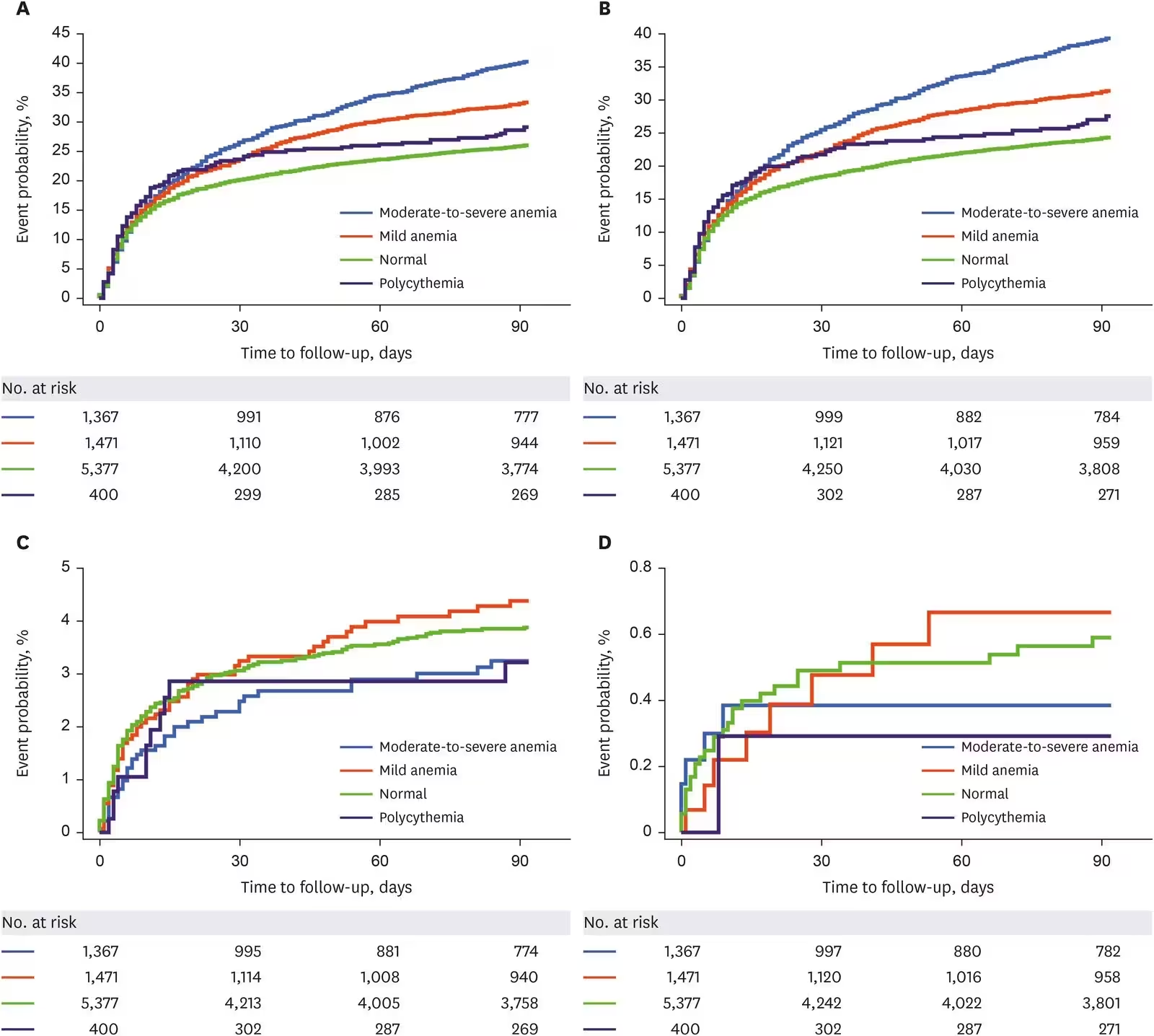
Among the 8,615 patients evaluated, whose average age was 74.3 years, 15.9 percent presented with moderate-to-severe anemia, and 17.0 percent had mild anemia. Over the three-month follow-up period, the cumulative incidence rate for a composite primary outcome of recurrent stroke, myocardial infarction, and all-cause mortality reached 29.6 percent.
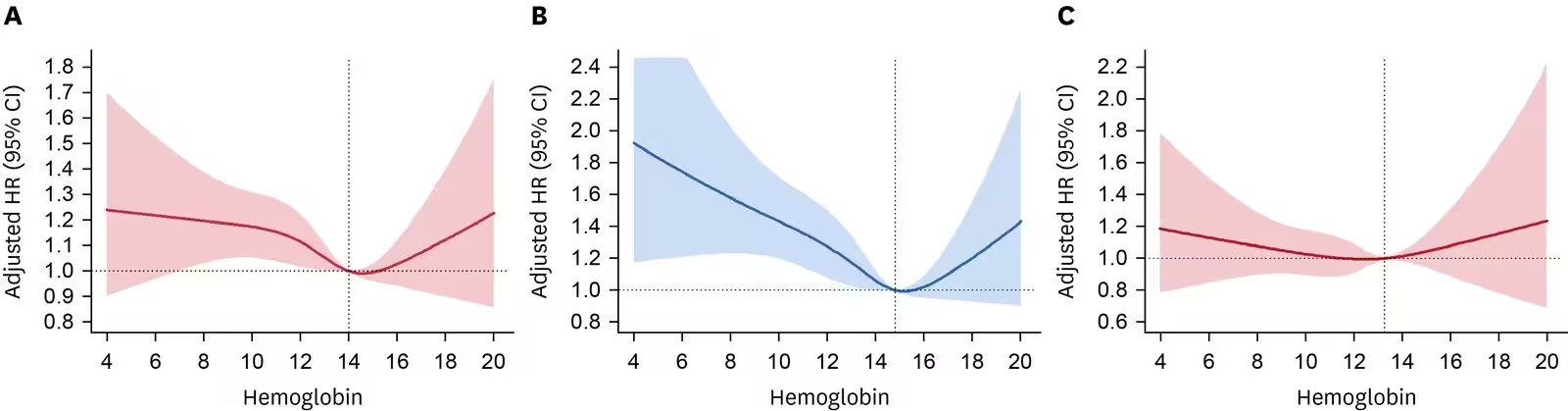
Patients with mild anemia or moderate-to-severe anemia faced significantly higher rates of adverse vascular events and death compared to individuals with normal hemoglobin levels. After adjusting for confounding factors such as age, sex, body mass index, pre-existing medical conditions, and initial stroke severity, both mild anemia and more severe forms remained independently associated with an elevated risk of the three-month composite outcome. Specifically, mild anemia carried an adjusted hazard ratio of 1.15, while moderate-to-severe anemia showed an adjusted hazard ratio of 1.14.
Understanding the Limitations and Future Directions
The investigators pointed out several limitations within their work. Because the study relied on a retrospective observational design, researchers could not entirely rule out residual confounding, and hemoglobin levels were recorded only at hospital admission without subsequent tracking. Furthermore, the registry lacked granular data regarding specific blood transfusions, making it difficult to distinguish the direct physiological impact of anemia from potential transfusion-related complications.
Despite these constraints, the study challenges the widespread assumption that mild anemia is clinically insignificant in severe neurological emergencies. The authors suggest that future prospective randomized trials should investigate whether more individualized transfusion strategies or higher hemoglobin targets might improve survival and recovery for vulnerable stroke patients.
The research was published in Journal of Korean medical science on November 16, 2026.
This article has been fact checked for accuracy, with information verified against reputable sources. Learn more about us and our editorial process.
Last reviewed on .
Article history
- Latest version
Reference(s)
- Kim, Hyunsoo., et al. “Does Mild Anemia Associate With 3-Month Vascular Outcomes in Severe Acute Ischemic Stroke?.” Journal of Korean Medical Science, vol. 41, no. 44, January 1, 2026 XMLink, doi: 10.3346/jkms.2026.41.e289. <https://doi.org/10.3346/jkms.2026.41.e289>.
Cite this page:
- Posted by Sana Malik