Fly Tumors Reveal How Cancer Stem Cells Decide When to Differentiate
Local neighborhood communication and receptor signaling dictate whether cancer stem cells maintain their identity or mature into progeny.
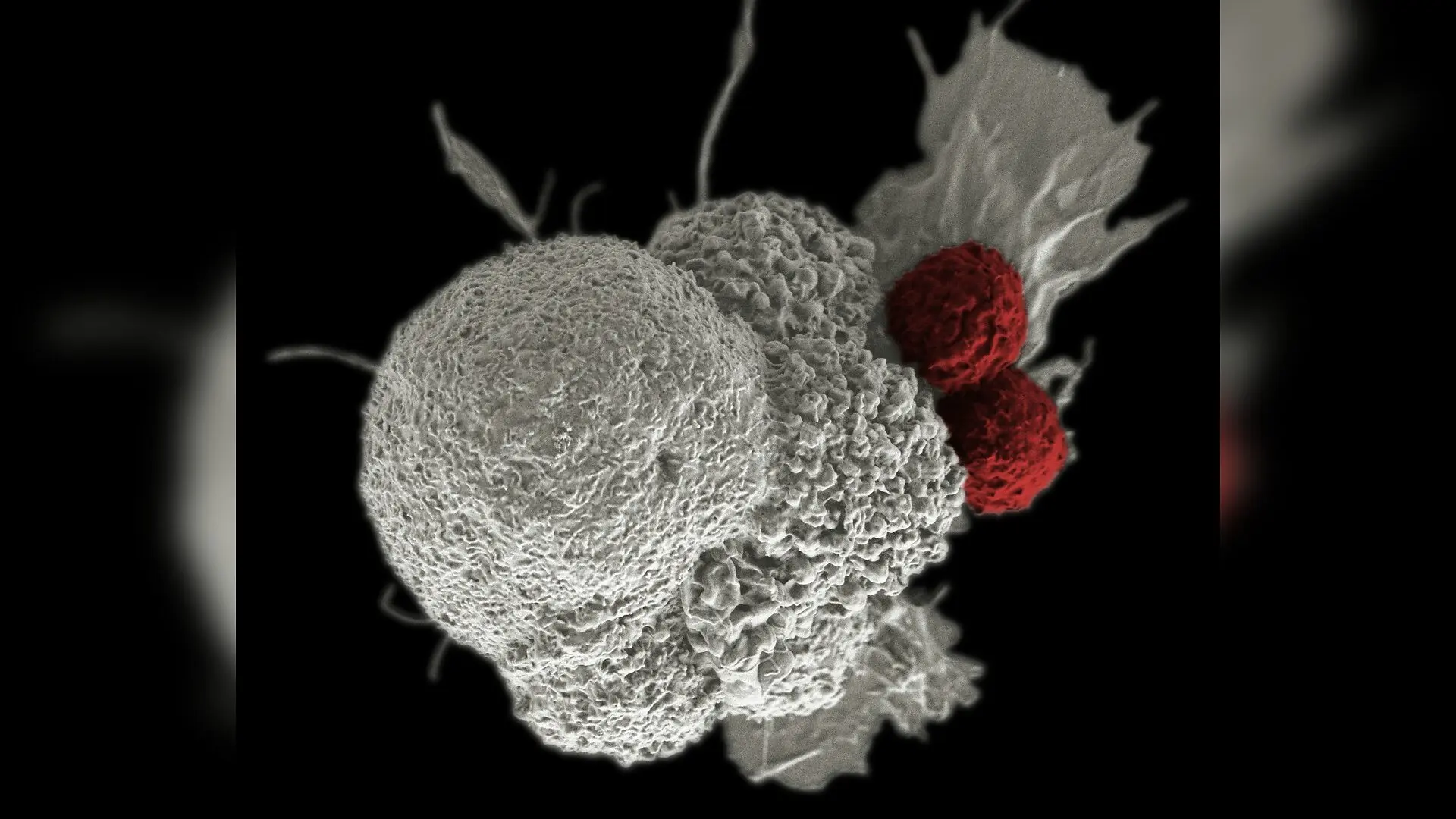
Cancer stem cells are notoriously resilient and drive tumor recurrence, yet how they maintain a stable proportion within a growing tissue has long remained a puzzle. A new study reveals that rather than following a rigid internal clock, these rogue stem cells decide to differentiate based on the company they keep, taking cues from their immediate cellular neighbors.
By studying simple brain tumors in Drosophila fruit flies, researchers mapped the fate of individual cells at high resolution. The team found that cancer stem cells, which drive tumor growth, transition into faster-dividing progeny called transit-amplifying progenitors only when they find themselves surrounded by differentiated neighbors. The work is published in PLOS Biology.
How Local Neighborhoods Dictate Stem Cell Fate
In many hierarchical tumors, cancer stem cells make up a stable minority, hovering around 15 to 20 percent of the total cell population. Scientists have debated whether this balance is programmed into individual cells from birth or shaped by collective, local interactions. To answer this, Emma Legait and colleagues turned to fruit fly neural stem cell tumors, which lack complex immune and blood vessel infiltrates while preserving a realistic three-dimensional architecture.
Using advanced 3D cellular mapping and automated segmentation software, the researchers tracked protein markers across thousands of tumor cells. They identified an intermediate transitional state between stem cells and their more mature progeny. By measuring the local neighborhood of each cell, the team discovered a striking spatial bias: transitional cells were heavily enriched at the outer edges of stem cell clusters, where they made contact with differentiated cells.
When a stem cell was completely surrounded by other stem cells, its likelihood of differentiating dropped to near zero. Conversely, if it became isolated and surrounded entirely by mature progeny, it committed to differentiation with near certainty.
The Molecular Signaling Behind the Feedback Loop
To figure out how cells communicate this positional information, the authors investigated major signaling pathways and found that epidermal growth factor receptor, or EGFR, signaling acts as the primary driver of differentiation. Newly produced progeny secrete a signaling protein called Spitz, which activates the pathway in adjacent stem cells and triggers their transition.
At the same time, stem cells protect their identity by expressing an endogenous receptor inhibitor known as Kekkon-1. The balance between this external differentiation signal and the internal inhibitor sets the local transition rate, ultimately stabilizing the proportion of stem cells in the tumor.
Computer simulations incorporating these rules successfully recreated both the stable heterogeneity and the spatial clustering observed in real tumors. When the researchers experimentally increased adhesion among stem cells using a modified protein called Toll-1Ex, the cells clumped together more tightly, shielding them from differentiation signals and successfully expanding the stem cell pool.
Broader Implications for Cancer Biology
While EGFR is traditionally viewed as a promoter of tumor growth and survival, this research highlights a context-dependent role where the pathway drives cellular differentiation instead. The authors note that these self-organizing feedback mechanisms mirror how normal tissues maintain balance during embryonic development.
The researchers acknowledge that while the fly model offers an exceptionally clean platform, human tumors involve vastly more complicated microenvironments with immune and stromal cells. Future work will need to test whether similar spatial feedback rules apply to mammalian cancers, potentially opening up new avenues for therapies that disrupt local communication and exhaust the cancer stem cell population.
The research was published in PLOS Biology on November 19, 2026.
This article has been fact checked for accuracy, with information verified against reputable sources. Learn more about us and our editorial process.
Last reviewed on .
Article history
- Latest version
Reference(s)
- Legait, Emma., et al. “Local feedback governs cell fate transition to drive self-organized phenotypic equilibrium in hierarchical tumors.” PLOS Biology, vol. 24, no. 11, November 19, 2026, pp. e3004086 Public Library of Science (PLoS), doi: 10.1371/journal.pbio.3004086. <https://doi.org/10.1371/journal.pbio.3004086>.
Cite this page:
- Posted by Faisal Qureshi