Mysterious Black Capsules Found 4 Miles Under the Pacific Reveal a Secret Deep Sea World
Scientists have discovered fragile, unexpected lifeforms hiding within mysterious black spheres found nearly four miles deep on the Pacific Ocean floor.
Marine researchers have confirmed that complex life is not only present but actively reproducing nearly four miles beneath the surface of the Pacific Ocean. By analyzing spherical egg capsules recovered from the depths of the Kuril-Kamchatka Trench, scientists have documented the existence of free-living flatworms thriving at depths between 6,176 and 6,200 meters, shattering previous records for the group.
The discovery, published in the journal Biology Letters, underscores the vast gaps in our understanding of the deep ocean. As marine biologist Sylvia Earle has famously noted, the topography of Mars is currently better mapped and understood than the floor of our own oceans, a reality that makes the study of abyssal organisms a difficult and rare endeavor.
Recovering Life from the Abyss
The samples were secured on September 21, 2023, during an expedition aboard the research vessel Hakuho-maru. Using a beam trawl to sample the seafloor, the team recovered rock fragments hosting several dark, spherical cocoons. While many of the specimens were damaged during the retrieval process, researchers were able to isolate four intact capsules for detailed analysis.
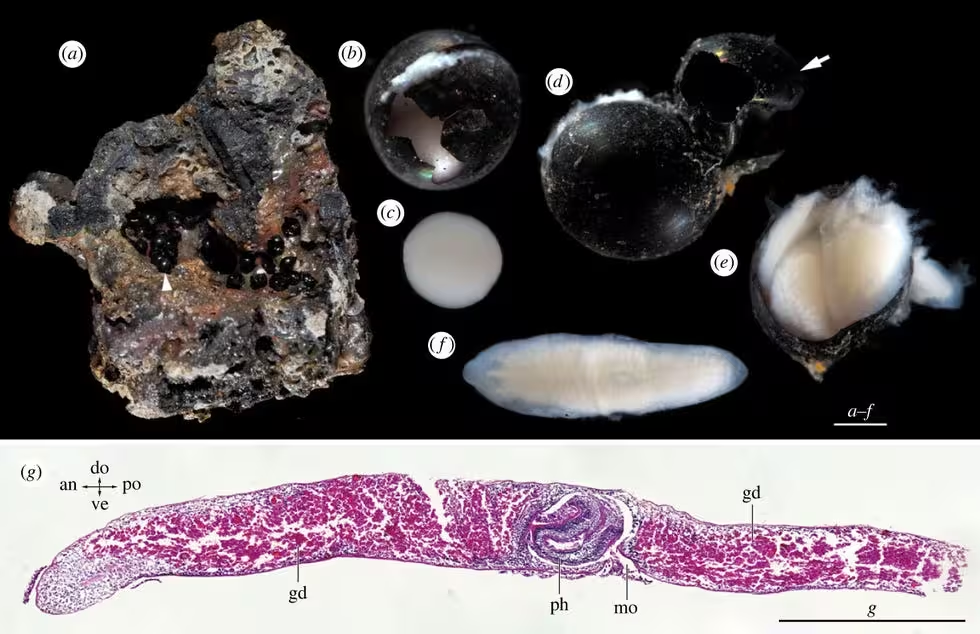
Keiichi Kakui, an invertebrate researcher at Hokkaido University, initially struggled to identify the mysterious, dark spheres clinging to the rocks. After opening one of the specimens and observing a fluid-like substance inside, he discovered several pale, delicate flatworm embryos. Measuring roughly 3.1 to 3.3 millimeters, each capsule contained between three and seven embryos in varying stages of development.
Genetic Identity and Evolutionary Origins
To confirm the species identity, Kakui and his co-author, Aoi Tsuyuki, utilized DNA extraction and microscopic sectioning. Genetic sequencing placed the worms within the order Tricladida, specifically the group Maricola. While most known members of this group inhabit freshwater or shallow coastal environments, the presence of these embryos in the deep abyss suggests that this lineage may have successfully colonized the extreme depths of the ocean over time.
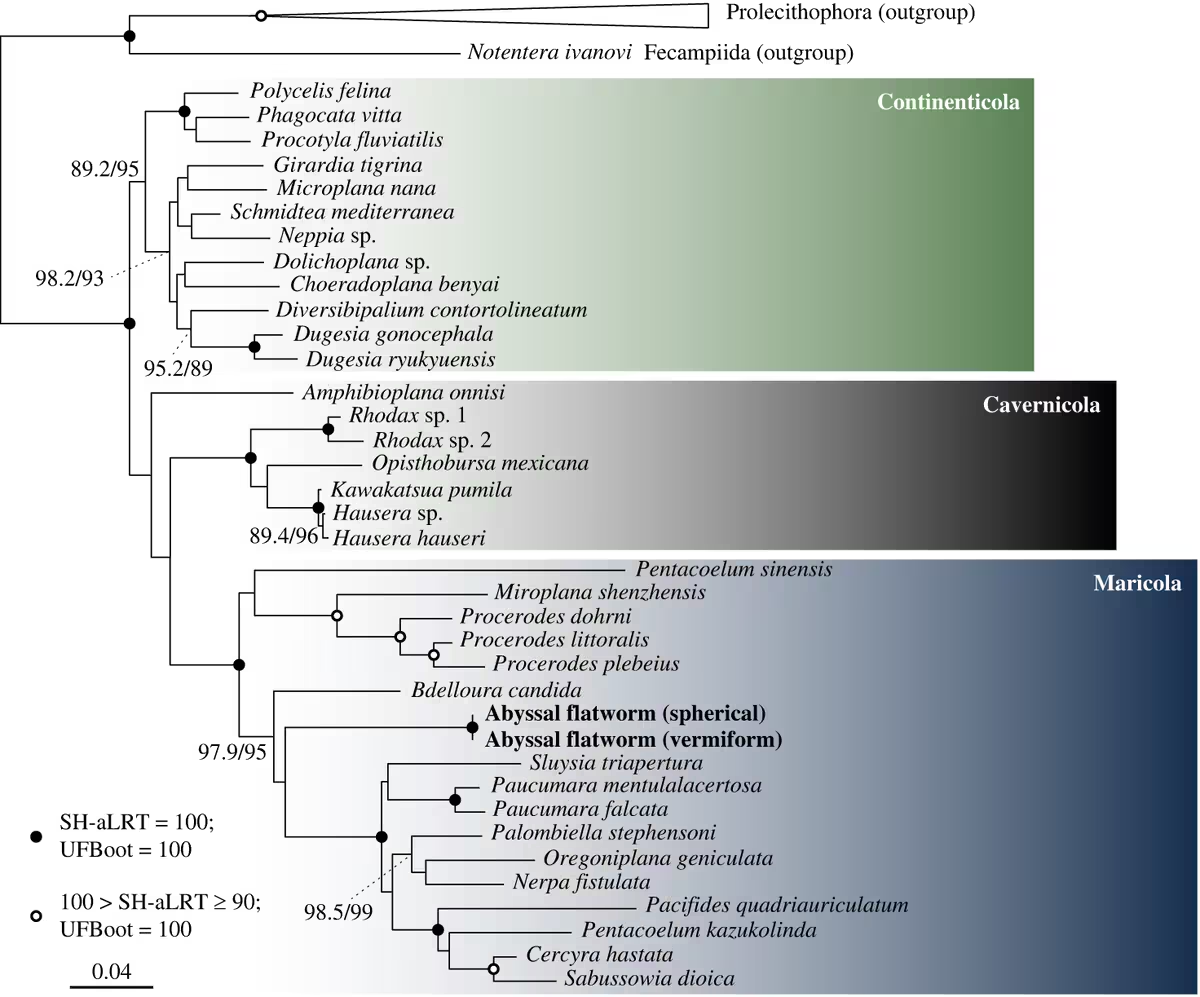
The genetic data also confirmed that the spherical and worm-shaped embryos found within the capsules were all part of the same species, representing different developmental phases. This finding provides definitive evidence of reproduction in the deep sea, far surpassing the previous record for free-living flatworms, which stood at approximately 3,232 meters.
Surprising Developmental Continuity
Perhaps most unexpected was the discovery that these deep-sea embryos appear to develop in a manner nearly identical to their shallow-water relatives. Despite the crushing pressure and complete absence of sunlight, the fundamental biological processes of these worms have remained consistent with those living in more hospitable environments.
Researchers believe the rocky, uneven terrain of the trench floor provides the necessary hard surfaces for these creatures to anchor their egg capsules. This study offers a rare glimpse into the life history of deep-sea invertebrates, suggesting that the colonization of the abyss may have been driven by shifts in ecology or physiology rather than a radical overhaul of early development. For scientists, the path forward remains tied to the arduous work of physical sampling, as each fragment of rock pulled from the dark provides a new piece of the puzzle regarding life in the deep.
This article has been fact checked for accuracy, with information verified against reputable sources. Learn more about us and our editorial process.
Last reviewed on .
Article history
- Latest version
Cite this page:
- Posted by Elizabeth Taylor