Scientists Kept Mini Brains Alive for 5 Years and They Matured Just Like a Child’s
Researchers have successfully grown lab-made mini brains for five years, revealing that they mature similarly to human tissue to help study aging disorders.
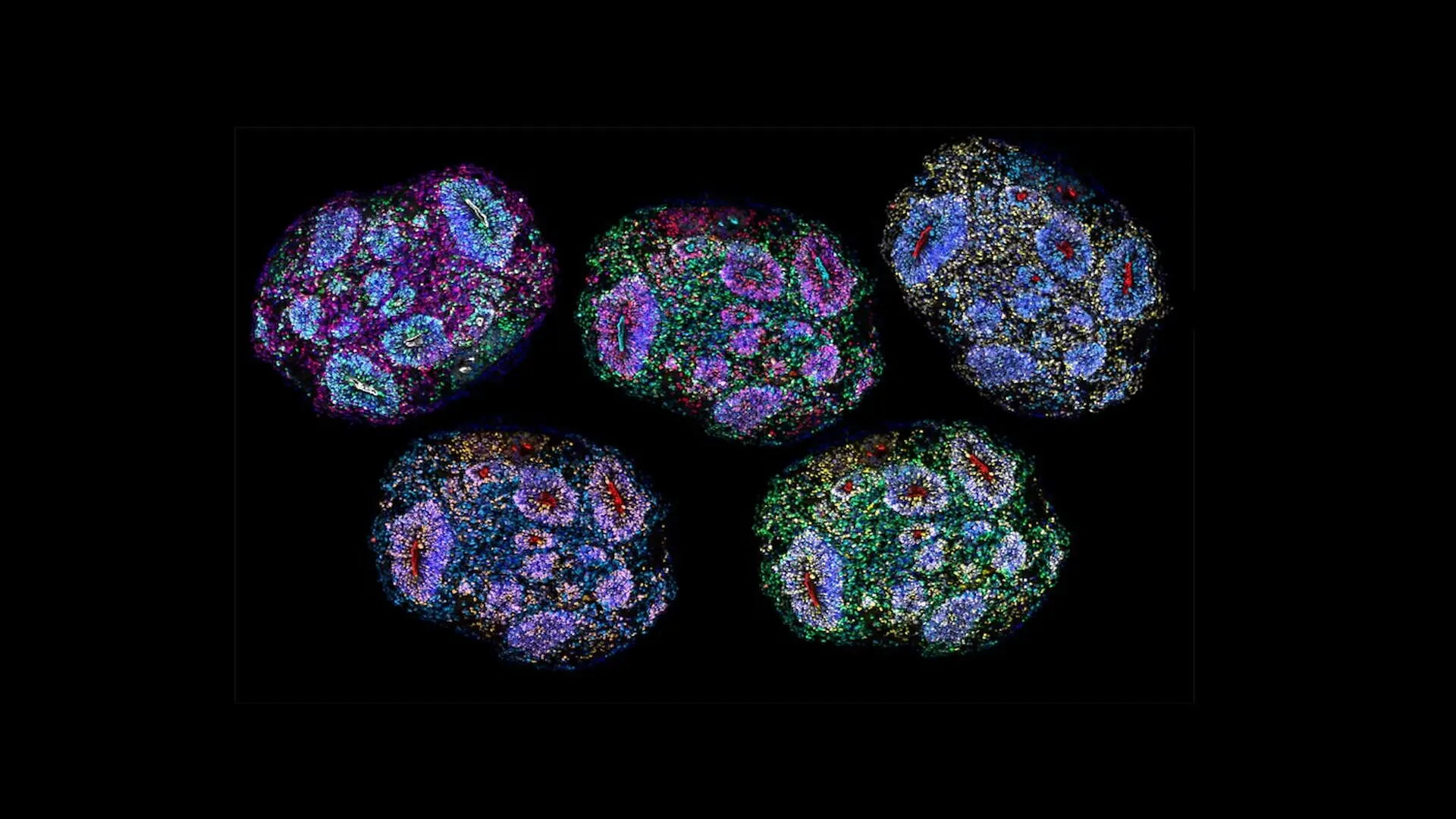
For years, neuroscientists have relied on brain organoids—miniature, lab-grown clusters of neural tissue—to unlock the secrets of how human brains develop. While these models have provided a window into early fetal growth, their utility has historically been hampered by their short lifespans. Most organoids wither and die after only a few months, leaving researchers unable to study the critical transitions that occur later in development, such as those associated with epilepsy, schizophrenia, and severe autism.
A research team led by Paola Arlotta at Harvard University has now shattered these limitations, developing a method to sustain brain organoids for more than five years. The findings, published in the journal Nature, demonstrate that these long-lived cultures follow a maturation schedule remarkably similar to that of a human brain, with genetic signatures in the oldest samples mirroring those of a typical four-year-old.
Deciphering the Internal Clock
The experiment involved tracking 34 organoids through regular intervals of gene expression analysis and epigenetic monitoring. By adjusting the nutrient-rich growth medium midway through the study, researchers were able to support the complex metabolic needs of aging neurons, allowing them to thrive far longer than previous models.
The results revealed a synchronized progression. Younger organoids exhibited gene activity profiles typical of the first trimester, while those observed between three and six months reflected second-trimester development. By the one-year mark, the gene expression resembled that of a newborn, eventually aligning with the molecular profile of a four-year-old child by the end of the five-year observation period.
Perhaps most intriguingly, the cells appear to possess an inherent temporal awareness. When the researchers combined cells from one-year-old organoids with those only 15 days old, each group adhered to its own developmental timeline. The younger cells progressed through early stages as expected, while the older cells bypassed these initial phases, immediately producing mature neurons. This suggests the presence of an internal developmental clock that dictates the timing of cellular maturation regardless of external environment.
“I like to think of this as a sort of ‘warping of developmental time’ indicating that the organoid cells record and recall the time they have already spent in culture,” Arlotta said regarding this discovery.
Advancing Disease Research
The ability to maintain these organoids over years transforms them into a powerful tool for longitudinal study. Because these tissues can be generated from patient-derived skin cells, researchers can now create “disease-in-a-dish” models that carry the specific genetic mutations linked to neurodevelopmental disorders. This allows for the observation of how neural circuits rewire and potentially malfunction over time, rather than just capturing a snapshot of early development.
Furthermore, the researchers have established a protocol for cryopreserving cells at various stages of development. This allows scientists to “save” progress and thaw samples for future experiments, significantly increasing the efficiency and reproducibility of longitudinal research.
While these organoids provide an unprecedented molecular blueprint, the researchers emphasize that they are not equivalent to a human brain. Without the complex sensory inputs and systemic interactions found in a living body, these mini brains lack the experiential wiring that shapes a sentient mind. Instead, they serve as a rigorous platform for investigating the biological scaffolding of the human brain.
Looking ahead, the team plans to use these long-term models to study the progression of schizophrenia and epilepsy, and to test potential therapeutic interventions. As the research continues, the integration of sensory stimuli—such as auditory or visual inputs—remains a topic of ongoing ethical and scientific consideration, as scientists continue to probe the limits of how much of human neural maturation can be replicated in a controlled environment.
“There is still much to learn about how the embryo naturally builds a progressively more complex and mature brain,” said study author Irene Faravelli. “Applying these lessons to organoids will allow us to model unexplored events of human brain maturation that occur after birth.”
This article has been fact checked for accuracy, with information verified against reputable sources. Learn more about us and our editorial process.
Last reviewed on .
Article history
- Latest version
Reference(s)
- Faravelli, Irene. “Human brain organoids record the passage of time over multiple years - Nature.”, August 19, 2026, pp. 1-11. Nature, doi: 10.1038/s41586-026-10877-x. <https://www.nature.com/articles/s41586-026-10877-x>.
Cite this page:
- Posted by Elizabeth Taylor