Scientists Just Discovered A Hidden Baobab Species That Was Hiding In Plain Sight
Genetic analysis has revealed a previously overlooked species of baobab in Madagascar, marking a major discovery in the evolutionary history of the trees.
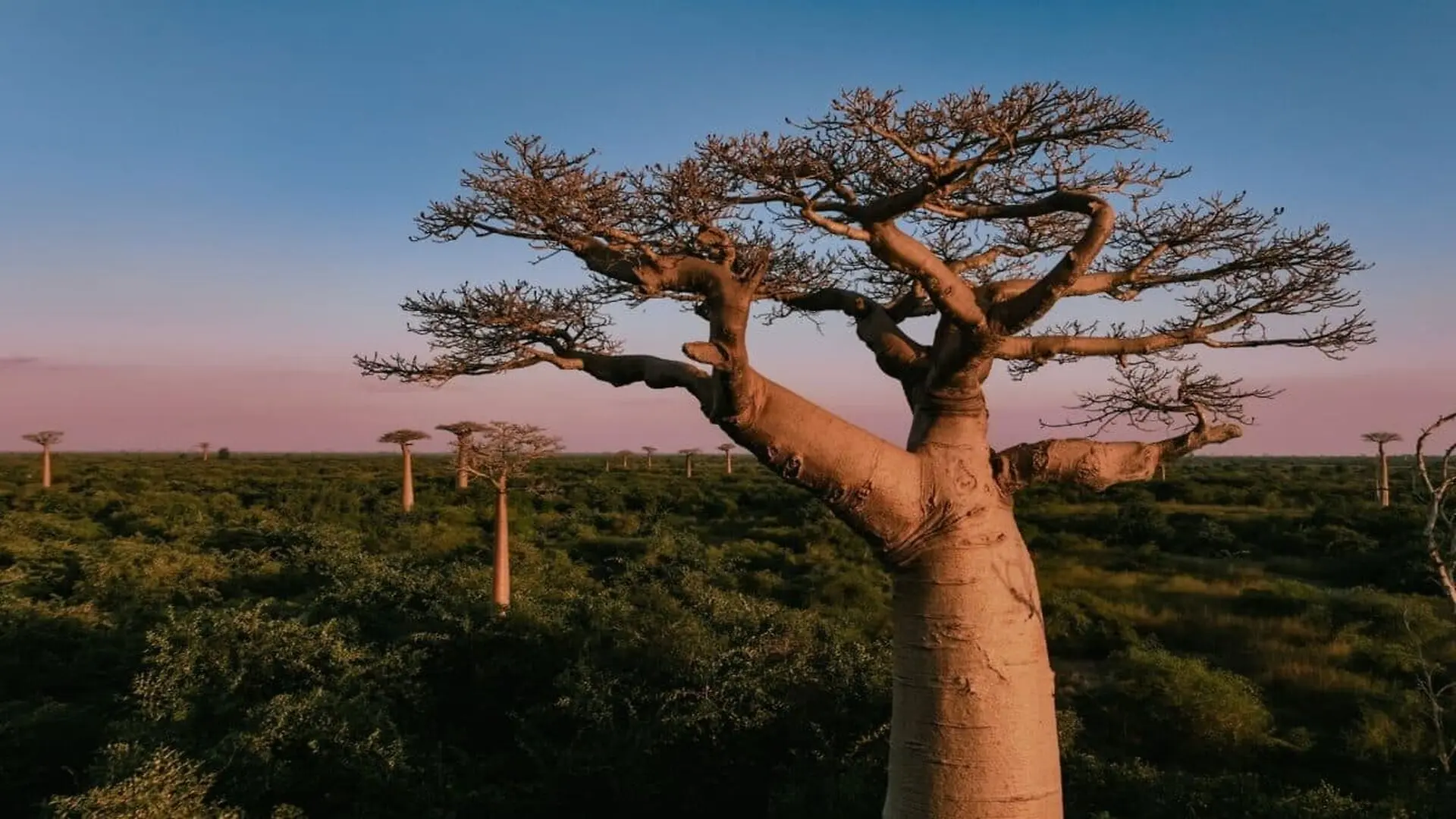
A sophisticated genetic analysis has reshaped our understanding of Madagascar’s iconic baobab trees, revealing a previously hidden species and increasing the count of endemic Malagasy baobabs from six to seven. The study, published in the journal Taxon, elevates the status of Adansonia bozy from a mere variety of Adansonia za to a distinct species in its own right.
This taxonomic shift is the result of intensive phylogenomic research led by Nisa Karimi. By examining hundreds of nuclear genetic regions and complete plastomes, the team resolved evolutionary relationships that had long been obscured by the physical similarities shared between different baobab groups.
Decoding the Baobab Genome
For years, researchers struggled to differentiate between certain Malagasy baobabs based on visual cues alone. Leaves, which often appear uniform across species, were unreliable indicators. Identification frequently required the study of flowers, which are notoriously difficult to track due to their short, often nocturnal, blooming periods. To secure the necessary data, the research team—comprising members from the University of Wisconsin–Madison, the Missouri Botanical Garden, and Iowa State University—undertook rigorous field expeditions, including the use of climbing equipment to reach samples in remote regions.
Even after successful collection, laboratory analysis posed significant hurdles. Baobab leaves are rich in chemical compounds that can complicate DNA extraction. By employing a technique known as targeted sequence capture, the team was finally able to isolate and compare specific genetic regions. The resulting data demonstrated that northern populations previously classified under A. za were genetically distinct, forming a lineage more closely related to other northern baobabs than to the rest of the A. za population.
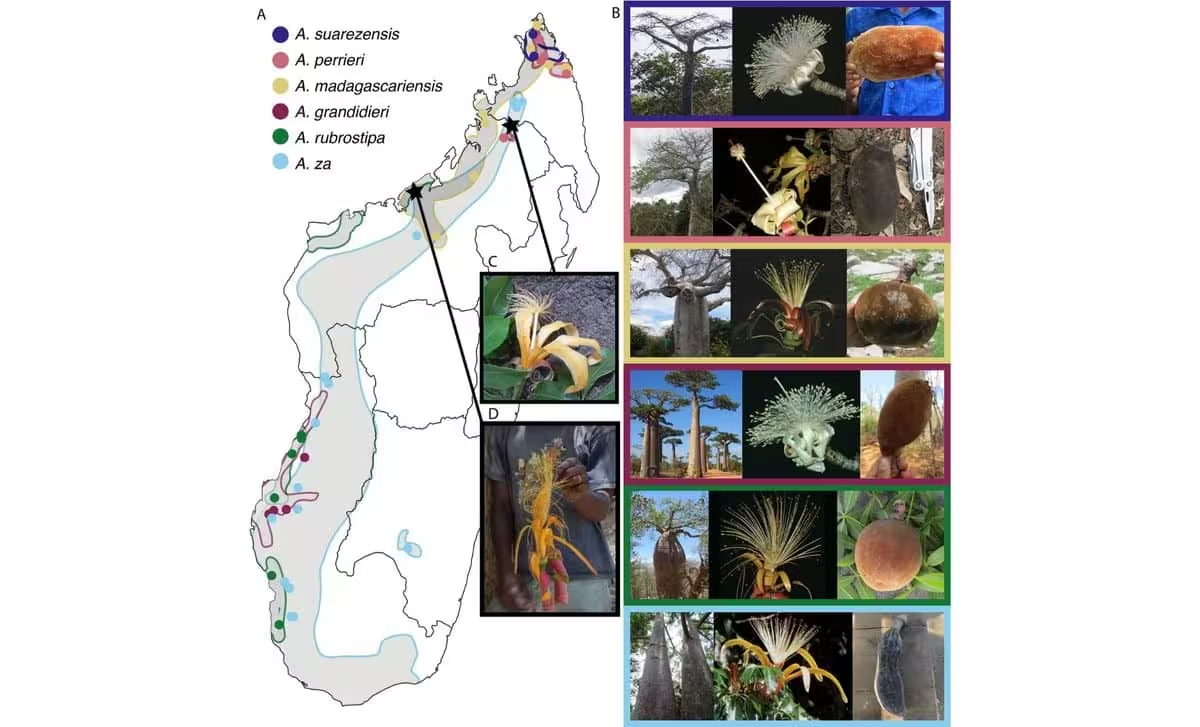
As coauthor David Baum noted, the goal of such taxonomic work is to ensure that scientific groupings reflect true evolutionary relationships. By recognizing A. bozy as a unique entity, the scientific community can now better track the tree’s health and specific environmental needs.
Impact on Future Biodiversity Protection
The implications of this discovery extend well beyond the realm of academic botany. Conservation efforts are often prioritized based on the classification and rarity of a species. With A. bozy now recognized as an independent, endangered species, stakeholders can develop more focused conservation strategies rather than lumping the tree into the broader, potentially more secure A. za population.
The research also sheds light on the complex history of interspecies interactions. The study uncovered evidence of introgression, or the movement of genes between species, particularly involving Adansonia rubrostipa. This suggests that the evolutionary narrative of Madagascar’s flora is fluid and that genetic mixing is a key factor in baobab development.
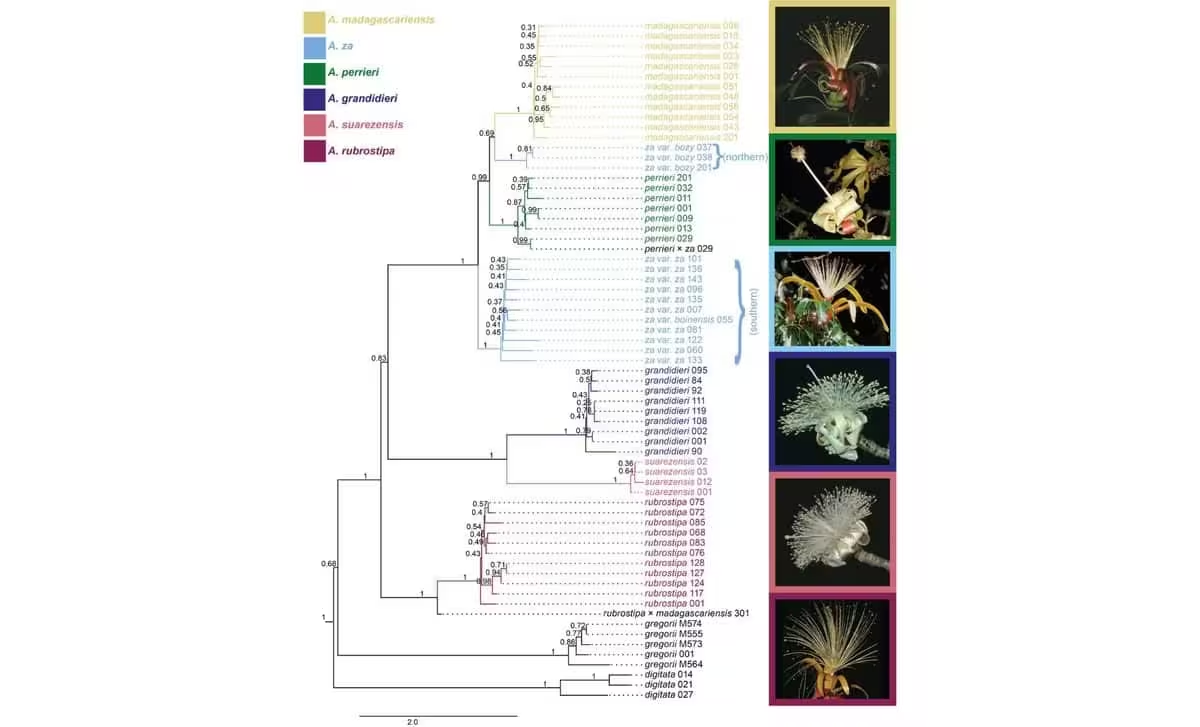
The researchers suspect that this may not be the final change to the baobab family tree. They pointed toward A. rubrostipa as a primary candidate for future study, noting that it may also contain hidden, distinct species waiting to be identified. As Karimi emphasized, the foundation of effective conservation is an accurate understanding of what exists on the landscape and how those organisms are interconnected.
This article has been fact checked for accuracy, with information verified against reputable sources. Learn more about us and our editorial process.
Last reviewed on .
Article history
- Latest version
Reference(s)
- Karimi, Nisa., et al. “Phylogenomic analysis of Madagascar's baobabs reveals admixed populations and supports resurrection of a previously described species.” TAXON, vol. 75, no. 4, July 12, 2026 Wiley, doi: 10.1002/tax.70176. <https://onlinelibrary.wiley.com/doi/10.1002/tax.70176>.
- “Nisa Karimi, Ph.D..” Missouri Botanical Garden <https://www.missouribotanicalgarden.org/plant-science/plant-science/about-science-conservation/resources-databases/study-opportunities/undergraduate-studies/2025/2025-mentors-and-projects/articleid/1788/nisa-karimi-ph-d>.
- “Baum, David.”, December 16, 2022 Biophysics <https://biophysics.wisc.edu/staff/baum-david/>.
Cite this page:
- Posted by Elizabeth Taylor