Ancient Mediterranean Discovery Reveals Hunter Gatherers Mastered The Open Sea 8500 Years Ago
An 8,500-year-old European discovery is challenging long-held assumptions about Stone Age life and revealing how early humans thrived in unexpected ways.

Conventional wisdom regarding the prehistory of the Mediterranean has long drawn a sharp line between two distinct populations: nomadic hunter-gatherers and the sedentary, crop-cultivating societies that eventually established themselves on the region’s islands. However, recent archaeological findings at a site in Malta are forcing a major revision of this timeline, suggesting that human activity in the central Mediterranean was far more complex and maritime-focused than previously imagined.
A 2025 study published in Nature presents compelling evidence that hunter-gatherer groups were present in Malta as early as 8,500 years ago, predating the arrival of the first agriculturalists by a full millennium. This discovery challenges the long-held assumption that small, remote islands were inaccessible to mobile foraging groups.
Rewriting the Timeline of Island Occupation
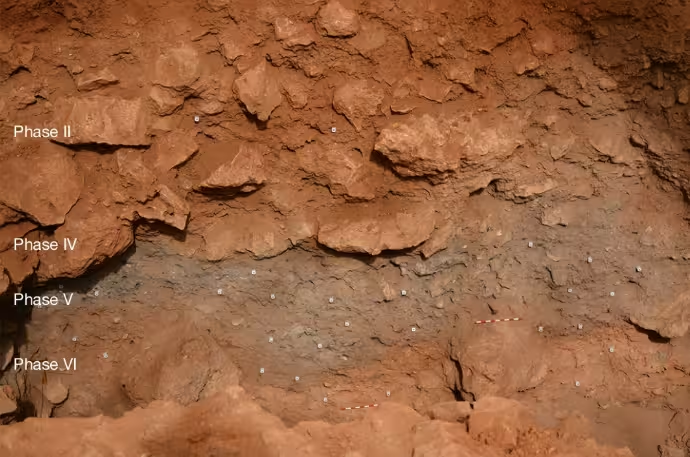
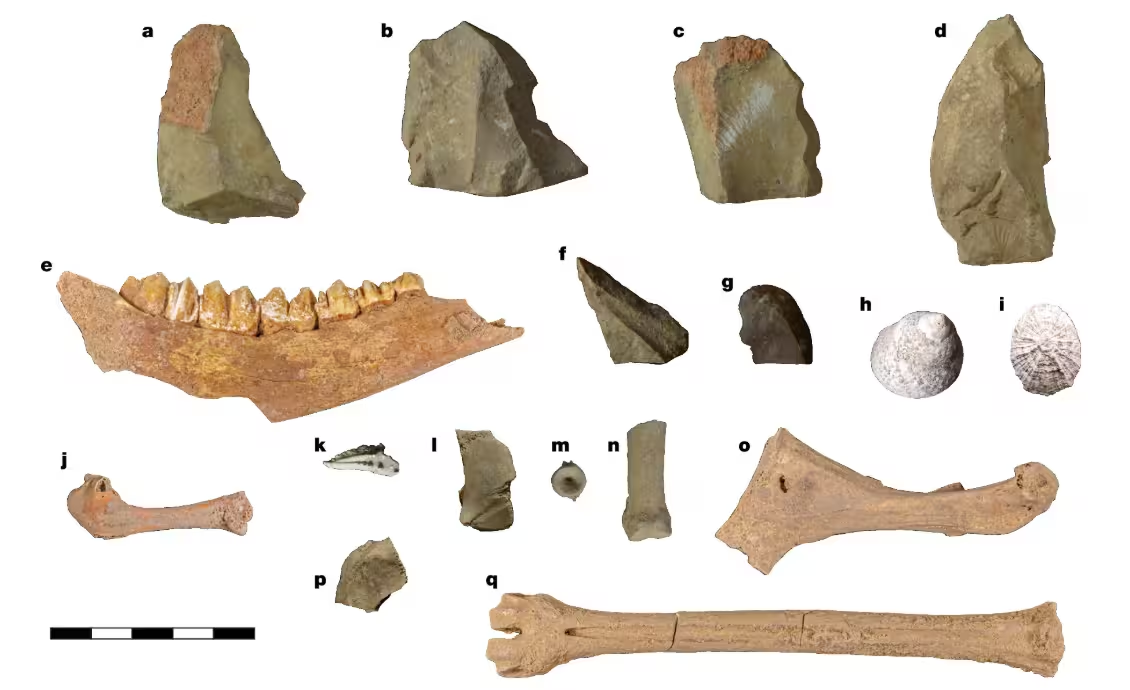
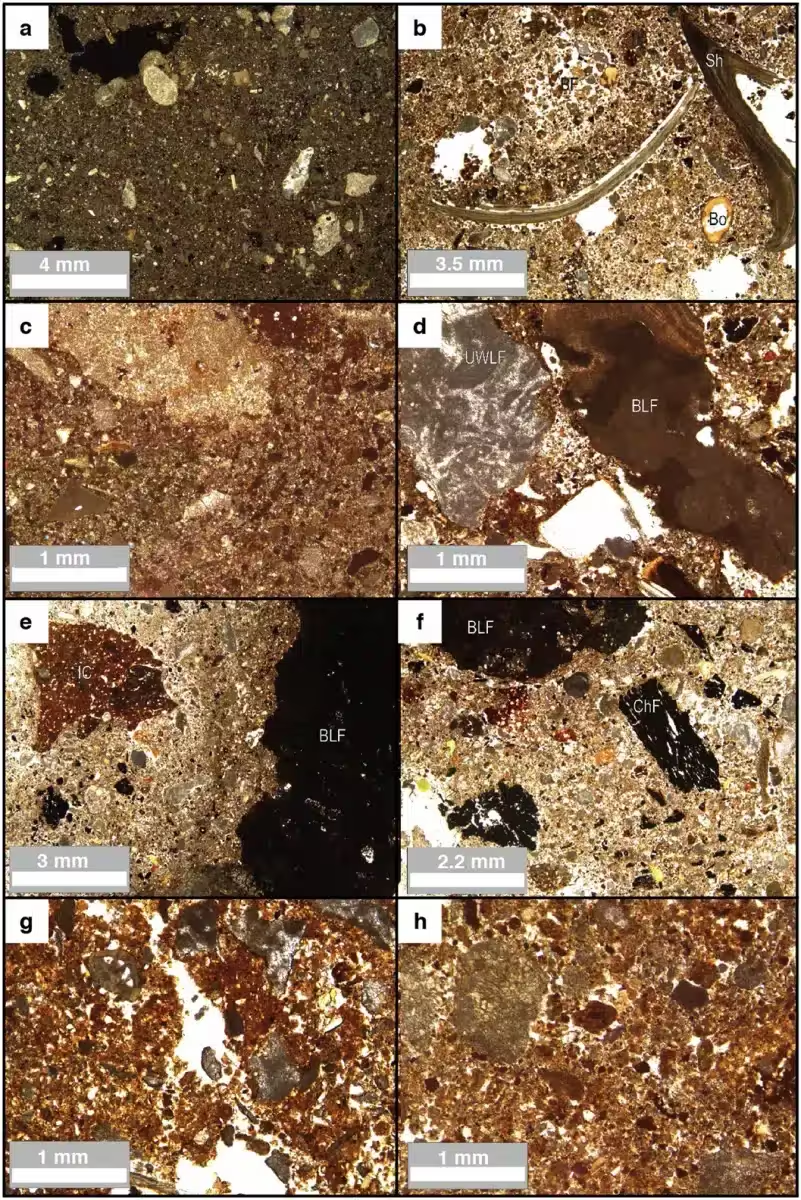
The breakthrough came during excavations led by Eleanor Scerri at Latnija, a site located in the northern part of Malta. Between 2021 and 2023, the research team uncovered deep stratigraphic layers containing hearth ashes, stone tools, and the remains of both terrestrial and marine animals. These findings confirm a sustained human presence dating back to the Mesolithic era, a period when, contrary to earlier theories, there were no land bridges connecting Malta to the Italian mainland or Sicily.
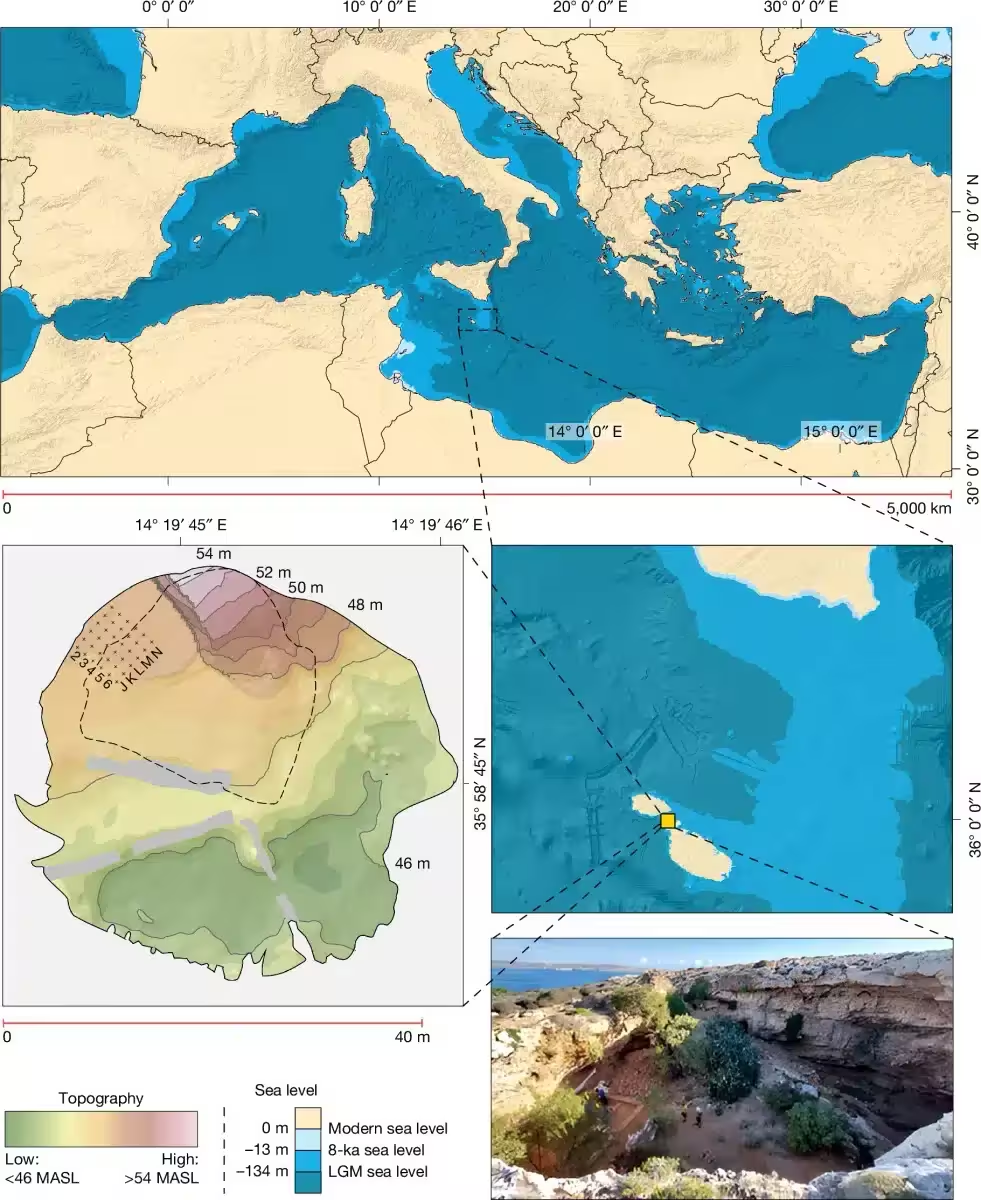
To reach the Maltese archipelago, these early voyagers had to navigate at least 85 to 100 kilometers of open water across the Sicily Channel. Using replica dugout canoes, researchers estimate that such a voyage would have taken an entire day or more under favorable conditions, marking these as some of the most ambitious maritime crossings of the Mediterranean in antiquity.
Through rigorous analysis, including accelerator mass spectrometry for radiocarbon dating and a thorough cataloging of lithic tools and dietary remains, the team verified that the occupation layers definitively predate the onset of agriculture on the island. The inclusion of shellfish and marine mammal remains in the diet suggests these populations were adept at exploiting coastal resources, an essential skill for survival on a semi-arid island.
Maritime Connectivity as a Strategy for Survival
The findings at Latnija raise a significant question: how could such a small, isolated group maintain a viable population for nearly 1,000 years? Scerri’s team utilized population modeling to determine that the island’s limited resources could not have supported a self-sustaining community in isolation. Instead, the researchers suggest that these hunter-gatherers were part of a wider, interconnected maritime network.
Rather than a one-time migration, the evidence points toward repeated, deliberate voyages. Frequent travel between Malta and larger landmasses like Sicily would have been essential for maintaining genetic diversity and providing a social “lifeline” to larger, more stable populations. This transforms our understanding of the central Mediterranean from a barrier into a highway, where navigation was not a peripheral skill but a fundamental component of Mesolithic life.
As noted in reporting by Science, this revelation extends the timeline of sophisticated maritime activity back significantly further than previously hypothesized. While the cultural motivations for these voyages—and the social structures that facilitated them—remain hidden in the deep past, the physical record clearly demonstrates that these early humans were far more capable than they were once given credit for.
This article has been fact checked for accuracy, with information verified against reputable sources. Learn more about us and our editorial process.
Last reviewed on .
Article history
- Latest version
Reference(s)
- Scerri, Eleanor. “Hunter-gatherer sea voyages extended to remotest Mediterranean islands - Nature.”, vol. 641, no. 8061, pp. 137-143. Nature, doi: 10.1038/s41586-025-08780-y. <https://www.nature.com/articles/s41586-025-08780-y>.
- <https://www.science.org/content/article/mediterranean-hunter-gatherers-voyaged-across-open-sea-8500-years-ago>.
Cite this page:
- Posted by Elizabeth Taylor