Ancient Antarctic Microbes Reveal How Long Life Can Actually Survive in Deep Freeze
Ancient microbes trapped in Antarctic ice for millions of years show signs of life, offering new clues on how long DNA survives in extreme frozen environments.
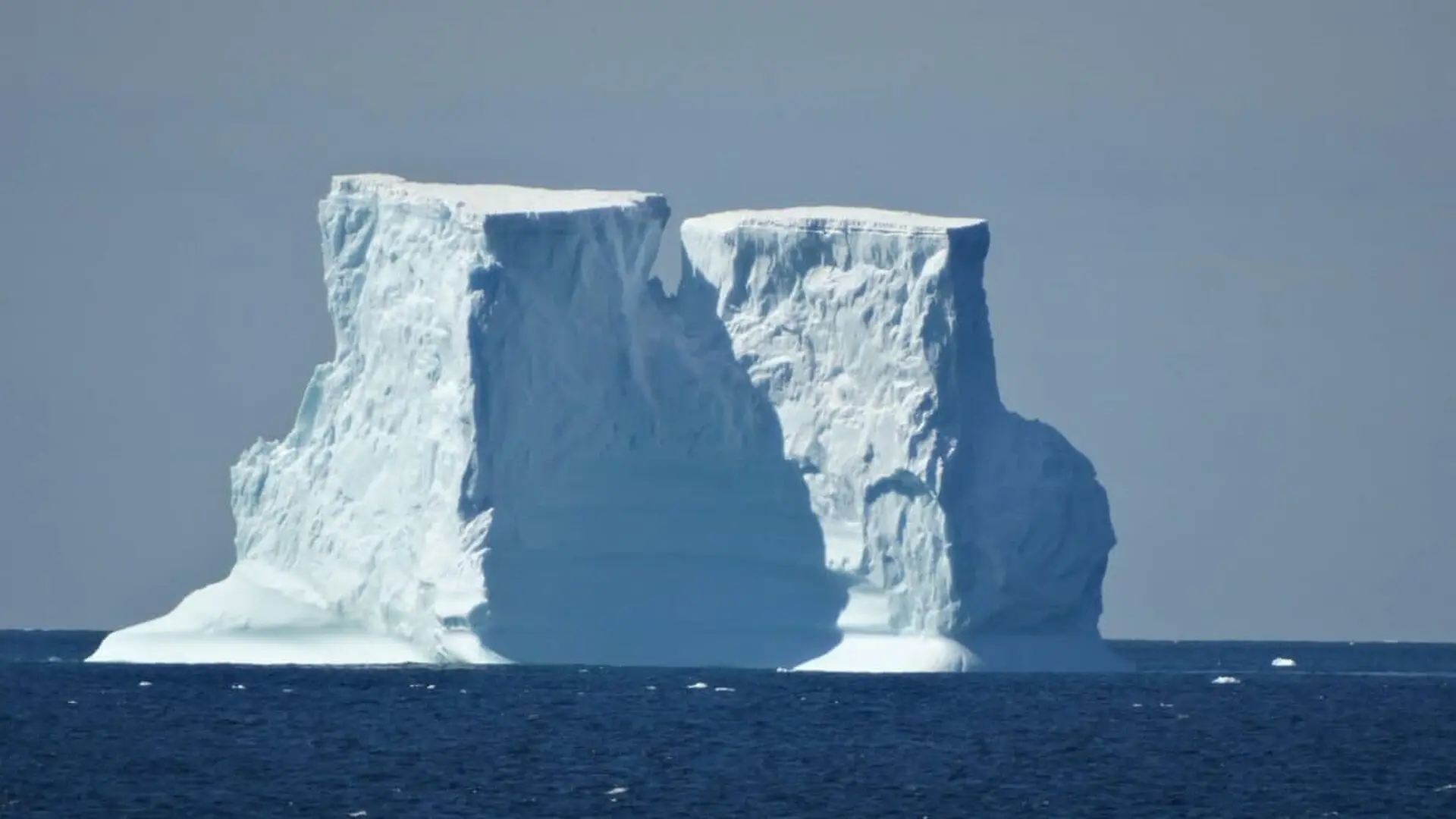
Deep Freeze: How Ancient Antarctic Ice Reveals the Limits of Microbial Survival
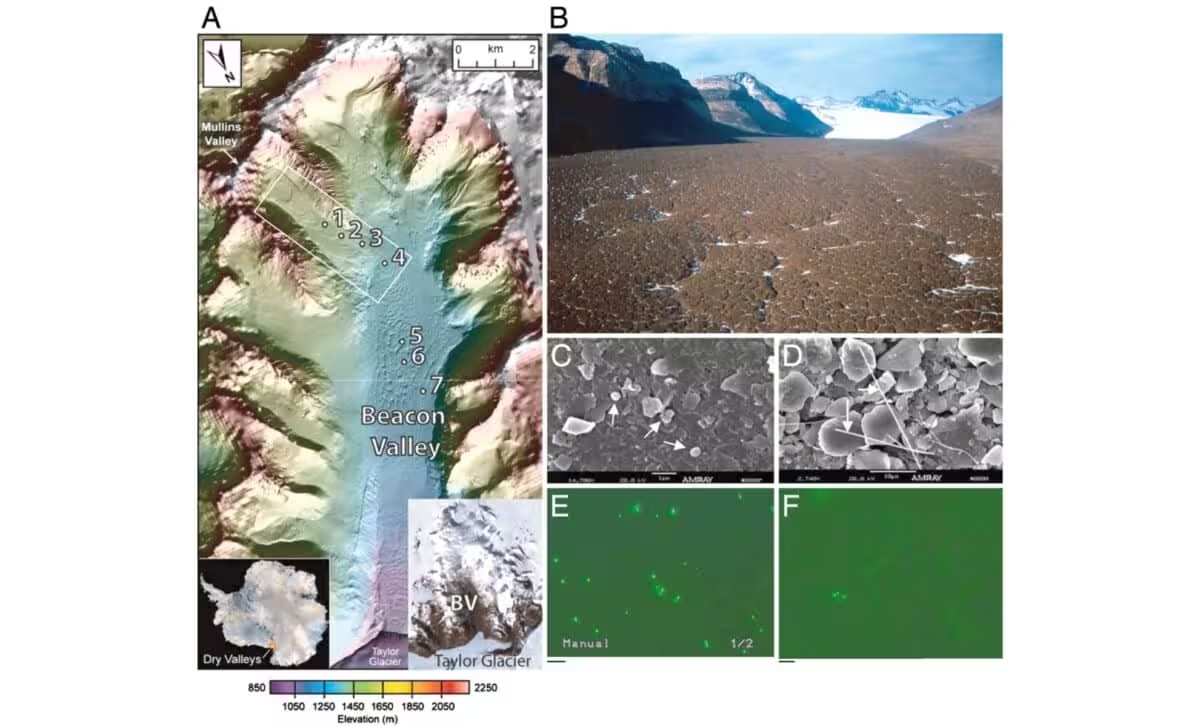
Research into the extreme endurance of life has long centered on the icy vaults of Antarctica. A seminal study, published in the Proceedings of the National Academy of Sciences, explored this frontier by extracting samples from the frigid depths of the Mullins and upper Beacon Valleys. Among these findings was ice dating back approximately 8 million years, a discovery that at the time represented the oldest known ice recovered from the Earth’s surface.
This investigation provided a unique window into the biological stability of microorganisms over geological timescales. By analyzing how these microbes endure, scientists sought to address broader questions about DNA degradation in frozen environments and the theoretical potential for biological materials to traverse the vacuum of space.
Biological Persistence vs. Genetic Integrity
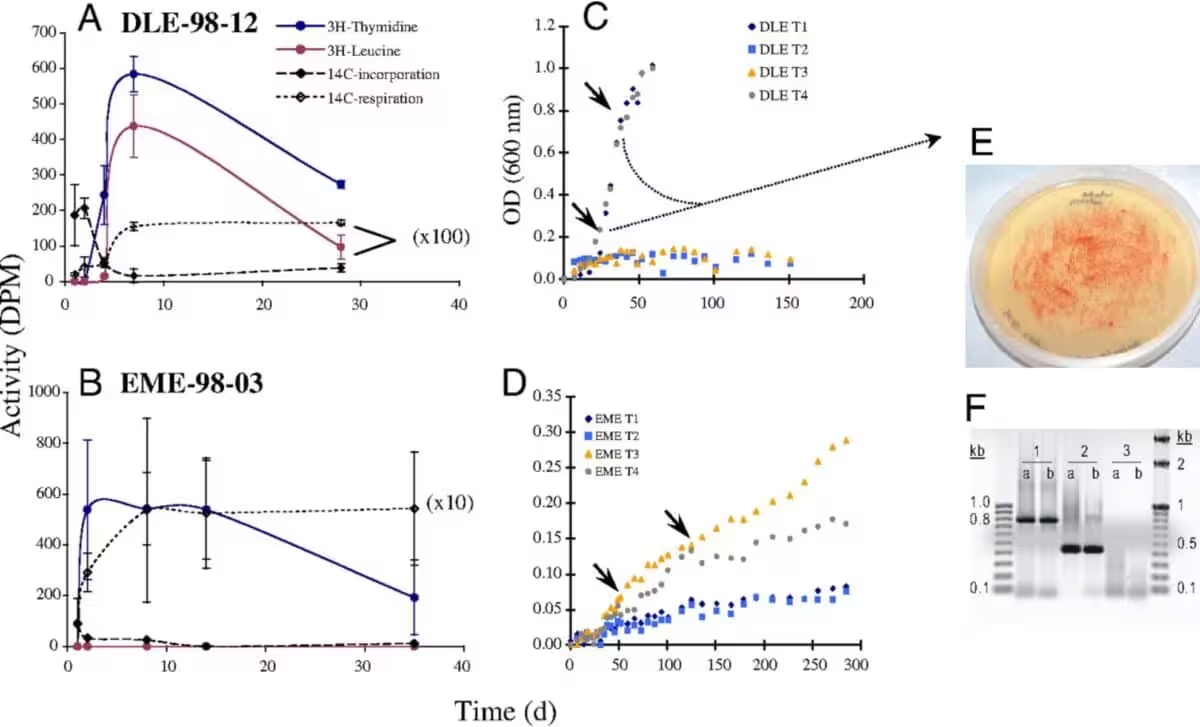
The research team assessed samples ranging from roughly 100,000 years old to the 8-million-year benchmark. Through the use of radiolabeled substrates, investigators confirmed that these microbes retained a level of metabolic function even after millennia of entrapment. While the organisms in the younger ice samples exhibited relatively swift growth and were successfully cultured as Arthrobacter bacteria, the older samples showed a marked decline in viability. Microbes recovered from the 8-million-year-old ice demonstrated significantly slower metabolic rates, and researchers were ultimately unable to isolate living cells on solid media.
Perhaps more critical than metabolic activity was the state of the genetic material. The study identified an exponential decline in DNA size as the age of the ice increased. DNA fragments in the 100,000-year-old samples averaged 18,500 base pairs, whereas fragments in the oldest ice had disintegrated into lengths of approximately 210 base pairs. With a calculated half-life for this genetic decay of roughly 1.1 million years, the study underscores the severe limitations of long-term biological storage, likely driven by a combination of chemical breakdown and exposure to ionizing radiation over eons.
Refining the Panspermia Hypothesis
These findings serve as a crucial reality check for panspermia, the hypothesis suggesting that life might be distributed throughout the cosmos via celestial bodies like comets or meteorites. While the idea dates back to ancient thinkers like Anaxagoras and later scientists such as Svante Arrhenius, the Antarctic data provides a quantitative barrier to the concept.
The researchers noted that while microbes can survive for extended periods, the relentless degradation of DNA—compounded by the harsh, radiation-heavy environment of outer space—makes the interstellar transport of viable, information-rich biological material highly improbable. The study does not prove life arrived from elsewhere; rather, it offers a cautionary framework for evaluating such claims.
The scientific community has seen similar debates in the past, such as the initial excitement surrounding the Martian meteorite ALH84001 and the 2001 Kerala “red rain” event. In both instances, what appeared to be evidence of alien life was eventually attributed to inorganic processes or common terrestrial algae. By focusing on the measurable, physical decay of DNA, the PNAS study provides a rigorous benchmark for future planetary science, establishing that while life is resilient, it remains strictly governed by the thermodynamic and radiogenic constraints of our universe.
This article has been fact checked for accuracy, with information verified against reputable sources. Learn more about us and our editorial process.
Last reviewed on .
Article history
- Latest version
Reference(s)
- Bidle, Kay D.., et al. “Fossil genes and microbes in the oldest ice on Earth.” Proceedings of the National Academy of Sciences, vol. 104, no. 33, August 14, 2007, pp. 13455-13460. National Academy of Sciences, doi: 10.1073/pnas.0702196104. <https://www.pnas.org/doi/full/10.1073/pnas.0702196104>.
Cite this page:
- Posted by Elizabeth Taylor