Ancient DNA Uncovers Three Death Waves at Roopkund Lake, Including Mediterranean Travelers
DNA analysis of hundreds of skeletons from a Himalayan lake uncovers a bizarre, decades‑long mystery that defies expectations.
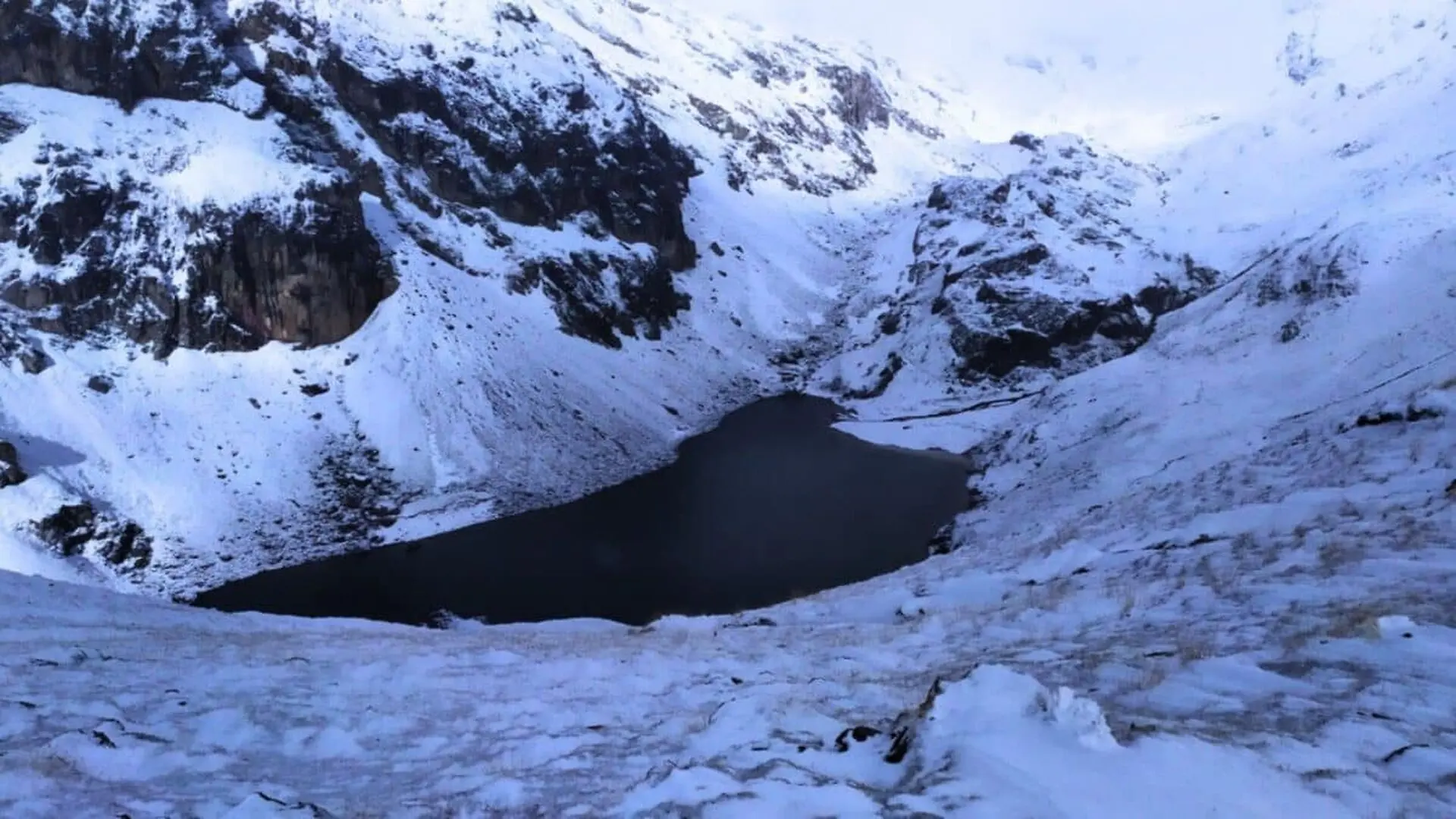
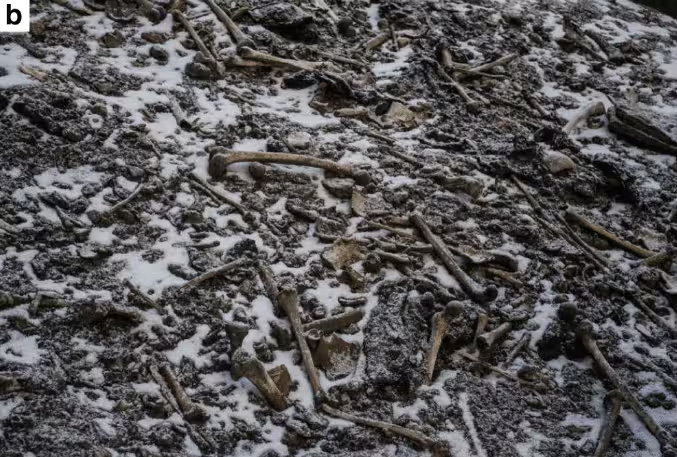
On the shores of a secluded high‑altitude lake in the Indian Himalayas, the remains of hundreds of people lay scattered for decades without explanation. Recent analysis of ancient DNA from 38 of those bones has revealed a surprisingly intricate story: the individuals did not travel together, they originated from distinct parts of the world, and they perished at different times.
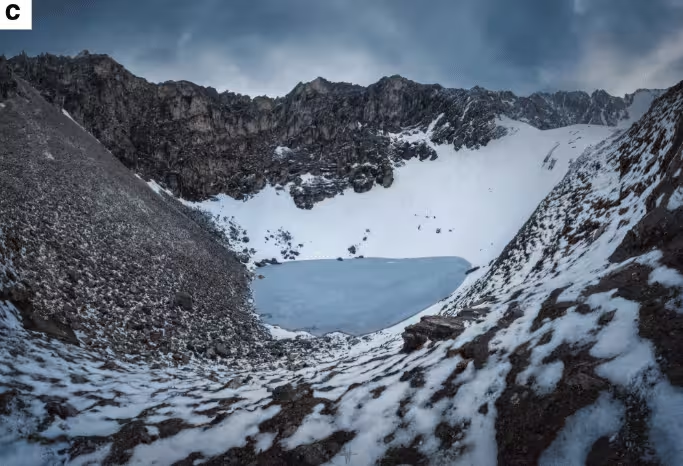
Roopkund Lake, perched above 5,000 m in Uttarakhand, lies along a historic pilgrimage corridor linked to the goddess Nanda Devi. The site entered wider awareness in 1942 when a forest official found human bones partially submerged in its glacial waters. Early speculation ranged from epidemic outbreak to ritual self‑immolation.
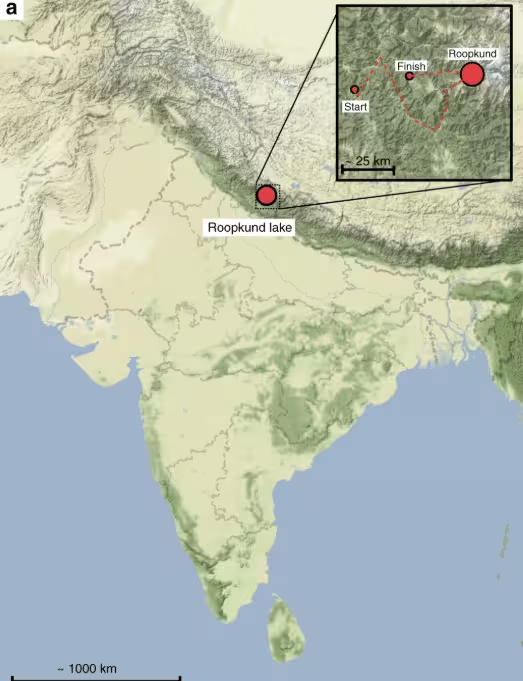
In a paper published in Nature Communications, a team led by Harvard’s Reich Laboratory, together with Indian and international collaborators, untangled the genetic signals preserved in the skeletal material.
Three genetic lineages, separated by roughly a thousand years
Genome‑wide sequencing of the 38 individuals uncovered three separate ancestry clusters. Twenty‑three of the samples carried genetic signatures matching contemporary South Asian populations. Fourteen others displayed affinities with groups from the eastern Mediterranean, while a single skeleton showed links to Southeast Asia.
Radiocarbon dates placed the South Asian cluster around 800 CE, whereas the eastern Mediterranean group dated to about 1800 CE. This chronological gap eliminates the possibility of a single catastrophic event. The authors note that the South Asian remains could themselves represent multiple episodes.
Stable‑isotope measurements reinforced the temporal separation, revealing distinct dietary patterns for the two main groups. The eastern Mediterranean individuals bore isotopic signatures indicative of diets far removed from the Indian subcontinent.
Mystery surrounding the eastern Mediterranean travelers
The detection of a 14‑person cohort with eastern Mediterranean ancestry dying at Roopkund in the 18th century has sparked intense curiosity. While the genetic evidence confirms their origins, it does not clarify how they arrived at a remote Himalayan lake. Whether they were pilgrims, merchants, or part of a foreign entourage remains an open question.
Writer Douglas Preston highlighted this puzzle in a 2020 The New Yorker article and later discussions at the School for Advanced Research, noting that the genetic data raise more questions than they answer about long‑distance movement in the pre‑modern era.
Anthropologist Agustín Fuentes of Princeton, speaking at the same forum, emphasized that genetics alone cannot reconstruct the full narrative. Contextual evidence—archaeological findings, oral traditions, and historical records—must be integrated to interpret the skeletal assemblage.
Local folklore recounts that a royal pilgrimage party was struck down by hailstones sent by the goddess Nanda Devi after they violated sacred customs. Supporting this legend, researchers have identified perimortem trauma consistent with blunt‑force impacts from above, possibly a severe hailstorm.
A living pilgrimage route links past and present
Roopkund lies on the path of the Nanda Devi Raj Jat Yatra, a 280‑km trek that circles the high Himalayas every twelve years. The pilgrimage, honoring the “bliss‑giving” goddess, attracts thousands of devotees and traverses terrain that has been considered sacred for centuries.
The surrounding Nanda Devi Biosphere Reserve, a UNESCO World Heritage site, has been closed to climbers since 1983 to protect its fragile ecosystems and cultural heritage. The lake’s position on an active pilgrimage corridor explains how multiple groups could have passed through the area over time, yet it does not yet account for the arrival of an eastern Mediterranean contingent in the 1800s.
Implications for the field of ancient DNA
The Roopkund investigation showcases the power of ancient DNA retrieval from high‑altitude, cold environments, where preservation conditions enable recovery of genome‑wide data even after centuries of freeze‑thaw cycles.
At the same time, the study underscores the limitations of relying solely on genetic information. While ancestry clusters pinpoint geographic origins, they cannot alone explain migration routes, motivations for travel, or the specific causes of death. The coherent eastern Mediterranean genetic profile suggests a coordinated group, but no textual or material evidence currently identifies the purpose of their journey to Roopkund.
This article has been fact checked for accuracy, with information verified against reputable sources. Learn more about us and our editorial process.
Last reviewed on .
Article history
- Latest version
Reference(s)
- Harney, Éadaoin. “Ancient DNA from the skeletons of Roopkund Lake reveals Mediterranean migrants in India - Nature Communications.”, vol. 10, no. 1, August 20, 2019, pp. 3670 Nature, doi: 10.1038/s41467-019-11357-9. <https://www.nature.com/articles/s41467-019-11357-9>.
- Preston, Douglas. “The Skeletons at the Lake.”, December 4, 2020 The New Yorker <https://www.newyorker.com/magazine/2020/12/14/the-skeletons-at-the-lake>.
- “SAR Moments: Revisiting the Skeletons of Roopkund Lake - School for Advanced Research.”, July 1, 2026 School for Advanced Research <https://sarweb.org/blog-revisiting-skeletons-of-roopkund-lake/>.
- admin, “Nanda Devi: The Bliss-Giving Goddess of the Himalayas.”, June 2, 2025 Mountainiax <https://mountainiax.com/nanda-devi-the-bliss-giving-goddess-of-the-himalayas/>.
Cite this page:
- Posted by Elizabeth Taylor