New Ghost Shark Species Discovered Deep Off Costa Rica Reveals Hidden Ocean Life
New ghost shark found off Costa Rica reveals how much of the deep Pacific and Earth’s oceans remain unexplored.
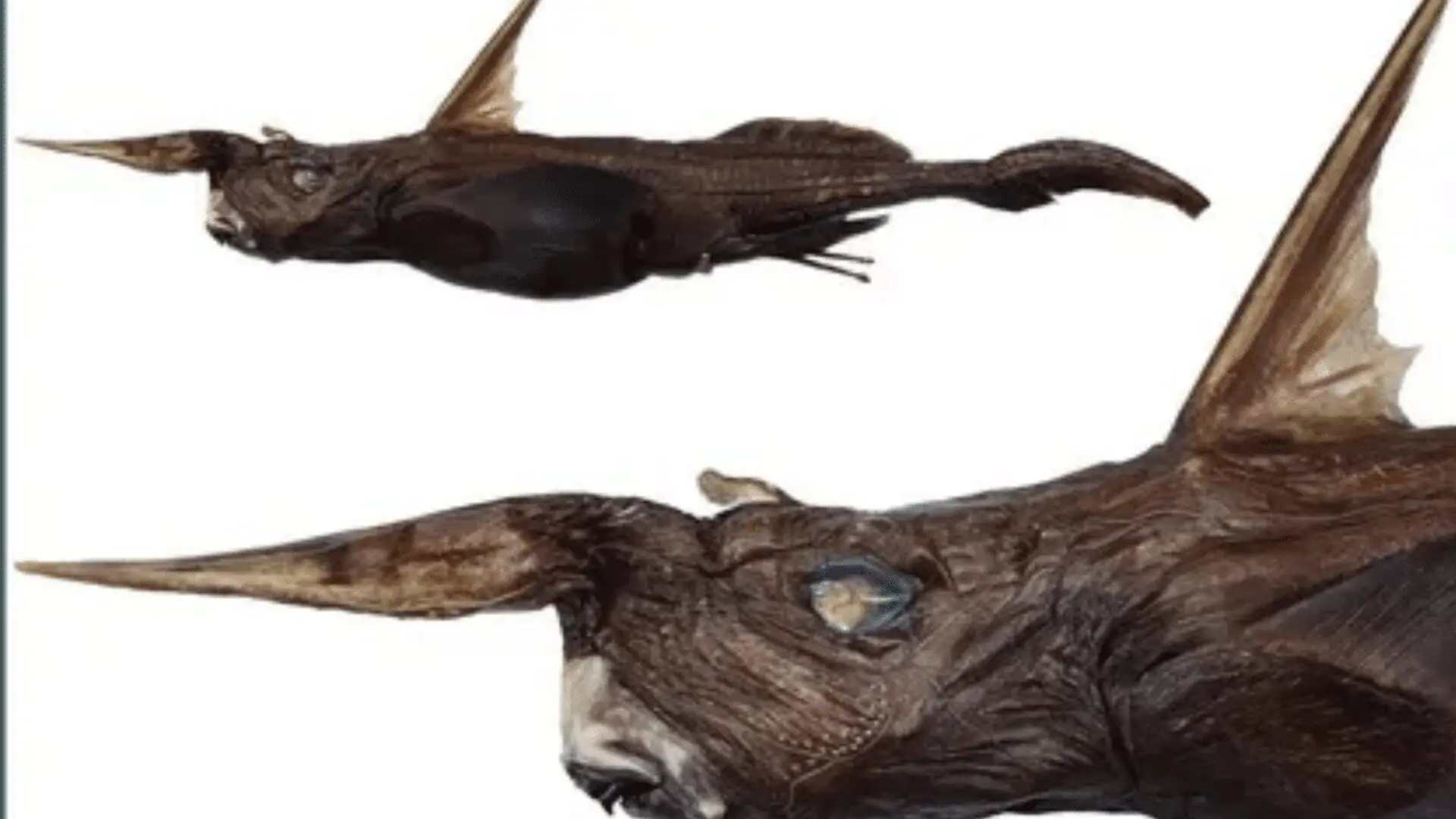
Scientists have announced the identification of a new ghost‑shark species inhabiting the Pacific Ocean off Costa Rica, a finding published in the peer‑reviewed journal Zootaxa. The discovery, made at depths of several hundred metres, highlights how much of the deep‑sea biome remains undocumented and underscores the potential for further marine biodiversity revelations.
New Ghost‑Shark Species Unveiled in Costa Rican Waters
The fish, classified as Rhinochimaera costaricana, belongs to the long‑nosed chimaeras—a group of cartilaginous fishes often called ghost sharks. Researchers located the specimens in the Pacific waters of Costa Rica, where they inhabit a zone ranging from roughly 390 to 787 metres beneath the surface. This depth‑range, characterized by perpetual darkness and extreme pressure, limits human access and has kept many such organisms hidden from scientific observation.
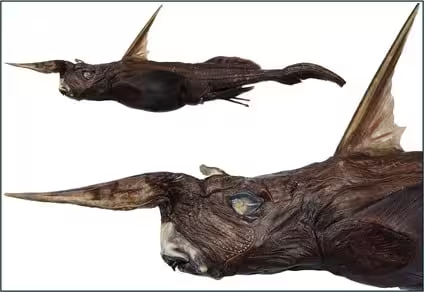
Ghost sharks occupy an ancient branch of the vertebrate tree, diverging from sharks and rays hundreds of millions of years ago. Their elongated snouts and deep‑sea habits make them among the most elusive of the cartilaginous fishes, with encounters typically limited to specialized research expeditions.
Comprehensive Morphological Review Confirms a Distinct Taxon
The taxonomic claim rests on a detailed study of three male specimens collected between 2000 and 2023. Collaboration among Costa Rica’s Fisheries and Aquaculture Institute (INCOPESCA), the University of Costa Rica, and Brazil’s Federal University of Pará combined expertise in anatomy, taxonomy, and genetics. Researchers measured 49 morphological traits and compared them with over 90 individuals representing the three known species of the genus Rhinochimaera.
Statistical analysis revealed a suite of features that consistently set the Costa Rican fish apart: a comparatively shorter rostrum, a higher first dorsal fin and associated spine, a larger inter‑dorsal distance, and fewer tubercles on the tail. These distinctions were sufficient to designate the specimens as a separate species rather than a regional variant.
The results were published in Zootaxa, a leading outlet for formal species descriptions. The authors emphasize that rigorous anatomical comparison remains essential for deep‑sea taxonomy, where direct observation opportunities are scarce.
Genetic Analysis Reinforces Species Delineation
Parallel to the morphological work, the team performed DNA sequencing on the same specimens. Molecular data corroborated the physical differences, revealing clear genetic divergence from the nearest congeners. This dual line of evidence reduces the likelihood that the observed traits result from intraspecific variation alone.
The integration of genetic tools into marine systematics has accelerated the detection of cryptic diversity, especially in habitats where external features are subtle. As genomic repositories expand, scientists anticipate additional discoveries of hidden lineages across the world’s oceans, with the deep sea representing a particularly promising frontier.
This article has been fact checked for accuracy, with information verified against reputable sources. Learn more about us and our editorial process.
Last reviewed on .
Article history
- Latest version
Reference(s)
- VIDAURRE-QUESADA, NAIDELY. “A new species of Rhinochimaera Garman 1901 (Holocephali: Chimaeriformes: Rhinochimaeridae) from the Eastern Pacific Ocean.”, vol. 5828, no. 3, pp. 535-548., doi: 10.11646/zootaxa.5828.3.7. <https://www.mapress.com/zt/article/view/zootaxa.5828.3.7>.
Cite this page:
- Posted by Elizabeth Taylor