Color Night Vision Arrives: Quantum‑Dot Glasses Turn Infrared Into Vibrant Images
New night-vision glasses use quantum dots and OLED to turn infrared into vivid colors, ending monochrome night sight.
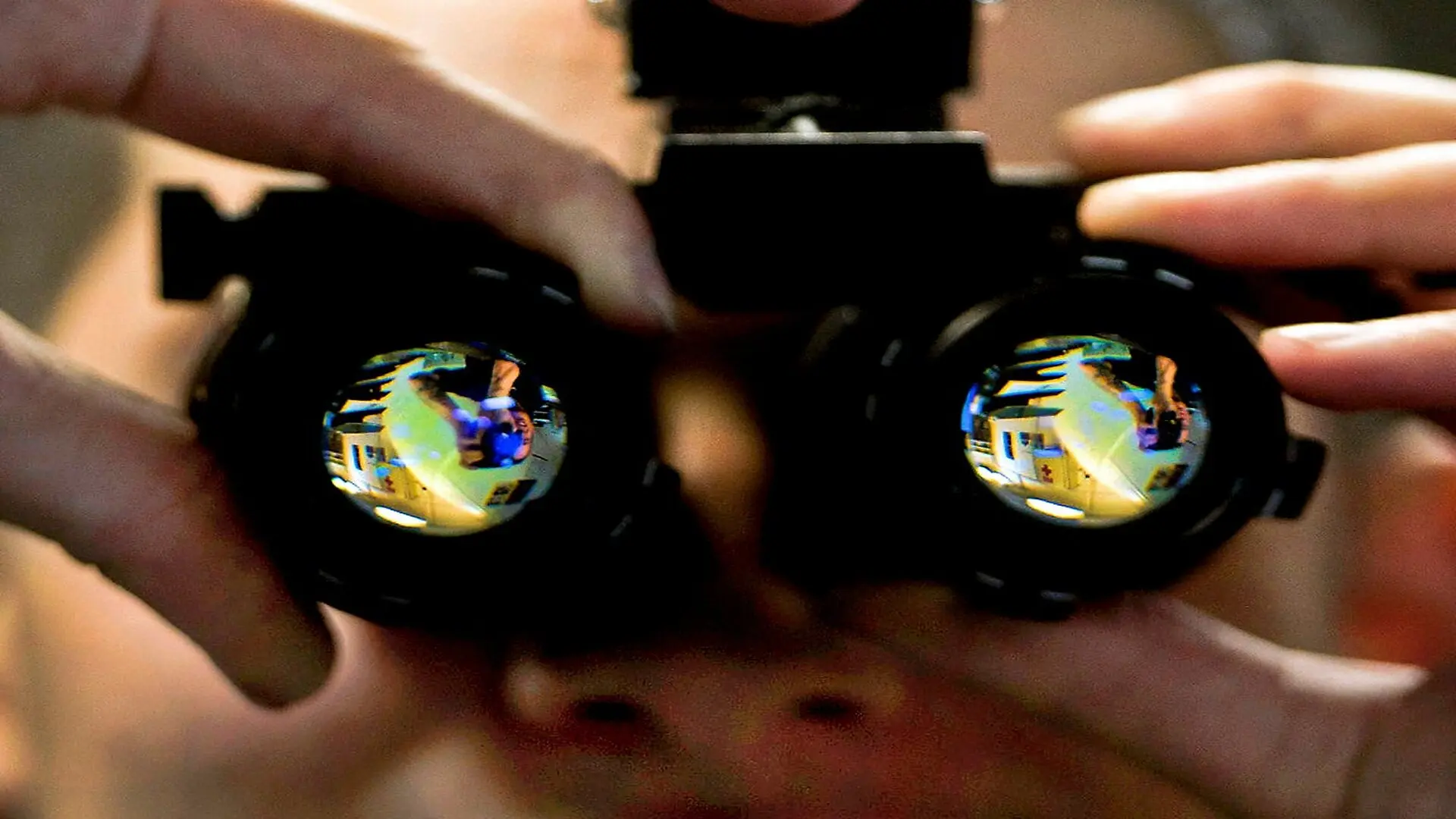
The system merges quantum dots with an OLED panel to turn infrared radiation into a spectrum of visible hues.
Colorful night vision breaks the green‑screen barrier
For decades, night‑vision gear has relied on monochrome green output, forcing users to interpret scenes by subtle brightness changes alone. A research team at Beijing Institute of Technology has now built a prototype that renders infrared scenes in full color, promising a more intuitive view of darkness.
Inside the upconverter: quantum dots meet a dual‑layer OLED
The new device, dubbed an upconverter, consists of an ultrathin stack of films on a glass substrate. At its core lies a layer of mercury‑telluride quantum dots—semiconductor crystals under four nanometers in size that respond to faint infrared photons.
Above the quantum‑dot layer sits an OLED display engineered with two emissive strata. The lower layer emits red light when the detector supplies a modest charge, while the upper layer produces cyan only when a stronger signal arrives. As infrared intensity grows, the output shifts from red toward cyan, encoding both the strength and wavelength of the incoming radiation in hue and brightness.
Using this color‑based encoding, the researchers estimate that observers could discern infrared power differences as small as 0.11 mW cm⁻², a roughly 200‑fold gain over brightness‑only detection, which would require a change of about 23.7 mW cm⁻².
From prototype glasses to neural stimulation
To showcase practical potential, the team integrated the upconverter into a pair of spectacles. When illuminated with increasing infrared levels, the lenses transitioned from deep red through orange to yellow, and could even display moving letters or track rotating targets.
In a separate experiment, neurons were genetically engineered to express channelrhodopsin‑2, a protein that fires when exposed to blue light. By coupling the upconverter to these cells, infrared illumination generated enough blue emission to activate the proteins, with electrophysiological recordings confirming stronger currents as the infrared signal intensified.
Finally, the researchers placed the device over the eyes of mice and human volunteers while monitoring retinal and cortical activity. Infrared pulses alone produced no response, but with the upconverter in place both species exhibited robust neural signals.
Challenges on the road to everyday use
Despite the promising demonstrations, several obstacles remain. The OLED panel requires an external power source, and the system depends on an infrared illuminator to provide sufficient reflected light for detection. All tests to date have been conducted in tightly controlled laboratory environments.
Nevertheless, the work represents a significant step toward next‑generation night‑vision technology that could eventually replace the dated green monochrome paradigm.
This article has been fact checked for accuracy, with information verified against reputable sources. Learn more about us and our editorial process.
Last reviewed on .
Article history
- Latest version
Cite this page:
- Posted by Zara Tariq