Colombia Begins Recovery Of 17 Billion Dollar San José Shipwreck Amid Global Legal Battle
Centuries after the world’s most valuable shipwreck vanished, new artifacts recovered from the site raise a shocking question: were they there first?
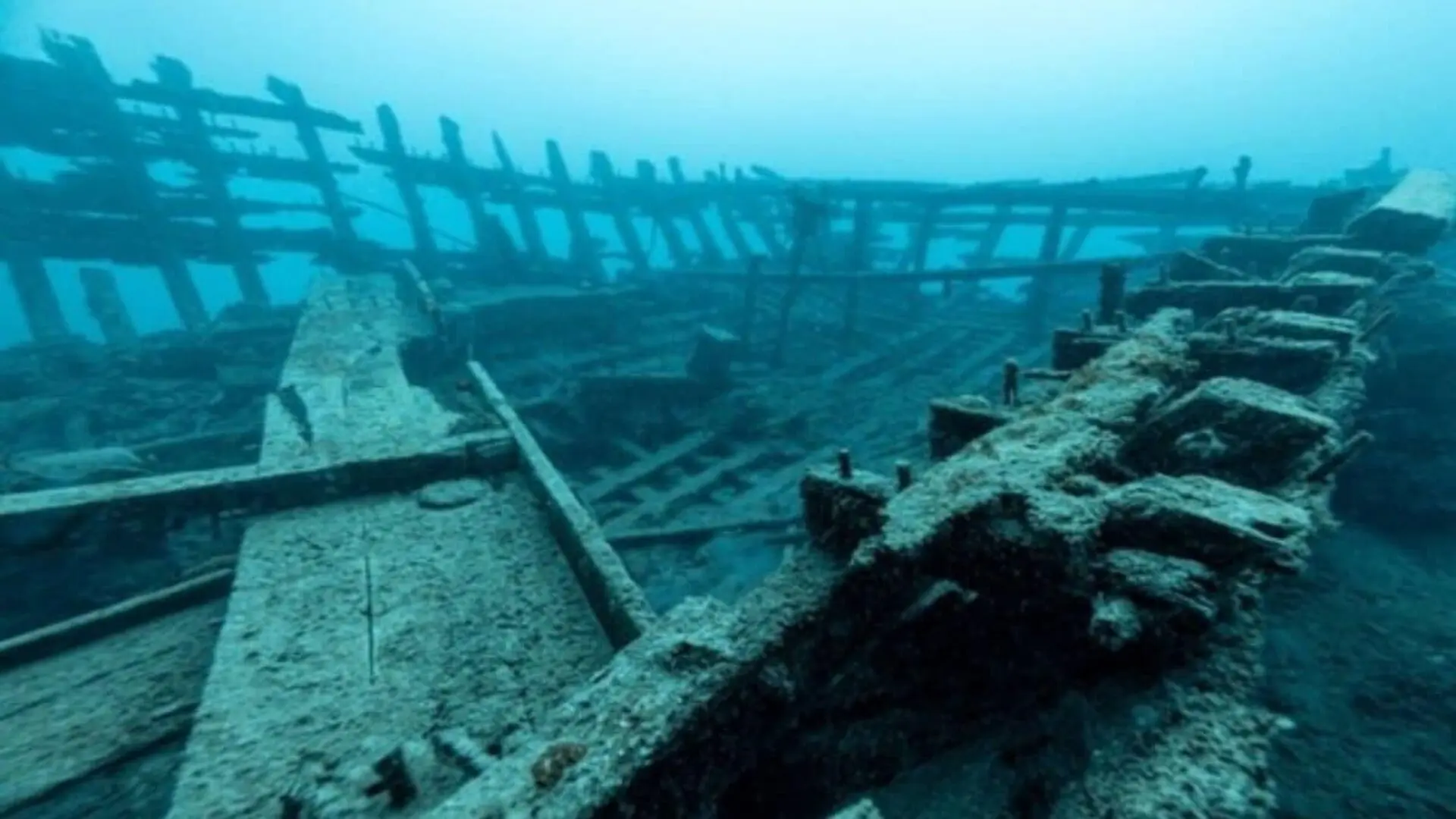
Colombia has initiated the recovery of artifacts from the San José, a legendary Spanish galleon submerged nearly 2,000 feet beneath the surface of the Caribbean. While the vessel, often described as the Holy Grail of shipwrecks, holds a fortune in gold, silver, and precious gems estimated at up to $17 billion, the operation has been mired in intense controversy. Nearly a year into the recovery efforts, the project faces allegations of illicit site tampering, complex ownership disputes, and a high-stakes arbitration battle that threatens to complicate one of the most significant archaeological endeavors in history.
The San José was lost in 1708 during the War of Spanish Succession after being intercepted by the British Royal Navy. The resulting battle triggered an explosion in the ship’s powder stores, sending the 150-foot vessel and its crew of nearly 600 sailors to the seafloor. For centuries, the site remained hidden until the Colombian government revealed its discovery in 2015. To protect the integrity of the wreckage, the exact coordinates remain a closely guarded state secret.
A Deep-Sea Treasure Trove
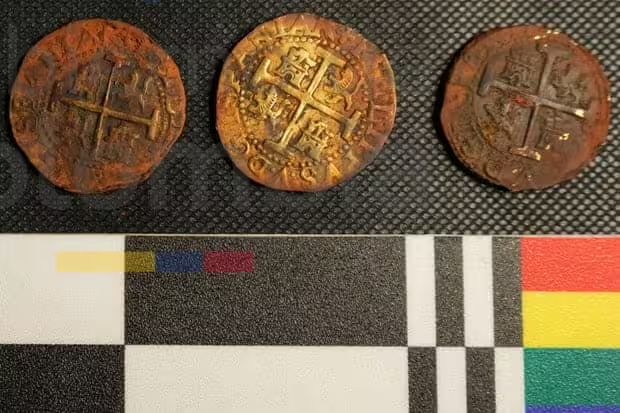
The galleon was serving as a transport vessel for the Spanish Crown, carrying the accumulated tax revenue of a decade from Latin American colonies back to Europe. Historians estimate the hold contains approximately 200 tons of gold, silver, and uncut gemstones. Among the most historically significant items are macuquinas, or cobs—the primary currency used in the Americas at the time, typically forged by cutting segments from precious metal ingots.
Initial Recovery and Scientific Scrutiny
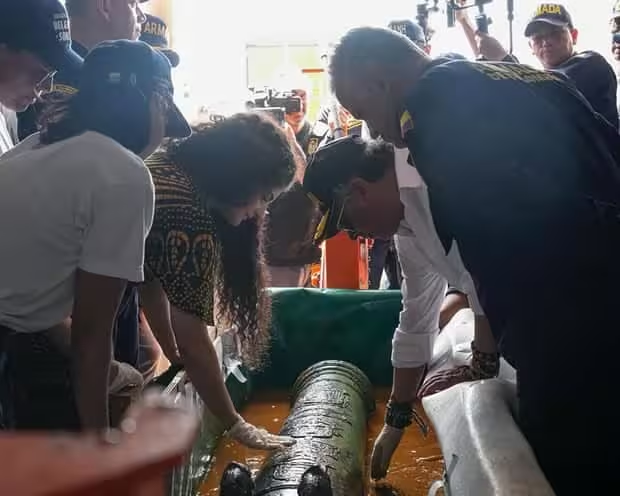
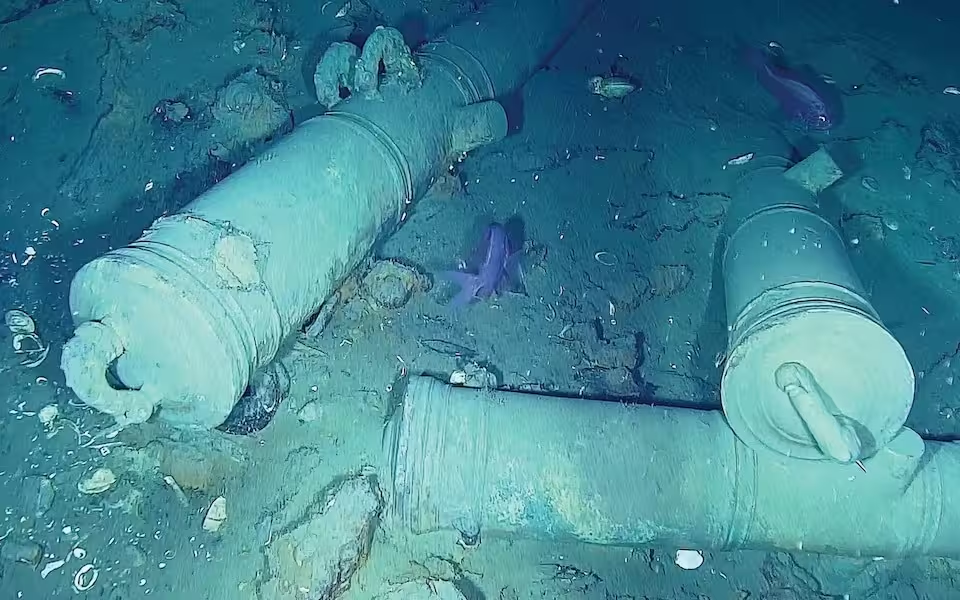
In late 2025, the Colombian Ministry of Culture, Arts, and Knowledge utilized a robotic submersible to extract the first set of items from the site. The haul included a bronze cannon, two porcelain cups, and three gold coins, alongside various fragments of rope and sediment. Alhena Caicedo Fernández, director of the Colombian Institute of Anthropology and History (ICANH), stated that the recovery allows the public to engage with the vessel’s history through tangible artifacts.
However, the methodology has drawn criticism from experts who question the scientific justification for disturbing the site. Skeptics have raised concerns about the preservation of organic materials like rope, with some questioning whether certain retrieved items were truly from the 18th-century wreck. Research teams maintain that these samples are vital for conducting chemical and physical analyses to guide the long-term conservation strategy of the wreckage.
Navigating Legal and Ethical Challenges
The project is currently shadowed by accusations of unauthorized intervention. A local oversight group has formally alleged that looting occurred at the site in 2016 and 2022, citing expert analysis of underwater imagery that reportedly shows evidence of sediment disturbance. ICANH has consistently denied these claims, asserting that the site has remained secure.
Beyond the archaeological disputes, the legal ownership of the ship’s contents remains contentious. Spain maintains that the San José, as a state vessel, is a protected war grave. Meanwhile, the Qhara Qhara nation of Bolivia argues that their ancestors were forced to mine the silver that eventually ended up on the ship. The most pressing challenge, however, is a multibillion-dollar arbitration case at the Permanent Court of Arbitration in The Hague. A U.S.-based salvage firm, Sea Search Armada, claims it identified the wreck in the 1980s and is seeking half of the treasure’s value. Colombia rejects these claims, but a negative ruling could establish the San José as the most expensive and legally complex treasure recovery in human history.
This article has been fact checked for accuracy, with information verified against reputable sources. Learn more about us and our editorial process.
Last reviewed on .
Article history
- Latest version
Cite this page:
- Posted by Zara Tariq