Hidden Viral Decoy Molecule Accelerates Pathogen Replication
Researchers discover how a host protein-driven circular RNA dismantles cellular defenses to foster viral propagation.
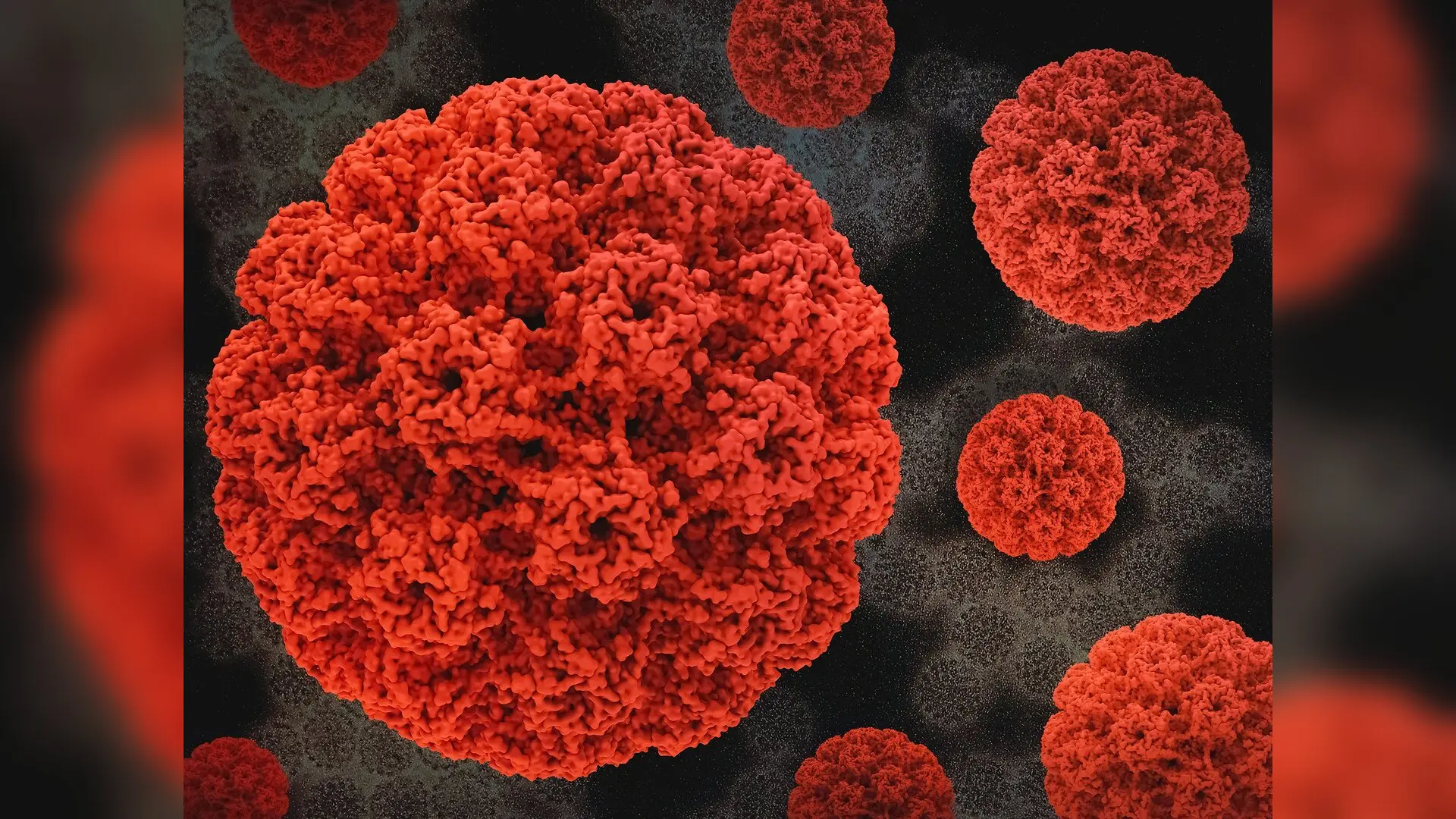
Porcine deltacoronavirus weaponizes a host RNA-binding protein to manufacture a circular RNA decoy that accelerates viral replication. The newly discovered noncoding RNA loop, designated circC3, accumulates dramatically during infection and neutralizes cellular defenses by destabilizing essential transcripts.
How Viral Pathogens Hijack Host Splicing Machinery
Coronaviruses are enveloped pathogens capable of infecting various domestic animals and, in some cases, humans. Despite the public health and agricultural threats they pose, the intracellular mechanisms driving their proliferation remain incompletely understood. A research team led by scientists sought to uncover how these viruses manipulate host circular RNAs, which are closed-loop transcripts lacking standard coding polarity. Their work, published in PLOS Pathogens, reveals a bidirectional regulatory axis between viral infection, host RNA-binding proteins, and newly formed circular transcripts.
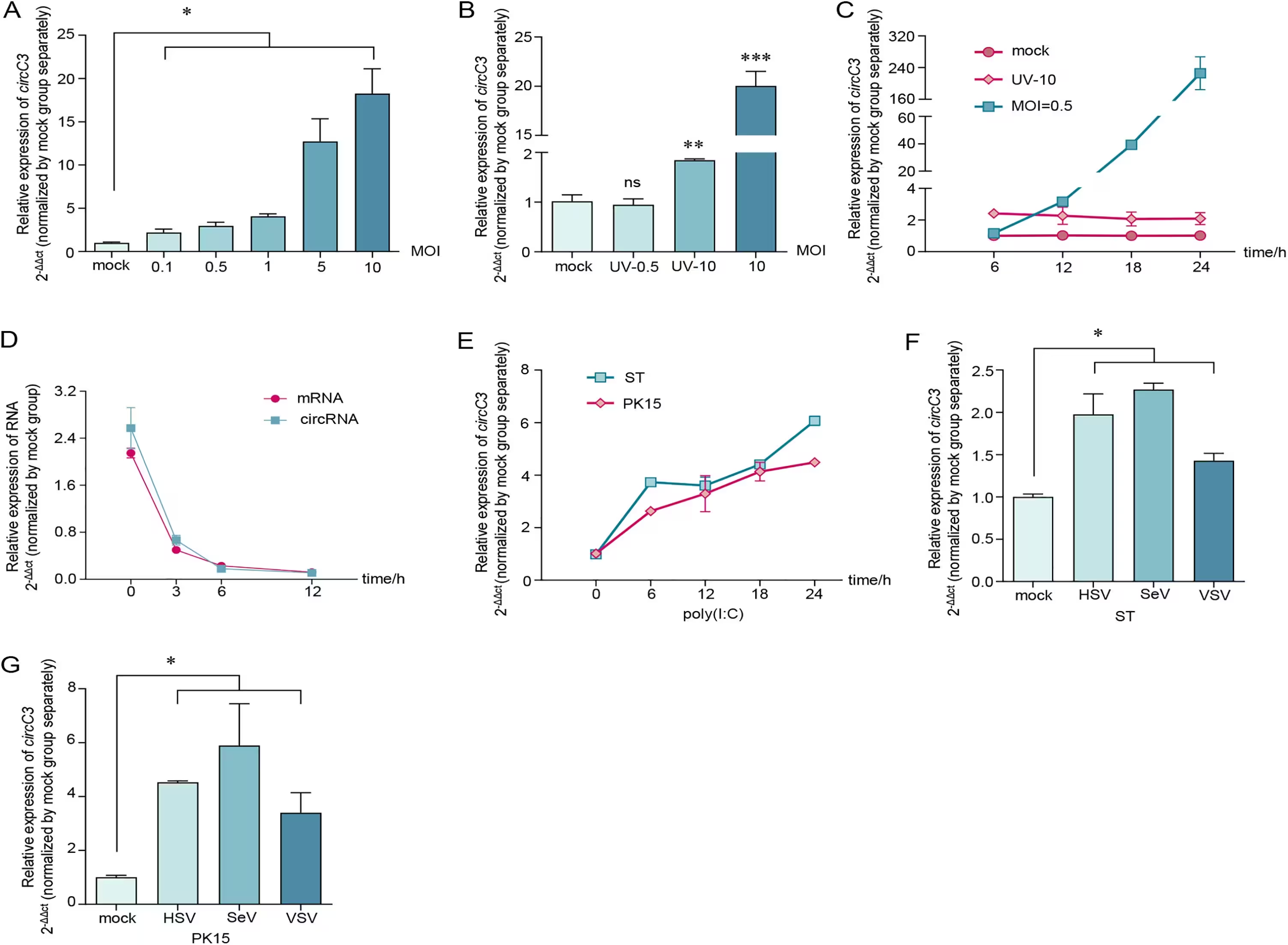
The investigators discovered that cellular infection triggers a robust upregulation of circC3, a 356-nucleotide transcript derived from the complement C3 gene. Unlike its linear mRNA counterpart, circC3 exhibits high resistance to RNase R digestion and remains remarkably stable within the cytoplasm of porcine cells. Although various DNA and RNA viruses stimulate its production, active viral replication is required for this accumulation, as UV-inactivated viral particles fail to induce the same response.
The Molecular Bridge Driving Circular RNA Biogenesis
To understand how viral infection promotes circC3 generation, the authors examined host RNA-binding proteins capable of recognizing specific intronic motifs. They identified muscleblind-like 1, known as MBNL1, as a critical factor whose expression increases during infection. Through detailed mapping assays, the team demonstrated that MBNL1 binds to conserved YGCY motifs located within the flanking introns of the C3 pre-mRNA. Protein dimerization of MBNL1 acts as a molecular bridge, bringing distant splice sites into close proximity and enhancing the back-splicing reaction that produces circC3.
Functional assays revealed that circC3 acts as a proviral factor. Overexpressing circC3 significantly increases viral genomic RNA copies, infectious titers, and viral protein production, whereas targeted silencing of the circular transcript using small interfering RNAs impairs viral replication. Further investigation ruled out miRNA sponging as the underlying mechanism, despite initial computational predictions and interactions with the argonaute protein AGO2.
Direct RNA Pairing Destabilizes Antiviral Transcripts
Instead of acting as a microRNA sponge, circC3 exerts its biological function through direct RNA-RNA pairing with host messenger RNAs. Computational predictions and in vitro pull-down assays demonstrated that circC3 directly binds to the three prime untranslated region of MBNL1 mRNA. This physical interaction accelerates the degradation of MBNL1 transcripts, reducing the abundance of the MBNL1 protein.
Because MBNL1 normally functions as a negative regulator of viral replication, its depletion by circC3 effectively lifts cellular restrictions on the pathogen. Mutating the specific binding sites within circC3 abolishes its ability to destabilize MBNL1 mRNA, confirming the sequence-specific nature of this interaction. These findings outline a complex feedback loop where a virus induces a host protein to build a circular decoy, which in turn destroys that same protein to foster a hospitable environment for viral propagation.
The research was published in PLOS Pathogens on November 19, 2026.
This article has been fact checked for accuracy, with information verified against reputable sources. Learn more about us and our editorial process.
Last reviewed on .
Article history
- Latest version
Reference(s)
- Du, Liuyang., et al. “Deltacoronavirus modulates circRNA circC3 biogenesis to accelerate MBNL1 mRNA decay.” PLOS Pathogens, vol. 22, no. 11, November 19, 2026, pp. e1014790 Public Library of Science (PLoS), doi: 10.1371/journal.ppat.1014790. <https://doi.org/10.1371/journal.ppat.1014790>.
- Posted by Elizabeth Taylor