Natural Compounds Show Potential Binding Affinity to Key Lung Cancer Proteins
Computer simulations and genetic profiling suggest curcumin and resveratrol interact with matrix metalloproteinase enzymes linked to tumor progression.
Plant compounds found in turmeric and grapes might hold new clues for tackling the most common form of lung cancer, according to a recent study. Researchers evaluated how the natural substances curcumin and resveratrol interact with specific proteins linked to lung adenocarcinoma, a disease that claimed a significant share of the 1.8 million global lung cancer deaths recorded in 2022.
How Computer Modeling Connects Natural Compounds to Lung Cancer Proteins
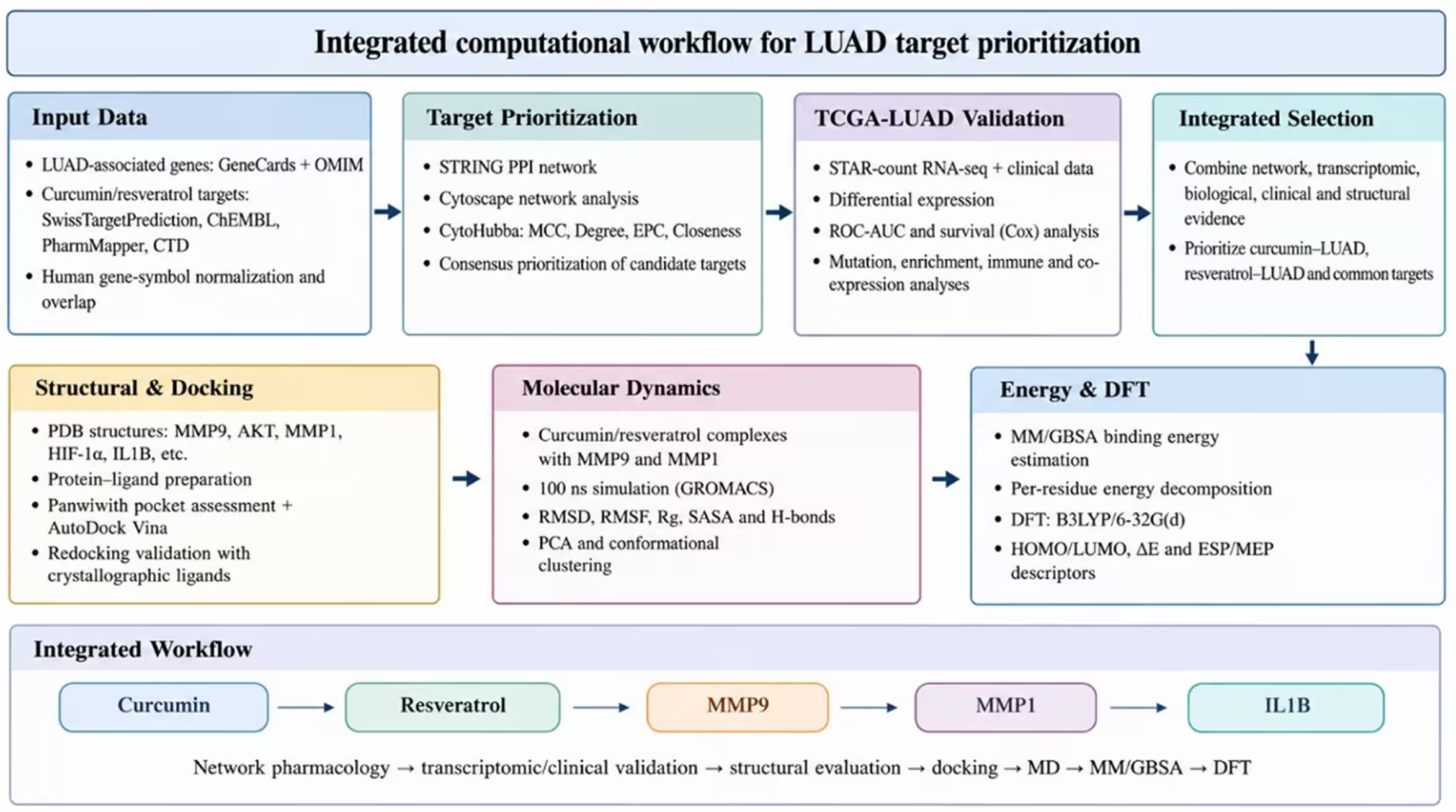
Lung adenocarcinoma is notorious for its complex genetic makeup, making it difficult to treat effectively with standard therapies. To investigate whether natural polyphenols might help, a team of researchers employed an integrated computational framework combining network pharmacology, molecular docking, and 100-nanosecond molecular dynamics simulations. The findings from this investigation were published in PLOS One by Md. Ramjan Sheikh and colleagues.
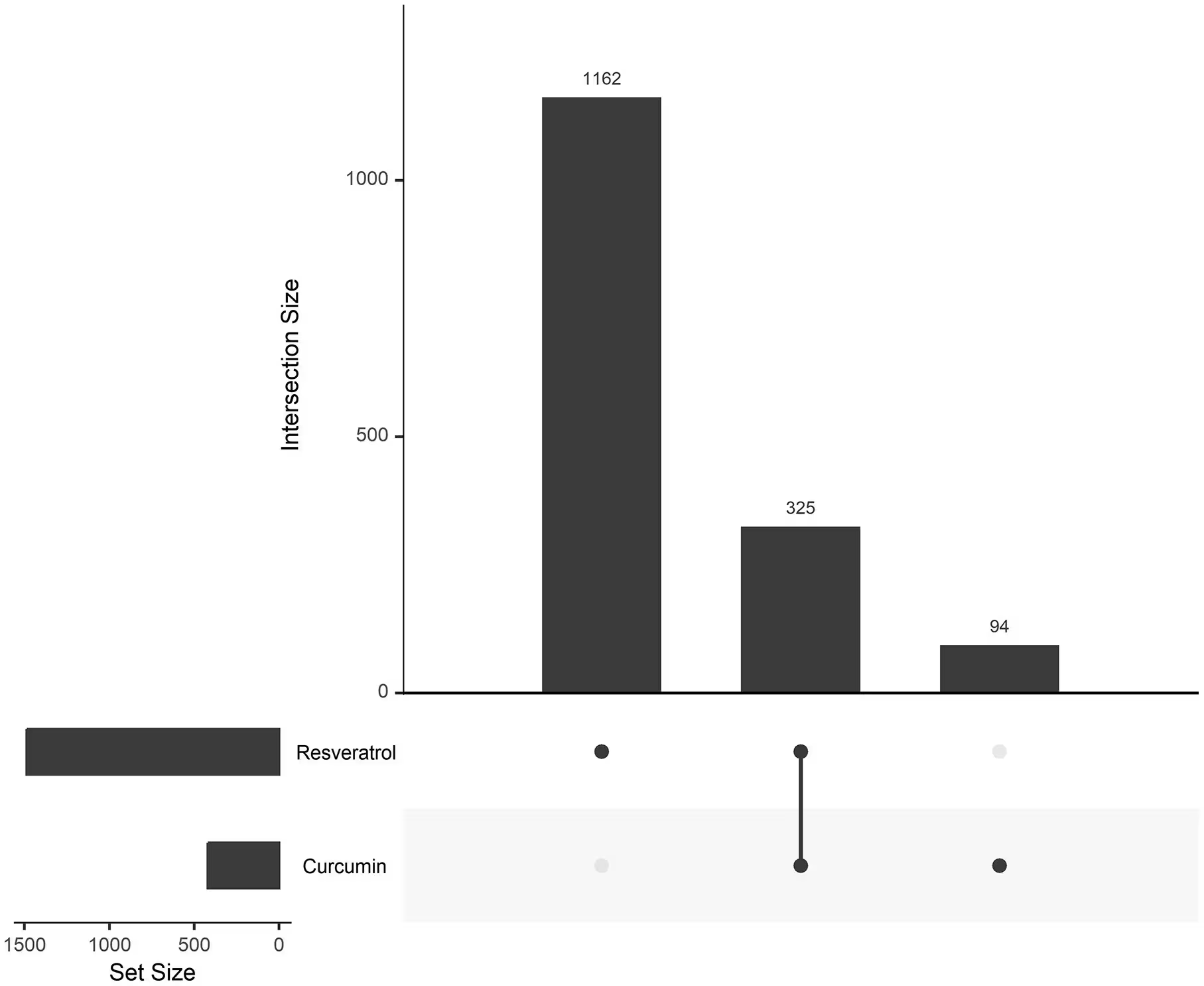
The researchers first scanned chemical databases and disease registries to identify overlapping molecular targets. They intersected thousands of targets associated with curcumin and resveratrol with nearly 4,000 genes linked to lung adenocarcinoma. This filtering narrowed the focus down to 325 shared targets, which were then mapped into a protein-protein interaction network to find central regulatory hubs.
Why MMP1 and MMP9 Emerged as Prime Targets
Further analysis using genetic expression data from The Cancer Genome Atlas revealed that two matrix metalloproteinase enzymes, known as MMP1 and MMP9, showed dramatic upregulation in tumor tissues compared to normal lung samples. MMP1 displayed a log2 fold change of +4.96, while MMP9 showed a log2 fold change of +2.64. These enzymes normally help remodel the extracellular matrix, but their overactivity is frequently tied to tumor invasion and metastasis.
To test how the plant compounds might interact with these proteins, the authors utilized high-resolution structural templates from the Protein Data Bank. Molecular docking calculations indicated that curcumin achieved a favorable binding affinity of -9.9 kcal/mol with MMP9, forming hydrogen bonds with residues like ARG106 and GLN108. Resveratrol also showed strong docking scores, reaching -8.9 kcal/mol with MMP9 and -7.0 kcal/mol with MMP1.
What Stability Tests and Electronic Calculations Reveal
To ensure these docking poses were not merely static artifacts, the team ran molecular dynamics simulations over 100 nanoseconds. The protein-ligand backbone root mean square deviation and radius of gyration metrics confirmed that the complexes remained structurally stable throughout the simulation period. Furthermore, binding free energy calculations using the molecular mechanics generalized Born surface area method yielded values of -18.35 kcal/mol for the curcumin-MMP9 complex and -12.93 kcal/mol for the resveratrol-MMP9 complex.
Quantum chemical calculations using density functional theory demonstrated that curcumin possesses a narrower frontier molecular orbital energy gap of 3.63 eV compared to resveratrol’s 4.04 eV, pointing to different electronic reactivity profiles. Additionally, pharmacokinetic evaluations indicated that both compounds comply with Lipinski’s Rule of Five, showing high gastrointestinal absorption and favorable oral drug-likeness parameters.
Limitations and What Comes Next in Preclinical Research
Despite these promising computational results, the authors emphasize that the work remains entirely in silico and hypothesis-generating. The expression levels of MMP1 and MMP9 did not independently predict overall patient survival after adjusting for clinical stage, and somatic mutations found in patients, such as the MMP1 p.R214S substitution, require empirical testing to determine if they alter drug binding. Future laboratory work will need to validate these predicted interactions using biochemical assays and cellular models before any clinical utility can be established.
The research was published in PLOS One on November 19, 2026.
This article has been fact checked for accuracy, with information verified against reputable sources. Learn more about us and our editorial process.
Last reviewed on .
Article history
- Latest version
Reference(s)
- Sheikh, Md. Ramjan., et al. “Identification and structural characterization of MMP1 and MMP9 as potential targets of curcumin and resveratrol in lung adenocarcinoma.” PLOS One, vol. 21, no. 11, November 19, 2026, pp. e0362473 Public Library of Science (PLoS), doi: 10.1371/journal.pone.0362473. <https://doi.org/10.1371/journal.pone.0362473>.
Cite this page:
- Posted by Elizabeth Taylor