Surgical Lasers Release Invisible Air Pollution That Lingers Long After Operations End
Real-time measurements in operating rooms reveal that throat surgeries using jet ventilation create persistent particle plumes that resist standard clearing methods.
Surgical lasers used in operating rooms generate hidden clouds of microscopic debris that linger in the air long after the procedure ends. A team of researchers discovered that operating room air pollution spikes significantly during throat surgeries that utilize medical lasers and specialized breathing tubes.
The study, published in OTO open, reveals that total particle counts in the air remain elevated for minutes following laser use. While adding standard medical suction devices helps clear out larger debris, microscopic particles manage to evade capture and persist in the environment.
How Surgical Lasers Create Hidden Air Pollution
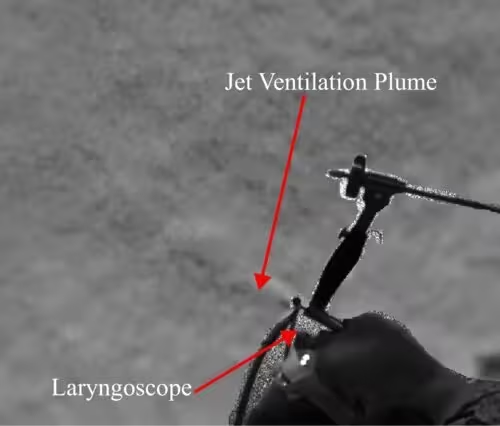
When doctors perform throat surgeries such as laser supraglottoplasty, which reshapes tissue in the upper airway, they often rely on a technique called jet ventilation. This method uses a specialized catheter to deliver quick, high-pressure bursts of oxygen directly into the patient’s windpipe to maintain breathing while keeping the surgical field open. However, the high-pressure air mixes with surgical smoke, tissue fragments, and moisture, creating an energetic plume that is forcefully expelled into the operating room.
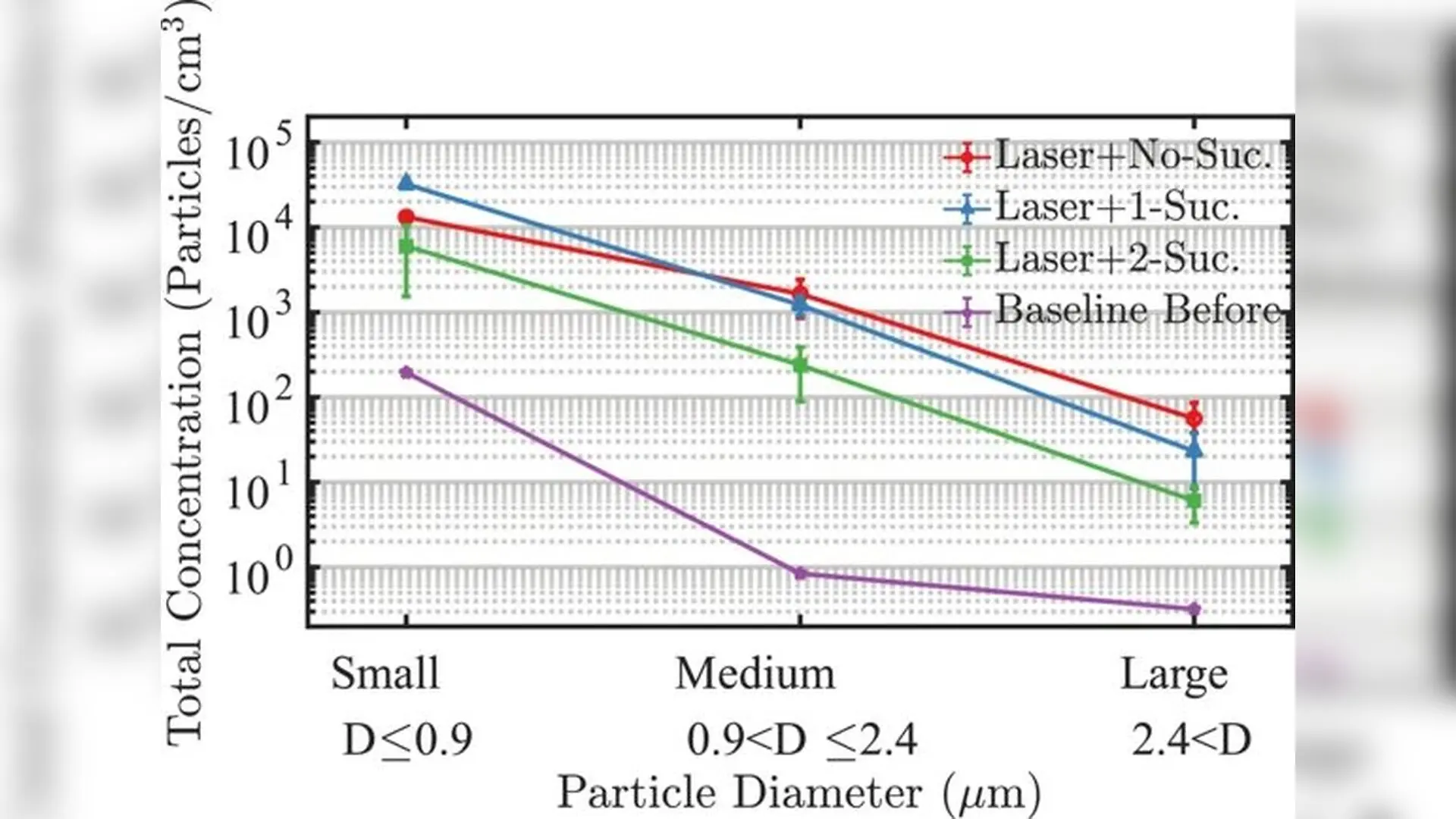
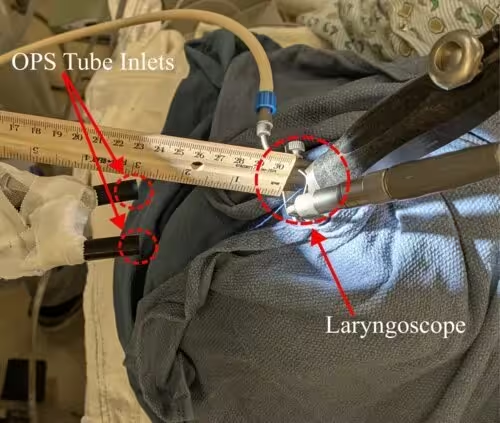
The researchers, led by S. Syam and colleagues at Case Western Reserve University and University Hospitals Cleveland Medical Center, set out to measure these invisible plumes in real time. They used advanced optical particle sizers, which are instruments that count and measure airborne particles, placed just 7.62 centimeters away from the surgical instruments during live patient operations. Before the laser was turned on, baseline particle counts sat at 199 particles per cubic centimeter. Once the laser began vaporizing tissue, total particle concentrations surged, and readings remained on average 27 percent higher even after the procedure concluded.
Why Double Suction Clears Some Particles But Misses Others
To test ways of protecting medical staff, the team evaluated three different suction setups in the operating room. Without any suction, the air filled with massive spikes of smoke and debris, forcing surgeons to frequently pause their work because poor visibility blurred the surgical field. Adding a single suction tube near the laser site reduced medium and large particles by 25 percent and 58 percent, respectively, compared to having no suction at all.
When the team tested a two-suction approach, combining a primary airway tube with a secondary 5-millimeter laser backstop suction tool, the results improved dramatically. Total concentrations of small, medium, and large particles dropped by 54 percent, 85 percent, and 89 percent during laser ablation compared to the unmitigated condition. During the post-procedure recovery phase, the dual-suction setup helped the air clear out much faster, reaching baseline recovery speeds far quicker than relying on ventilation alone.
Despite these improvements, the team found that submicron particles, which are pieces of matter smaller than one micrometer in diameter, consistently resisted removal. Even with two active suction devices, submicron particle counts remained elevated. These tiny airborne fragments can carry chemical compounds and biological materials deep into the lungs, posing potential health risks to nurses and doctors over time.
What Operating Room Teams Can Do to Stay Safe
The findings point to an underestimated occupational hazard for healthcare workers who spend their careers in surgical suites. Because submicron particles easily bypass standard surgical masks, which typically filter only 30 percent to 60 percent of such ultrafine matter, the authors recommend combining dual suction methods with high-filtration respirators. Standard N95 respirators are capable of filtering over 95 percent of particles down to 0.3 micrometers when fitted with a tight face seal.
The researchers emphasize that further studies are needed to evaluate how different suction volumes and airflow designs might capture these persistent pollutants more effectively. Protecting surgical personnel from aerosolized debris remains a vital priority as modern operating rooms continue to adopt advanced energy-based tools.
The research was published in OTO open on November 15, 2026.
This article has been fact checked for accuracy, with information verified against reputable sources. Learn more about us and our editorial process.
Last reviewed on .
Article history
- Latest version
Reference(s)
- Syam, S.., et al. “Real‐Time Measurement of Particulate Concentration: Laser Surgery With Jet Ventilation.” OTO Open, vol. 10, no. 4, November 15, 2026 Wiley, doi: 10.1002/oto2.70299. <https://doi.org/10.1002/oto2.70299>.
Cite this page:
- Posted by Raj Joshi