The 24 Pound Portable Computer That Sold Out Instantly Before Destroying Its Own Company
The 1981 portable computer that everyone wanted—and why its pioneering maker collapsed into bankruptcy just two years later.
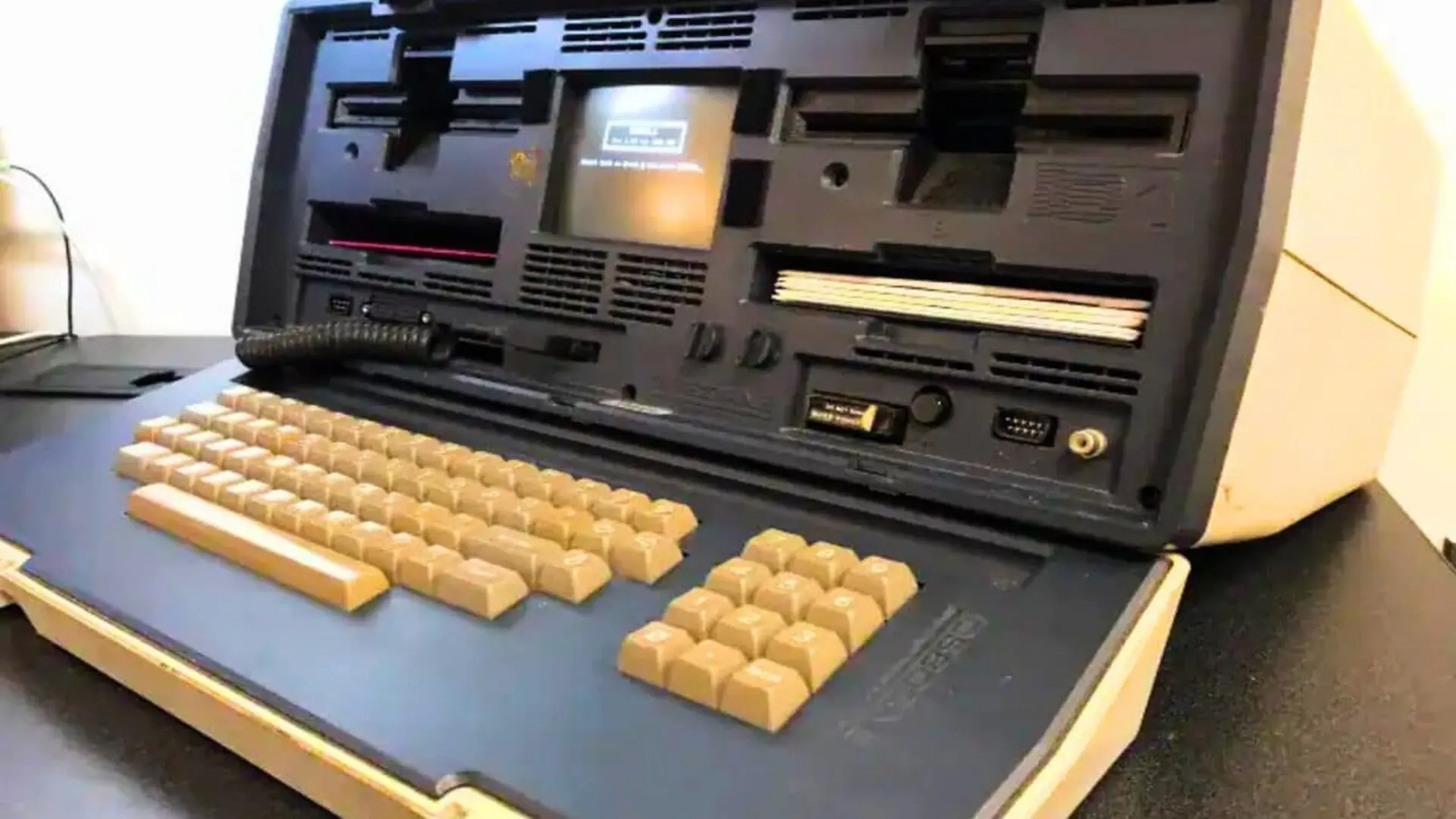
When Adam Osborne first drafted the business plan for his revolutionary personal computer, he projected total lifetime sales of 10,000 units. He would soon discover the weight of his own success: at the company’s peak, it moved that same volume of machines in a single month. Within a whirlwind year, his startup exploded from a two-person operation into a 3,000-employee enterprise generating $73 million in revenue.
The device at the heart of this frenzy was the Osborne 1, which debuted in April 1981 at the West Coast Computer Faire in San Francisco. While it lacked a battery, featured a tiny five-inch display, and weighed a hefty 24.5 pounds (11.1 kilograms), its $1,795 price tag helped it become the first commercially successfulportable computer, setting the stage for the modern laptop.
Yet, the company’s trajectory was as steep in its decline as it was in its ascent. On September 13, 1983, Osborne Computer Corporation filed for bankruptcy. The collapse was so sudden and preventable that it birthed a permanent piece of business terminology: the Osborne effect—a cautionary tale regarding the perils of pre-announcing future technology.
Engineering a Portable Icon
Adam Osborne was an unlikely hardware magnate. Born to British parents in Bangkok in 1939, he was a chemical engineer who gained prominence by publishing accessible technical manuals. After selling his publishing firm to McGraw-Hill in 1979, he pivoted to hardware, recruiting engineer Lee Felsenstein to craft a machine that was both affordable and mobile.
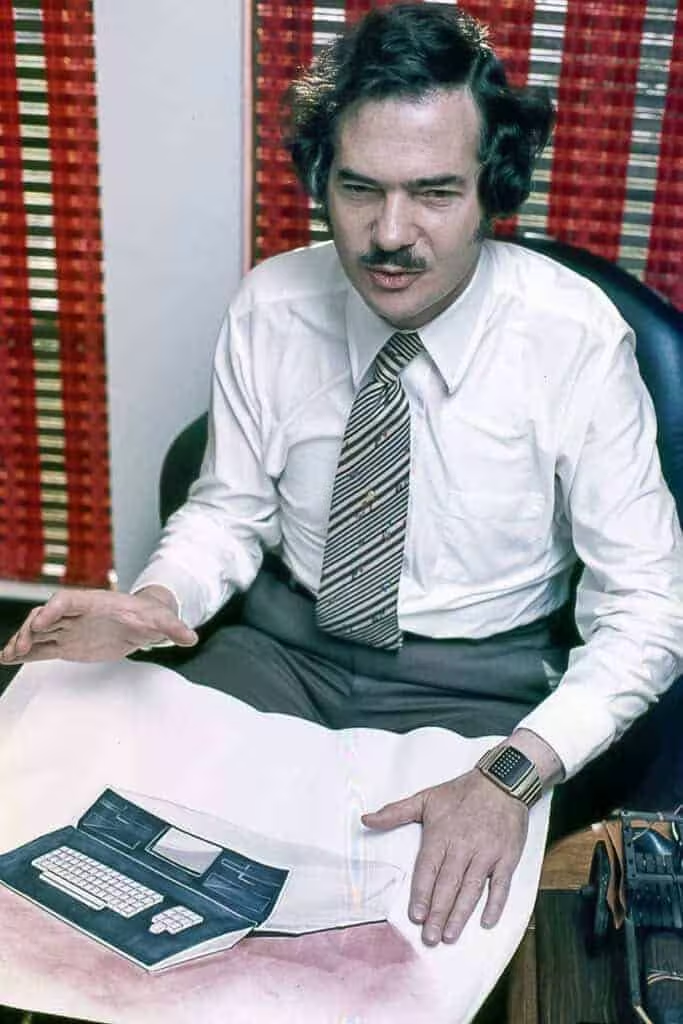
The resulting machine was encased in durable plastic with a built-in carrying handle, roughly the dimensions of a sewing machine. Marketed as the only computer capable of fitting under an airline seat, it was designed for portability, though Felsenstein later joked that carrying two at once could pull a person’s arms right out of their sockets.
With its five-inch screen and dual 90-kilobyte floppy drives, the hardware was functional rather than flashy. Time magazine once described its aesthetic as a blend of a World War II radio and a “shrunken instrument panel of a DC-3.” Osborne himself characterized the machine’s utility as merely adequate.
The Software Bundle Strategy
The true genius of the Osborne 1 was not the hardware, but the bundled software. By including word processors, spreadsheets, and the CP/M operating system—a package worth over $1,500—Osborne turned the machine into an irresistible deal. As BYTE magazine noted, the device was defined by its price and its mobility.
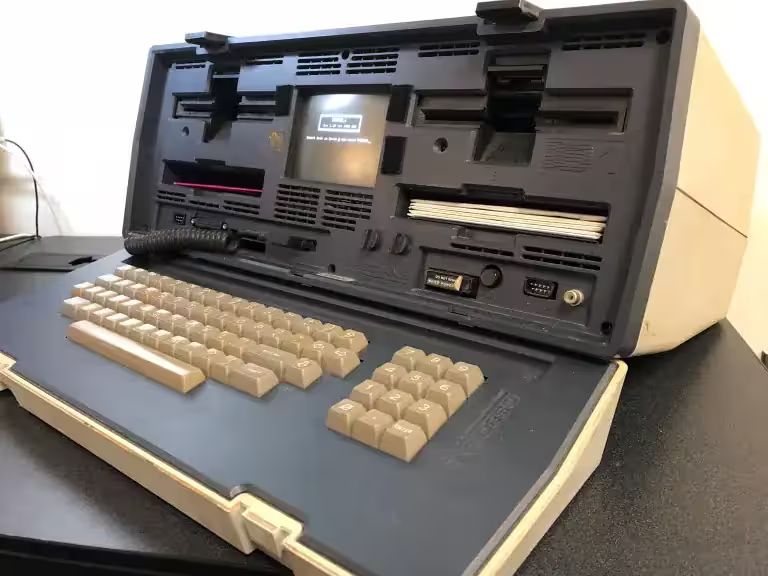
For many, the computer was essentially a free add-on to a massive software purchase. Writers and business professionals flocked to the device, leading to massive backorders. Demand was so intense that the company ramped up to 500 units a day, a move that severely compromised their quality control and led to high failure rates in early units.
The Fatal Marketing Error
By 1983, the landscape had shifted. Competitors like the Kaypro II and the powerful IBM PC had arrived, and the industry was moving away from the CP/M operating system. In an effort to keep pace, Osborne began showcasing his new model, the Osborne Executive, to the press. This proved to be a catastrophic mistake.
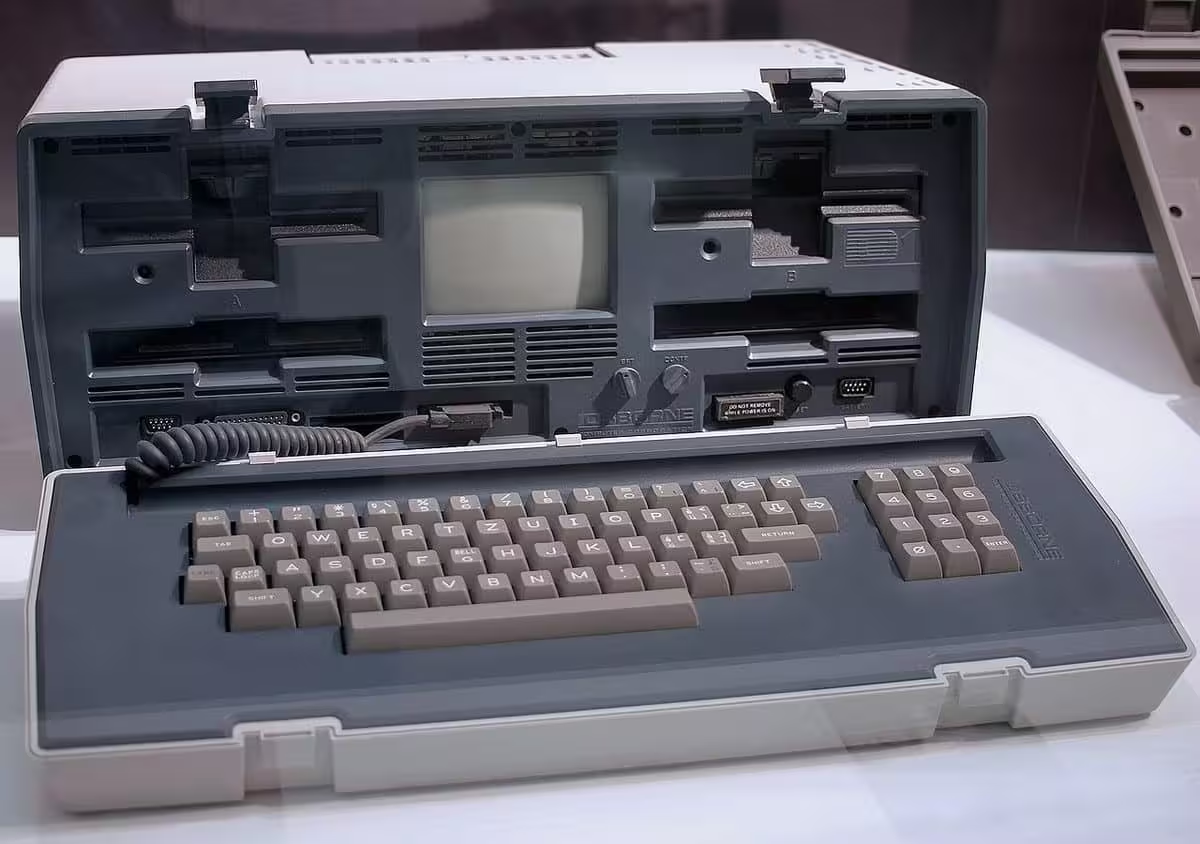
Dealers immediately halted orders for the Osborne 1 to wait for the newer, better model. The resulting stockpile of unsold inventory caused the company to collapse under its own weight, cementing the “Osborne effect” in the lexicon of tech history. While some observers, such as Robert X. Cringely, argue that broader financial mismanagement was the true culprit, the narrative of the premature announcement remains the defining element of the firm’s demise.
Legacy and Final Years
Adam Osborne never returned to the heights of his initial success. After surviving a 1984 bankruptcy, he pivoted to software publishing, only to be hit with a significant copyright lawsuit from Lotus in 1987. A federal court ruled that his product had infringed on the look and feel of the market-leading spreadsheet software.
Following his departure from the software industry and a subsequent move into artificial intelligence, Osborne returned to India in 1992. He struggled with health issues related to a neurological condition and passed away in his sleep in Kodaikanal on March 18, 2003, at the age of 64.
This article has been fact checked for accuracy, with information verified against reputable sources. Learn more about us and our editorial process.
Last reviewed on .
Article history
- Latest version
Reference(s)
- projects, Contributors. “portable microcomputer.”, March 26, 2003 Wikimedia Foundation, Inc. <https://en.wikipedia.org/wiki/Osborne_1>.
- McCracken, Harry. “Osborne!.”, April 1, 2011 Technologizer by Harry McCracken <http://technologizer.com/2011/04/01/osborne-computer/>.
- “InfoWorld.” Google Books <https://books.google.com/books?id=Dj4EAAAAMBAJ&pg=PA1>.
- “Byte Magazine Volume 06 Number 04 - Future Computers : Free Download, Borrow, and Streaming : Internet Archive.”, September 22, 2012 Internet Archive <https://archive.org/stream/byte-magazine-1981-04/1981_04_BYTE_06-04_Future_Computers>.
- <https://web.archive.org/web/20070803124101/https:/www.pbs.org/cringely/pulpit/2005/pulpit_20050616_000856.html>.
- <https://law.justia.com/cases/federal/district-courts/FSupp/740/37/1952439/>.
- Schofield, Jack. “Adam Osborne.”, March 27, 2003 The Guardian <https://www.theguardian.com/news/2003/mar/27/guardianobituaries.jackschofield>.
Cite this page:
- Posted by David Anderson