Scientists Discover Mysterious Extinct Yak Species Hiding in Famous Denisova Cave
Please provide the text you would like me to rewrite.
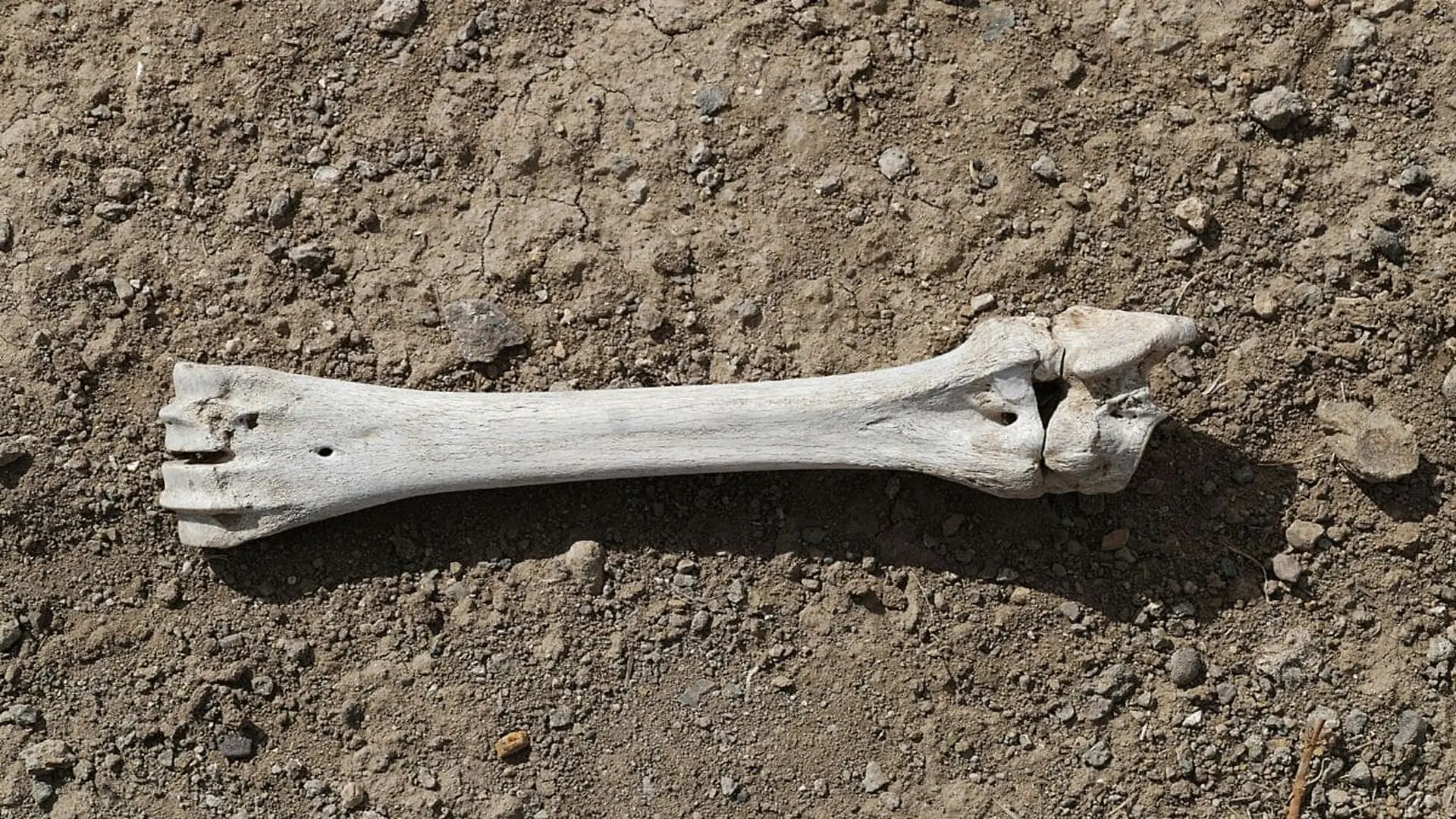
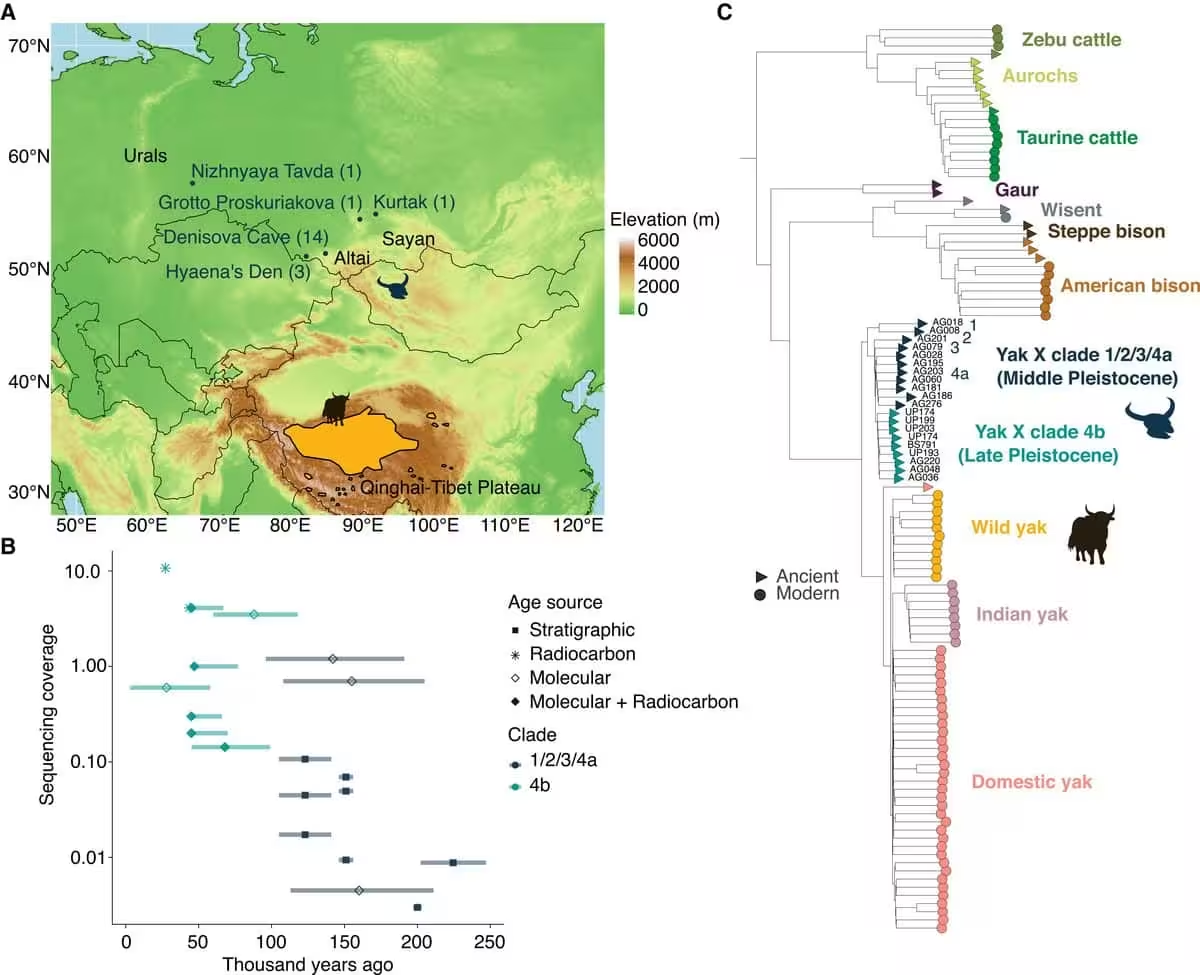
A sophisticated genetic investigation into the bone fragments recovered from the famed Denisova Cave in Siberia has unveiled the existence of a previously unknown species of extinct bovine. Researchers have dubbed the animal “yak X,” identifying at least 20 distinct genomes that suggest this lineage diverged from the ancestors of the modern Himalayan yak roughly 400,000 years ago.
Denisova Cave, nestled within the Altai Mountains, has long been a focal point for studies into ancient hominin evolution. However, the site also houses a vast repository of faunal remains—an estimated 250,000 bone fragments—that offer a window into the broader ecosystem inhabited by extinct human groups. The discovery of yak X highlights the site’s function as a critical biological archive, providing insights into the environmental conditions and dietary habits of prehistoric populations.
Unlocking Secrets in a Sea of Fragments
Analyzing the collection presents a significant technical challenge. Approximately 95 percent of the skeletal remains found in the cave are too fragmentary or morphologically indistinct to identify through traditional visual inspection. To overcome this, researchers utilized advanced genomic sequencing on a subset of bovine remains. The findings, detailed in the journal Current Biology, confirm that these bones belong to a unique bovine lineage that thrived alongside the site’s human occupants.
Evolutionary Divergence and Phenotypic Mystery
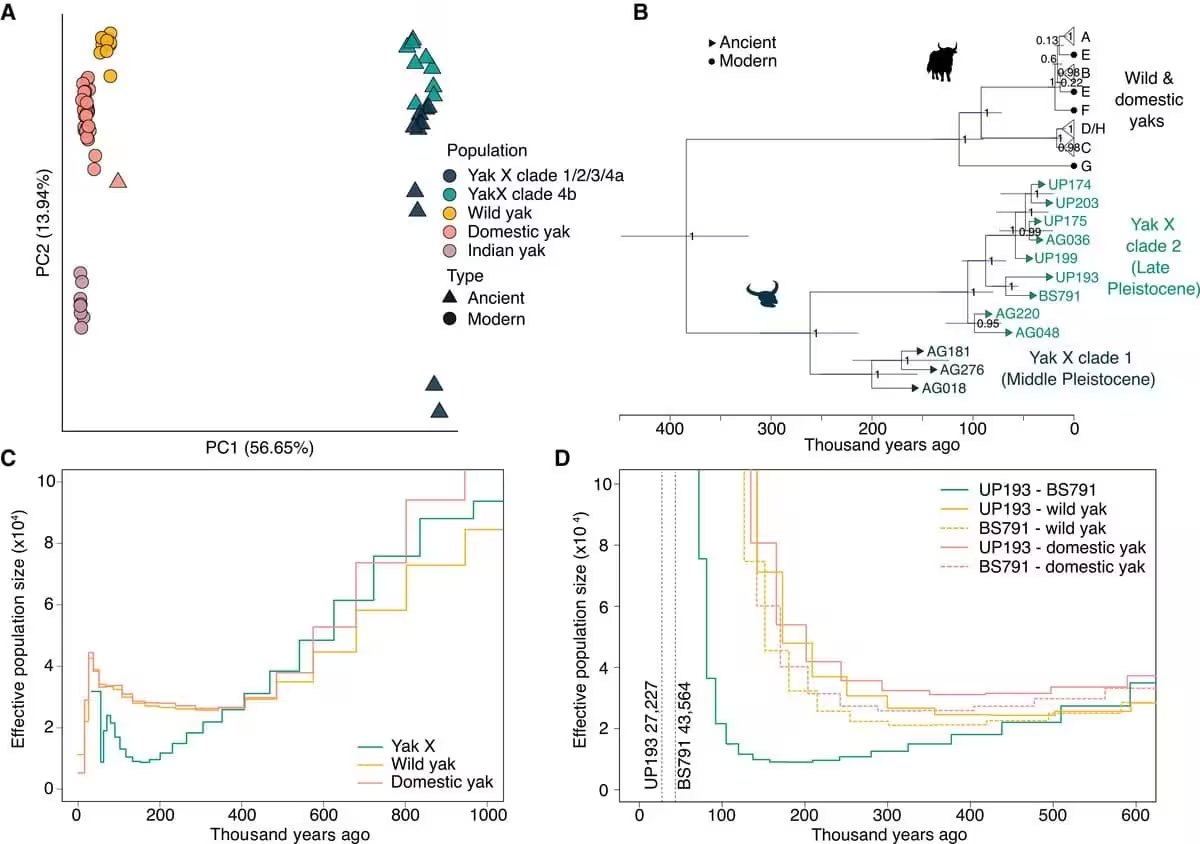
While yak X shares a common ancestor with the modern, shaggy-coated yaks of the Tibetan Plateau, the two lineages followed distinct evolutionary trajectories for hundreds of thousands of years. Genetic modeling indicates that the separation began approximately 400,000 years ago, with the lineages becoming fully distinct by 250,000 years ago.
Determining the physical appearance of yak X remains a topic of scientific debate. Love Dalén of Stockholm University, in comments to IFLScience, noted that given the relatively recent divergence, it is plausible that yak X closely resembled its modern cousins. However, he cautioned that evolutionary paths can lead to significant morphological differences, citing the distinct appearances of polar bears and brown bears despite their similarly recent divergence.

The research team is currently conducting follow-up studies to isolate specific protein-coding genes that may have differentiated yak X from the Himalayan yak, potentially shedding light on adaptations to the Siberian environment.
Coexistence in the Altai Foothills
The temporal range of the discovered yak X remains is striking, spanning from approximately 247,000 years ago to as recently as 27,000 years ago. This timeframe overlaps significantly with the presence of both Neanderthals and Denisovans at the site. According to study co-author Jonas Oppenheimer, it is highly probable that these early humans interacted with the bovines, potentially utilizing them as a primary food source.
“Although we don’t have direct evidence of these interactions, I think it’s likely that ancient humans, including Denisovans and Neanderthals, may have hunted yak X over this time period,” Oppenheimer told IFLScience.
This discovery reinforces the significance of the Altai region as a biodiversity hotspot and a potential environmental refugium during the volatile climate shifts of the Pleistocene. As the scientific community continues to piece together the history of Denisova Cave, the genetic identification of species like yak X provides essential context for understanding the survival strategies of the extinct hominins who once called this cave home.
This article has been fact checked for accuracy, with information verified against reputable sources. Learn more about us and our editorial process.
Last reviewed on .
Article history
- Latest version
Reference(s)
- Oppenheimer, Jonas., et al. “Ancient genomes reveal an extinct bovine species from mid-latitude Asia.” Current Biology, October 1, 2026 Elsevier BV, doi: 10.1016/j.cub.2026.09.043. <https://doi.org/10.1016/j.cub.2026.09.043>.
Cite this page:
- Posted by Elizabeth Taylor