Scientists Have Been Misidentifying Australia’s Famous Giant Stick Insects for Years
Australian researchers have identified five distinct species of large stick insects, correcting a decades-old classification error and discovering two new ones.
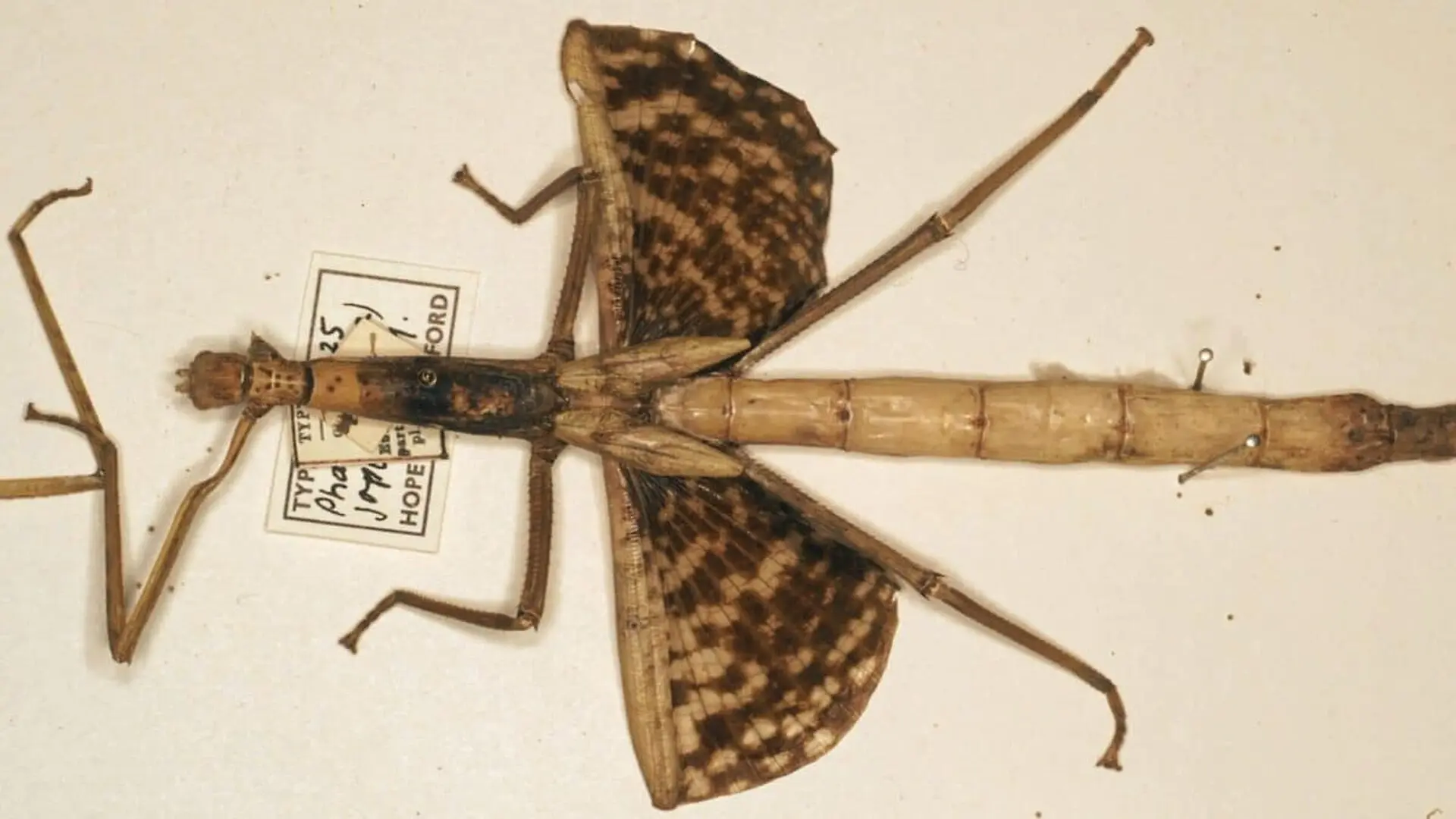
A comprehensive taxonomic review has brought clarity to the Anchiale genus of stick insects, resolving long-standing confusion regarding the identity of these common Australian invertebrates. Despite being a frequent subject of citizen-science documentation, with over 1,000 records submitted by the public, several distinct species within this group had been misclassified for years.
A research team led by the University of Sydney integrated diverse data streams, including museum archives, field surveys, captive populations, and DNA sequencing, to untangle the genus’s complex history. Their findings, published on September 21, 2026, in the journal Austral Entomology, confirm the existence of five distinct Australian species. Beyond its academic value, this reassessment is critical for ecological management, as these insects can occasionally trigger large-scale foliage loss in forests and agricultural regions, making precise identification essential for addressing future outbreaks.
Refining the Taxonomy Through Molecular and Physical Evidence
The researchers conducted a rigorous analysis of 35 morphological specimens and performed molecular testing on 32 Anchiale individuals, utilizing 37 additional specimens for comparative reference. By focusing on the mitochondrial COXI gene and applying Bayesian inference and maximum-likelihood methods, the team established that the Australian members of the genus are Anchiale albopunctata, Anchiale briareus, Anchiale mabiensis, Anchiale robusta, and Anchiale spinicollis.
The study marks a significant taxonomic shift, elevating A. albopunctata back to species status after it was previously relegated to a synonym of A. briareus. Additionally, the researchers identified and described two new species, A. mabiensis and A. robusta, while determining that the name Anchiale austrotessulata should be treated as a synonym for A. briareus.
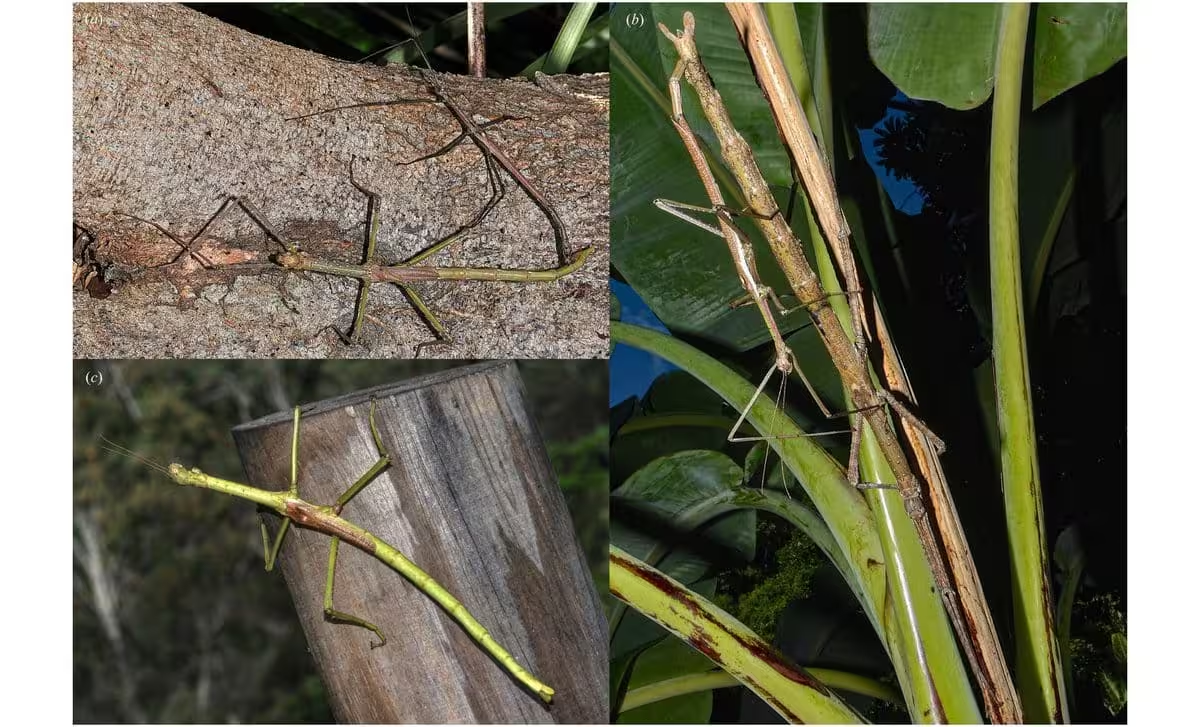
One primary outcome is the formal recognition of A. robusta, a large species native to tropical eastern Queensland. Previously misidentified as other members of the genus, this insect occupies a range extending at least 450 kilometers from Tully to the north of Cooktown. Females of this species are notable for their size, with the holotype measuring 160 millimeters in length.
While the study resolved many taxonomic ambiguities, some mysteries remain. For instance, A. albopunctata exhibits significant genetic diversity, with two major groups showing a 4.8 percent divergence in their COXI sequences. However, because no corresponding morphological differences were found, the researchers have kept these populations under one species heading for now.
A Specialized Rainforest Dweller with Unique Reproductive Traits
The discovery of Anchiale mabiensis highlights the importance of localized habitat studies. Primarily associated with the Mabi forest on Queensland’s Atherton Tablelands—a rare mesophyll vine forest on basalt soil—this species displays distinct biological markers, particularly in its reproductive morphology.
The eggs of A. mabiensis are glossy, black, and oval, featuring a uniquely sculptured surface and an operculum that contains two to three inner rings surrounding a raised central cone. These inner rings are absent in the other Australian species analyzed by the team. The species, which has been observed feeding on the grey sassafras (Doryphora aromatica), is named for the Mabi forest; the term “Mabi” derives from the Dyirbal and Yidiny indigenous languages and refers to the Lumholtz’s tree-kangaroo, a threatened inhabitant of the same ecosystem.
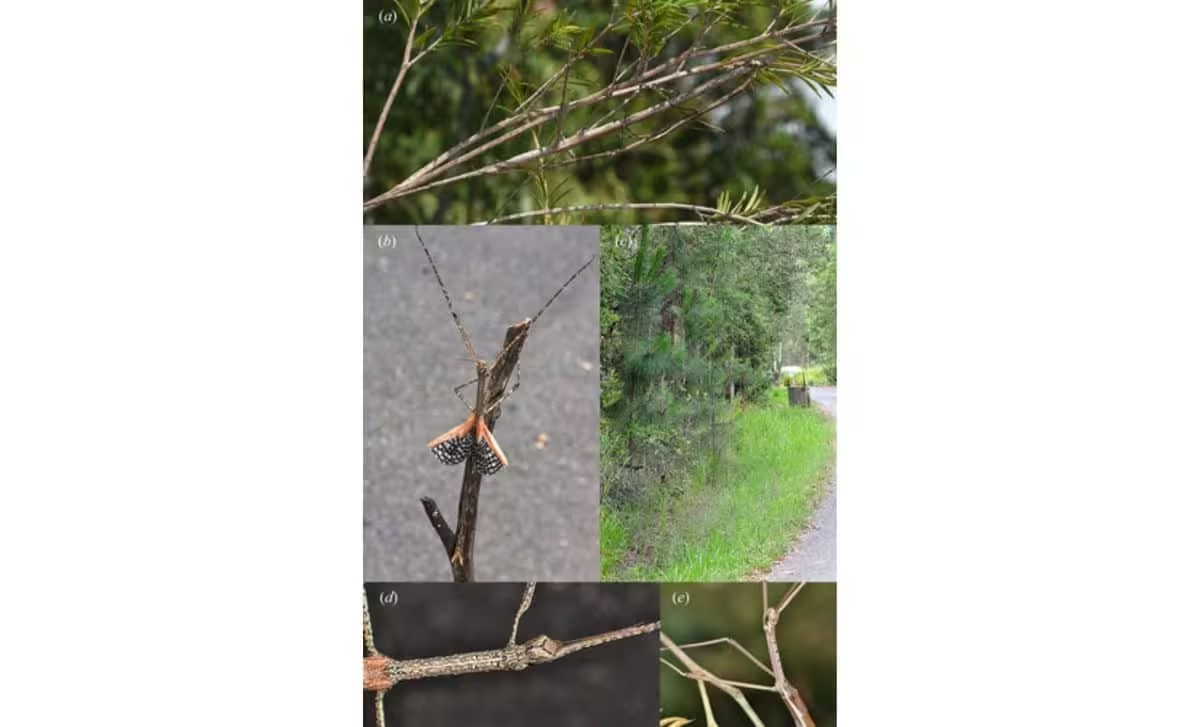
The research underscores that even frequently documented species can hide behind misnomers. While the team suspects another undescribed species exists in Cape York, they noted that further specimens are required to confirm its status. This work serves as a reminder that the combination of historical museum collections and modern genomic analysis remains a vital tool for documenting biodiversity, even in species that appear to be well-understood by the public.
This article has been fact checked for accuracy, with information verified against reputable sources. Learn more about us and our editorial process.
Last reviewed on .
Article history
- Latest version
Reference(s)
- Jones, Braxton R.., et al. “A Revision of Australian Anchiale Stål, 1875 (Phasmida: Phasmatidae), with the Description of Two New Species.” Austral Entomology, vol. 65, no. 4, September 21, 2026 Wiley, doi: 10.1111/aen.70096. <https://onlinelibrary.wiley.com/doi/10.1111/aen.70096>.
Cite this page:
- Posted by Elizabeth Taylor