Scientists Have Discovered a Mysterious Genetic Collapse That Wiped Out Ancient Male Lineages
Ancient DNA analysis has uncovered a mysterious, forgotten event that fundamentally reshaped the trajectory of human male ancestry.

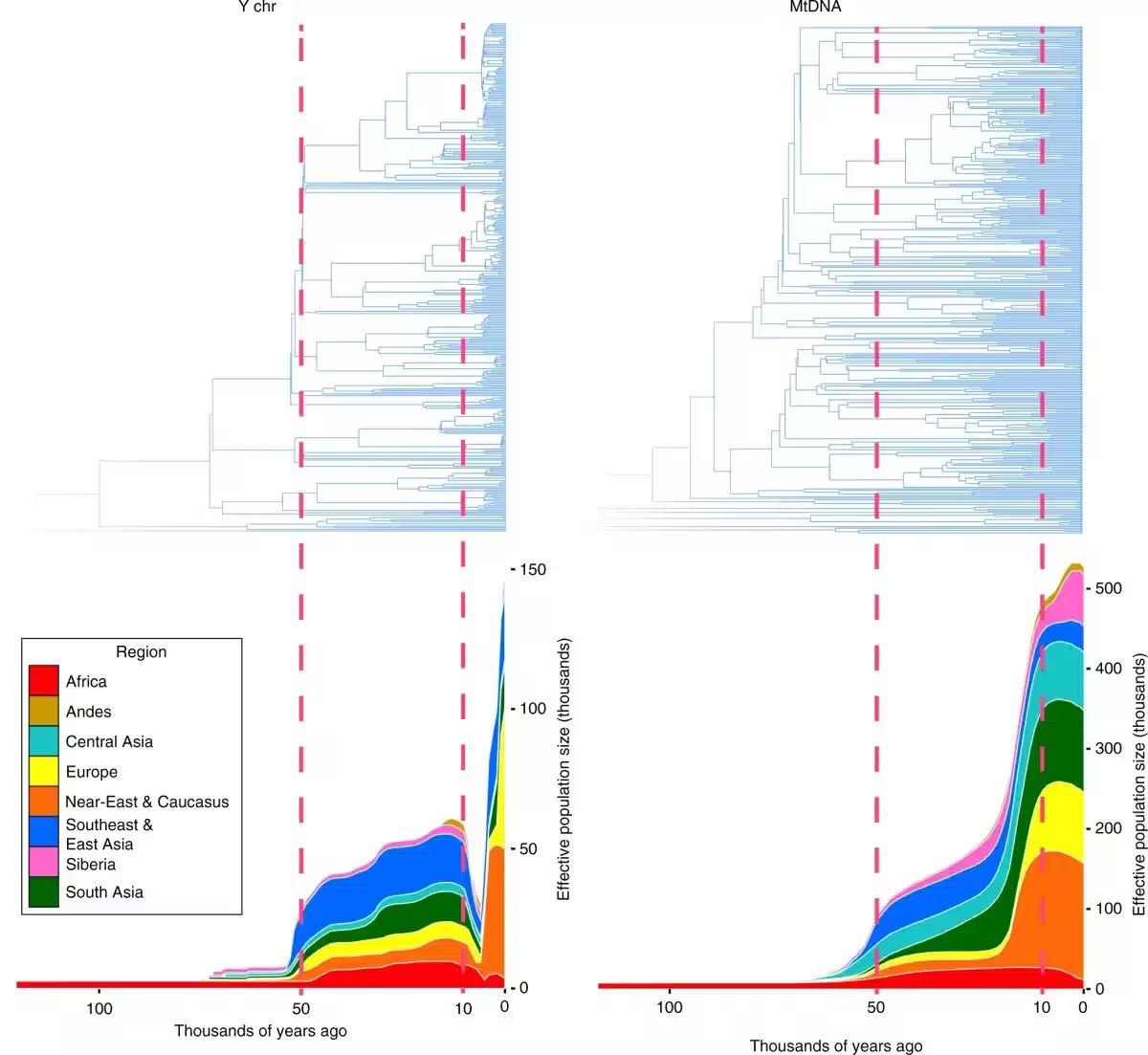
Approximately 7,000 years ago, humanity experienced a profound genetic anomaly. Data extracted from the Y chromosome—the genetic marker passed exclusively from fathers to sons—reveals that male lineage diversity plummeted across vast regions of Africa, Europe, and Asia. This sudden contraction, which left female genetic diversity largely untouched, marks one of the most curious events in the history of the human genome.
Known as the post-Neolithic Y-chromosome bottleneck, this sharp decline occurred long after the initial dawn of agriculture. While the exact catalysts remain a subject of intense scientific inquiry, the phenomenon suggests that major shifts in social organization during the Neolithic period fundamentally altered the human evolutionary trajectory.
Tracking Lineages Through Time
Every human cell contains 46 chromosomes, with the X and Y pair determining biological sex. Because the Y chromosome is inherited along the paternal line, it acts as a high-resolution map of male ancestry. By analyzing variations in these sequences, researchers can reconstruct population histories, identifying moments of rapid expansion or significant decline.
A seminal study published in 2015 analyzed hundreds of Y chromosome sequences globally, identifying a precipitous drop in diversity that occurred between 5,000 and 7,000 years ago. Estimates suggest that during this timeframe, Y chromosome diversity withered to roughly 5 percent of its previous levels. Notably, this pattern was absent in the Americas and failed to appear in mitochondrial DNA, which tracks maternal inheritance, confirming that the pressure was exclusively impacting male lineages.
The Rise of Patrilineal Social Structures
To decode this genetic signature, scientists have turned to the Neolithic period, an era marked by the transition to complex, agrarian societies. As farming techniques migrated from West Asia, human communities grew in size and social complexity, often organizing into strictly patrilineal clans where power, property, and status were dictated by male ancestry.
A 2018 study from Stanford University utilized mathematical models to hypothesize that intense competition between these clans could drive such a bottleneck. If rival groups engaged in violent conflict or systemic exclusion, specific male lineages could be extinguished while others were preserved and amplified. This process would result in a population where a vast majority of men share a common ancestor, creating the illusion of a sudden population collapse without necessarily requiring a catastrophic drop in the total human headcount.
Beyond Conflict: Social Dynamics and Reproductive Success
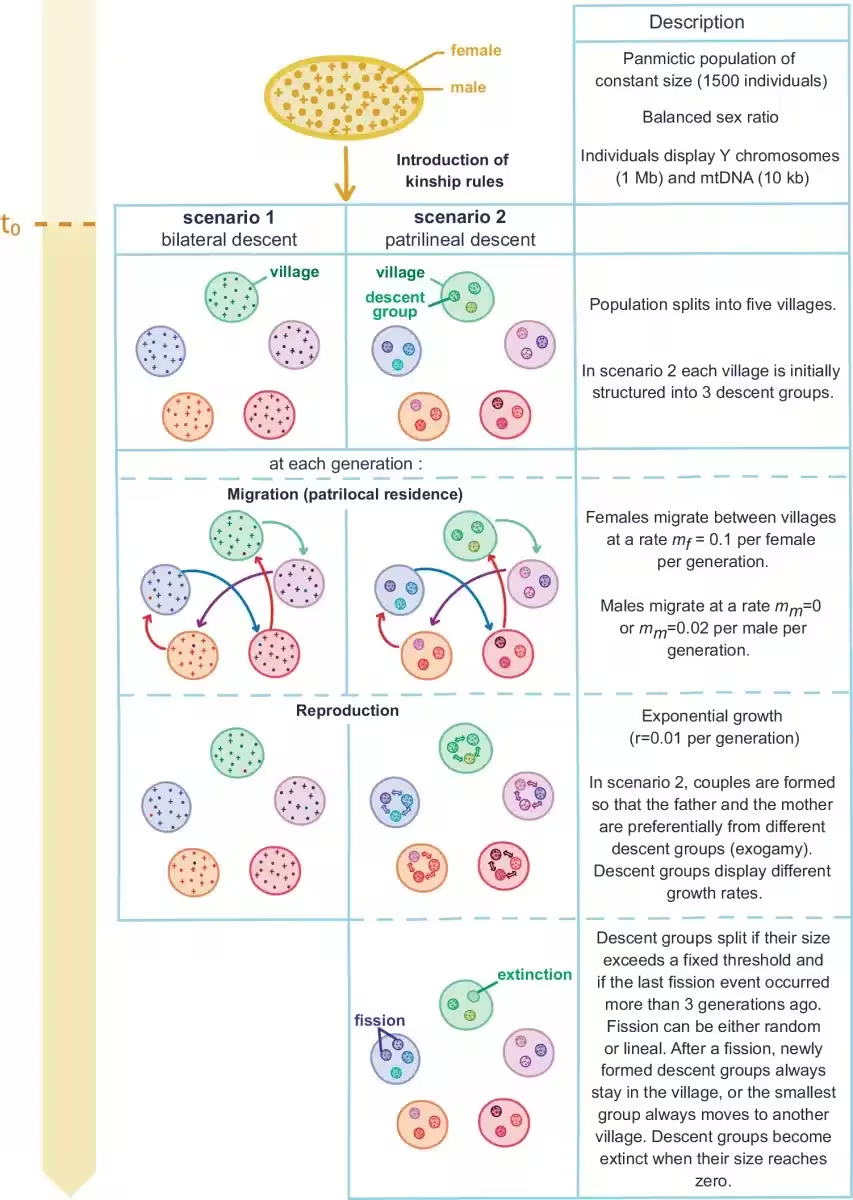
While the prospect of prehistoric warfare is a compelling explanation, recent research suggests that violence is not the only mechanism capable of producing this genetic fallout. According to findings published in Nature Communications, standard social evolution within patrilineal systems may have been sufficient to reshape the human gene pool.
The study argues that even in the absence of mass conflict, disparities in reproductive success among men—driven by cultural advantages, economic status, or simple demographic chance—could cause certain Y chromosomes to propagate more effectively than others. Over thousands of years, these cumulative social pressures would naturally favor specific lineages, allowing them to dominate the genetic landscape while others faded into obscurity.
This article has been fact checked for accuracy, with information verified against reputable sources. Learn more about us and our editorial process.
Last reviewed on .
Article history
- Latest version
Reference(s)
- “459.” <https://genome.cshlp.org/content/25/4/459>.
- Zeng, Tian. “Cultural hitchhiking and competition between patrilineal kin groups explain the post-Neolithic Y-chromosome bottleneck - Nature Communications.”, vol. 9, no. 1, May 25, 2018, pp. 2077 Nature, doi: 10.1038/s41467-018-04375-6. <https://www.nature.com/articles/s41467-018-04375-6>.
- Guyon, Léa. “Patrilineal segmentary systems provide a peaceful explanation for the post-Neolithic Y-chromosome bottleneck - Nature Communications.”, vol. 15, no. 1, April 24, 2024, pp. 3243 Nature, doi: 10.1038/s41467-024-47618-5. <https://www.nature.com/articles/s41467-024-47618-5>.
Cite this page:
- Posted by Elizabeth Taylor