NASA Will Launch Six Toaster Sized Satellites To Form One Massive Space Telescope
Six toaster-sized satellites will synchronize to form a giant radio telescope, helping scientists study solar eruptions that threaten space missions.
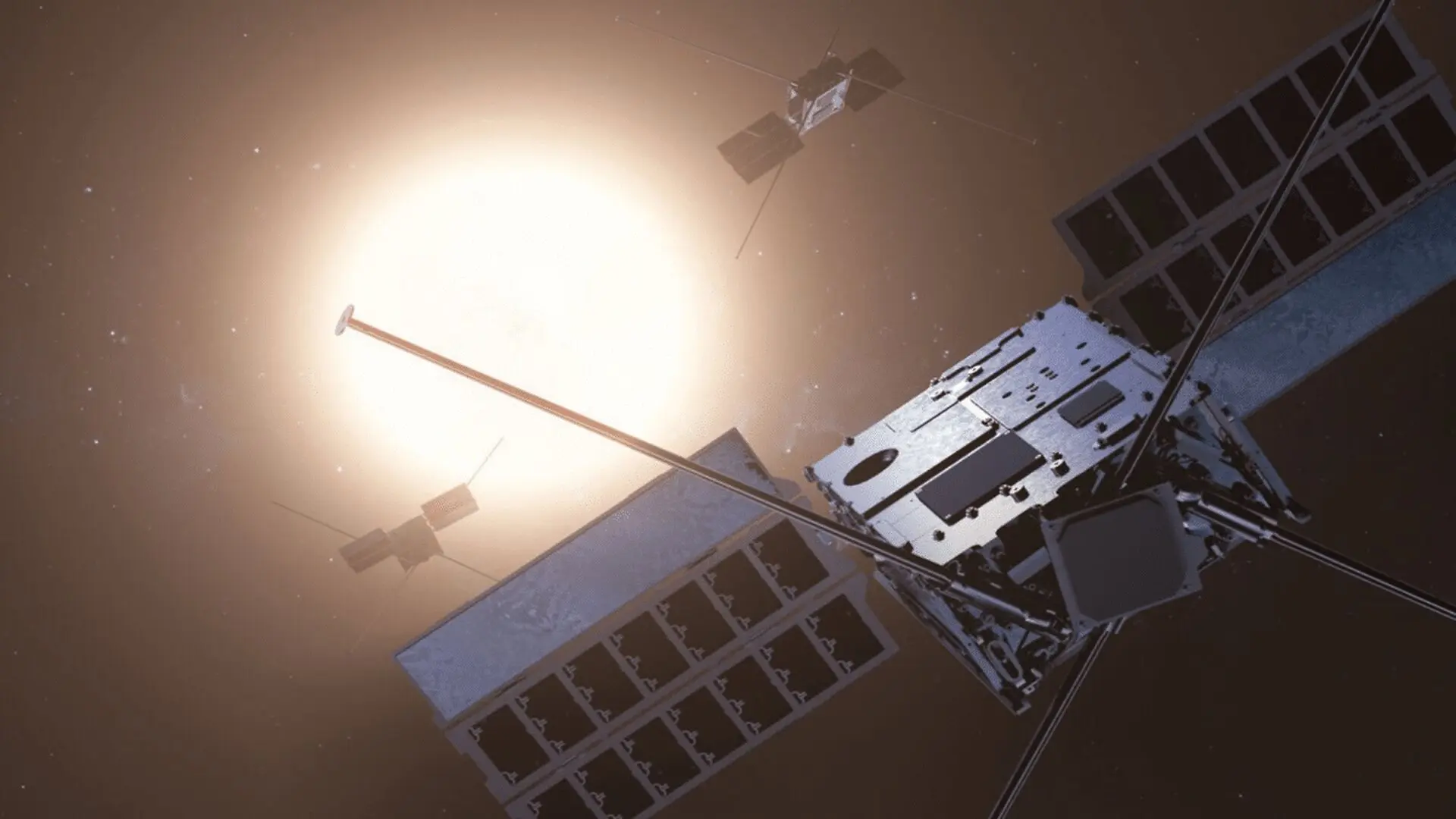
NASA is preparing to launch an ambitious mission that will reconfigure how we monitor the Sun, transforming a fleet of six compact satellites into a single, massive radio telescope orbiting Earth. Known as the Sun Radio Interferometer Space Experiment, or SunRISE, the project is currently targeting a launch date no earlier than mid-2027 aboard a SpaceX Falcon Heavy rocket.
A Distributed Approach to Solar Observation
The mission represents a departure from traditional space-based observatories, which typically rely on a single, heavy, and complex spacecraft. Instead, SunRISE utilizes six SmallSats—each roughly the size of a toaster oven—to act in concert. By flying in precise formation, these units will employ radio interferometry, a technique that synthesizes data from physically separated antennas to simulate the capabilities of a much larger, singular instrument. This distributed architecture allows scientists to pinpoint and analyze radio emissions from the Sun’s outer atmosphere with a level of precision that would be prohibitive for a single spacecraft to achieve alone.
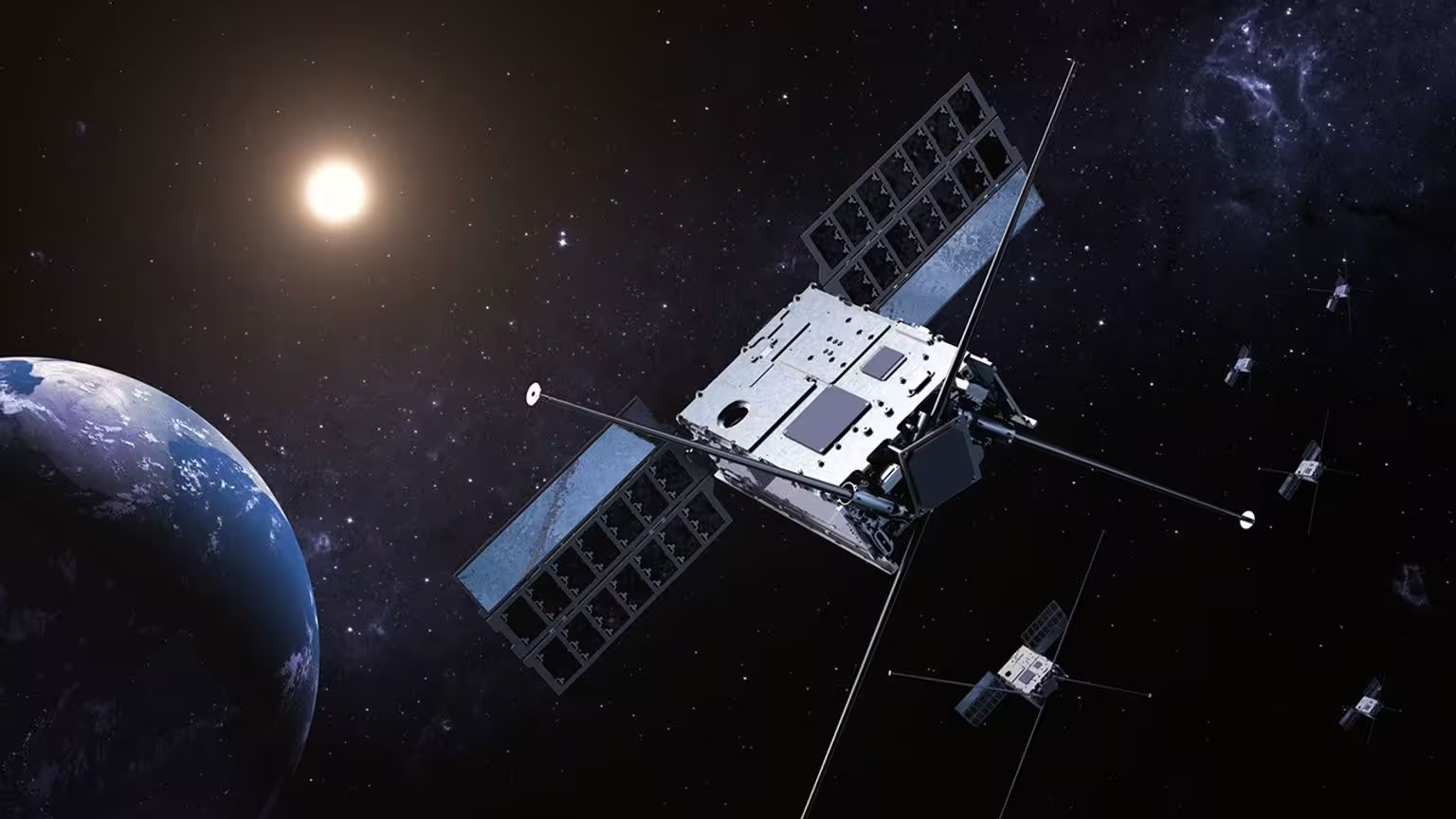
Positioned slightly above geosynchronous orbit, approximately 22,000 miles (35,000 kilometers) from Earth, the constellation will monitor the solar corona. By capturing radio bursts from multiple vantage points simultaneously, the mission aims to track the origin and evolution of high-energy solar phenomena that propagate throughout the solar system.
Tracking Space Weather Hazards
The primary goal of SunRISE is to better understand the volatile radio emissions associated with solar particle acceleration. According to NASA’s JPL, these “rumbles” serve as markers for energetic particle events that present significant risks to satellites and astronauts. As humanity ventures further into deep space, the ability to predict the path and intensity of these radiation events is becoming a critical component of space weather forecasting.
Radio observation is key to this effort, as the movement of high-energy electrons through solar plasma produces distinct signals. By reconstructing these signals through interferometry, researchers can map the magnetic pathways that guide solar particles. This data will refine existing models of how solar disturbances move through space, providing a clearer picture of the radiation environment that spacecraft and crews might encounter.
Logistics and Launch Plans
The mission is a collaborative effort between NASA, the United States Space Force’s Space Systems Command, and SpaceX. The satellites are scheduled to depart from the Kennedy Space Center in Florida, utilizing a rideshare payload arrangement on a Falcon Heavy launch vehicle. This strategy allows the project to access its high-altitude orbit efficiently without the need for a dedicated, single-purpose launch.
Success depends on the ability of the SunRISE team to maintain rigid synchronization across the fleet. Each satellite must track its position and timing with extreme accuracy, as the distance between the units effectively becomes the aperture of the telescope. By operating as a unified system rather than a group of independent observers, the SunRISE mission promises to deliver a new, high-resolution perspective on the complex, high-energy environment of our nearest star.
This article has been fact checked for accuracy, with information verified against reputable sources. Learn more about us and our editorial process.
Last reviewed on .
Article history
- Latest version
Reference(s)
- Laboratory, Jet. “NASA’s SunRISE Mission Targets No Earlier Than Mid-2027 Launch | NASA Jet Propulsion Laboratory (JPL).” <https://www.jpl.nasa.gov/news/nasas-sunrise-mission-targets-no-earlier-than-mid-2027-launch/>.
Cite this page:
- Posted by Karan Das