Watch Venus Vanish Behind The Moon In A Stunning Event this June
June’s celestial highlights: rare lunar occultation of Venus, planetary alignments and astronomical summer kickoff.
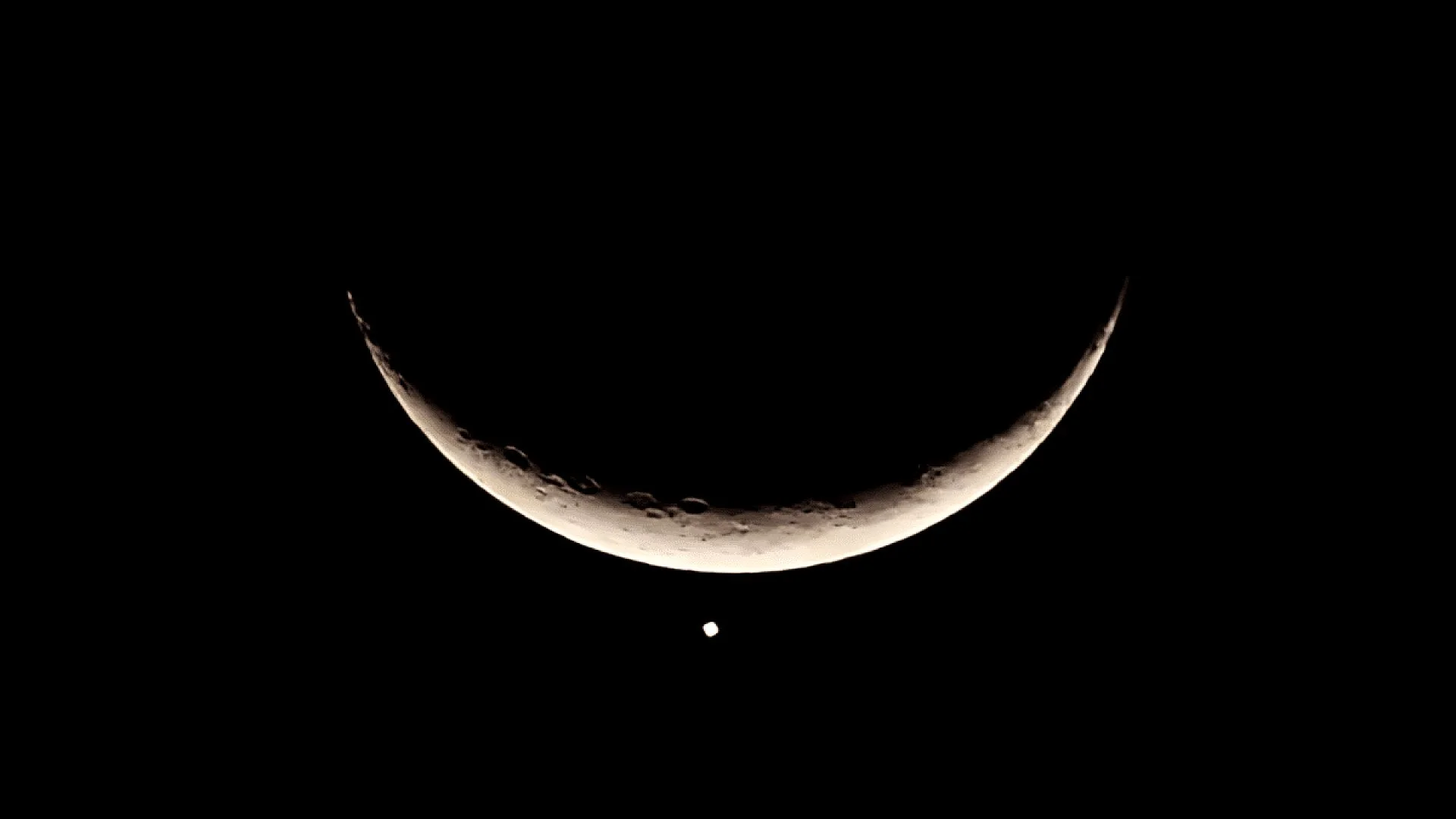
This June, skywatchers across the Americas will witness a rare celestial event as the Moon drifts across the face of Venus, temporarily hiding one of the brightest objects in the night sky. The occultation, coupled with a series of planetary close approaches and the arrival of astronomical summer, promises an especially vibrant month for amateur astronomers.
Venus and Jupiter Appear Nearly Side by Side
In the early evenings of June, Venus and Jupiter will draw together in the western sky after sunset. NASA notes that on June 9 the two brightest planets will line up along the ecliptic, creating the illusion of a single, sparkling point for observers with the naked eye.
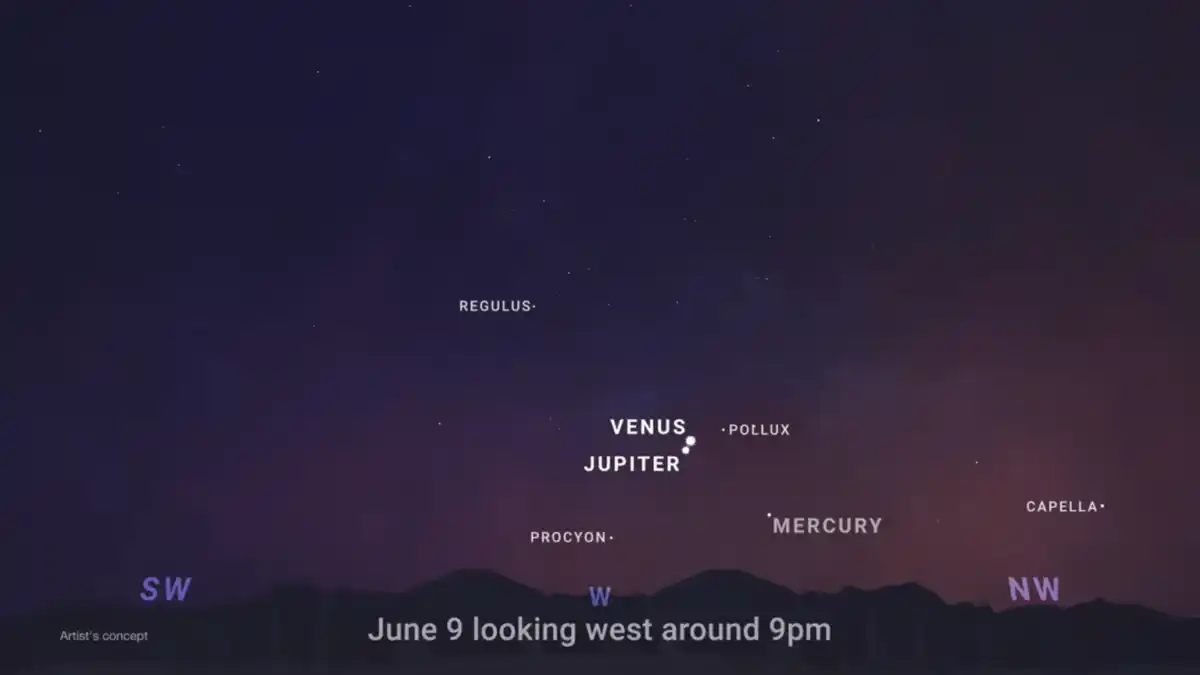
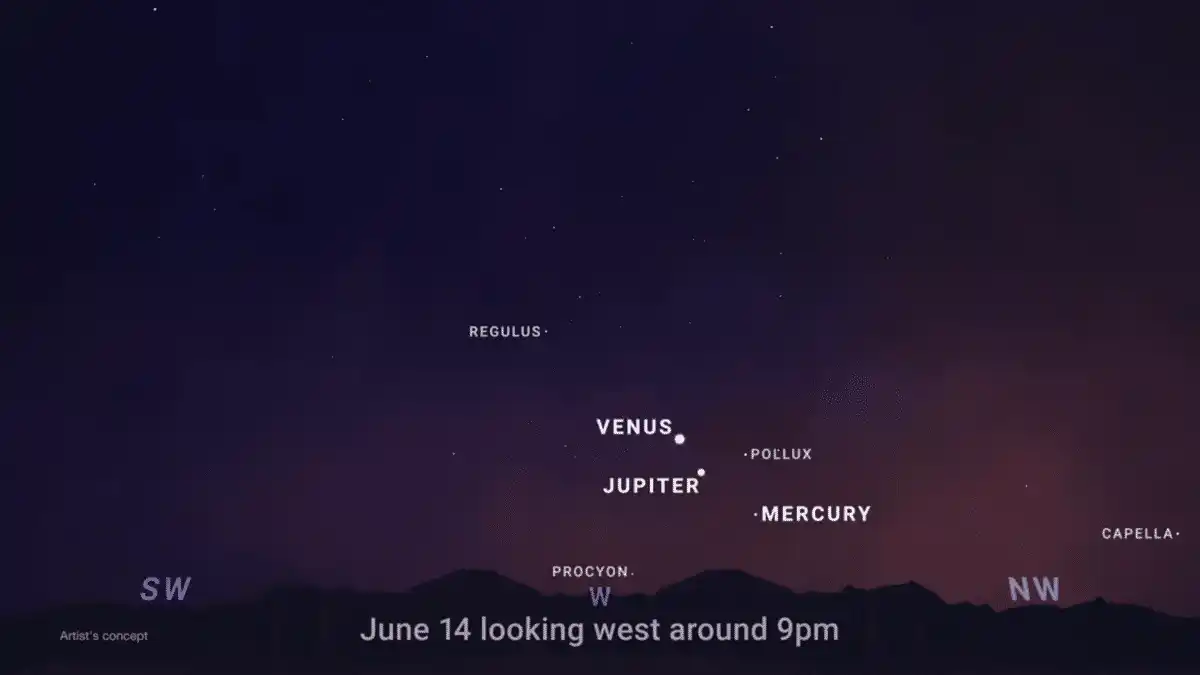
A few days later, from June 11 through June 15, Mercury will join the pair, forming a three‑planet alignment. While Venus will dominate the view, Jupiter will sit nearby and Mercury will cling to the horizon, demanding clear skies to be seen before twilight overwhelms it.
Moon Swallows Venus on June 17
The highlight of the month occurs on June 17, when the Moon will pass in front of Venus for observers in parts of the United States, Canada, Brazil and Venezuela. To onlookers, the planet will seem to disappear behind the lunar disk before resurfacing a few minutes later, offering a dramatic illustration of celestial mechanics.
According to ScienceDaily, this occultation is an uncommon event, and even those outside the narrow path of total coverage will see the Moon and Venus drawn unusually close together. Anyone attempting daylight viewing should remember that telescopes, binoculars or cameras must never be aimed toward the Sun without proper solar filters, as doing so can cause permanent eye injury.
June 21 Marks the Start of Astronomical Summer
The summer solstice arrives on June 21, officially ushering in astronomical summer for the Northern Hemisphere. In the Pacific Time zone the solstice occurs at 1:24 a.m., delivering the longest day and shortest night of the year. The tilt of Earth’s axis and its orbital position not only affect daylight length but also shift the apparent positions of stars and planets.
The moment of maximum daylight does not always coincide with the earliest sunrise or latest sunset; cities such as Los Angeles experience slight variations before or after the solstice. Nevertheless, the extended evening darkness that follows creates ideal conditions for late‑night observing.
Summer Triangle Guides Viewers to Nebulae
As night deepens later in June, the prominent asterism known as the Summer Triangle—composed of Vega, Altair and Deneb—climbs higher in the sky, pointing observers toward a suite of deep‑sky targets. Among the most rewarding are the Dumbbell Nebula (M27), the Ring Nebula, the North America Nebula and the Veil Nebula, each showcasing different stages of stellar evolution.
The Dumbbell Nebula, a classic planetary nebula, reveals a dying star shedding its outer layers. With modest telescopes or long‑exposure photography, enthusiasts can capture the glowing gases, intricate filaments and distant star clusters that define these objects. ScienceDaily highlights that the combination of bright planets, the lunar occultation and these deep‑sky treasures makes June an especially rewarding period for both beginners and seasoned observers.
Tips for Maximizing June Sky Watching
To take full advantage of the month’s events, observers should seek locations with unobstructed horizons and clear weather. Planning tools such as mobile apps, star charts or printed guides can help pinpoint the timing and visibility paths of each phenomenon. Photographers aiming to capture the planets or nebulae may benefit from long exposures, sturdy mounts and wide‑angle lenses to render the celestial choreography in vivid detail.
With planetary pairings, a rare lunar occultation and a wealth of deep‑sky targets, June offers an unparalleled window for exploring the night sky. From the western horizon to the lofty Summer Triangle, both casual stargazers and dedicated astronomers have a rich tapestry of sights to enjoy.
This article has been fact checked for accuracy, with information verified against reputable sources. Learn more about us and our editorial process.
Last reviewed on .
Article history
- Latest version
Cite this page:
- Posted by Karan Das