NASA Just Made It Easier To Watch Asteroid Encounters In Real Time
NASA has upgraded its Eyes on Asteroids platform with new, interactive tools to better visualize asteroid close approaches and potential impacts on Earth.
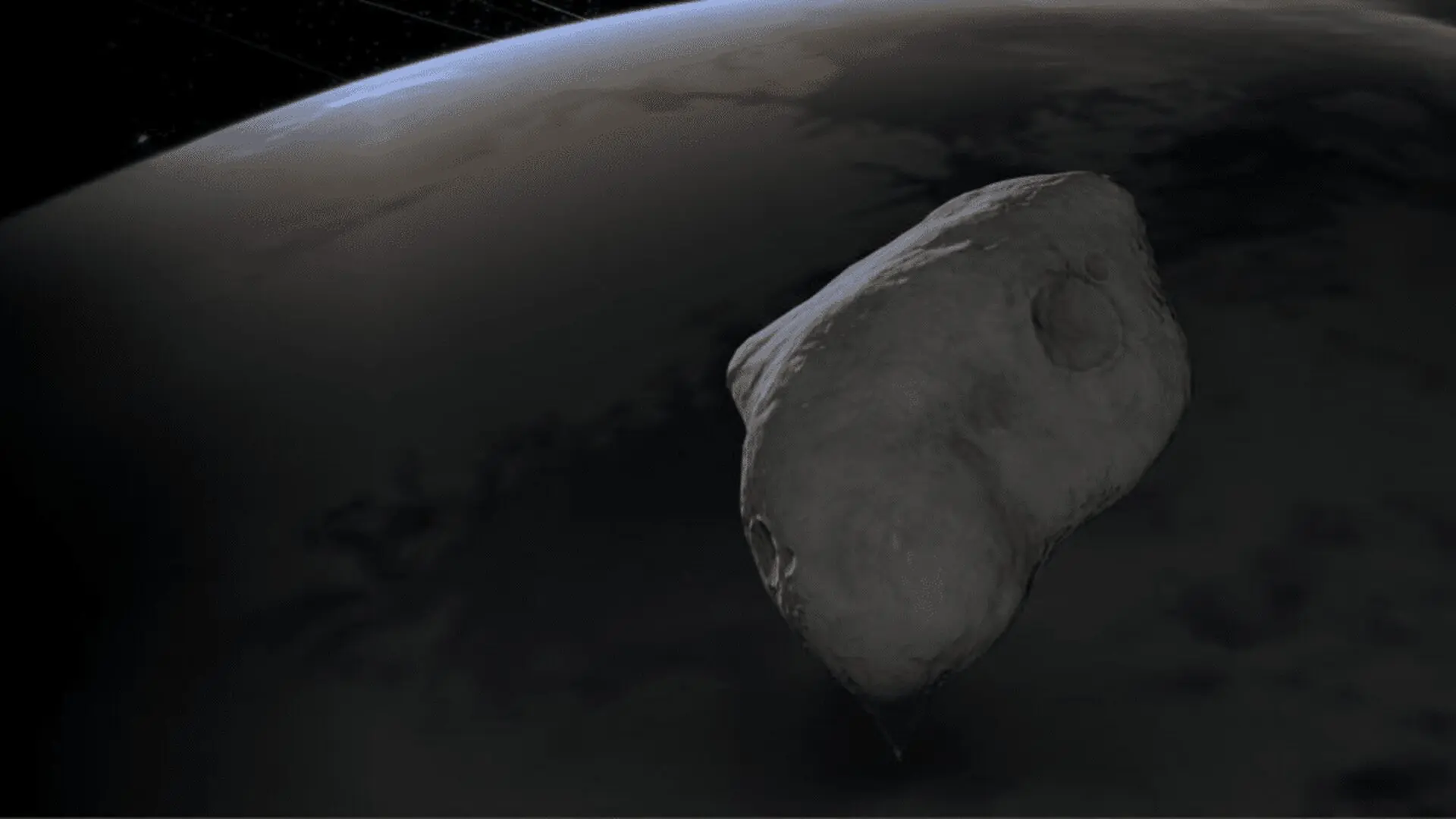
NASA has overhauled its Eyes on Asteroids visualization platform, introducing new tools that allow the public to explore the mechanics of space impacts and orbital encounters in three dimensions. Released on September 30, 2026, the update aims to demystify celestial mechanics by moving beyond raw data, offering users a spatial perspective on the thousands of objects currently tracked within our solar system.
Visualizing the Dynamics of Space Encounters
The core enhancement to the platform is the addition of an “Impact” tab and a corresponding “Watch” button within the asteroid information panel. These features allow users to trigger a 3D simulation of specific asteroid events, ranging from historical impacts to predicted close flybys. By placing these events into a dynamic model, NASA seeks to provide context to astronomical distances that often prove difficult to interpret through numbers alone.
While a pass measured in millions of miles might sound alarming in a headline, the visualization tools demonstrate the true scale of space, illustrating how objects interact with Earth’s neighborhood. This approach provides students, researchers, and casual observers with an intuitive way to grasp complex orbital dynamics without needing specialized training in celestial mechanics.
Navigating Over 42,000 Near-Earth Objects
The NASA platform currently monitors 42,580 Near-Earth Objects (NEOs). For any of these bodies, the “Watch” functionality activates when a trajectory is projected to bring the object within 0.05 astronomical units (AU) of Earth. As noted by the agency, this distance equates to approximately 7,479,894 kilometers or 4,647,790 miles.
Experts emphasize that the inclusion of a “Watch” button is an educational tool, not an emergency warning. The label “near-Earth” refers to the object’s orbital path rather than an immediate collision risk. By allowing users to animate these flybys, the platform clarifies the vast gulfs that typically separate our planet from these passing space rocks.
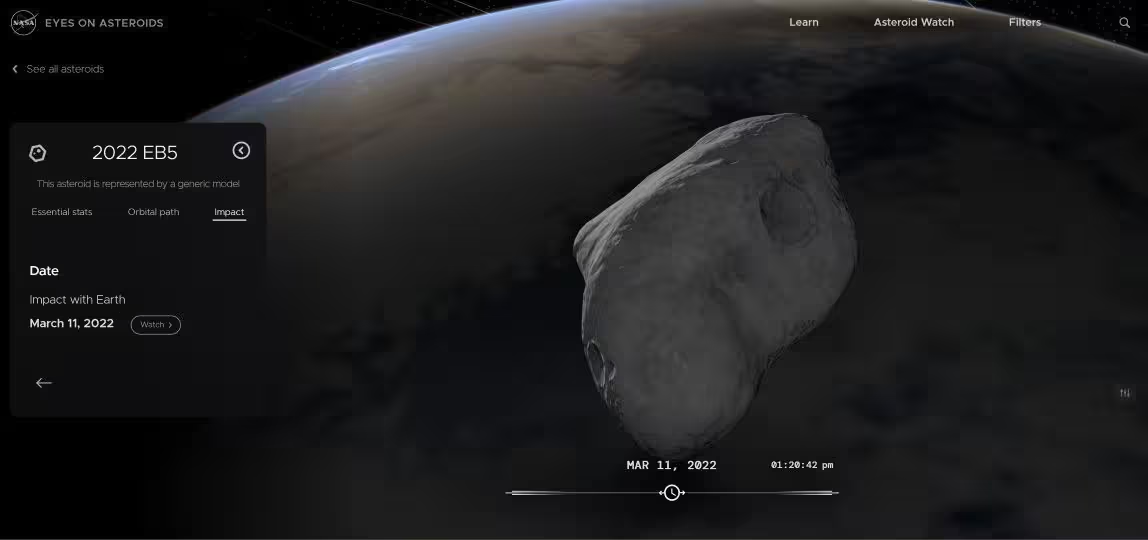
Maintaining Scientific Precision
To ensure the accuracy of its simulations, NASA has implemented a 10-year projection window for the software. Any close approach occurring beyond this decade-long timeframe is omitted from the 3D visualization. According to release notes, this limitation prevents the software from implying a degree of precision that may shift as new observational data becomes available. Orbital forecasting is an iterative process, and the platform is designed to prioritize high-confidence data for public consumption.
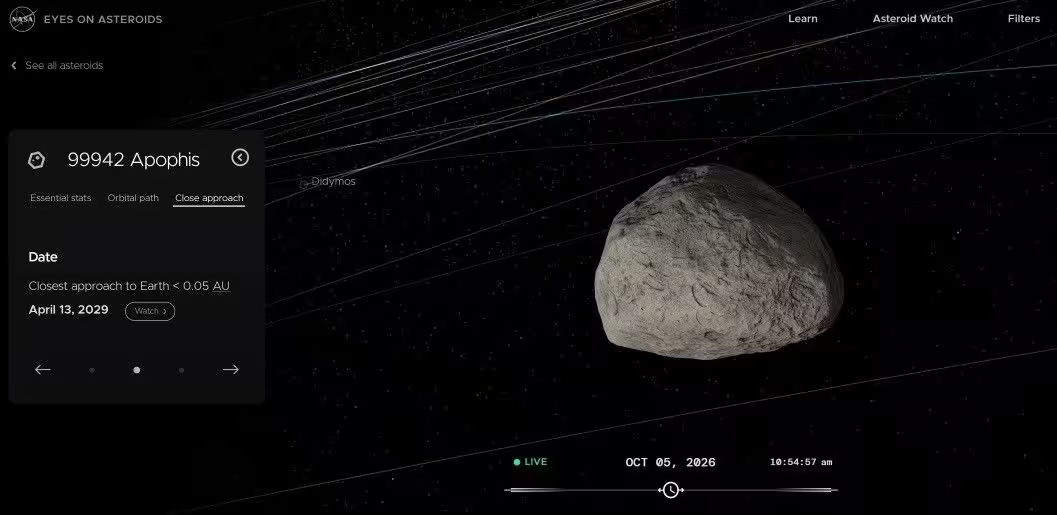
Bridging Detection and Public Education
Beyond the interface updates, the platform’s “Learn” section has been expanded with a new module titled “How NASA Protects Earth.” This update highlights the upcoming NEO Surveyor mission, slated for launch in 2027. This space-based telescope is specifically engineered to identify “dark asteroids”—objects that reflect very little light and often evade detection by ground-based observatories.
By connecting the Eyes on Asteroids software to the reality of active planetary defense missions, NASA is providing users with a clearer link between the abstract paths shown on their screens and the ongoing global efforts to monitor the skies. These visualizations are more than just animations; they are built upon the constant, meticulous tracking performed by observatories around the world.
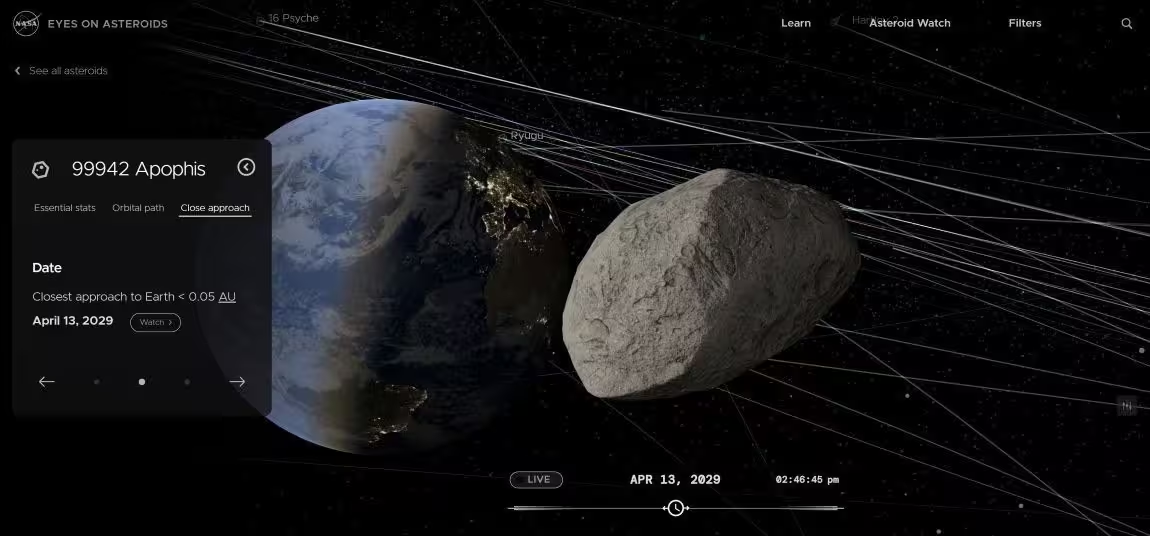
This article has been fact checked for accuracy, with information verified against reputable sources. Learn more about us and our editorial process.
Last reviewed on .
Article history
- Latest version
Reference(s)
- Craig, Jason. “NASA's Eyes software: September release notes - NASA Science.”, October 5, 2026 NASA <https://science.nasa.gov/blogs/eyes/2026/10/05/nasas-eyes-software-september-release-notes/>.
Cite this page:
- Posted by Karan Das