Scientists Found Life Thriving In Toxic Blue Mud Near The Mariana Trench
Strange blue mud found deep beneath the Pacific floor is teeming with extreme microbes, offering new insights into how life survives in hostile environments.
Deep beneath the surface of the Pacific Ocean, researchers have discovered a thriving microbial community existing in an environment so hostile it would chemically dissolve human skin. Located at the Pacman mud volcano, this extreme habitat features a pH level of 12—comparable to industrial-strength bleach—and exists in total darkness with almost no nutritional resources.
Detecting Life in a Caustic Abyss
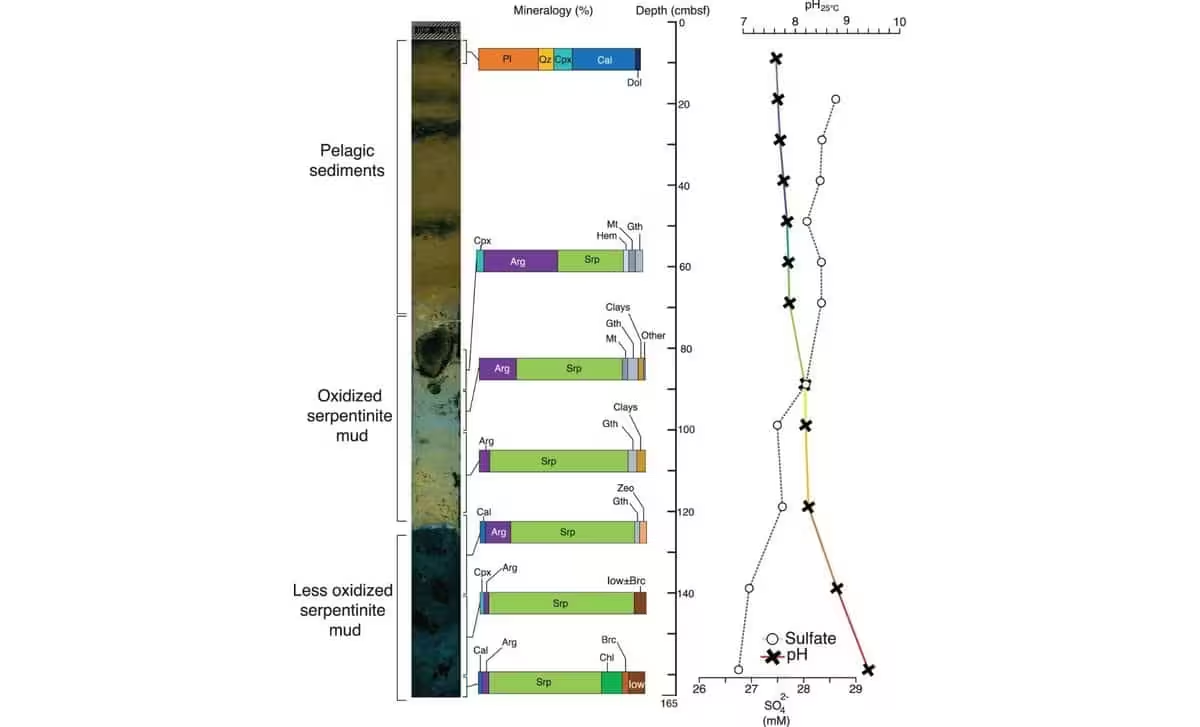
The discovery, made during a 2022 deep-sea expedition, required an innovative approach to biological identification. Because the biomass within the 1.65-meter sediment cores was so sparse, conventional DNA sequencing proved ineffective. Instead, a research team from the University of Bremen utilized lipid biomarkers—fatty molecules found in microbial cell membranes—to confirm the presence of life.
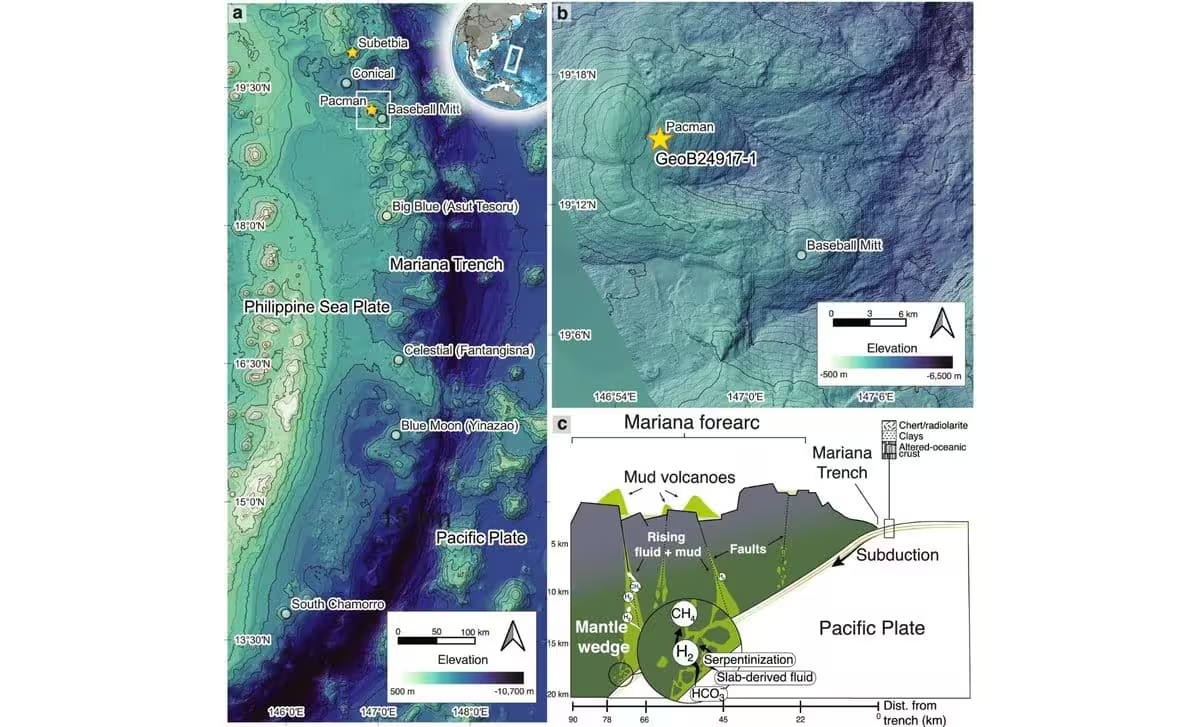
The mud itself is a product of serpentinite, a geological material formed when water reacts with igneous rock near subduction zones. As the material moves toward the surface, it oxidizes, shifting from a striking neon blue—caused by the presence of brucite—to a more muted green as it interacts with seawater. According to the study published in Communications Earth & Environment, these lipid molecules remained remarkably intact despite the high alkalinity, allowing scientists to map the activity of the resident microbes.
Metabolic Strategies in Extreme Environments
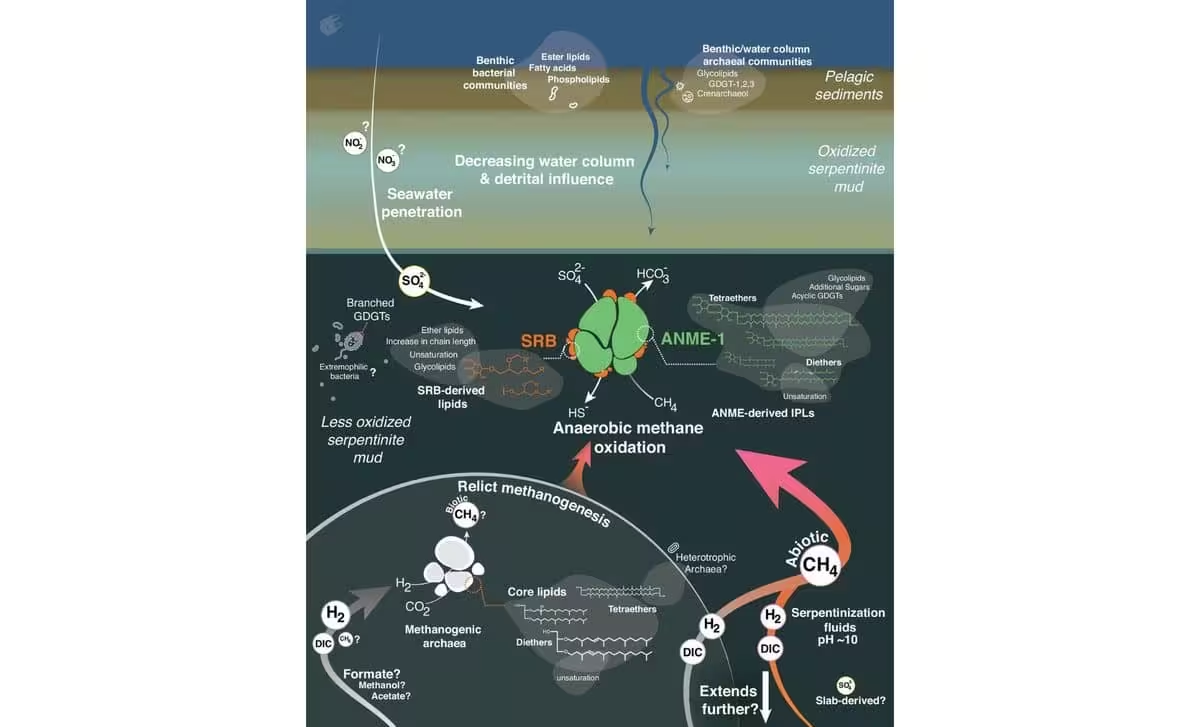
Lead author and doctoral researcher Palash Kumawat explained that the analysis of these biomarkers was crucial for distinguishing between currently active biological communities and fossilized remains. The research suggests these microbes metabolize methane and sulfate, a process that ultimately produces hydrogen sulfide. These organisms are part of a massive, elusive subsurface biosphere, which some estimates suggest could account for up to 15 percent of all living biomass on Earth.
Implications for the Origins of Life
The ability of these microorganisms to persist in carbon-poor, highly alkaline conditions has significant implications for evolutionary biology. Geochemist and senior author Florence Schubotz noted that such environments provide a compelling analog for the conditions that may have existed on the primordial Earth.
By studying how life adapts to these extreme stressors, scientists hope to gain a clearer picture of how early biological systems originated and flourished. These Mariana Trench microbes now join a growing list of extremophiles—including the heat-loving Aquifex bacteria and the vacuum-resilient tardigrade—that continue to challenge our understanding of the limits of life.
This article has been fact checked for accuracy, with information verified against reputable sources. Learn more about us and our editorial process.
Last reviewed on .
Article history
- Latest version
Reference(s)
- Kumawat, Palash. “Biomarker evidence of a serpentinite chemosynthetic biosphere at the Mariana forearc - Communications Earth & Environment.”, vol. 6, no. 1, August 13, 2025, pp. 659 Nature, doi: 10.1038/s43247-025-02667-6. <https://www.nature.com/articles/s43247-025-02667-6>.
- “Palash Kumawat - Universität Bremen.”, August 8, 2023 <https://www.uni-bremen.de/en/petrologie-der-ozeankruste/team/palash-kumawat>.
Cite this page:
- Posted by Karan Das