Habitable Worlds Could Have Emerged Only 200 Million Years After The Big Bang
New research suggests that water-rich worlds could have formed just 300 million years after the Big Bang, potentially pushing back the timeline for life.
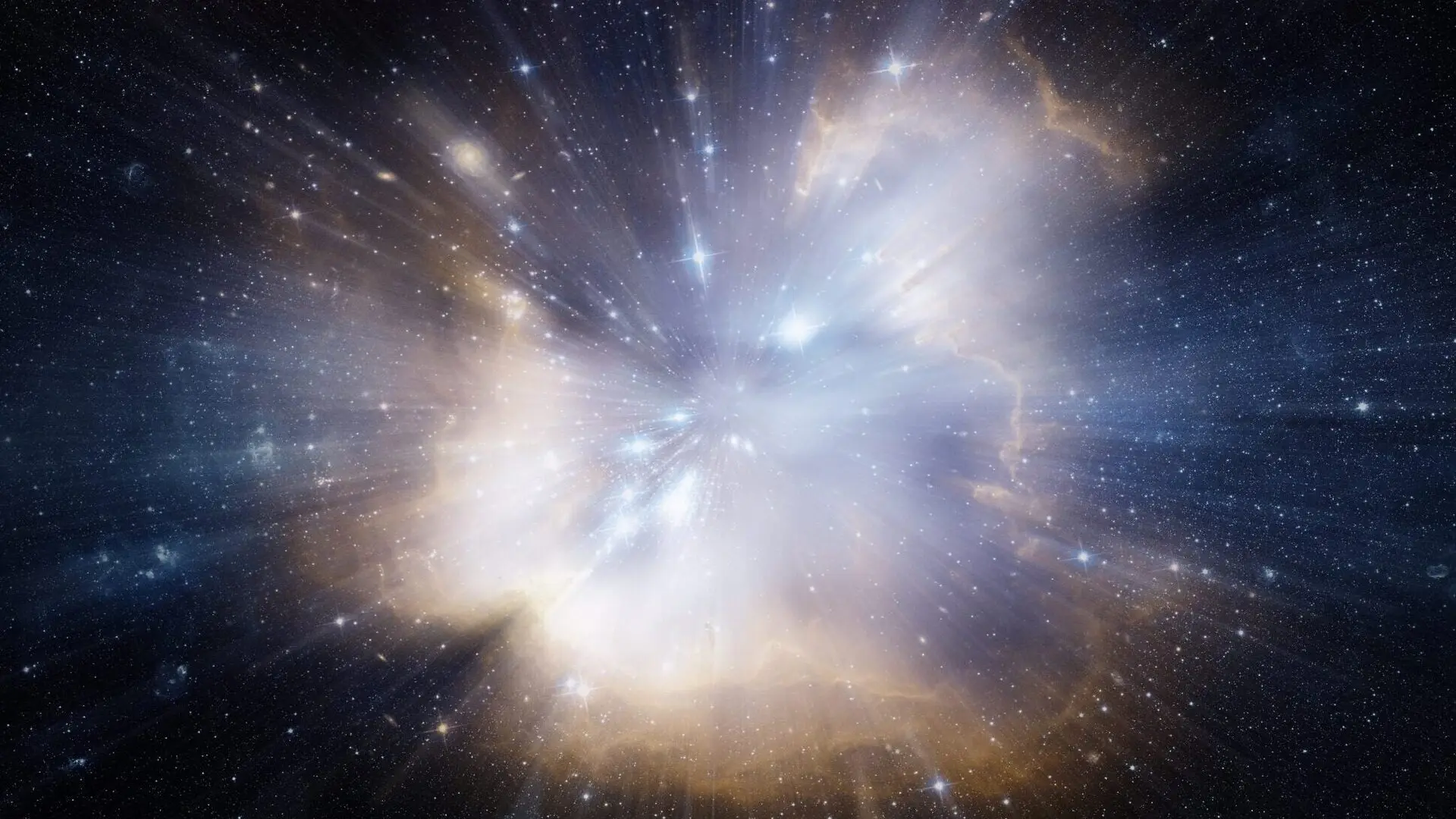
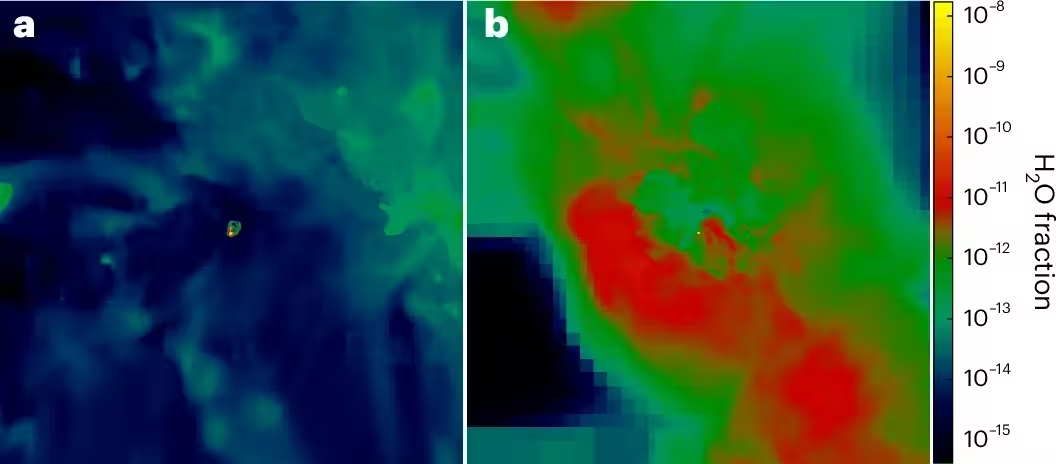
New evidence suggests that the essential chemical ingredients for life may have permeated the universe far earlier than previously believed. According to a study published in Nature Astronomy, water-rich environments capable of supporting the formation of stars and planets likely emerged between 100 million and 200 million years following the Big Bang.
While this timeline does not confirm the presence of biological organisms at such an early stage, it significantly expands the window of opportunity for potentially habitable worlds to have taken root. Researchers found that the cataclysmic deaths of the universe’s inaugural stars acted as celestial factories, forging the necessary chemical complexity long before the formation of modern galaxies.
The Cosmic Chemical Awakening
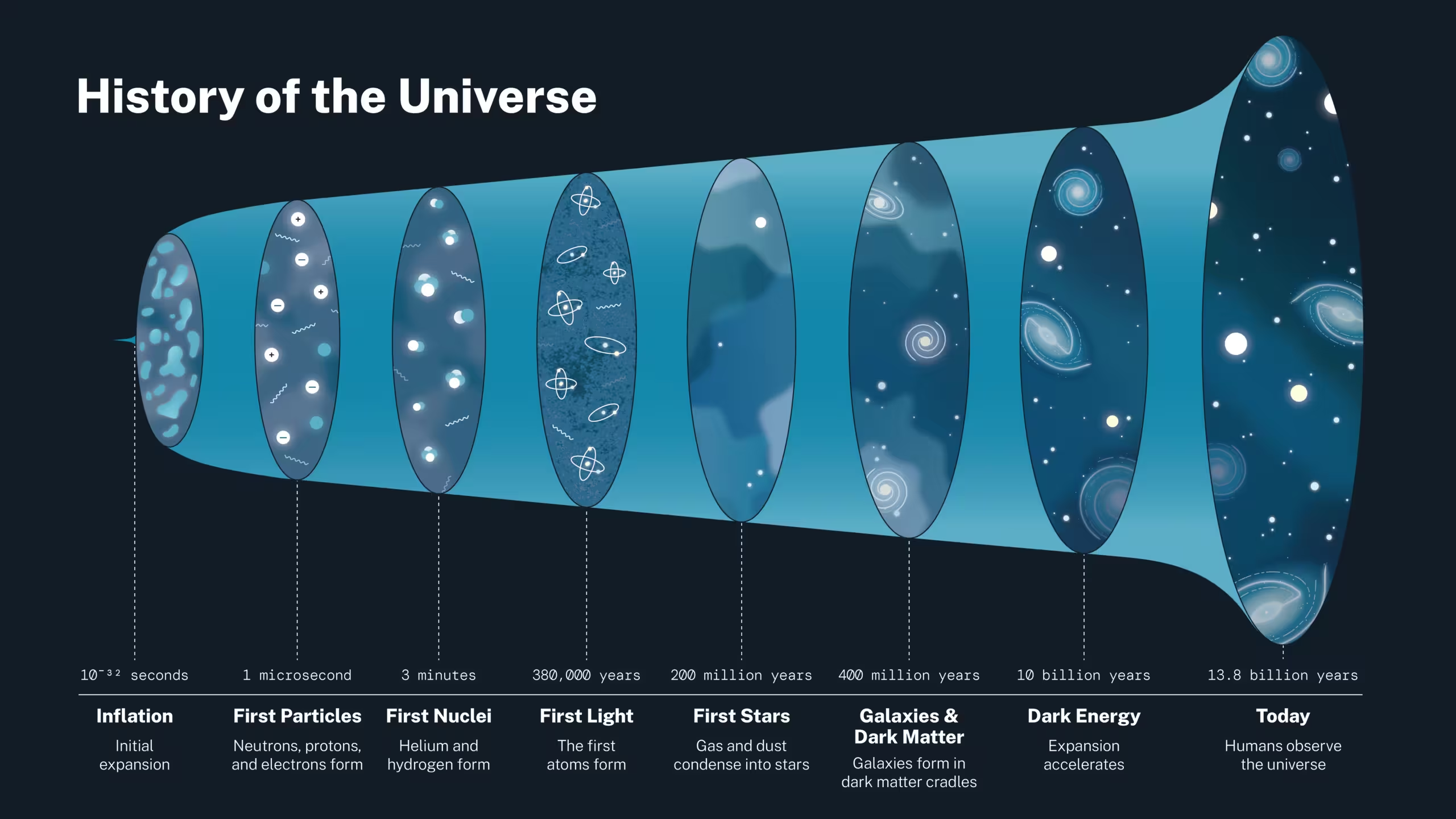
Following the Big Bang roughly 13.8 billion years ago, the primordial universe was composed almost exclusively of hydrogen and helium. Heavier elements essential for life, such as oxygen and carbon, were non-existent until the first generation of stars ignited. These massive stellar bodies, living fast and dying young, dispersed the first heavy elements into the surrounding cosmos through violent supernova explosions.
Daniel Whalen, an astrophysicist at the University of Portsmouth and the lead investigator of the research, notes that the simulation results offer a new perspective on the early universe. “What our simulations showed was that you could get sites for planet formation already enriched with water levels similar to those in the solar system today only 200 million years after the big bang,” Whalen explained.
Supernovae as Atmospheric Incubators
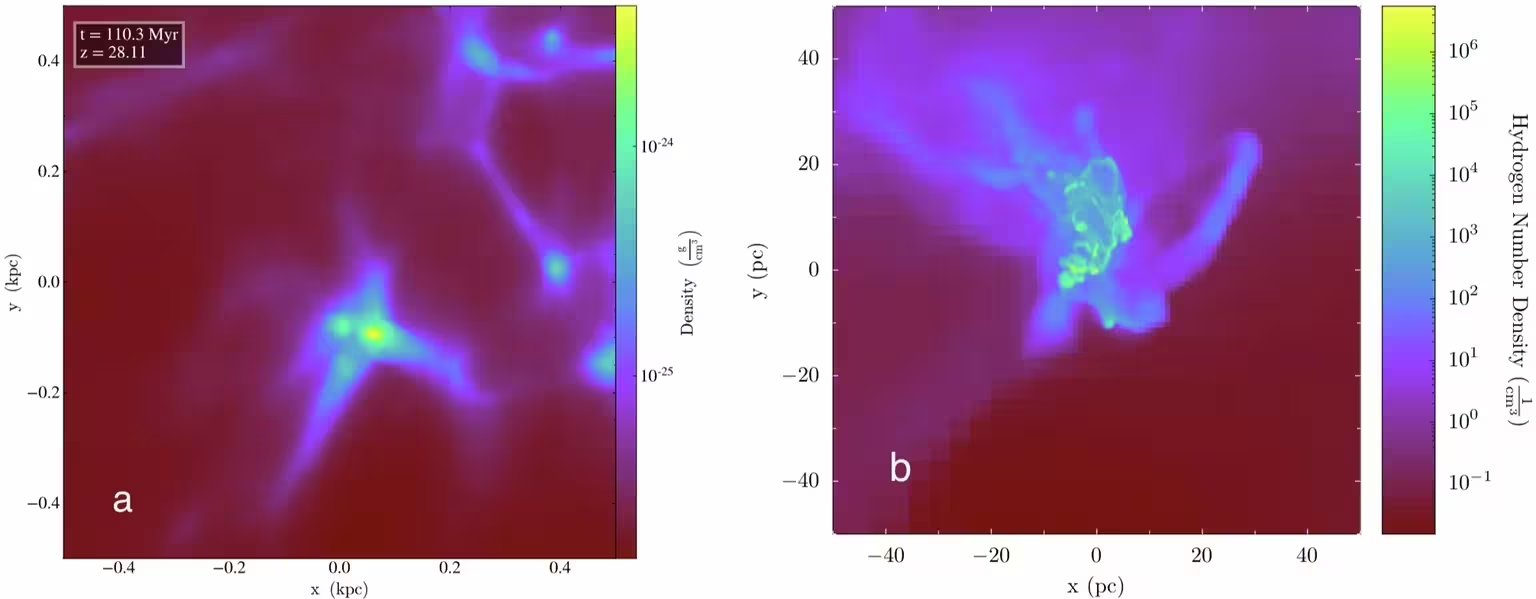
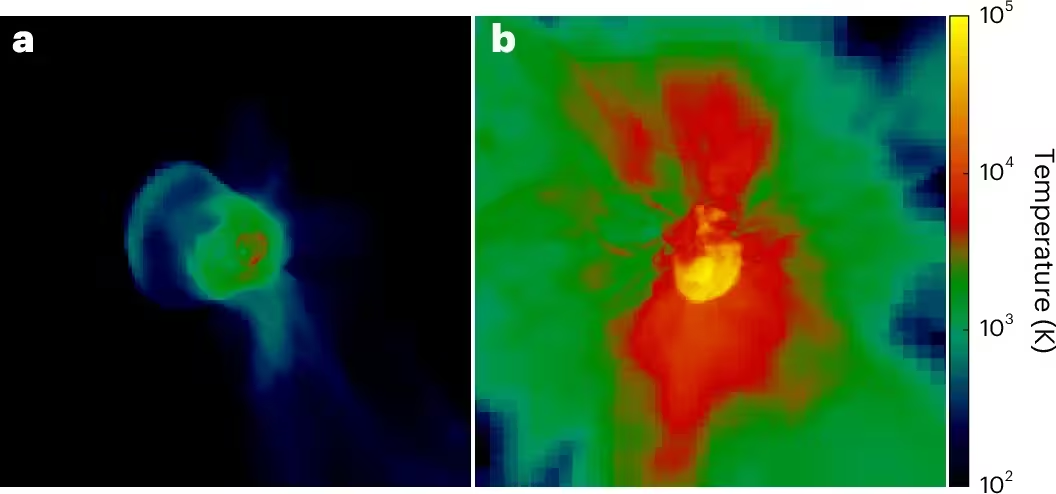
To understand how water could accumulate so rapidly, the research team modeled the life cycles of primordial stars, ranging from 13 to 200 times the mass of the Sun. As these stars exploded, their shock waves created dense, turbulent pockets of gas. Within these regions, the concentration of oxygen allowed for the synthesis of water, which was further accelerated by the high temperatures of the surrounding environment.
Shmuel Bialy of the Technion–Israel Institute of Technology highlights that the extreme conditions were actually beneficial for molecular production. “At high gas temperatures, a set of very efficient chemical reactions that lead to water formation kick in,” said Bialy.
Paving the Way for Rocky Worlds
The implications extend beyond mere water production. Additional simulations conducted by the team suggest that the enriched gas from these supernovae could collapse into low-mass stars surrounded by protoplanetary disks. These disks contained the necessary building blocks—or planetesimals—to form rocky, potentially habitable planets.
This discovery aligns with parallel findings in Monthly Notices of the Royal Astronomical Society, which demonstrate that vortices within early disks could trap enough dust to form planetesimals, even in metal-poor environments.
Defining the Limits of Early Habitability
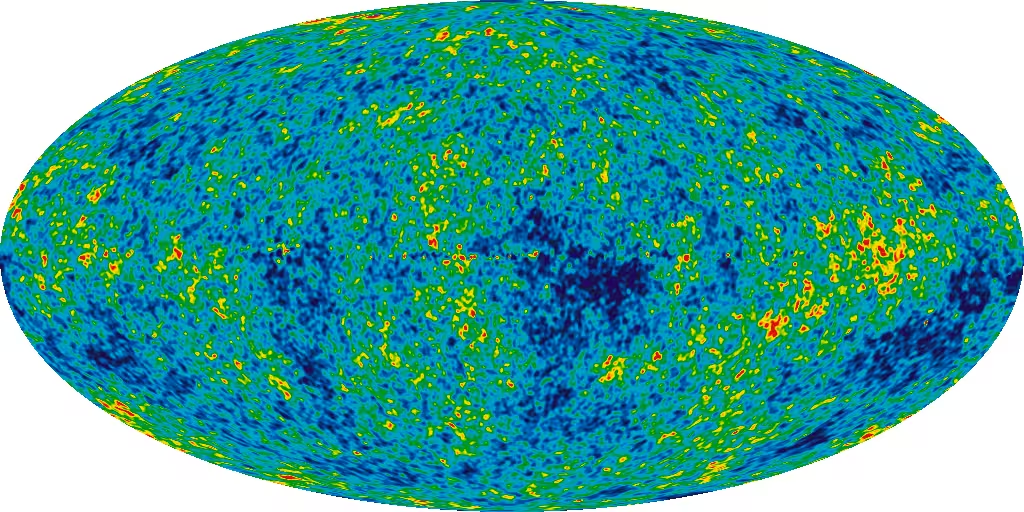
While the jump from inorganic chemistry to self-replicating life remains a significant hurdle, this research provides a vital theoretical framework for how the universe became hospitable. By pushing the timeline for these chemical processes back to the “cosmic dawn,” scientists have opened new questions about whether the first living systems could be far older than the 3.7 billion-year-old record observed on Earth.
Whalen emphasizes that the current models, while groundbreaking, are still evolving. Uncertainties remain regarding the typical mass distribution of the first stars and the potential for star clusters to alter the chemical landscape. Nevertheless, the findings challenge the assumption that the universe required billions of years to prepare for the possibility of biology.
Further Reading and References
- Habitable Worlds Formed at Cosmic Dawn: An exploration of how first-generation supernovae could facilitate the creation of planetary building blocks.
- Planets and planetesimals at cosmic dawn: vortices as planetary nurseries: Research on how dust-trapping vortices catalyze planet formation in metal-poor environments.
- Pristine ices in a planet-forming disk revealed by heavy water: Insights into the survival of water ice through the stages of planetary development.
- Agnostic Biosignatures: Expanding the Search for Life in the Solar System: An analysis of alternative frameworks for identifying life that may not mirror Earth’s biology.
- Reconstructing Early Microbial Life: Contextualizing the emergence of life through the lens of Earth’s earliest microbial environments.
This article has been fact checked for accuracy, with information verified against reputable sources. Learn more about us and our editorial process.
Last reviewed on .
Article history
- Latest version
Reference(s)
- Whalen, D.. “Abundant water from primordial supernovae at cosmic dawn - Nature Astronomy.”, vol. 9, no. 5, pp. 741-746. Nature, doi: 10.1038/s41550-025-02479-w. <https://www.nature.com/articles/s41550-025-02479-w>.
- “University of Portsmouth - Clearing.” <https://www.port.ac.uk/>.
- “Home - הטכניון-מכון טכנולוגי לישראל.”, October 31, 2023 הטכניון-מכון טכנולוגי לישראל <https://www.technion.ac.il/en/>.
- <https://academic.oup.com/mnras/article/542/2/641/8220041>.
- Vorobyov, Eduard. “Planet Formation at Cosmic Dawn: Planetesimals in H$_2$O-Rich Disks Around Low-Mass Stars.” arXiv.org <https://arxiv.org/abs/2501.08375>.
- Leemker, Margot. “Pristine ices in a planet-forming disk revealed by heavy water - Nature Astronomy.”, vol. 9, no. 10, pp. 1486-1494. Nature, doi: 10.1038/s41550-025-02663-y. <https://www.nature.com/articles/s41550-025-02663-y>.
- Graham, Heather V.. “Agnostic Biosignatures: Expanding the Search for Life in the Solar System.” Annual Review of Earth and Planetary Sciences, vol. 54, no. 1, May 29, 2026, pp. 585-604. Annual Reviews, doi: 10.1146/annurev-earth-040722-101044. <https://www.annualreviews.org/content/journals/10.1146/annurev-earth-040722-101044>.
- Kaçar, Betül. “Reconstructing Early Microbial Life.” Annual Review of Microbiology, vol. 78, no. 1, November 10, 2024, pp. 463-492. Annual Reviews, doi: 10.1146/annurev-micro-041522-103400. <https://www.annualreviews.org/content/journals/10.1146/annurev-micro-041522-103400>.
Cite this page:
- Posted by Aisha Ahmed