JWST Reveals The Violent Cosmic Race To Build Giant Planets Before Gas Disappears
New JWST observations reveal how shifting winds in young solar systems may strip away the essential gas required to build planets.
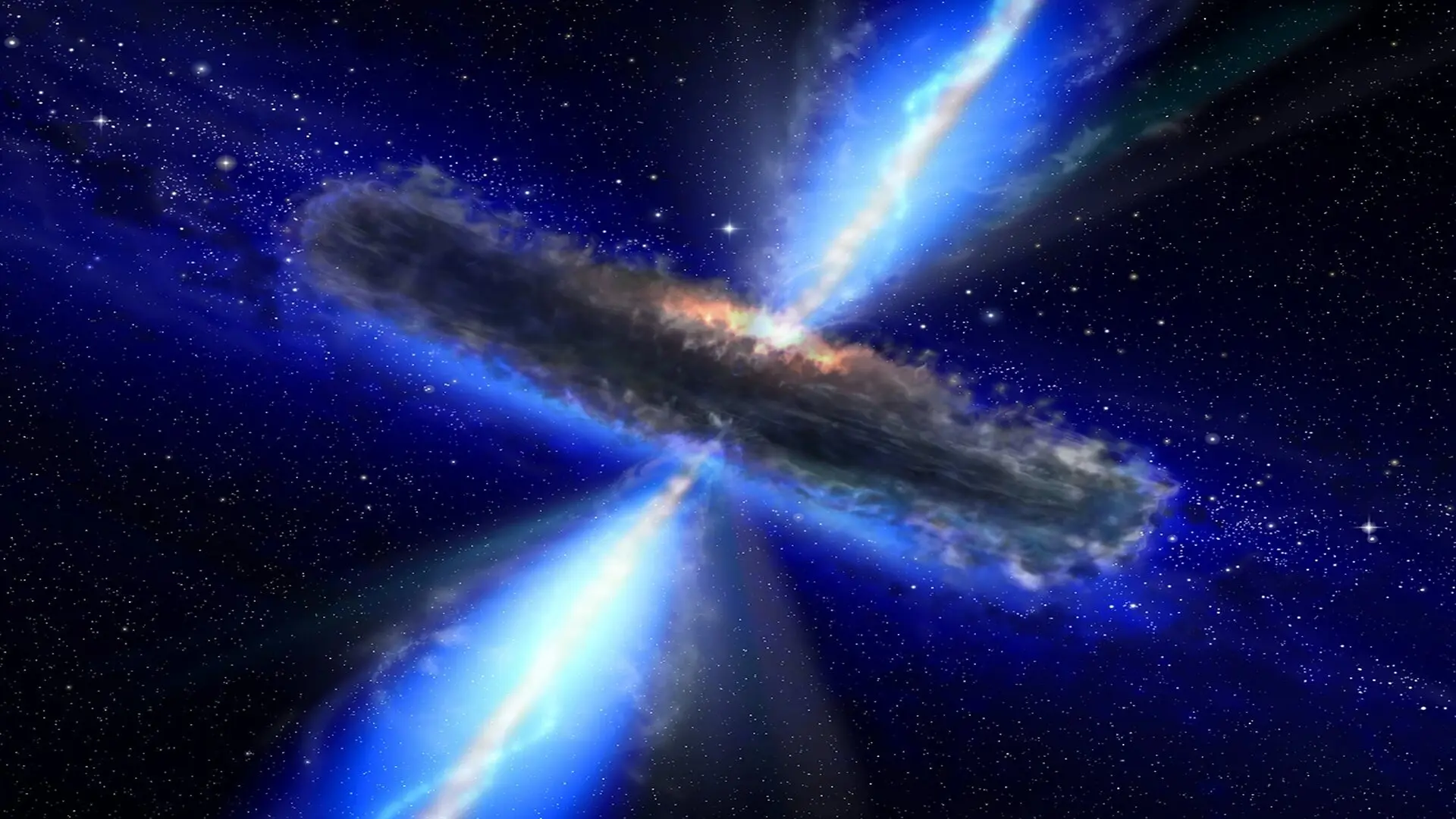
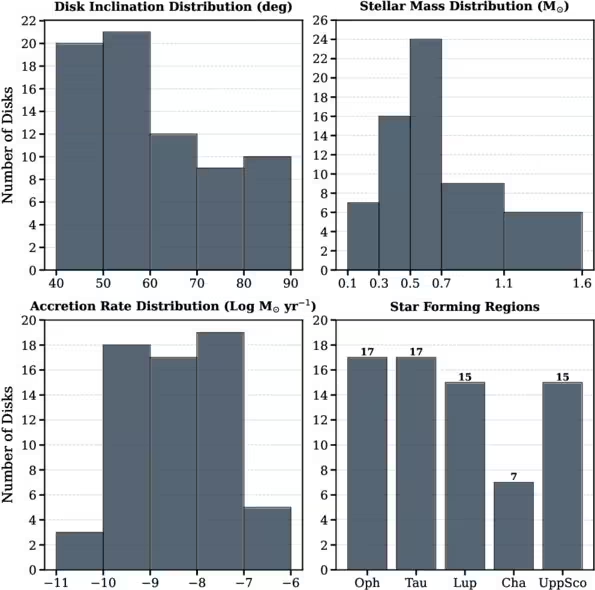
New data from the James Webb Space Telescope (JWST) is reshaping our understanding of how infant planetary systems shed their gas, revealing a two-stage process that acts as a cosmic deadline for the birth of gas giants. A comprehensive analysis of 72 young star systems suggests that before settling into a tranquil state, nascent solar systems are swept by intense magnetic winds that eventually give way to lighter, radiation-driven outflows.
The findings, led by Naman Bajaj of the University of Arizona’s Lunar and Planetary Laboratory, offer a clearer picture of the environment in which our own Sun once resided. During the first 10 million years of a star’s life, its surrounding disk contains roughly 100 times more gas than dust. The rapid dissipation of this material is a critical phase, as planets like Jupiter must accumulate their massive atmospheres before the supply is exhausted.
Mapping the Evolution of Planetary Nurseries
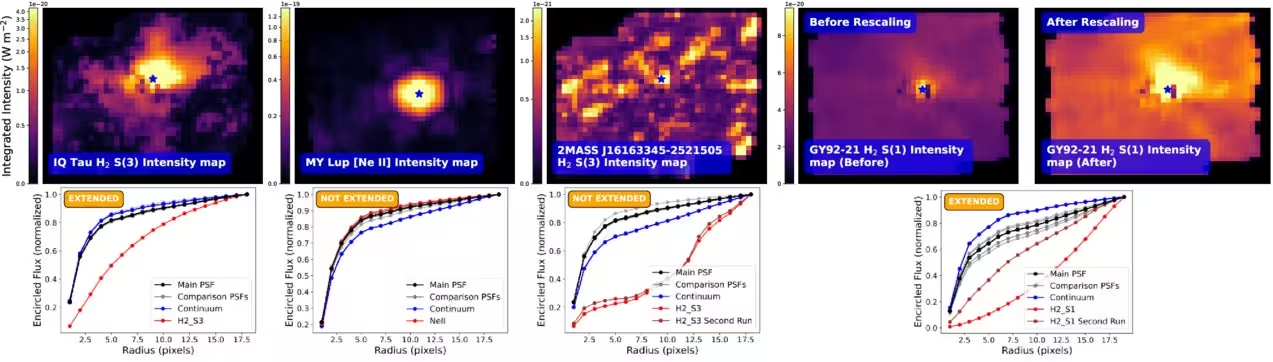
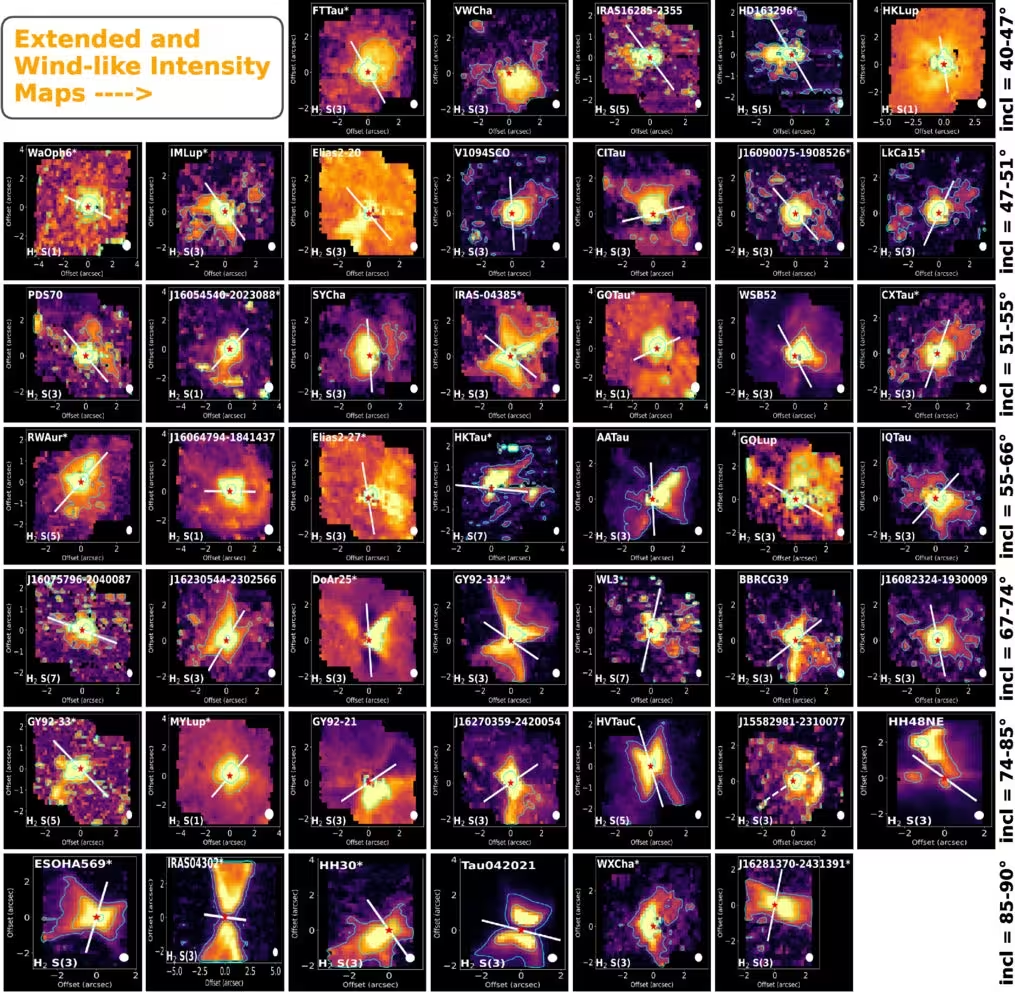
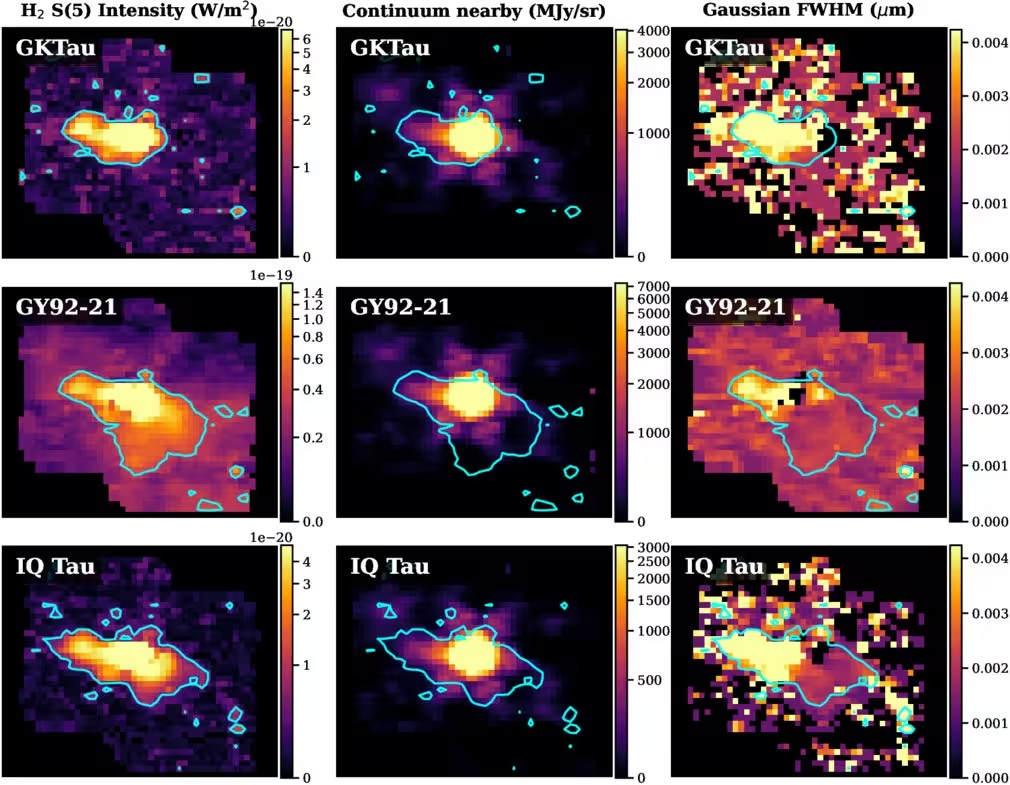
To reconstruct this transition, researchers utilized archival data from JWST’s Mid-Infrared Instrument (MIRI), treating the 72 observed systems as individual snapshots of varying evolutionary stages. By tracking two primary gas tracers—molecular hydrogen and ionized neon—the team was able to distinguish between different types of mass loss.
Molecular hydrogen proved vital for identifying broad, sweeping winds, while ionized neon served as a dual indicator for high-speed jets and slower, atomic-based winds. The study, published in The Astronomical Journal, found that 64 of the systems exhibited extended molecular hydrogen signatures, while 57 showed extended ionized neon, suggesting that these outflow mechanisms are nearly universal in young systems.
A Magnetic Shift in Disk Clearing
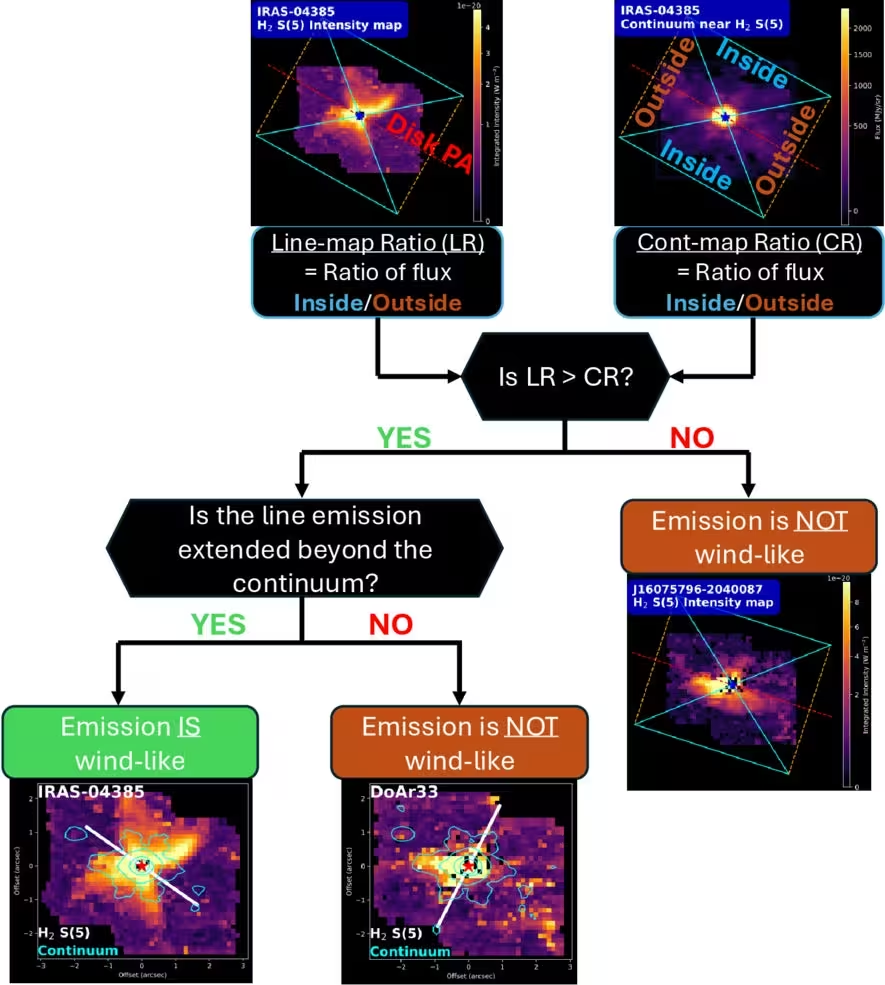
The research points to a clear, progression-based shift. In the earliest, most active phases of accretion, massive magnetic fields dominate, launching gas away from the star through magnetohydrodynamic (MHD) winds. These systems frequently displayed fast, narrow jets paired with wide molecular outflows. The dense molecular winds likely act as a protective barrier, shielding the outer reaches of the disk from the star’s high-energy X-ray and ultraviolet radiation.
As the star’s accretion rate slows, the magnetic influence wanes. The high-speed jets vanish, and the shielding molecular winds fade. This decline allows high-energy radiation to penetrate deeper into the disk, initiating a process known as photoevaporation. In this later stage, ionized neon no longer traces intense jets but instead tracks the slower, broader movement of this thermal, photoevaporative wind.
“Neon initially traces the fast-moving jets while molecular hydrogen is tracing wider winds,” Bajaj explained. “Later, we see neon in the slower, broader motion of the photoevaporative wind when the magnetic jets and winds weaken, and the X-ray photons can excite neon.”
The Clockwork of Planet Building
This transition marks a definitive end to the rapid growth phase of planets. Because gas giants like Jupiter rely on these massive gas reservoirs to build their atmospheres, the timing of these wind shifts determines the ultimate composition of the resulting solar system. Once the magnetic shielding fails and photoevaporation takes over, the window for forming gas-heavy planets essentially closes.
The JWST observations provide critical validation for a hypothesis proposed by University of Arizona professor Ilaria Pascucci and her team in 2020. Their earlier work suggested that molecular winds were responsible for blocking radiation during the early stages of disk life, a theory that the new, higher-resolution data from JWST has now largely confirmed.
Future research will aim to quantify exactly how much mass these winds remove and determine the specific launch points within the disk, potentially helping astronomers predict which planetary systems are most likely to host gas giants versus smaller, rocky worlds. By observing these distant, churning disks, scientists are essentially peering into the turbulent, long-lost origins of our own home.
This article has been fact checked for accuracy, with information verified against reputable sources. Learn more about us and our editorial process.
Last reviewed on .
Article history
- Latest version
Reference(s)
- Bajaj, Naman S.., et al. “JWST/MIRI Reveals the Evolution from Molecular to Atomic Disk Winds.” The Astronomical Journal, vol. 172, no. 3, August 25, 2026, pp. 161 American Astronomical Society, doi: 10.3847/1538-3881/ae9089. <https://iopscience.iop.org/article/10.3847/1538-3881/ae9089>.
Cite this page:
- Posted by Aisha Ahmed