See Mercury Like Never Before This June As The Elusive Planet Lights Up Evening Twilight
Rare June 2026 evening sighting: Mercury aligns with Venus and Jupiter in twilight
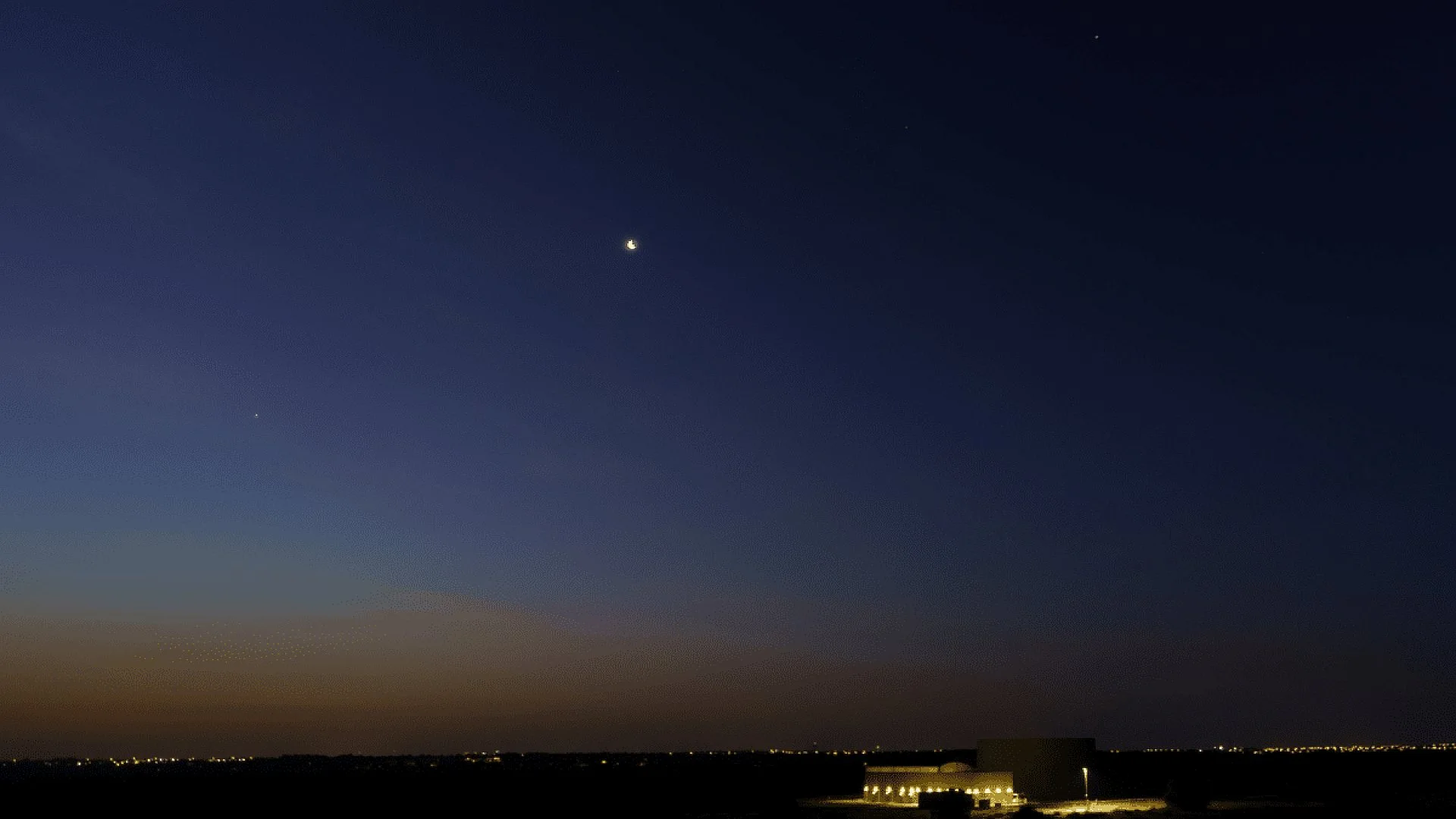
In the twilight of June 2026, stargazers will have a brief window to glimpse Mercury, the solar system’s innermost world, before it disappears again behind the Sun’s glare. The opportunity, highlighted by BBC Sky at Night Magazine, combines a favorable elongation, a low‑angle setting and the challenges of bright evening sky, offering a rewarding but fleeting sighting for anyone willing to time it right.
What makes Mercury so hard to see
Mercury’s proximity to the Sun keeps it close to the daylight horizon, unlike the more distant Venus or Jupiter that can be tracked deep into the night. In mid‑June 2026 the planet reaches its greatest eastern elongation on the 15th, pulling 24.5 degrees away from the Sun. Even so, the lingering twilight and Mercury’s modest altitude mean that observers must act quickly before the sky darkens further.
Ideal viewing window and location
The first chance to spot Mercury arrives on June 7, 2026, roughly 40 minutes after sunset. At that moment the planet shines at magnitude +0.0 and stays above the horizon for about 80 minutes. It will be positioned in the north‑west, nestled within the constellation Gemini, and sit roughly 13.6 degrees from Venus. The nearby presence of Venus and Jupiter offers a helpful guide for locating the fainter Mercury. Telescopes of 75 mm aperture or larger can reveal subtle surface‑brightness variations and phase details.
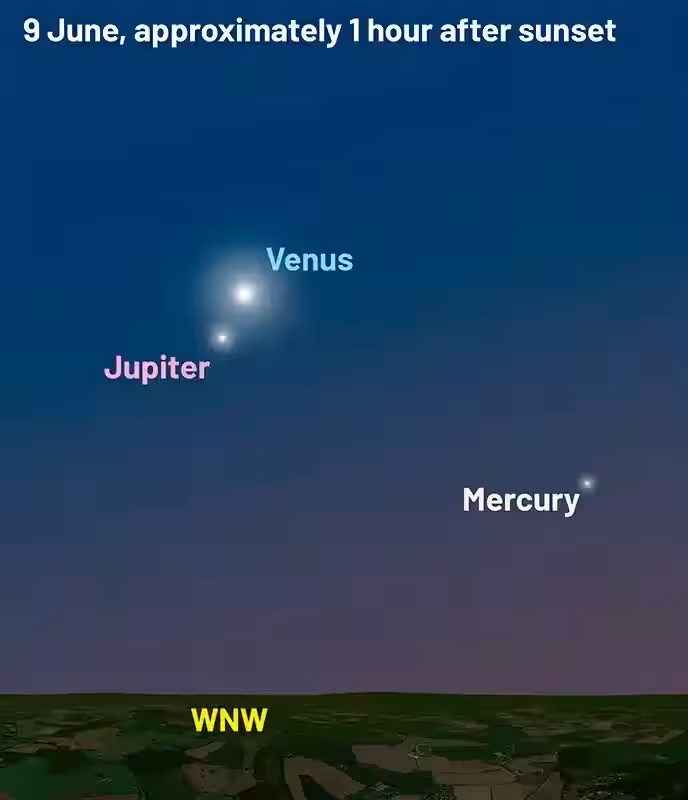
Credit: Pete Lawrence
How the solstice influences evening darkness
Approaching the June solstice, twilight stretches longer, making the sky’s transition to darkness more gradual. Mercury’s orbital path and the ecliptic’s tilt keep it low in the western sky even as the Sun sets farther away. Although the planet’s brightness only wanes slightly, the extended glow of the horizon demands precise timing for both visual observers and photographers.
Planetary pairings that point the way
A useful marker this month is the close approach of Venus and Jupiter, which reaches minimum separation on June 9. The bright duo provides a reliable reference point; by drawing an imaginary line from the Venus‑Jupiter pair toward the northwest, observers can home in on Mercury’s position. BBC Sky at Night Magazine notes that aligning with these planets markedly improves the odds of a successful detection.
Observing and photographing the planet
For the best photographic results, choose a site with an unobstructed western horizon and minimal artificial light. A telescope of at least 75 mm aperture will display Mercury’s subtle phase and surface‑brightness cues, while binoculars can aid in initial acquisition when aimed using Venus and Jupiter as guides. Monitoring the planet over several evenings offers a chance to track gradual shifts in brightness and position, enriching the overall astronomical experience.
This article has been fact checked for accuracy, with information verified against reputable sources. Learn more about us and our editorial process.
Last reviewed on .
Article history
- Latest version
Reference(s)
- Lawrence, Pete. “Now is one of your best chances to see the planet closest to the Sun. Catch Mercury in the evening twilight in June 2026.”, June 1, 2026 BBC Sky at Night Magazine <https://www.skyatnightmagazine.com/news/mercury-june-2026>.
Cite this page:
- Posted by Aisha Ahmed