Scientists Detect Magnetic Fields on Distant Gas Giants for the First Time
Astronomers detect magnetic fields on seven distant gas giants unlocking clues about exoplanet atmospheres and habitability
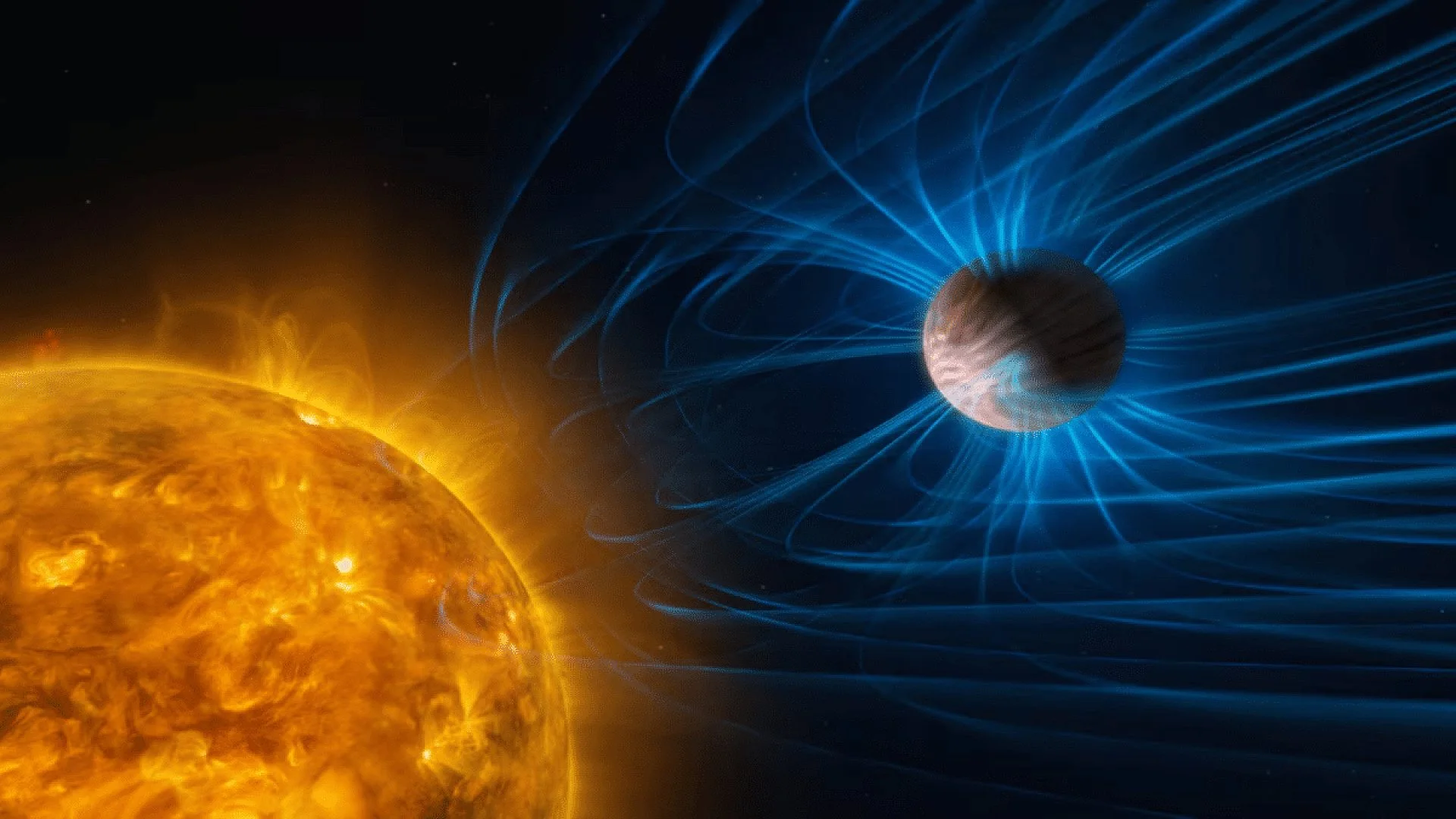
A team of astronomers has identified clear signs that planets outside the Solar System can sustain magnetic fields, akin to those surrounding Earth and Jupiter. By analyzing a set of seven ultra‑hot gas giants, the researchers uncovered a link between extreme temperature, rapid atmospheric flows, and magnetism, a finding that appears in the latest issue of Nature Astronomy.
Wind anomalies point toward magnetic drag
All seven planets in the sample circle their stars at very close distances and are tidally locked, meaning one hemisphere constantly faces the star while the opposite side remains in perpetual night. This configuration produces blistering daytime heat and drives atmospheric currents that race toward the cooler night side at speeds approaching 15,500 miles per hour (25,000 km/h), outpacing even the swiftest jets on Jupiter.
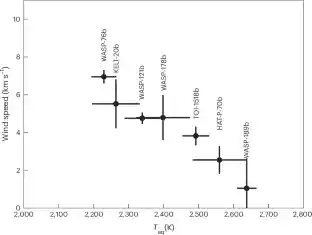
“Conventional wisdom would predict that hotter worlds generate stronger winds, because more stellar energy should stir the atmosphere more violently. Instead, we observe the reverse trend,” explained astronomer Julia Seidel of the Observatoire de la Côte d’Azur’s Lagrange Laboratory in Nice, who led the study released on Tuesday in Nature Astronomy.
“It’s the hottest planets that have the least strong winds mixing the atmosphere. And that’s really strange from what we know of how atmospheres behave. That means all that energy that the star puts into the planet’s atmosphere has to be dissipated in a different way. And the only possibility to brake the atmosphere that much that fast is via the magnetic field and its interaction with the moving charged particles of the atmosphere.”
The data imply that magnetic fields act like brakes on the atmospheric flow, diverting a portion of the stellar energy and smoothing the wind patterns. Unlike earlier work that focused on individual exoplanets, this investigation examined a cohort, allowing a systematic trend to emerge. “We’re not looking at an isolated case; we’re seeing a collective behavior across several worlds,” Seidel added.
Credit: Nature Astronomy
Why planetary magnetism matters
Magnetic fields arise when electrically conductive material, such as a molten metallic core, moves under the influence of planetary rotation. In our own system, Earth, Jupiter, Mercury, Saturn, Uranus and Neptune generate global magnetic shields, whereas Venus and Mars lack such protection. These fields serve as a barrier against high‑energy particles and stellar radiation, a factor that can dictate whether an atmosphere endures over geological timescales.
For the hot Jupiters examined, the inferred magnetic strengths are modest compared with Jupiter’s massive magnetosphere, yet they fall within the range observed for several Solar System planets. Pinpointing these fields helps scientists infer interior composition, atmospheric chemistry, and the nature of star‑planet interactions.
Credit: Nature Astronomy
Relevance to the search for habitable worlds
While the objects studied are gas giants unlikely to host life, the presence of magnetic fields on such planets hints at a broader principle: magnetic shielding may be essential for retaining atmospheres on rocky exoplanets, moderating climate, and protecting surface water from erosion by stellar winds. Consequently, magnetism emerges as a potential criterion in the evaluation of habitability beyond the Solar System.
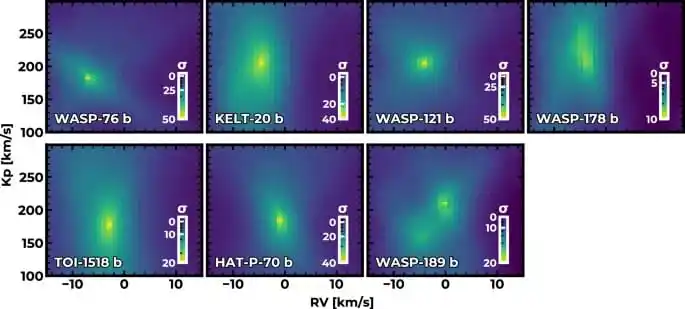
The investigation combined high‑resolution observations from facilities in Chile and Hawaii with sophisticated models that translate wind measurements into magnetic field estimates. By detecting magnetic signatures across multiple exoplanets rather than a single case, the team bolsters confidence in the robustness of the result.
This article has been fact checked for accuracy, with information verified against reputable sources. Learn more about us and our editorial process.
Last reviewed on .
Article history
- Latest version
Reference(s)
- Seidel, Julia. “Magnetic field strengths of hot giant exoplanets consistent with Solar System values - Nature Astronomy.”, June 2, 2026, pp. 1-12. Nature, doi: 10.1038/s41550-026-02870-1. <https://www.nature.com/articles/s41550-026-02870-1>.
Cite this page:
- Posted by Aisha Ahmed