NASA Confirms Roman Telescope’s Giant Mirror Is Ready For Space
NASA’s Roman Space Telescope clears final mirror test paving way for groundbreaking cosmic views
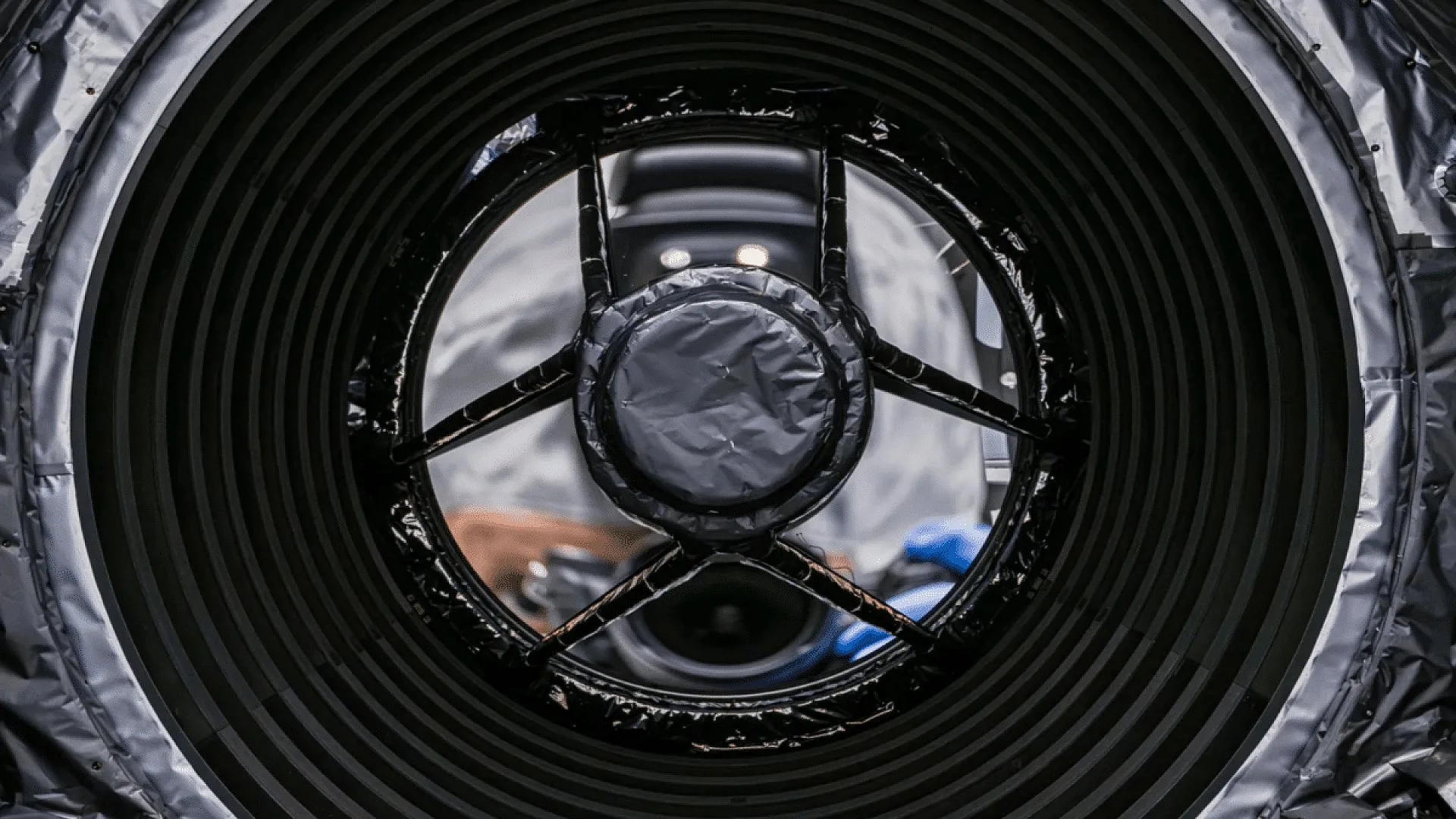
NASA announced that the Nancy Grace Roman Space Telescope has passed its last major technical hurdle: a thorough visual inspection of its 2.4‑meter primary mirror. The verification confirms that the telescope’s key optical component remains perfectly aligned and free of contaminants, keeping the mission on track for an early‑September launch and promising unprecedented wide‑field views of the universe.
Last Visual Inspection Wrapped Up at Goddard
At NASA’s Goddard Space Flight Center in Greenbelt, Maryland, engineers rotated the observatory onto its side, removed the launch cover and examined the primary mirror in detail. The 7.9‑foot (2.4‑meter) mirror, which gathers faint light from distant galaxies and stars, was inspected to ensure that no particles settled on its surface during prior testing and that all coatings and alignments remained within specification. This hands‑on review signaled the shift from assembly to final launch preparations for one of the agency’s most eagerly awaited astronomy missions.
“The Roman engineering team laid eyes on the telescope for the final time before it, in turn, becomes the eyes of humanity, revealing the wonders of the cosmos,” said J. Scott Smith, the Roman telescope manager at NASA Goddard. “It is a profoundly humbling moment to witness the culmination of hard work from so many dedicated individuals, teams, and partner organizations, including L3Harris.”
Exacting Optical Alignment Guarantees Wide‑Field Accuracy
Specialized imaging equipment captured high‑resolution views of the mirror and surrounding optics after the spacecraft endured vibration and shake tests that simulate launch stresses. Engineers verified that the light path remains precisely directed toward the Wide Field Instrument detector array, a requirement for the mission’s ability to capture faint, distant signals. Any microscopic deviation could degrade scientific data once Roman reaches orbit.
“We developed a method of using a high-resolution camera equipped with a very powerful zoom lens to do a multi-purpose inspection,” said Bente Eegholm, optics lead for Roman’s Optical Telescope Assembly at NASA Goddard. “The mirror passed with flying colors, keeping the mission on track for an early September launch.”
Distinctive Coating and Surface Smoothness
Roman’s mirror is coated with a silver layer thinner than 400 nanometers—about 200 times thinner than a human hair—to boost reflectivity in the near‑infrared spectrum. This choice sets it apart from the Hubble Space Telescope, which uses aluminum and magnesium fluoride for visible and ultraviolet work, and the James Webb Space Telescope, whose mirrors are gold‑coated for longer infrared wavelengths (source).
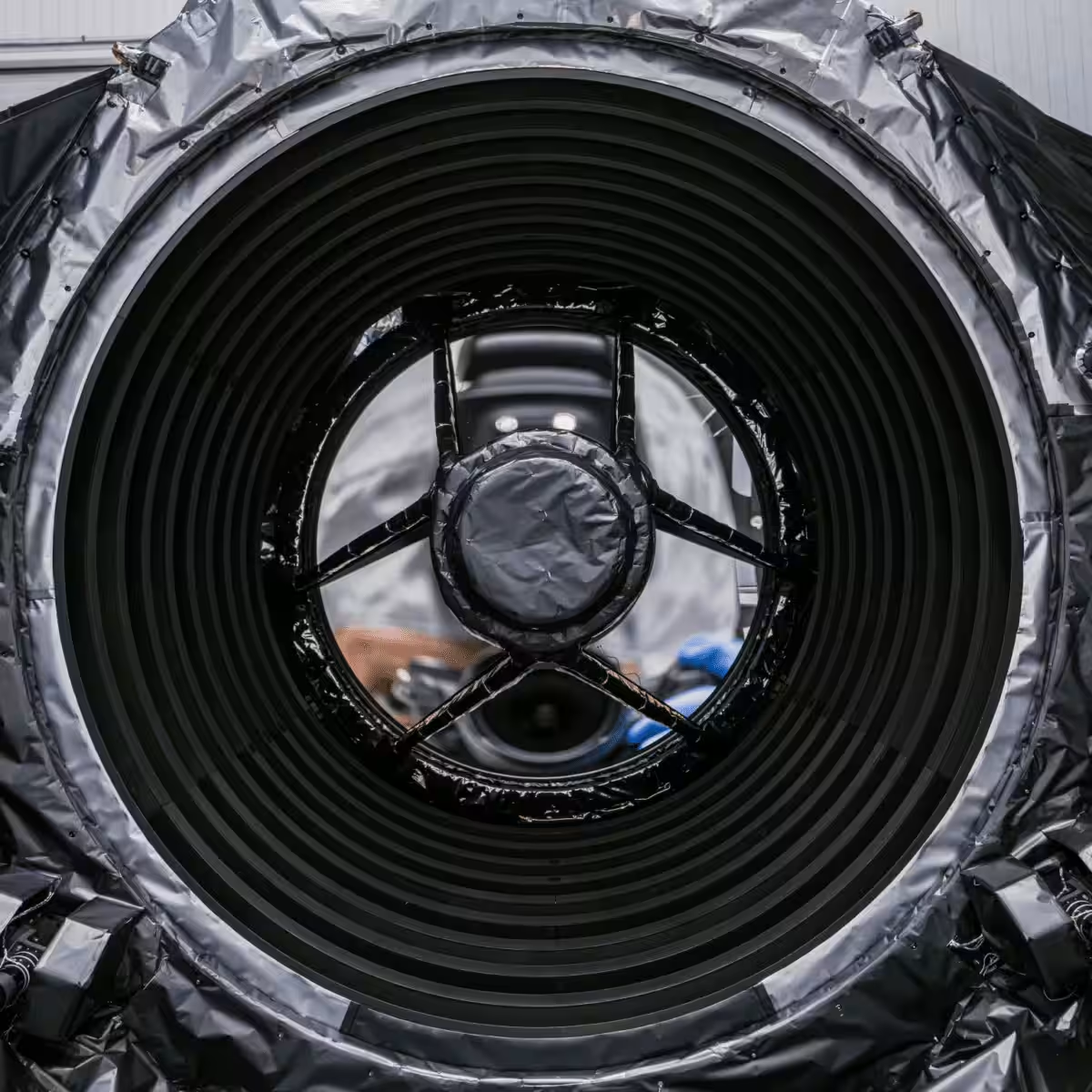
Credit: NASA/Sydney Rohde
Surface measurements show an average deviation of just 1.2 nanometers—more than twice as smooth as the mission’s specifications demand. If the mirror were scaled to Earth’s size, those imperfections would rise only a few millimeters. Constructed from ultra‑low‑expansion glass, the mirror resists shape changes caused by temperature swings between Earth’s environment and the cold vacuum of space, preserving image clarity for the telescope’s demanding observations.
“In order to gather very sensitive measurements of objects strewn throughout space, all of Roman’s components have to be ultraprecise,” Eegholm said. “The primary mirror certainly delivers on that precision.”
Final Countdown Toward Launch
With the mirror cleared, the telescope will be transported to Kennedy Space Center in Florida for final processing ahead of the slated early‑September liftoff (NASA). Once deployed, Roman’s wide‑field capability will enable astronomers to map vast swaths of the sky, probe dark energy, hunt for exoplanets and trace large‑scale cosmic structures, extending the legacy of Hubble and Webb.
Team members view the successful inspection as a validation of years of engineering, testing and collaboration. “We’re really proud of the amazing optical system we’ve delivered for the Roman mission alongside our partners at L3Harris,” said Josh Abel, lead Optical Telescope Assembly systems engineer at NASA Goddard. “Now that it’s assembled, aligned, and all shined up, we’re ready to go.”
This article has been fact checked for accuracy, with information verified against reputable sources. Learn more about us and our editorial process.
Last reviewed on .
Article history
- Latest version
Reference(s)
- Balzer, Ashley. “NASA’s Roman Space Telescope Primary Mirror Gets Last Look - NASA.”, May 29, 2026 NASA <https://www.nasa.gov/missions/roman-space-telescope/nasas-roman-space-telescope-primary-mirror-gets-last-look/>.
Cite this page:
- Posted by Aisha Ahmed