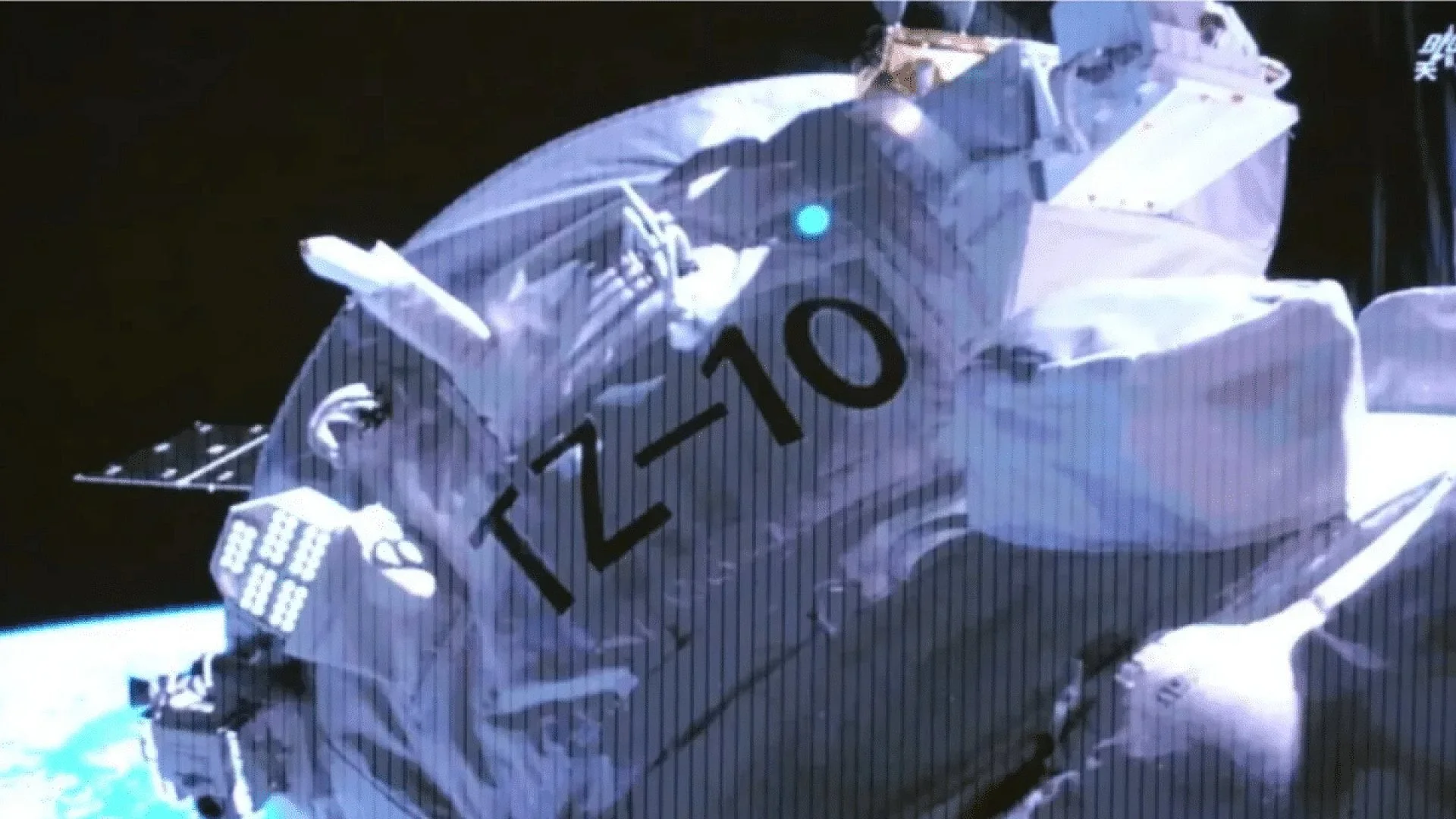
China has launched the first human‑derived artificial embryos into orbit, a step intended to reveal how the unique conditions of space—such as microgravity and heightened radiation—might influence the earliest phases of human development. The experiment could provide essential data for future habitats on the Moon, Mars and other destinations.
Synthetic Embryos Fly Aboard Tianzhou‑10
The Tianzhou‑10 cargo vessel, which lifted off from the Wenchang Space Launch Site on 10 May, delivered more than seven tonnes of supplies—including provisions, fuel, spacesuits and scientific payloads—to the Tiangong space station. Among the cargo were lab‑grown human‑like embryos created from living stem cells. These constructs can replicate and multiply but lack the capacity to develop into a full fetus, offering a lower‑risk model for probing early developmental processes.
Leqian Yu, a scientist at the Chinese Academy of Sciences’ Institute of Zoology, clarified, “These are not genuine human embryos and cannot become an individual, yet they serve as a valuable proxy for studying the first steps of human growth.” Two variants were sent: one that imitates the peri‑implantation stage when an embryo adheres to the uterine lining, and another that mirrors the peri‑gastrulation phase when cells begin to form distinct tissue layers. The embryos will be cultured for five days before being frozen for return to Earth.
To isolate the influence of space, identical synthetic embryos were cultivated on Earth as a baseline. “The experiment is progressing smoothly,” Yu reported. “By contrasting the orbital and terrestrial specimens we aim to pinpoint the variables that steer early embryonic development under space‑flight conditions and to anticipate the biological hurdles of long‑duration missions.”
Parallel studies with zebrafish and mouse embryos are also underway aboard Tianzhou‑10. Researchers hope these models will reveal how reduced gravity and cosmic radiation disrupt cell division, tissue patterning and overall growth—knowledge that could prove vital for any future attempts at human reproduction beyond Earth’s atmosphere.
Reproductive Biology in a Weightless Environment
Understanding how life reproduces in space remains a formidable challenge. Prior work shows that stem cells age more rapidly under microgravity, while exposure to space radiation can induce DNA lesions. Recent findings suggest that spermatozoa lose their directional orientation in zero‑gravity, potentially hindering fertilization. Yu emphasized that the artificial embryos were launched “to test whether life, which has evolved under constant gravity for hundreds of millions of years, is altered by its sudden removal.”
Future off‑world habitats may need to rely on assisted reproductive technologies such as in‑vitro fertilization, a concept already being explored by commercial space ventures. These experiments target the critical window when organ primordia form and the body axis is established, providing insight into how fundamental developmental milestones might be reshaped by extraterrestrial conditions.
If permanent settlements on the Moon or Mars are to become reality, a thorough grasp of reproductive viability in space will be indispensable. Data from the synthetic embryo missions could shape protocols for safely nurturing human life beyond Earth, while also informing medical guidelines for astronauts on extended voyages. As space tourism expands and the prospect of conception in orbit gains plausibility, these studies represent a pioneering step toward managing the biological complexities of interplanetary living.
Fact Checked
This article has been fact checked for accuracy, with information verified against reputable sources. Learn more about us and our editorial process.
Ahmed, Aisha. “China Sends Human Artificial Embryos To Space To Study Reproduction Beyond Earth.” BioScience. BioScience ISSN 2521-5760, 25 May 2026. <https://www.bioscience.com.pk/en/subject/astronomy/china-sends-human-artificial-embryos-to-space-to-study-reproduction-beyond-earth>.
Ahmed, A. (2026, May 25). “China Sends Human Artificial Embryos To Space To Study Reproduction Beyond Earth.” BioScience. ISSN 2521-5760. Retrieved May 25, 2026 from https://www.bioscience.com.pk/en/subject/astronomy/china-sends-human-artificial-embryos-to-space-to-study-reproduction-beyond-earth
Ahmed, Aisha. “China Sends Human Artificial Embryos To Space To Study Reproduction Beyond Earth.” BioScience. ISSN 2521-5760. https://www.bioscience.com.pk/en/subject/astronomy/china-sends-human-artificial-embryos-to-space-to-study-reproduction-beyond-earth (accessed May 25, 2026).