Astronomers Team Up Globally to Build Eco-Friendly Telescope to Spot Galaxies Hidden in Cosmic Dust
Un nuevo telescopio internacional promete revelar por primera vez regiones ocultas del universo a décadas de invisibilidad
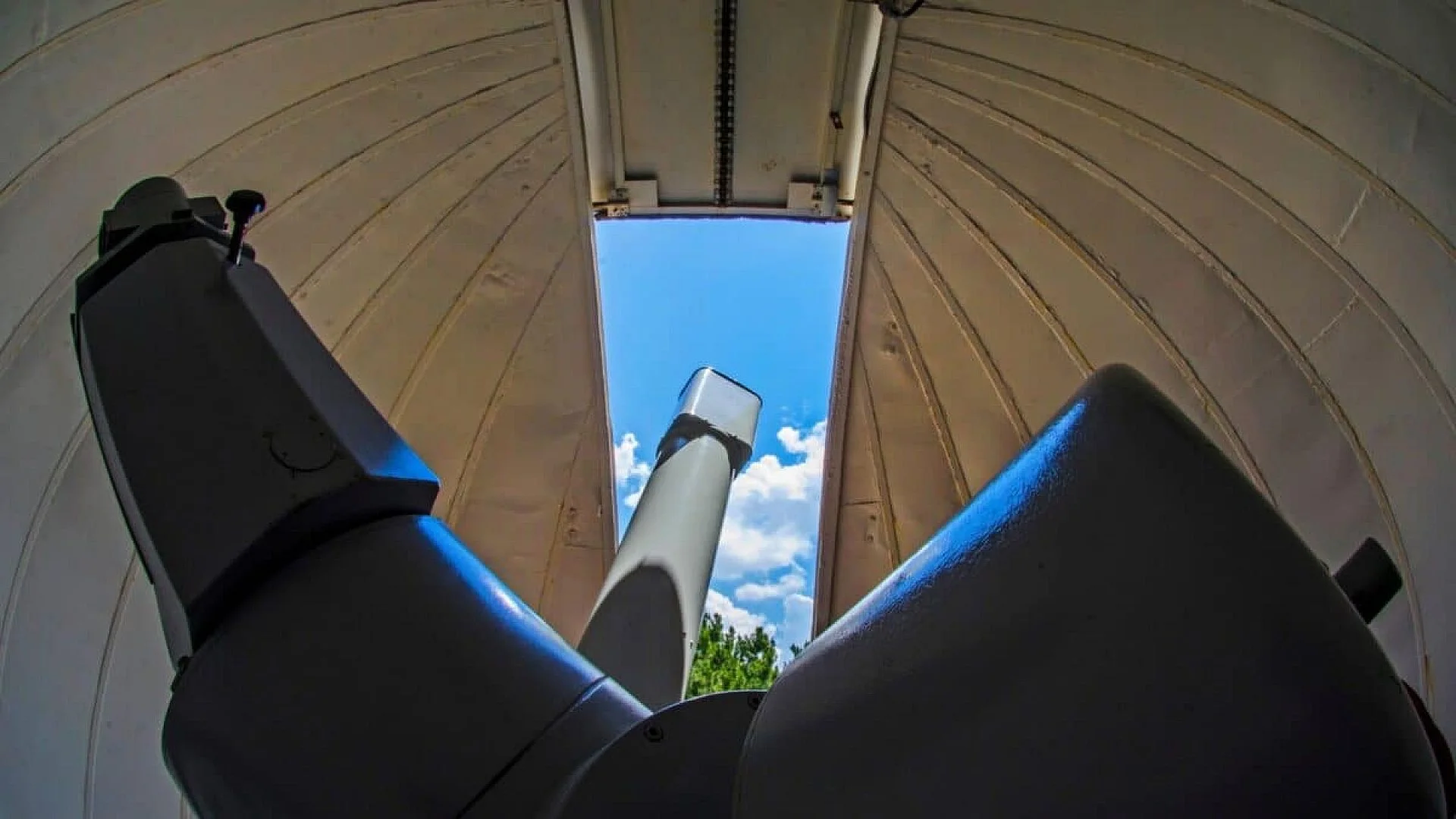
A Europe‑driven initiative called the Atacama Large Aperture Submillimeter Telescope (AtLAST) is set to chart regions of the cosmos that have long been hidden behind thick clouds of interstellar dust. Roughly half of the light that galaxies emit is absorbed by these dusty shrouds, leaving a major gap in our understanding of galaxy formation and evolution.
The plan calls for a 50‑meter single‑dish submillimeter instrument that can conduct expansive surveys while running completely on renewable power. Scientists anticipate that the telescope will uncover millions of previously unseen galaxies, map the cold gas that drives star birth, and deliver a fuller picture of cosmic structure.
A 50‑meter Submillimeter Surveyor for the Dusty Universe
Existing submillimeter facilities have already reshaped astronomy, yet instruments such as ALMA (Atacama Large Millimeter/submillimeter Array) provide only narrow, high‑resolution snapshots. Claudia Cicone, an astrophysicist at the University of Oslo and one of AtLAST’s co‑leaders, explained the limitation:
“When we work without submillimeter data we end up with a skewed view of the cosmos; the most dust‑enshrouded zones stay out of reach.”
According to Phys.org, the new telescope will function like a wide‑angle camera, scanning swaths of sky far larger than ALMA can cover and delivering a census of galaxies and cold gas throughout the observable universe.
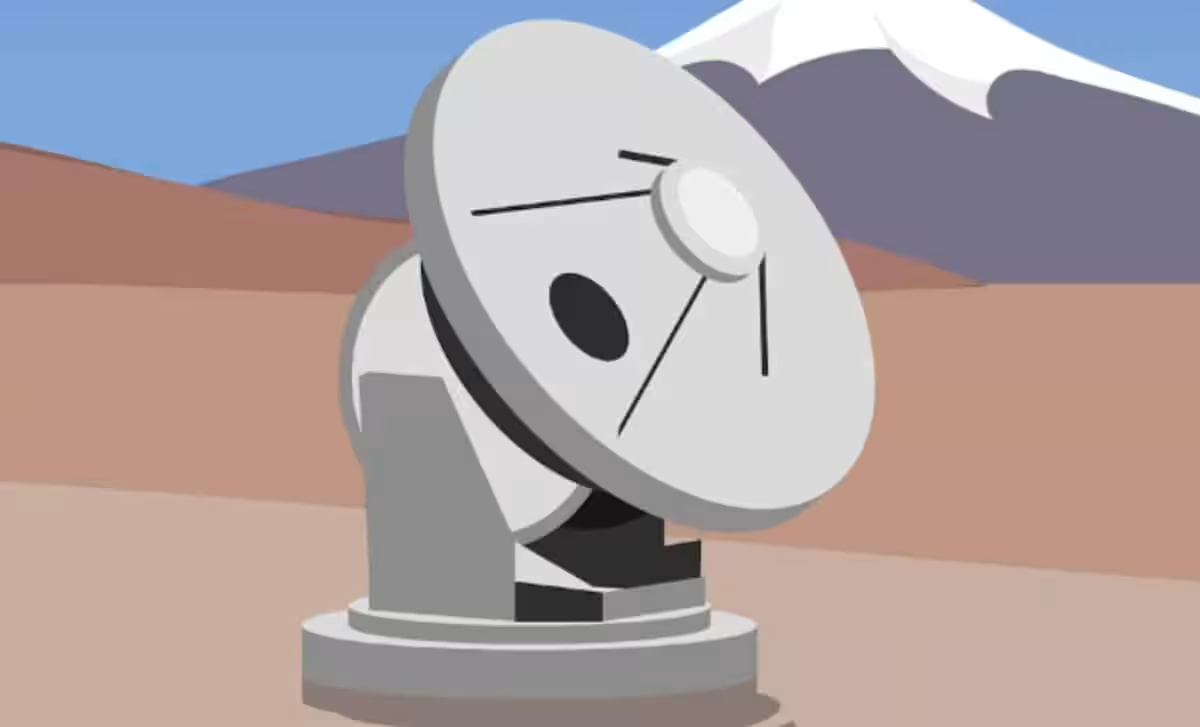
Many galaxies, including our own Milky Way, harbor dense dust clouds that block visible light and obscure key astrophysical processes. Project researchers estimate that about half of the radiation from galaxies is concealed behind dust, making submillimeter wavelengths essential for a clear view.
AtLAST will be equipped with a 50‑meter primary reflector and a 12‑meter secondary mirror. Tony Mroczkowski, an astronomer at Spain’s Institute of Space Sciences, highlighted the scale of the survey capability:
“ALMA is powerful, but it’s like a microscope; AtLAST will sweep an area comparable to sixteen lunar disks in a single pointing, letting us chart vast swaths of the sky.”
Green Engineering and International Teamwork
“The entire facility will be powered by renewable sources, using a custom hybrid regeneration system,” Cicone noted.
The design incorporates kinetic energy recovery when the antenna decelerates, alongside solar panels, battery banks and metal‑hydride storage. The steel and aluminum components are slated for production with near‑zero carbon emissions.
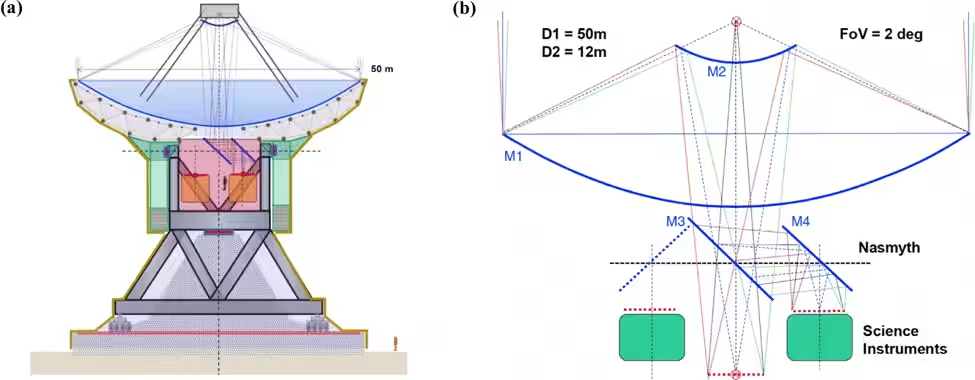
The project brings together scientists from Europe, Chile, South Africa, Canada, Taiwan, Thailand, New Zealand, Japan and the United States, pooling expertise in telescope design, prototyping and operations.
Revealing Galaxies Cloaked by Dust
When AtLAST becomes operational, astronomers will be able to probe regions that have remained out of reach. Dust‑obscured galaxies that currently blend together in existing data could be distinguished individually, and the distribution of cold gas and dust that fuels star formation will be mapped across the sky.
Mroczkowski estimates that the telescope could detect up to 50 million galaxies in just 1,000 hours of observing time. The same capability will enable detailed studies of molecular clouds, debris disks around young stars and even components of the Sun’s atmosphere, shedding light on the processes that give rise to stars and planets.
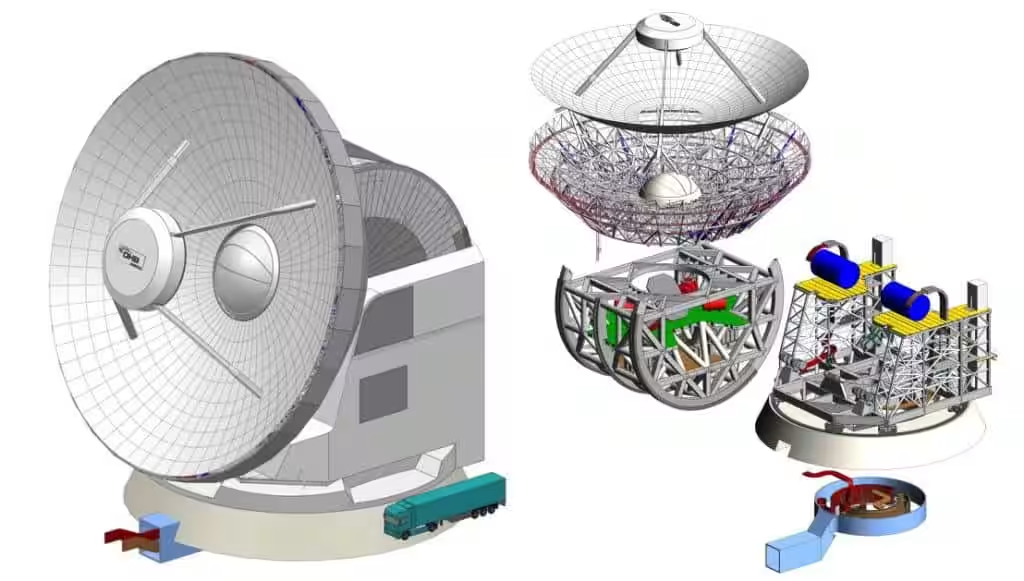
Researchers also hope to identify molecules that could be precursors to life and capture transient phenomena that appear only at submillimeter wavelengths. Cicone emphasized that AtLAST is built for decades of service, with modular instruments that can be upgraded to meet the needs of future generations of astronomers.
This article has been fact checked for accuracy, with information verified against reputable sources. Learn more about us and our editorial process.
Last reviewed on .
Article history
- Latest version
Reference(s)
- “ALMA - Atacama Large Millimeter/submillimeter Array.” <https://www.eso.org/public/teles-instr/alma/>.
- “Claudia Cicone - Institute of Theoretical Astrophysics.” <https://www.mn.uio.no/astro/english/people/aca/claudici/>.
- <https://phys.org/news/2026-05-atlast-telescope-reveal-universe.html>.
- “Atlast - AtLAST.”, June 1, 2026 <https://www.atlast.uio.no/>.
- “ORCID.” <https://orcid.org/0000-0003-3816-5372>.
Cite this page:
- Posted by Aisha Ahmed