Scientists Discover Earth and Mars May Be Siblings, Formed from the Same Cosmic Material
For eons, Earth and Mars have circled the Sun, yet emerging studies hint they may have shared more than just the same stellar neighborhood.
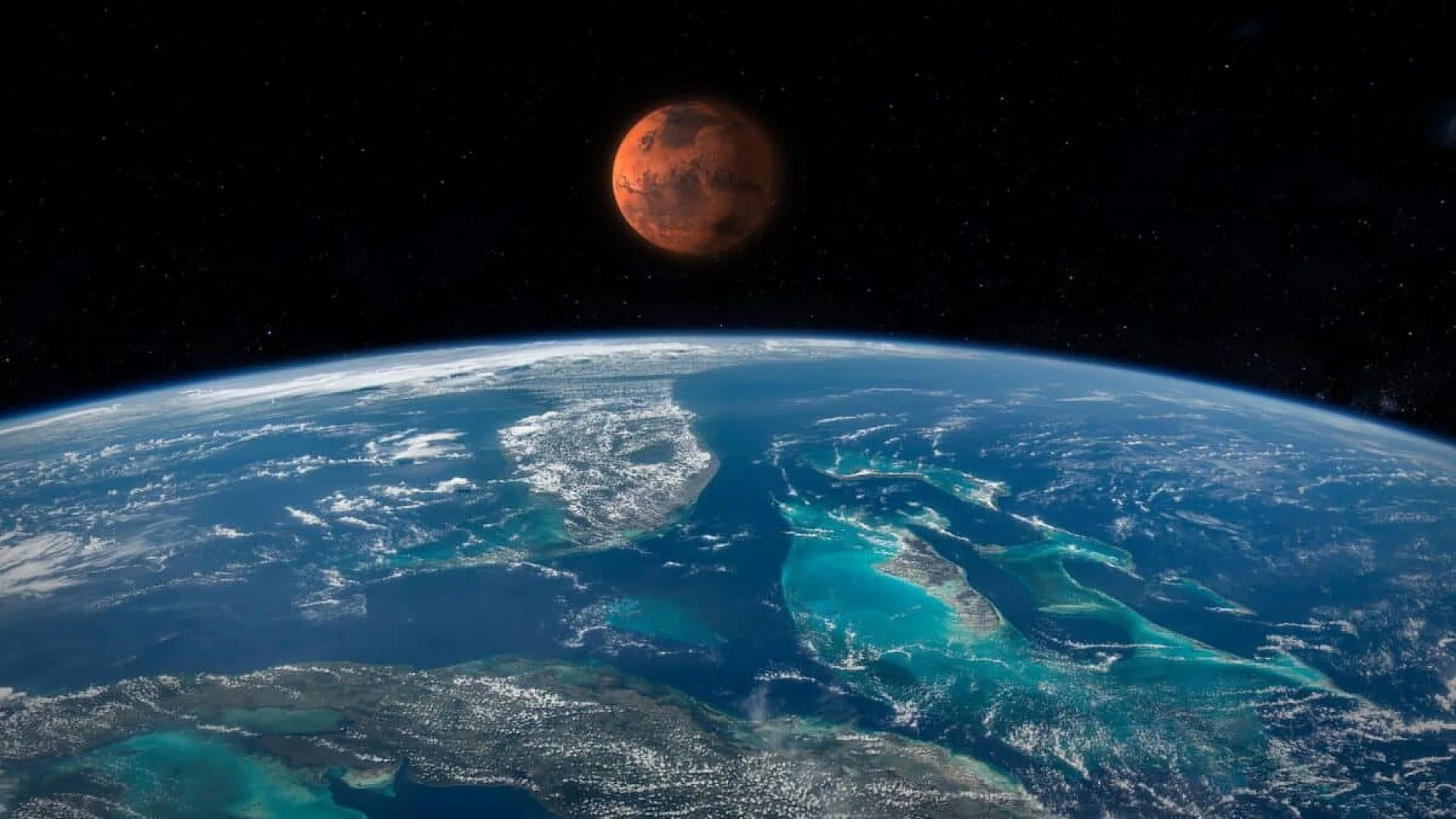
A groundbreaking study has revealed that the composition of Earth bears an uncanny resemblance to that of Mars, challenging long-held assumptions about the origins of our planet’s building blocks. Researchers now propose that Earth formed almost entirely from material within the inner Solar System, with little to no contribution from beyond Jupiter’s orbit.
This discovery offers a more detailed understanding of the Solar System’s architecture during its formative years. By analyzing the chemical makeup of meteorites, scientists are piecing together how Earth and its neighboring planets acquired the materials that comprise their cores and surfaces.
Understanding the source of Earth’s material is crucial, as it informs models of planetary formation, the distribution of volatile elements such as water, and the role of large planets like Jupiter in shaping the inner Solar System.
Tracing Planetary Material Through Meteorites
Meteorites serve as snapshots of the early Solar System, preserving fragments from the time when planets were coalescing. The study published in Nature Astronomy explains that researchers Paolo Sossi and Dan Bower analyzed meteorites from Mars and Vesta, comparing their isotopic ratios to Earth’s composition. Isotopes, variations of atoms of the same element, enable scientists to identify the origin of material.

The team discovered that Earth’s material originates almost entirely from the inner Solar System. Bower notes that material from the outer Solar System accounts for less than 2% of Earth’s mass, or possibly none at all. Sossi adds:
“Our studies are actually data science experiments,” she says. “We carried out statistical calculations that are rarely used in geochemistry, even though they are a powerful tool.”
Jupiter’s Influence on Planetary Formation
Jupiter’s gravitational pull has long been thought to shape the layout of the Solar System, influencing the size of Mars, forming the asteroid belt, and dividing the early Solar System into distinct material reservoirs. According to the BBC report, the study explains that Jupiter created a gap in the young Solar System’s dust disc, preventing material from the outer regions from mixing with inner Solar System material.
This separation likely limited the transfer of material from beyond Jupiter to the blue planet. Bower pointed out that the calculations were based purely on observational data, without relying on assumptions about physical processes we still don’t fully understand, which makes the results more robust.
Similarities Among Inner Rocky Planets
The research also showed that Earth’s makeup is very similar to that of Mars and Vesta, while Venus and Mercury seem to follow a comparable pattern. Sossi notes that this analysis enables scientists to theoretically predict the composition of Venus and Mercury, providing a clearer picture of how the inner planets formed.
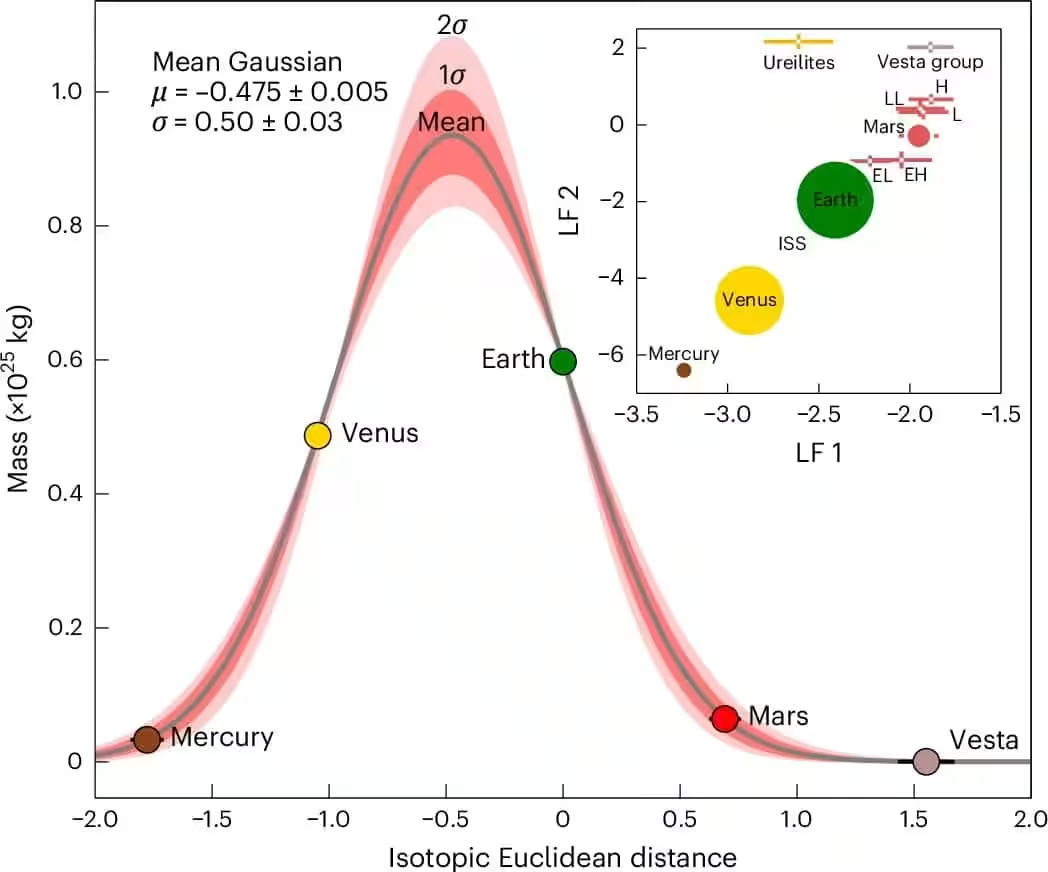
These findings improve our understanding of how rocky planets grew from the Sun’s primordial disc. The study indicates that Earth and its neighboring planets formed from a stable, local supply of material.
“Our results shed new light on the formation history of our Earth and the other rocky planets.” Sossi adds “Dan and I will have to engage in many heated debates about the material composition of Earth and its neighboring planets, because the scientific discourse over the building blocks of Earth is far from over.”
This article has been fact checked for accuracy, with information verified against reputable sources. Learn more about us and our editorial process.
Last reviewed on .
Article history
- Latest version
Cite this page:
- Posted by Aisha Ahmed