NASA’s NEO Surveyor Space Telescope Gears Up for 2027 Mission to Track Asteroids
NASA’s upcoming NEO Surveyor initiative is set to revolutionize our ability to spot potentially dangerous asteroids and comets that could pose a risk to our planet, employing a cutting-edge infrared telescope for an extensive multi-year observation campaign.
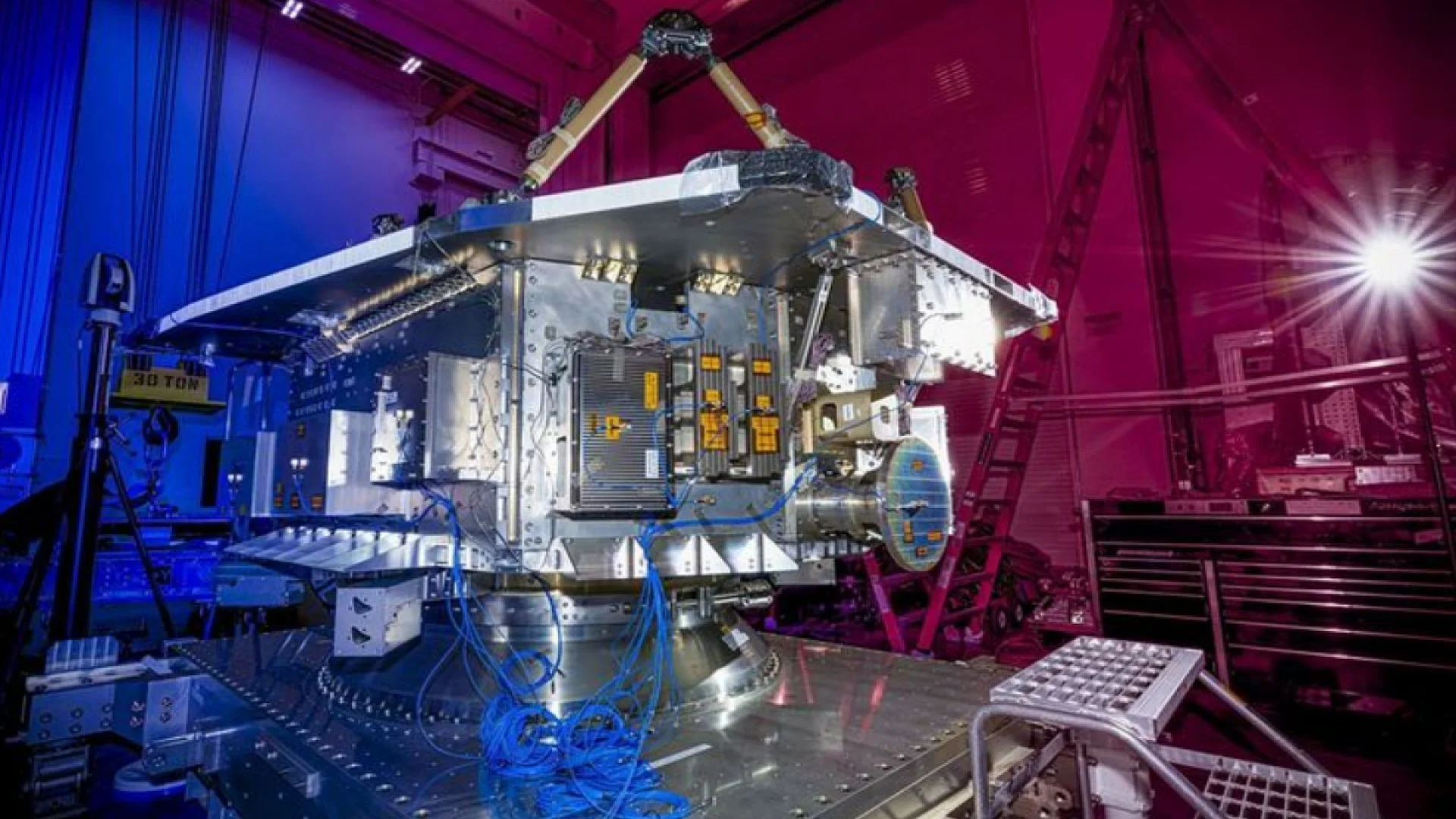
NASA is taking a bold leap forward in safeguarding Earth from cosmic threats with its groundbreaking NEO Surveyor mission. Scheduled to launch in 2027, this pioneering infrared space telescope will be NASA’s first-ever dedicated to detecting hazardous asteroids and comets. By meticulously scanning the solar system for hidden dangers, NEO Surveyor aims to identify objects that might otherwise go unnoticed, giving humanity a vital headstart in responding to potential threats.
A New Era in Asteroid Detection
The need for advanced asteroid detection systems has become increasingly apparent. While ground-based telescopes have made significant strides in tracking space objects, many near-Earth objects (NEOs) remain undetected due to their size, darkness, or location. As stated by Jim Fanson, the project manager for the mission at NASA’s Jet Propulsion Laboratory (JPL),
“Our focus is on deploying a robust observatory to the Sun-Earth L1 point, where it will conduct a continuous, multi-year infrared survey. By identifying objects that ground telescopes can miss, this mission will provide the critical data we need to safeguard our planet for years to come.”
The Sun-Earth Lagrange point (L1) is a stable region in space where the gravitational pull from the Earth and Sun allows the spacecraft to remain in a fixed position, enabling the telescope to scan vast areas of the sky without interference from the Earth or the Sun’s glare.
This unique placement and mission design give the NEO Surveyor a significant edge. Unlike optical telescopes that rely on visible light, the spacecraft will detect infrared radiation emitted by asteroids and comets as they absorb heat from the Sun. Many of these objects, particularly dark asteroids, are nearly invisible in visible light, but their infrared signatures can be easily detected by the spacecraft’s specialized sensors.
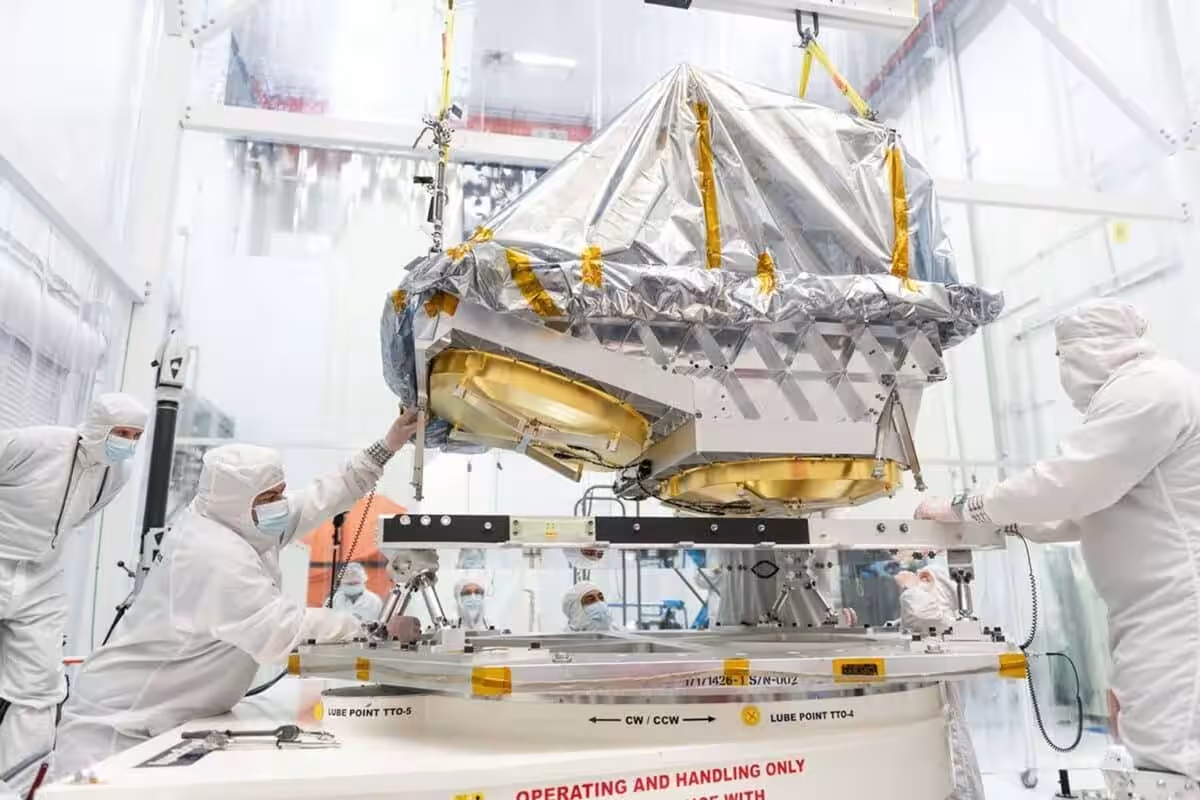
Credit: Space Dynamics Laboratory/Allison Bills
The Cutting-Edge Technology Behind the NEO Surveyor
The NEO Surveyor spacecraft will carry a suite of cutting-edge instruments, including a 16-megapixel camera with two detector arrays. These arrays will enable the telescope to capture images of space objects in two infrared wavelengths, allowing scientists to estimate an asteroid’s size and temperature. “We are currently working to develop the most efficient survey strategy that the mission will use to detect some of the hardest-to-find asteroids in our solar system, plus any comets that may be headed our way,” said Amy Mainzer, the mission’s lead at the University of California, Los Angeles (UCLA).
In addition to the camera, the spacecraft will feature a 20-foot sunshade, the largest structure on the spacecraft, which will shield the telescope from the Sun’s intense light. This will allow the observatory to look closer to the Sun than any previous telescope, where many potentially hazardous objects are located. The sunshade’s surface will also carry solar panels that will generate the electricity needed to power the spacecraft’s systems as it performs its critical mission.
The Mission’s Impact on Planetary Defense
Once the spacecraft begins its survey, the data it collects will be transmitted back to Earth via NASA’s Deep Space Network. These observations will be processed at the NEO Surveyor Survey Data Center located at Caltech’s IPAC, where scientists will analyze the infrared images and build catalogs of new NEOs. This data will then be sent to the Minor Planet Center, the global authority on tracking the orbits of space objects. These measurements will be critical for planetary defense agencies, such as NASA’s Center for Near-Earth Object Studies (CNEOS), which works to assess the potential risks posed by NEOs.
The NEO Surveyor’s data will provide invaluable insights, especially when it comes to calculating the size, trajectory, and potential impact risk of any asteroid or comet detected. By cataloging these objects in real-time, the mission ensures that planetary defense teams have the most up-to-date information possible to plan any necessary mitigation strategies should a dangerous NEO be identified.
This article has been fact checked for accuracy, with information verified against reputable sources. Learn more about us and our editorial process.
Last reviewed on .
Article history
- Latest version
Reference(s)
- Laboratory, Jet. “NASA’s Next-Gen Near-Earth Asteroid Space Telescope Takes Shape.” NASA Jet Propulsion Laboratory (JPL) <https://www.jpl.nasa.gov/news/nasas-next-gen-near-earth-asteroid-space-telescope-takes-shape/>.
Cite this page:
- Posted by Aisha Ahmed