See A Rare Planet Parade This Weekend As Venus, Jupiter, And Mercury Align
Rare weekend celestial show: Venus, Jupiter, and Mercury align in the western sky.
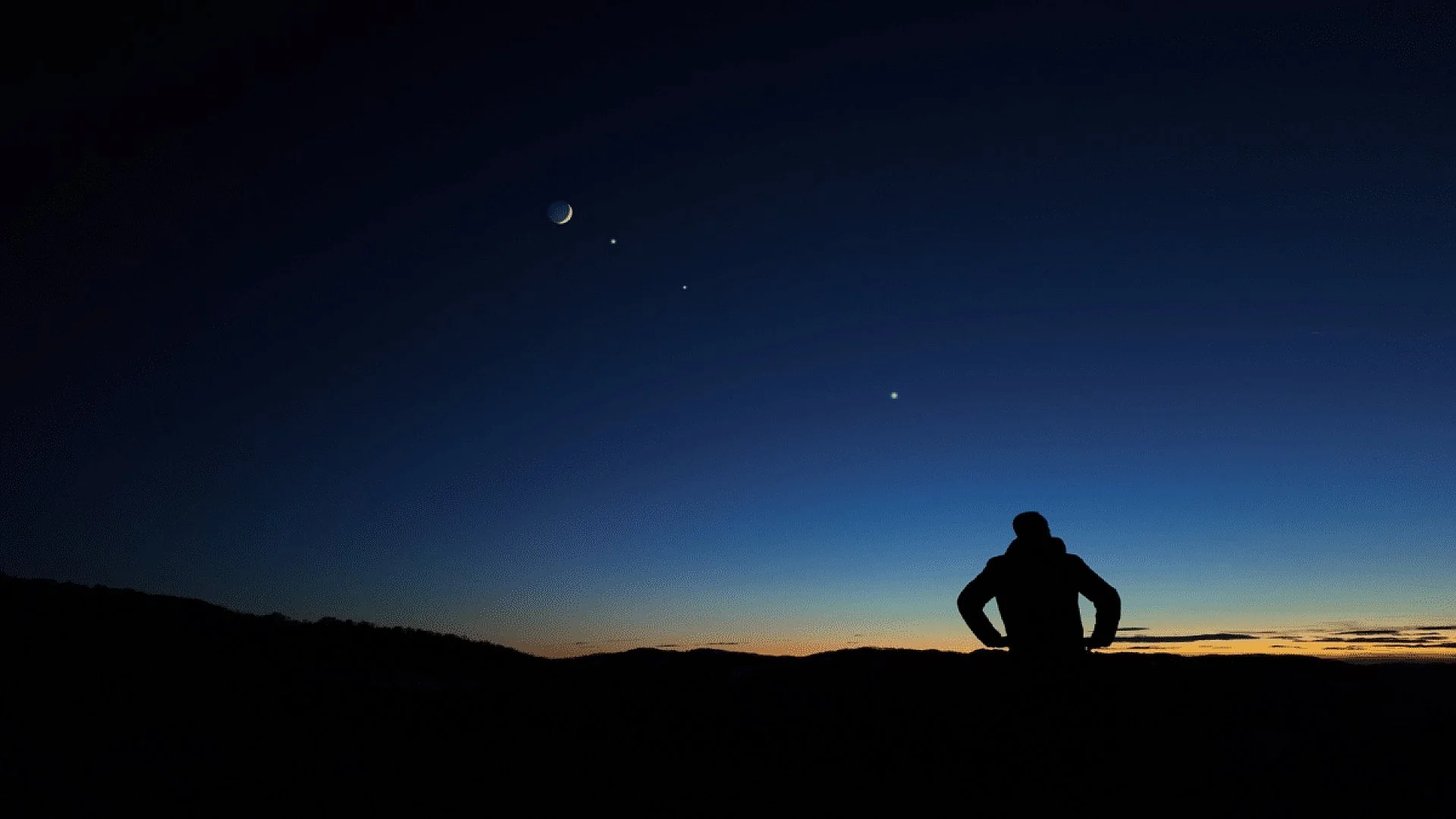
This weekend, observers will be treated to an eye‑catching arrangement as Venus, Jupiter and Mercury line up in the western sky just after sunset. The close grouping of three of the brightest planets offers a straightforward yet striking chance for both casual sky‑watchers and seasoned astronomers to see multiple worlds sharing the horizon.
Observing the Planetary Trio This Weekend
On Friday, May 22, a waxing crescent moon at roughly 45 % illumination will drift past the planets and skirt near Regulus, the dominant star of Leo, giving a useful reference point for evening viewing. By Saturday, May 23, Jupiter will sit just above Venus, while Mercury will hover low on the eastern horizon. Forbes notes that Mercury’s faintness may call for binoculars, but its evening rise is becoming more noticeable. On Sunday, May 24, all three planets remain visible, and the “Goat Star” Capella in Auriga will form an equilateral triangle with Venus and Mercury, creating a memorable setup for photography.
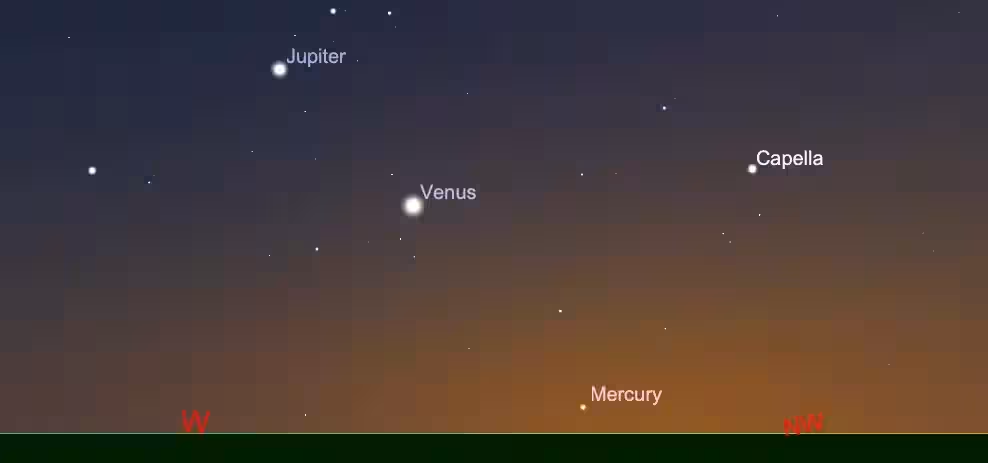
Credit: Stellarium
Why This Alignment Captivates Astronomers
Beyond its visual appeal, the coming weeks will see Venus and Jupiter drawing even nearer, culminating in a close conjunction around June 9‑11, with Mercury joining the scene. Forbes points out that such configurations provide a rare, real‑time glimpse of planetary motion, illustrating the principles of celestial mechanics more vividly than textbook diagrams. Observing the gradual approach of these bodies night after night highlights the predictable yet dynamic choreography of our solar system.
Moon Phase and Complementary Sky Phenomena
The moon continues its waxing cycle toward a full phase on May 31, producing a Blue Moon that will rise at dusk on May 30 and coincide with the “Manhattanhenge” street‑alignment event in New York City. As June begins, attention will shift back to the evening sky, with Venus and Jupiter moving ever closer, offering another chance to follow their converging orbits. A New Supermoon on June 15 will deliver the year’s largest lunar display, followed by the summer solstice on June 21, which marks the shortest nights of the year. Together, these overlapping events create a rich tableau for astronomy, photography and night‑time observation.
This article has been fact checked for accuracy, with information verified against reputable sources. Learn more about us and our editorial process.
Last reviewed on .
Article history
- Latest version
Reference(s)
- “See A ‘Planet Parade’ As Three Worlds Shine After Sunset This Weekend.”, May 22, 2026 Forbes <https://www.forbes.com/sites/jamiecartereurope/2026/05/22/see-three-planets-together-after-sunset-this-weekend/>.
Cite this page:
- Posted by Aisha Ahmed