Galaxies May Be Faking Dark Matter Evidence In Deep Space Stellar Streams
New simulations of 15,000 stellar streams suggest galaxies can create features once thought to be evidence of dark matter, narrowing the search for it.
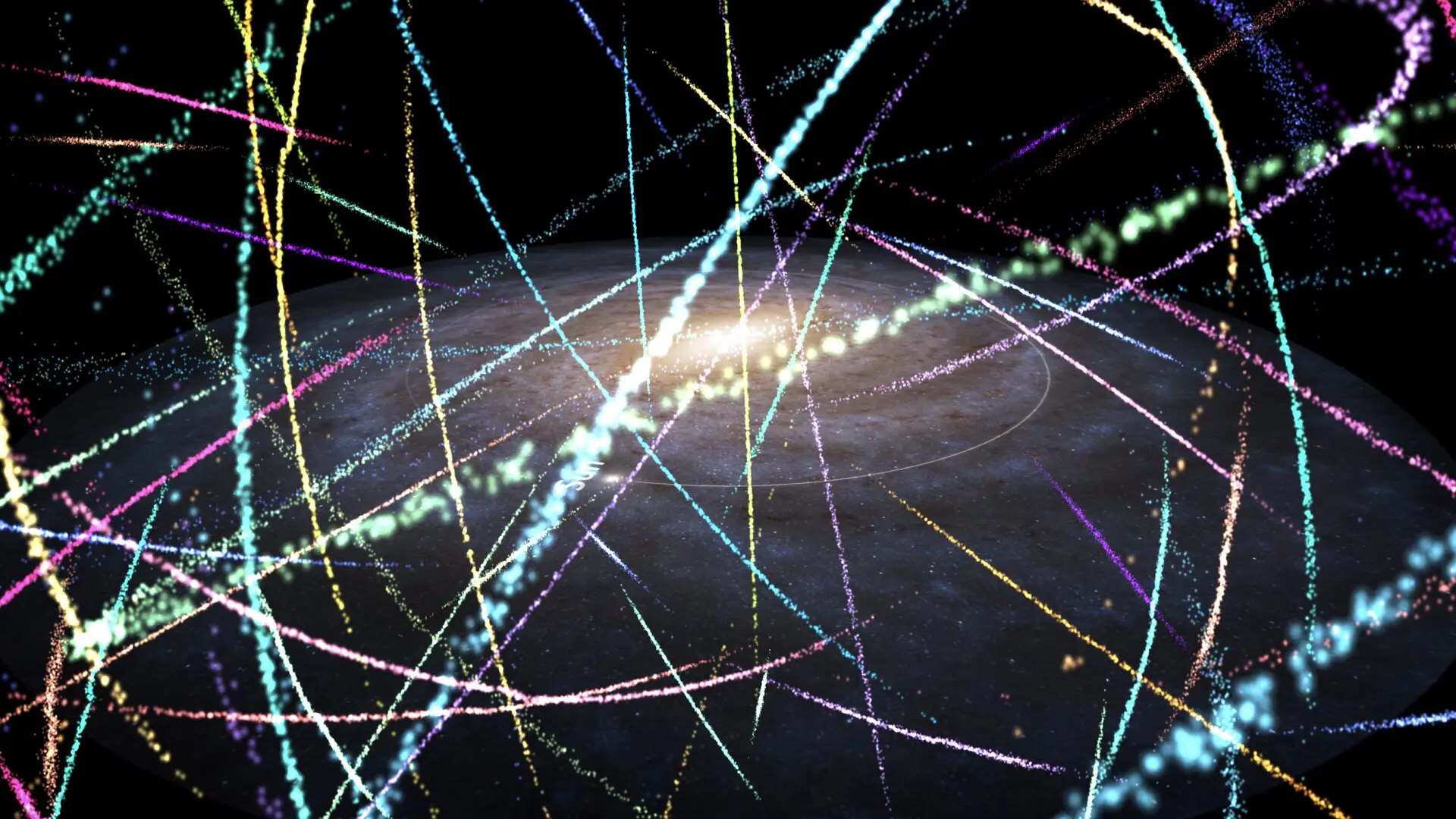
For years, astronomers have looked to the long, ribbon-like stellar streams wrapping around the Milky Way as vital clues in the hunt for dark matter. The prevailing theory suggested that these structures, formed by the tidal disruption of star clusters, should naturally remain smooth and coherent. Consequently, any observed kinks, gaps, or spurs were often interpreted as the gravitational “scars” left behind by encounters with invisible, dense clumps of dark matter.
New research, however, indicates that these cosmic ribbons may be far more chaotic on their own than previously assumed. A study led by researchers at the University of Washington suggests that the complex gravitational environment of a galaxy—even without the presence of dark matter subhalos—is more than capable of carving out the very irregularities once considered signatures of dark matter.
Simulating the Galactic Backdrop
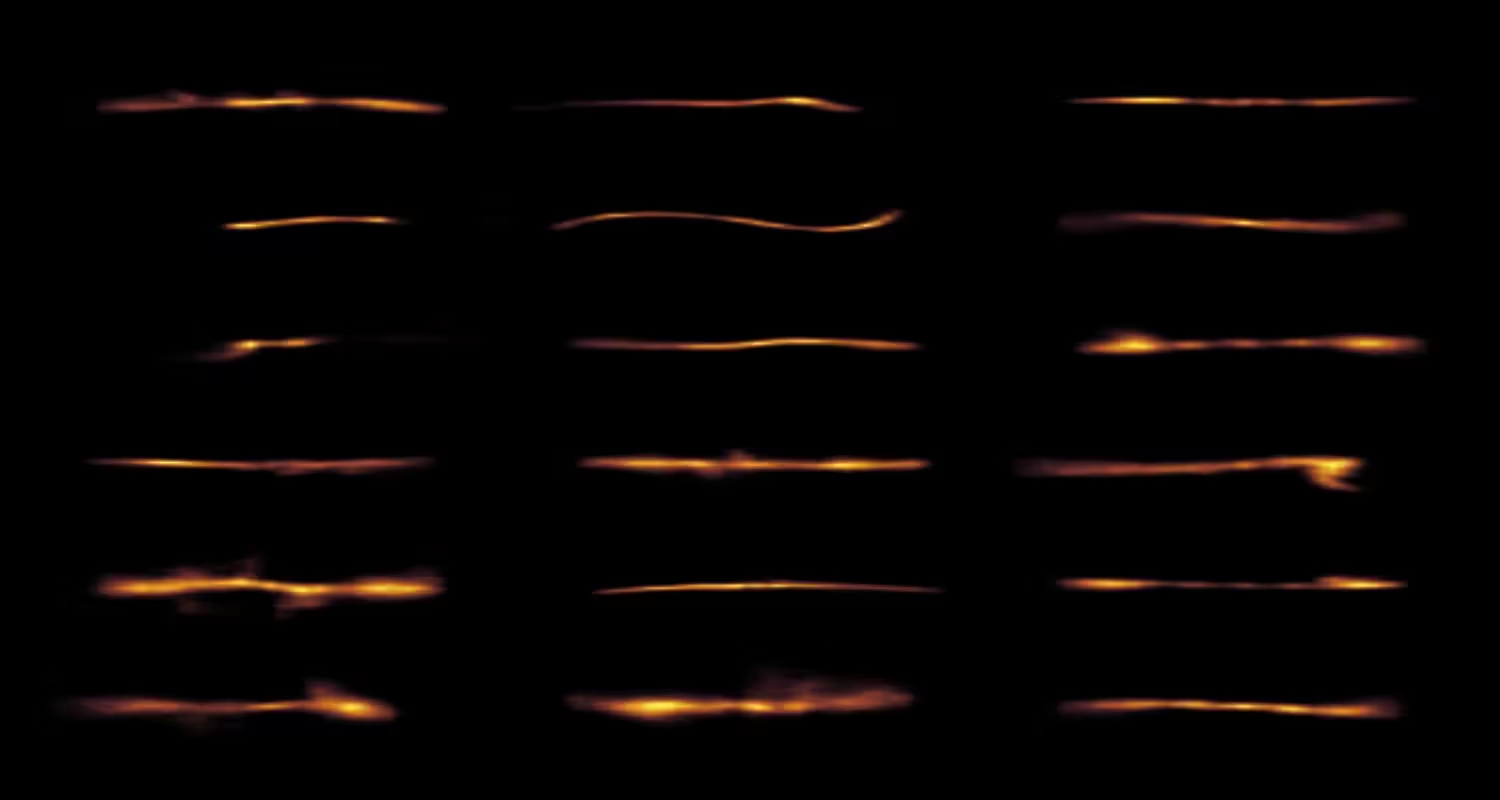
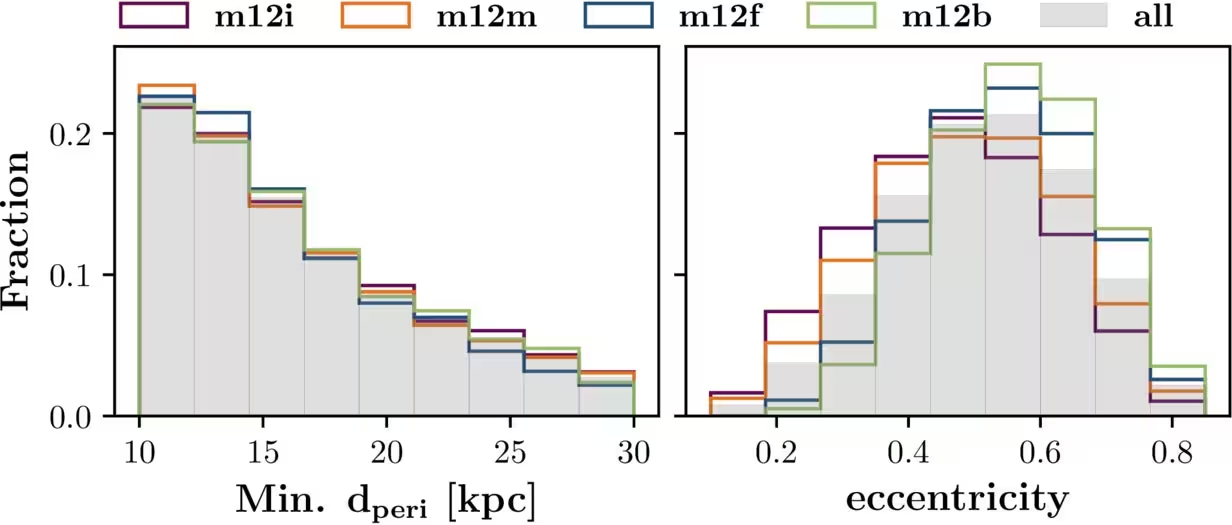
To determine how much of a stream’s appearance is intrinsic to galactic dynamics, lead author Arpit Arora and his team utilized high-resolution simulations from the FIRE-2 Latte project. They modeled roughly 15,000 globular cluster streams across four distinct Milky Way-sized galaxies, each with its own unique evolutionary history—ranging from isolated systems to those shaped by significant mergers.
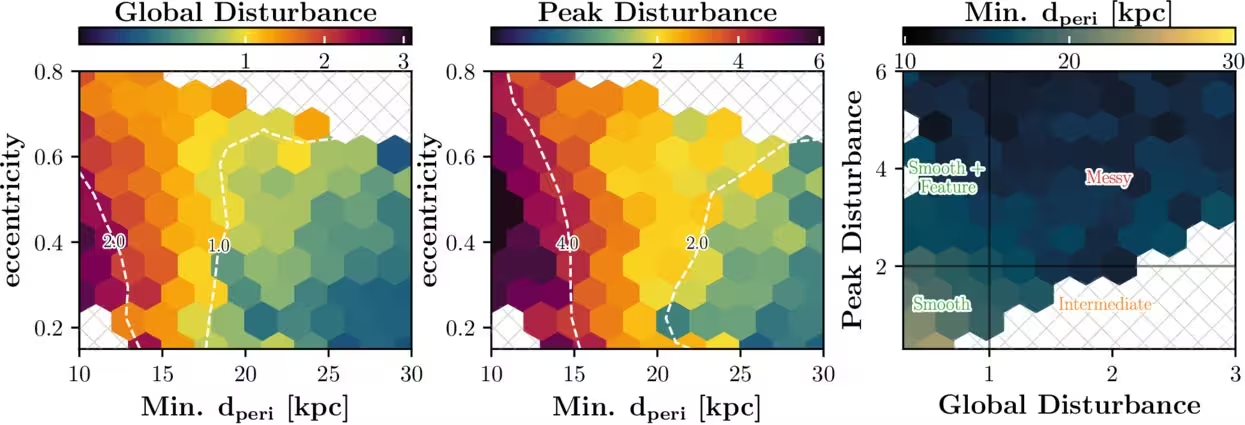
Crucially, the researchers excluded dark matter subhalos from these models, creating a controlled environment that isolated the gravitational influence of the host galaxy itself. The results were striking: after five billion years of simulated time, nearly every stellar stream exhibited some form of structural distortion. Only about 70 streams remained entirely free of detectable density disturbances and off-track features.
“We found that almost all of the streams had some sort of structural variation,” Arora noted. “So this idea that streams are naturally thin and smooth wasn’t really necessarily true.”
Challenging Assumptions About Dark Matter Signatures
The study, published in The Astrophysical Journal, reveals that features such as gaps and spurs, which have long been used to infer the presence of invisible mass, can arise spontaneously from the galaxy’s internal gravitational evolution. Streams that passed closer to the galactic center, where the environment is particularly volatile, were consistently the most disrupted.
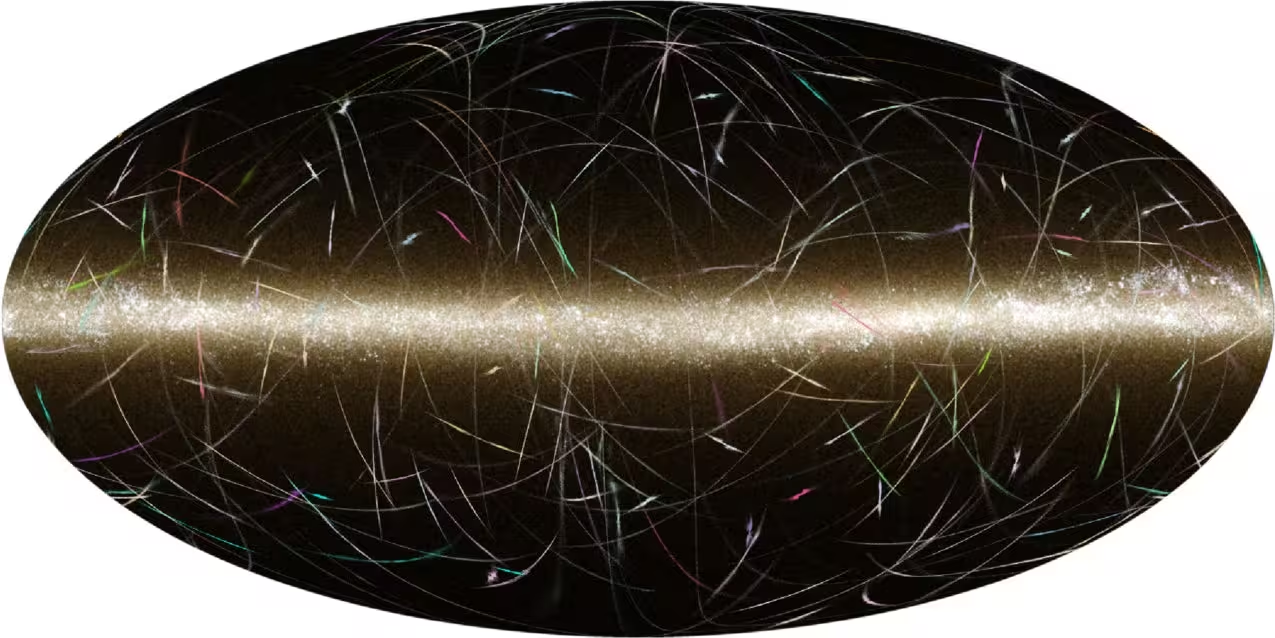
The simulations even successfully replicated famous irregularities seen in real-world observations, including features that mirror the morphology of the well-studied GD-1 stream and the ATLAS-Aliqa Uma stream.
Refining the Search Strategy
While these findings complicate the interpretation of existing data, they do not render stellar streams obsolete for dark matter research. Instead, they provide a much-needed baseline, allowing scientists to distinguish between natural galactic “noise” and potential dark matter interactions. By better understanding how a host galaxy naturally sculpts these streams, researchers can sharpen their focus on the specific deviations that likely require an external, invisible culprit.
“The Milky Way is one of the best laboratories we have for figuring that out, and stellar streams are one of the sharpest tools inside it,” said co-author Nora Shipp. “Now that we can predict what the host galaxy does on its own, we can start isolating the part that dark matter is responsible for.”
Future efforts will involve integrating dark matter subhalos back into these complex galactic environments to compare the resulting signatures against the “background” disturbances identified in this work. Researchers also hope that incorporating stellar velocity data, combined with a larger catalog of streams from the upcoming Vera C. Rubin Observatory, will help clear the path toward a more accurate understanding of the dark matter scaffolding that underpins our galaxy.
For further exploration of current research on stellar streams and dark matter:
- Measurement of Substructure from the Kinematics of the GD-1 Stellar Stream (The Astrophysical Journal, 2026)
- Detectability of dark matter subhalo impacts in Milky Way stellar streams (The Open Journal of Astrophysics, 2026)
- Evidence for the first globular cluster stellar stream beyond the Milky Way (Nature, 2026)
- Evidence of a population of dark subhaloes from Gaia and Pan-STARRS observations of the GD-1 stream (Monthly Notices of the Royal Astronomical Society, 2021)
- Stellar streams and dark substructure: the diffusion regime (Monthly Notices of the Royal Astronomical Society, 2022)
This article has been fact checked for accuracy, with information verified against reputable sources. Learn more about us and our editorial process.
Last reviewed on .
Article history
- Latest version
Reference(s)
- Arora, Arpit., et al. “No Stream Left Unscathed: The Imprint of a Host Galaxy.” The Astrophysical Journal, vol. 1008, no. 1, August 27, 2026, pp. 91 American Astronomical Society, doi: 10.3847/1538-4357/ae89af. <https://iopscience.iop.org/article/10.3847/1538-4357/ae89af>.
- Nibauer, Jacob., et al. “Measurement of Substructure from the Kinematics of the GD-1 Stellar Stream.” The Astrophysical Journal, vol. 1004, no. 1, June 4, 2026, pp. 62 American Astronomical Society, doi: 10.3847/1538-4357/ae6776. <https://doi.org/10.3847/1538-4357/ae6776?>.
- Lu, Junyang. “Detectability of dark matter subhalo impacts in Milky Way stellar streams.”, vol. 9, January 16, 2026, doi: 10.33232/001c.155386. <https://astro.theoj.org/article/155386-detectability-of-dark-matter-subhalo-impacts-in-milky-way-stellar-streams>.
- Holm, Julie. “Evidence for the first globular cluster stellar stream beyond the Milky Way - Nature.”, vol. 656, no. 8129, pp. 843-847. Nature, doi: 10.1038/s41586-026-10878-w. <https://www.nature.com/articles/s41586-026-10878-w>.
- <https://academic.oup.com/mnras/article/502/2/2364/6119928>.
- <https://academic.oup.com/mnras/article/513/3/3682/6567870>.
Cite this page:
- Posted by Aisha Ahmed