NASA’s Swift Space Telescope Set for Fiery Reentry After $30 Million Rescue Attempt Fails
After two decades of tracking the universe’s most violent events, NASA’s Swift telescope faces an uncertain future following a failed rescue mission.
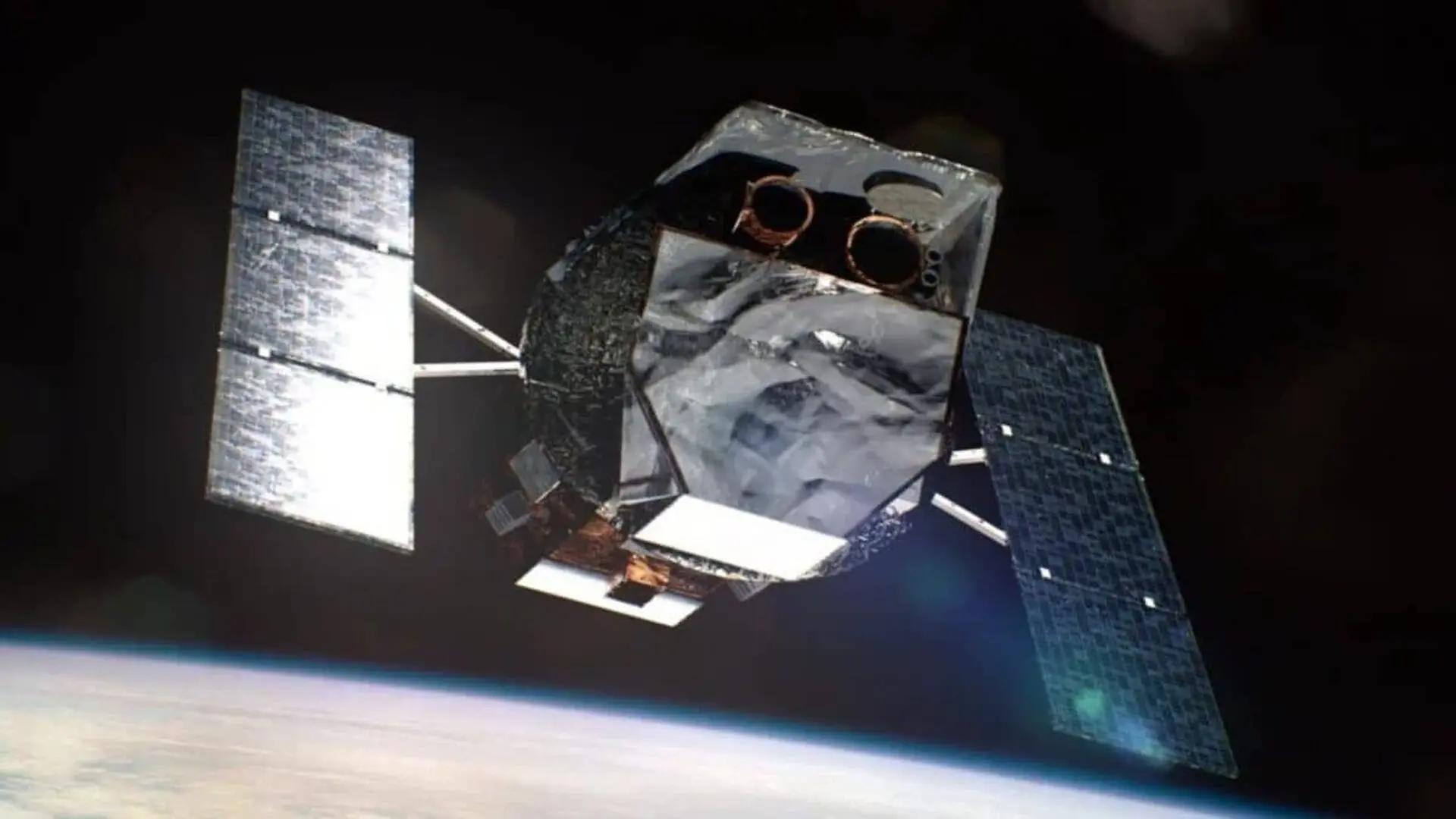
NASA’s Neil Gehrels Swift Observatory, a veteran space telescope that spent two decades unraveling the mysteries of the most violent explosions in the universe, is on a collision course with Earth. The mission, which began in 2004 to monitor gamma-ray bursts across ultraviolet, optical, and X-ray wavelengths, is nearing its conclusion after a high-stakes rescue attempt failed to extend its operational life.
The spacecraft’s orbit has steadily decayed, a process accelerated by recent surges in solar activity that increased atmospheric drag. In a bid to salvage the aging observatory, NASA awarded a $30 million contract to Arizona-based Katalyst Space Technologies. The company developed a robotic servicer, dubbed LINK, which was launched on July 3 with the specific objective of reaching the telescope and pushing it into a more stable, higher orbit.
The Ambition Behind the Failed Rescue
The mission represented an experimental leap in satellite servicing, aiming to demonstrate that aging orbital assets could be saved rather than abandoned. However, the attempt was short-lived. LINK suffered from critical issues involving its attitude-control systems, forcing NASA and the engineering team to abandon the rendezvous. Ghonhee Lee, CEO of Katalyst, noted in an August 24 interview with CNN that while the outcome was disappointing, the rapid development cycle—designing and deploying a robotic mission in just nine months—marked an unprecedented push into high-risk, high-reward territory.
Atmospheric Reentry and Safety Protocols
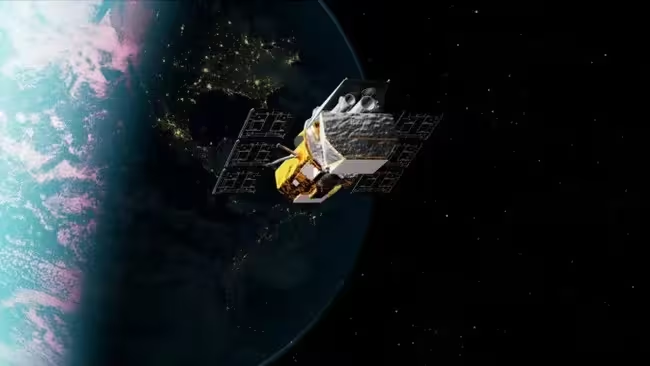
With the rescue mission off the table, the observatory is now destined for an uncontrolled reentry. NASA spokesperson Alise Fisher indicated that the reentry is unlikely to occur before October, with the exact timing contingent on evolving orbital conditions. The agency maintains that the vast majority of the 613-kilogram (1,351-pound) spacecraft will disintegrate under the intense thermal stress of passing through Earth’s atmosphere.
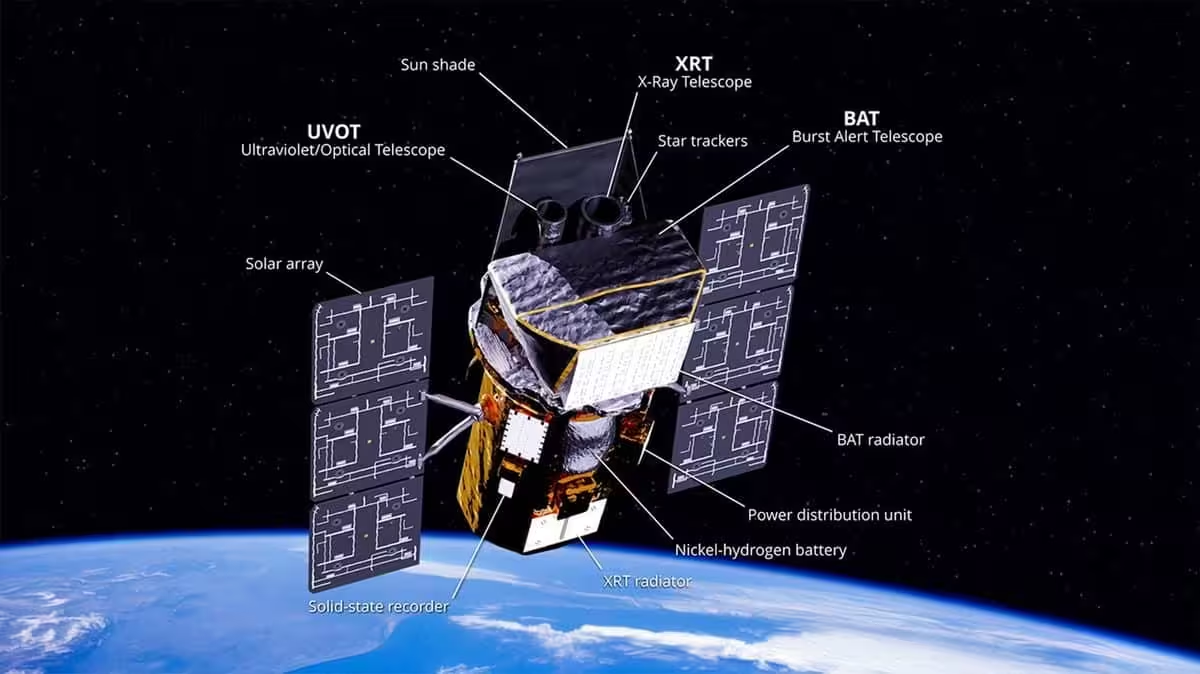
However, some components, particularly those made of heat-resistant materials, may reach the surface. Experts suggest that items such as titanium fuel tanks and specialized optical lenses have a higher probability of surviving the descent. Reporting by Space.com notes that while the risk to life on the ground is considered low, it remains a factor in the agency’s monitoring efforts.
Tracking the Potential Impact Zone
Because the reentry is uncontrolled, the potential footprint of debris is wide. The observatory’s orbital inclination of 21 degrees means that anything that manages to survive the heat of reentry could land anywhere within a band stretching from 21 degrees north to 21 degrees south latitude.
Darren McKnight, a senior technical fellow at LeoLabs, suggests the structural breakup of the telescope should minimize the risk of significant surface damage. Nevertheless, the possibility of a debris impact in populated areas cannot be entirely ruled out. As Ewan Wright of the University of British Columbia and the Outer Space Institute points out, while the most probable landing site is the ocean, the wide latitude range leaves a statistical, if small, chance of impact in inhabited regions.
This article has been fact checked for accuracy, with information verified against reputable sources. Learn more about us and our editorial process.
Last reviewed on .
Article history
- Latest version
Reference(s)
- “Katalyst Space.” <https://www.katalystspace.com/>.
- David, Leonard. “After failure of private rescue mission, NASA's Swift space telescope will crash back to Earth. But when and where?.”, August 27, 2026 Space <https://www.space.com/space-exploration/missions/after-failure-of-private-rescue-mission-nasas-swift-space-telescope-will-crash-back-to-earth-but-when-and-where>.
- “IAF : Darren McKnight.” <https://www.iafastro.org/biographie/darren-mcknight.html>.
- “Wright, Ewan.” <https://www.grad.ubc.ca/campus-community/meet-our-students/wright-ewan>.
Cite this page:
- Posted by Aisha Ahmed