Astronomers Revisit a 170 Year Old Mystery to Narrow the Search for Nearby Alien Worlds
A 170-year study of the binary system 70 Ophiuchi confirms the absence of giant planets, narrowing the search for hidden, rocky worlds in our neighborhood.
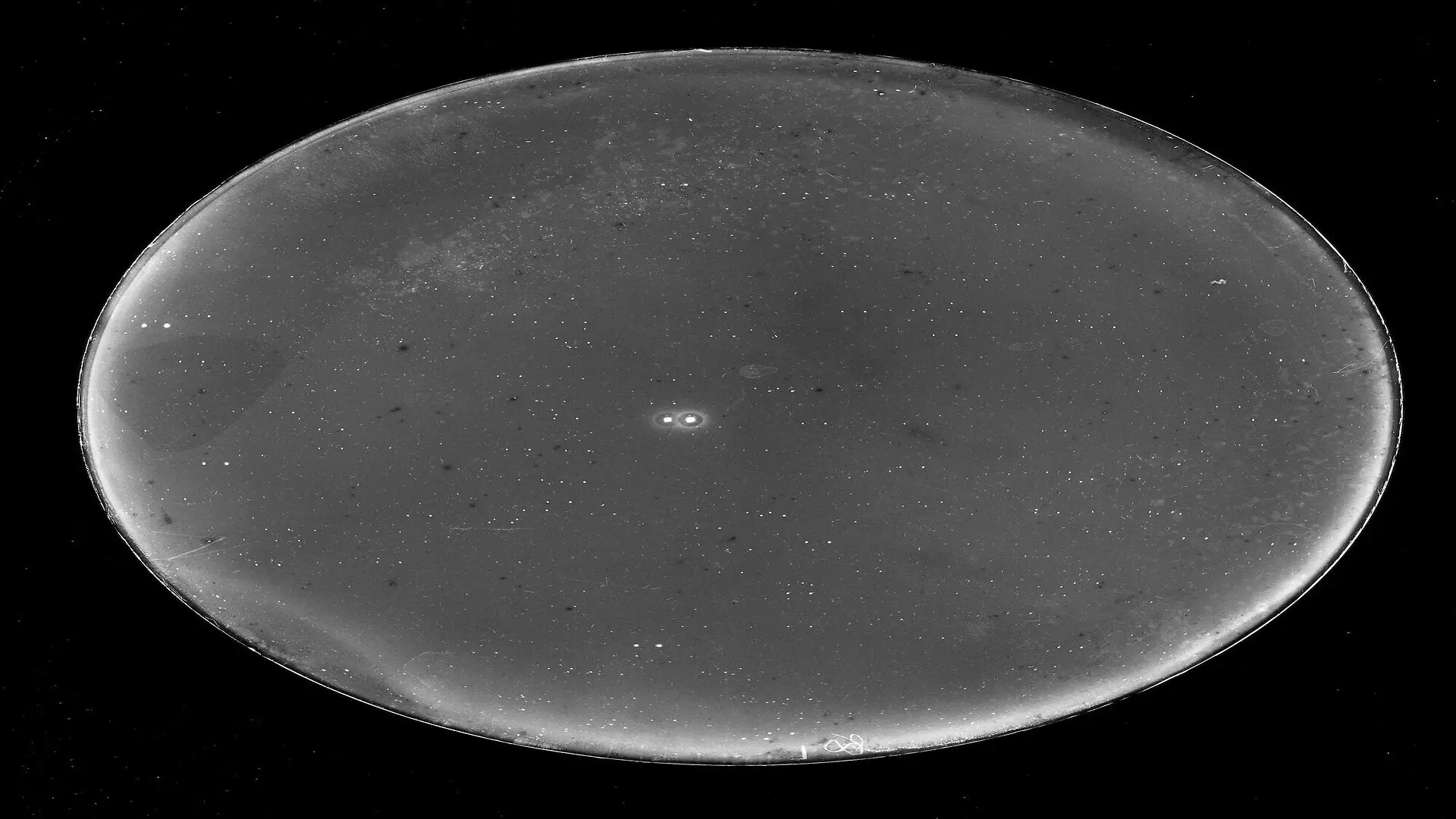
A rigorous new investigation into 70 Ophiuchi AB, a binary star system located just 16 light-years from Earth, has failed to uncover the massive worlds that astronomers have long suspected might reside there. Despite leveraging over a century of historical data alongside high-precision modern measurements, the study found no evidence of giant planets, effectively clearing the stage for smaller, potentially habitable worlds to be the focus of future research.
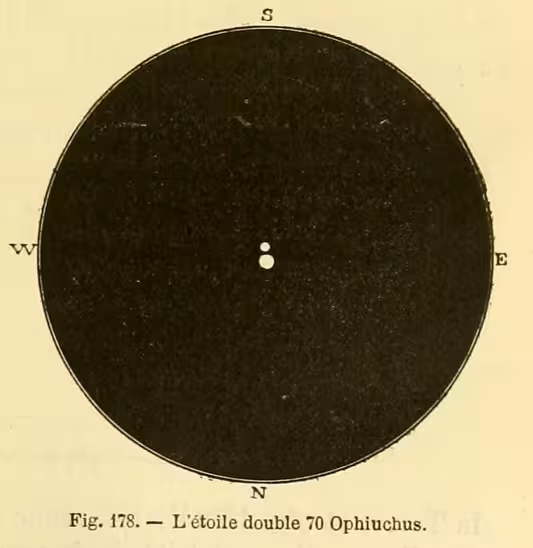
Deciphering a Century-Old Astronomical Mystery
The 70 Ophiuchi system has been a subject of intense scientific curiosity since 1855, when British astronomer William Jacob famously claimed the presence of an unseen planetary companion based on peculiar orbital movements. While that specific claim was eventually debunked, the system remained a candidate for hidden planets as successive generations of data continued to hint at subtle gravitational tugs.
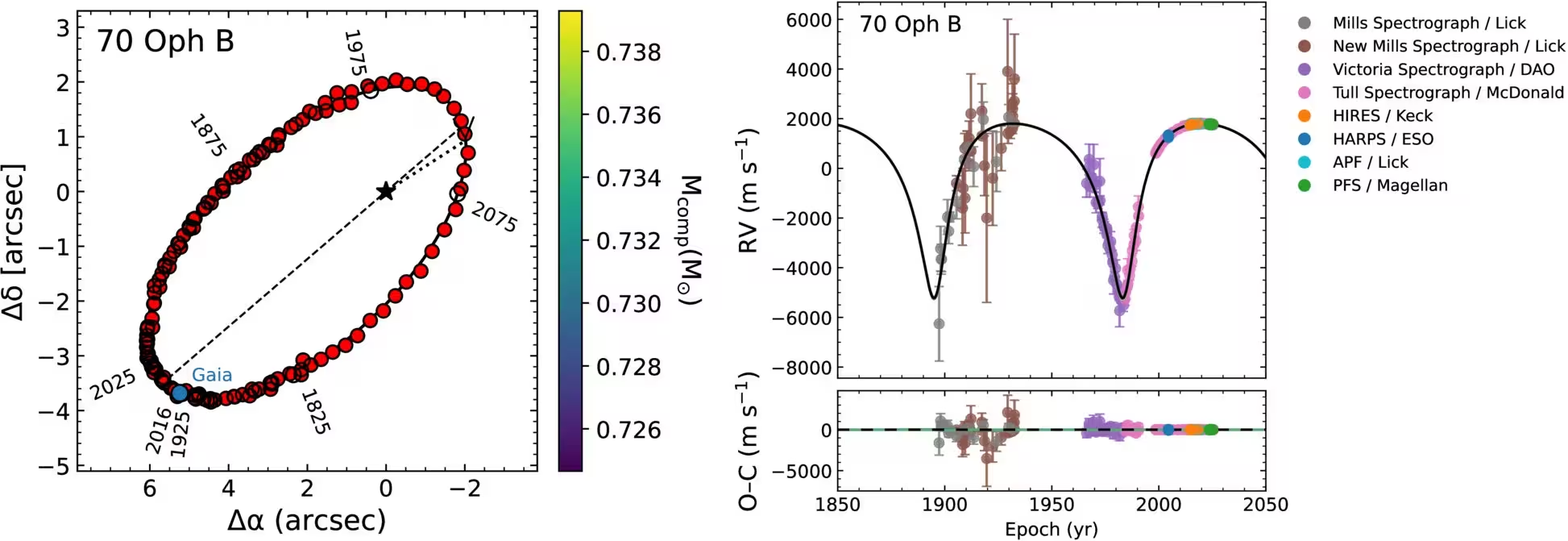
A team led by researchers at the University of Michigan utilized modern radial-velocity data—collected from the Planet Finder Spectrograph on the Magellan Clay Telescope in Chile and the McDonald Observatory in Texas—to conduct the most comprehensive analysis to date. Their findings, published in The Astrophysical Journal, suggest that the “wobbles” previously detected were likely not the product of giant planets at all.
Stellar Activity Mimicking Planets
A significant portion of the study focused on the phenomenon of stellar activity, which often masquerades as the gravitational signature of a planet. For 70 Ophiuchi A, the researchers identified periodic signals that initially looked like the influence of a large companion. However, these patterns aligned perfectly with the star’s 20-day rotation and associated magnetic activity.
“It’s a cautionary tale about how stellar activity can mimic planet signals using the radial velocity,” explained University of Michigan astronomer Michael Meyer. By modeling these stellar distortions, the team proved that what once looked like potential exoplanets were, in fact, merely the chaotic surface features of the stars themselves.
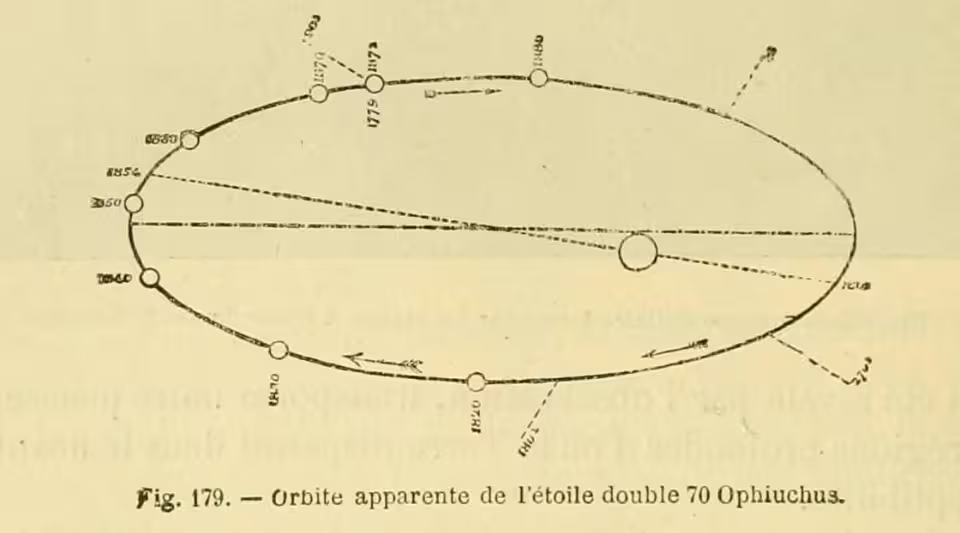
What Remains to be Discovered
While the study effectively rules out Jupiter-mass planets within the inner regions of the system, it does not confirm the absence of all planetary bodies. Terrestrial or “rocky” planets remain well within the realm of possibility, as their gravitational footprints are too faint to be detected by current radial-velocity methods.
The researchers also performed numerical simulations to assess orbital stability. They found that both stars in the 70 Ophiuchi binary possess regions where planets could maintain stable, long-term orbits—including within the habitable zones where liquid water could theoretically persist. As lead author Yiting Li noted, “The study sets an upper limit, not a ban, on planets.”
Looking Toward Future Missions
By refining the orbital characteristics of the binary pair and establishing precise mass measurements, this research provides a clean slate for future observational efforts. Given its close proximity to Earth, the system is a prime candidate for next-generation technology, such as the proposed SHERA mission or NASA’s Habitable Worlds Observatory.
These future platforms will rely on direct imaging and ultra-precise astrometry rather than radial velocity, allowing them to pierce through the “noise” of stellar activity to potentially resolve smaller, Earth-like worlds. Even after 170 years of speculation, the search for planets around 70 Ophiuchi is far from over—it is merely entering a new, more refined phase of exploration.
Relevant Scientific References
- Assessing Planetary Stability and Long-Term Habitability in Nearby Stellar Binaries: 70 Oph, 36 Oph, γ Leo(arXiv, 2026)
- HWO Target Stars and Systems: A Prioritized Community List of Potential Stellar Targets for the Habitable Worlds Observatory’s ExoEarth Survey(PASP, 2025)
- Worlds Next Door: A Candidate Giant Planet Imaged in the Habitable Zone of α Centauri A. I. Observations, Orbital and Physical Properties, and Exozodi Upper Limits(The Astrophysical Journal Letters, 2025)
- Worlds Next Door: A Candidate Giant Planet Imaged in the Habitable Zone of α Centauri A. II. Binary Star Modeling, Planet and Exozodi Search, and Sensitivity Analysis(The Astrophysical Journal Letters, 2025)
- Stability of planetary orbits in binary systems(The Astronomical Journal, 1999)
This article has been fact checked for accuracy, with information verified against reputable sources. Learn more about us and our editorial process.
Last reviewed on .
Article history
- Latest version
Reference(s)
- <https://news.umich.edu/>.
- Li, Yiting., et al. “A Century of Radial-velocity and Astrometric Monitoring of 70 Oph AB: New PFS Data and Constraints on Possible Planetary Companions*.” The Astrophysical Journal, vol. 1009, no. 2, September 29, 2026, pp. 199 American Astronomical Society, doi: 10.3847/1538-4357/ae9f52. <https://iopscience.iop.org/article/10.3847/1538-4357/ae9f52>.
- Arroyo, Yesenia. “Habitable Worlds Observatory - NASA Science.”, December 11, 2023 NASA <https://science.nasa.gov/astrophysics/programs/habitable-worlds-observatory/>.
- Jankowski, Alyssa. “Assessing Planetary Stability and Long-Term Habitability in Nearby Stellar Binaries: 70 Oph, 36 Oph, $γ$ Leo.” arXiv.org <https://arxiv.org/abs/2608.13243>.
- Tuchow, Noah W.., et al. “HWO Target Stars and Systems: A Prioritized Community List of Potential Stellar Targets for the Habitable Worlds Observatory’s ExoEarth Survey.” Publications of the Astronomical Society of the Pacific, vol. 137, no. 10, October 8, 2025, pp. 104402 IOP Publishing, doi: 10.1088/1538-3873/ae0a81. <https://doi.org/10.1088/1538-3873/ae0a81>.
- Beichman, Charles., et al. “Worlds Next Door: A Candidate Giant Planet Imaged in the Habitable Zone of α Centauri A. I. Observations, Orbital and Physical Properties, and Exozodi Upper Limits.” The Astrophysical Journal Letters, vol. 989, no. 2, August 11, 2025, pp. L22 American Astronomical Society, doi: 10.3847/2041-8213/adf53f. <https://doi.org/10.3847/2041-8213/adf53f>.
- Sanghi, Aniket., et al. “Worlds Next Door: A Candidate Giant Planet Imaged in the Habitable Zone of α Centauri A. II. Binary Star Modeling, Planet and Exozodi Search, and Sensitivity Analysis.” The Astrophysical Journal Letters, vol. 989, no. 2, August 11, 2025, pp. L23 American Astronomical Society, doi: 10.3847/2041-8213/adf53e. <https://doi.org/10.3847/2041-8213/adf53e>.
- Santos, N. C.., et al. “Star Formation in Bok Globules: Near-Infrared Survey of a Southern Sky Sample.” The Astronomical Journal, vol. 116, no. 3, September 1, 1998, pp. 1376-1387. American Astronomical Society, doi: 10.1086/300502. <https://doi.org/10.1086/300502>.
Cite this page:
- Posted by Aisha Ahmed