Small Predators Reveal Surprising Survival Patterns Near Human Farms
Camera-trap surveys in Nepal reveal how jungle cats and civets navigate agricultural landscapes by shifting to nocturnal habits.
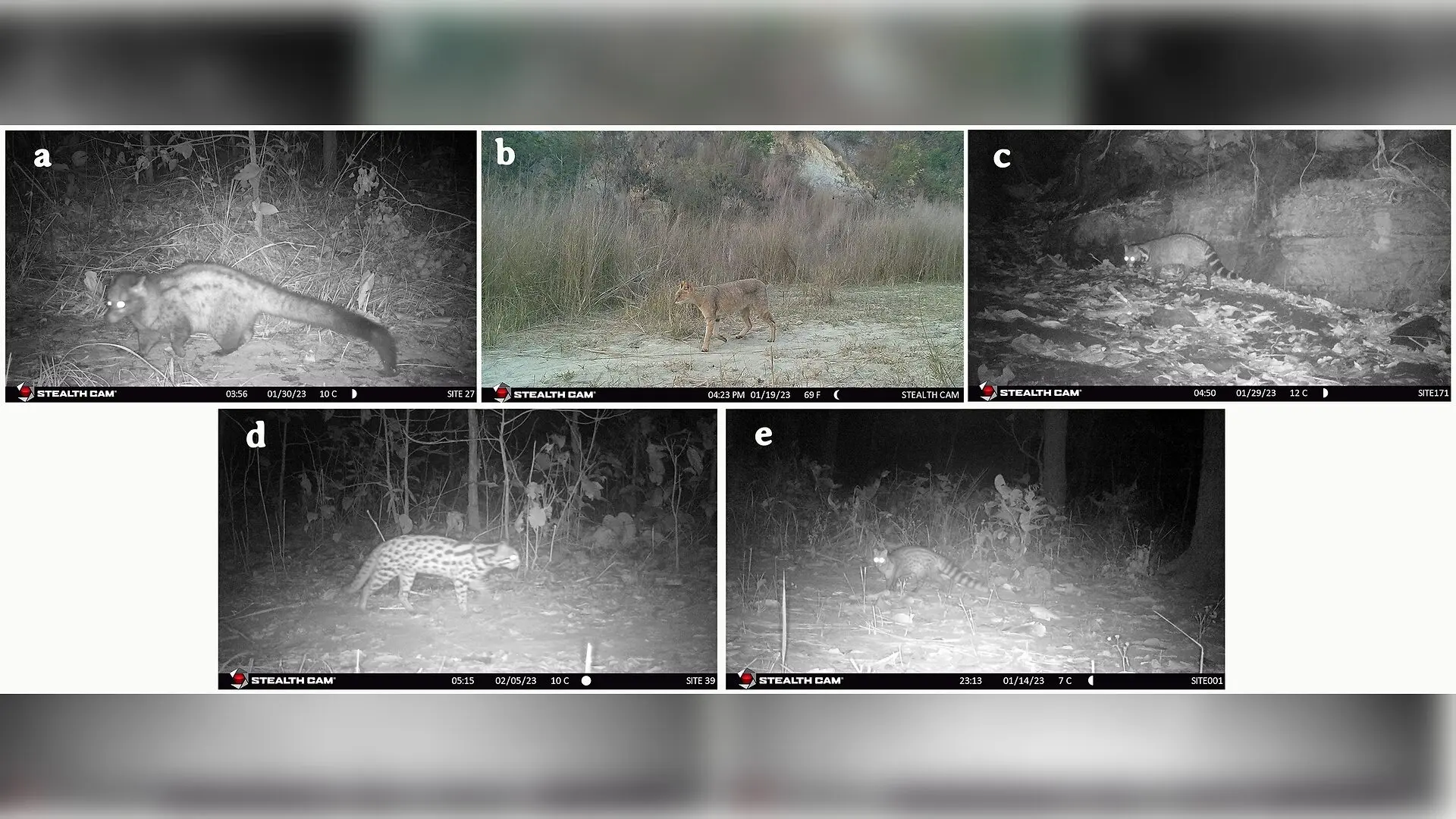
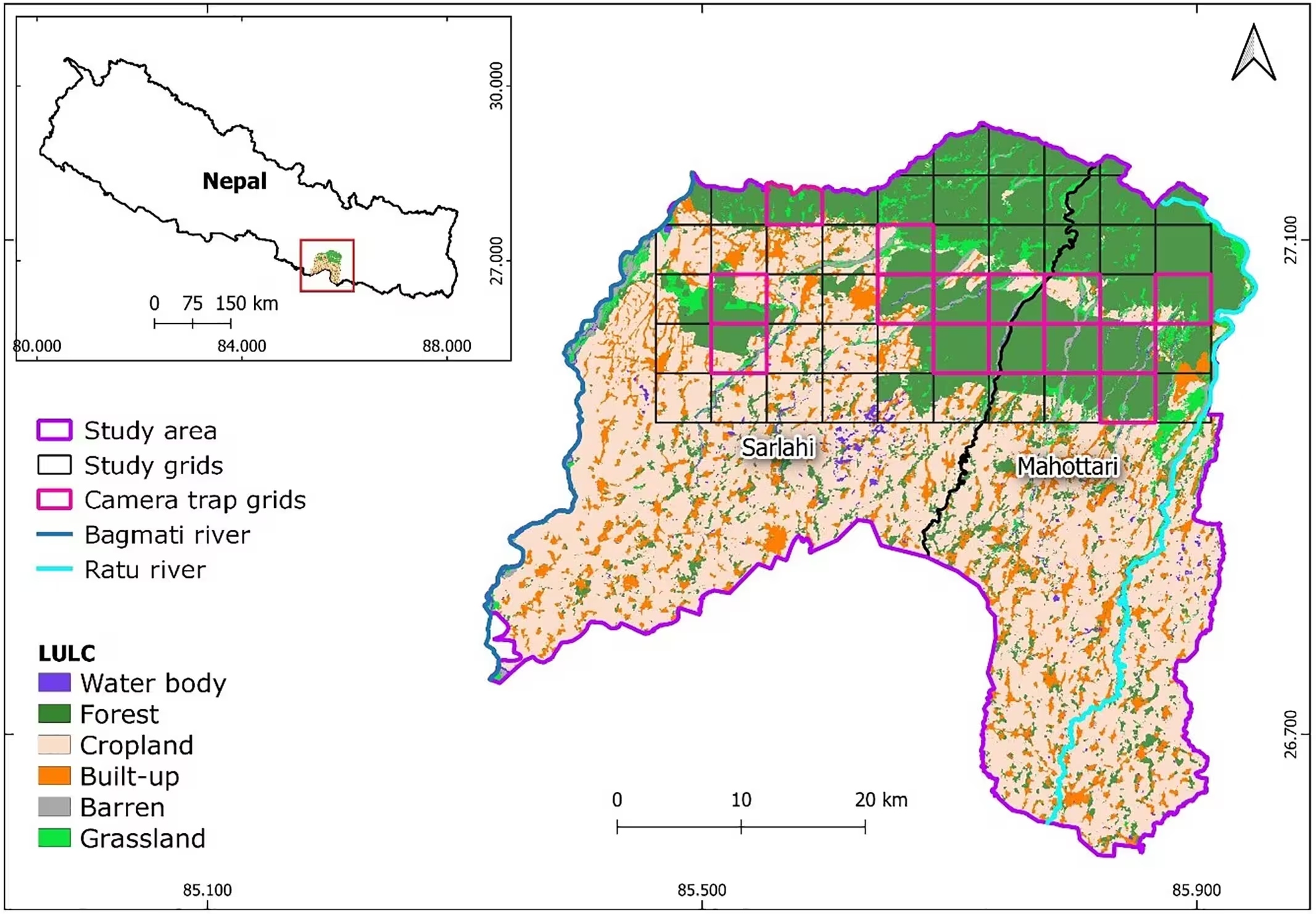
Jungle cats, leopard cats, and other small carnivores living alongside human farms and settlements in Nepal show unexpected patterns of survival, according to a recent camera-trap survey. Researchers deployed 42 cameras across 34 grid plots in the lowland agricultural landscape of the Bagmati-Ratu Complex during January and February 2023 to investigate how these elusive predators navigate human-dominated habitats.
Small carnivores play vital roles in ecosystems by dispersing seeds, regulating soil nutrient levels, and controlling agricultural pest populations like rodents. Yet they face constant pressures from habitat loss, vehicular collisions, and illegal harvesting. To evaluate their population distribution, the research team analyzed detection data using multi-species occupancy models, which account for the reality that animals are not always spotted even when present. The findings were published in PLOS One by Bashu Dev Baral and colleagues.
Understanding Occupancy and Detection Across Five Species
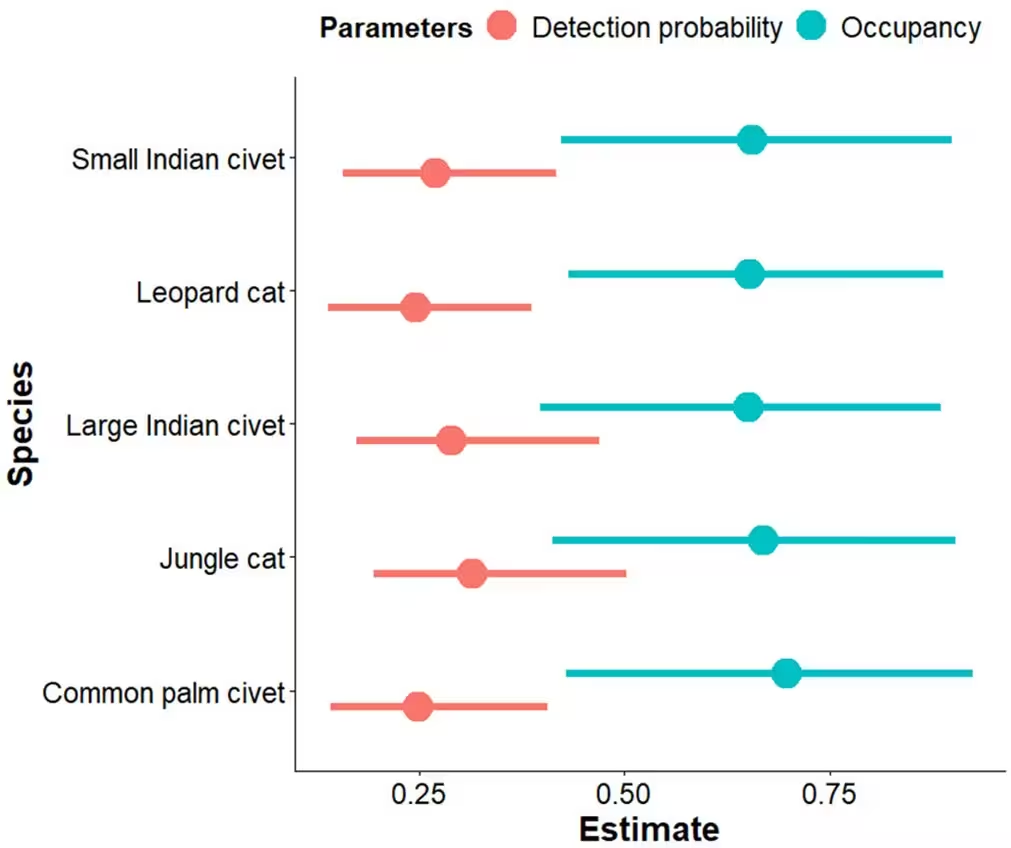
The survey yielded 903 independent images of wild animals, capturing five distinct small carnivore species. These included the jungle cat (Felis chaus), leopard cat (Prionailurus bengalensis), common palm civet (Paradoxurus hermaphroditus), large Indian civet (Viverra zibetha), and small Indian civet (Viverricula indica). Across the study area, the mean community detection probability sat at 0.273, while the overall community occupancy reached 0.665.
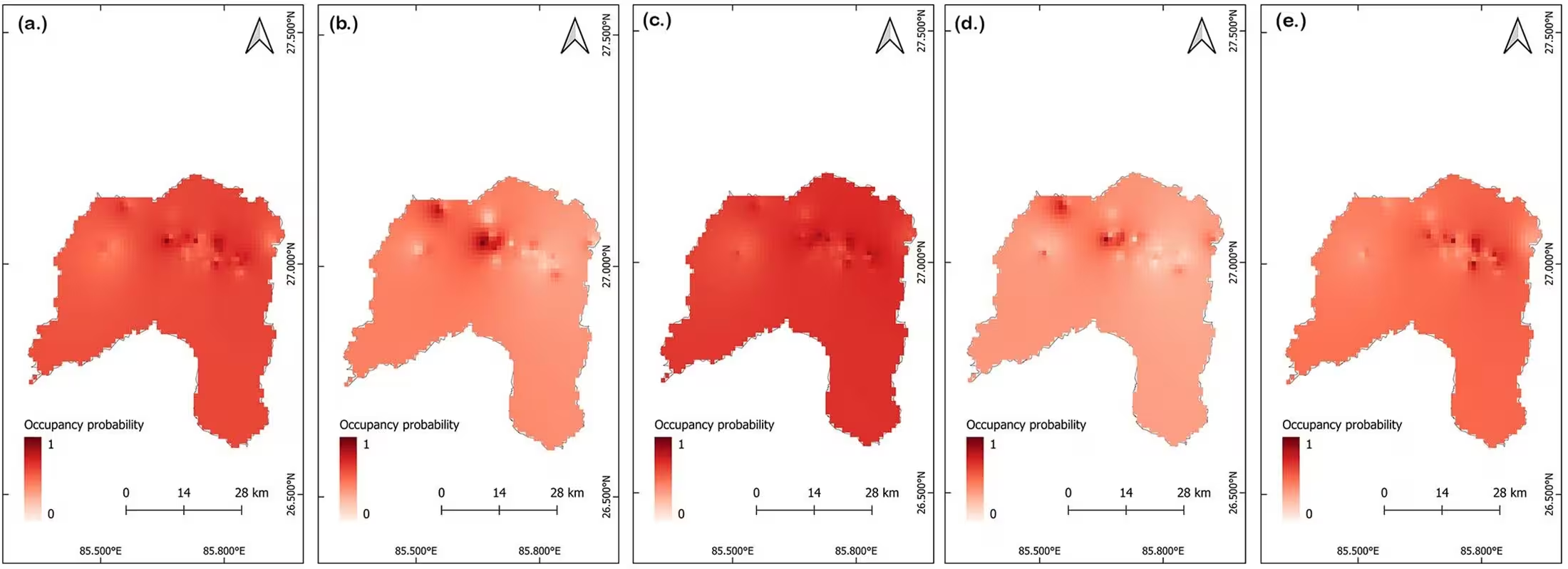
Species-level analysis revealed that jungle cats had the highest detection probability at 0.315, followed closely by large Indian civet at 0.289. Leopard cats recorded the lowest detection probability at 0.245. When looking at occupancy estimates, common palm civets ranked highest at 0.698, followed by jungle cats at 0.669. Large Indian civets recorded the lowest occupancy at 0.651, reflecting their preference for denser forest patches that offer substantial ground cover.
How Farmland Expansion Shapes Predator Presence
The study evaluated how environmental and human-related variables influence animal distribution. Statistical modeling indicated that community-level small carnivore occupancy decreased significantly with an increasing area of farmland. Intensive agricultural practices, such as monocultures and pesticide applications, likely reduce the abundance of small prey like rodents and lagomorphs. Furthermore, the structural uniformity of farmlands offers fewer natural refuges from predators compared to complex forest mosaics.
Conversely, individual species analyses revealed positive associations between certain predators and settlement areas. Jungle cats and large Indian civets showed positive occupancy trends near human settlements, pointing to potential behavioral plasticity. These generalist species may exploit food resources or shelter found around human-modified environments, though researchers caution that these trends might also reflect movement corridors rather than a direct attraction to human disturbance.
Nighttime Habits and Temporal Overlap Among Predators
Diel activity analyses showed that almost all recorded small carnivores were strongly nocturnal, restricting their movements to the dark hours between 1800 and 0559. This shared nocturnal behavior suggests a temporal adaptation to avoid direct interactions with humans during daylight hours. The leopard cat and small Indian civet were never detected during the day.
The single exception was the jungle cat, which displayed limited daytime activity, accounting for 22 percent of its observations. Activity overlap coefficients showed moderate temporal overlap across all species pairs. The highest overlap occurred between the common palm civet and the small Indian civet, likely because both species share similar nocturnal habits and generalist diets consisting of rodents, insects, and fruits.
Study Limitations and Conservation Implications
The authors note several limitations that temper these conclusions. Because the survey was restricted to winter months in 2023 and avoided high-elevation Chure Hills as well as areas dominated by farmland and settlements due to theft risks, the findings represent a single-season snapshot. Additionally, low independent detection counts for species like the leopard cat and small Indian civet mean species-specific models should be interpreted cautiously.
Ultimately, the study highlights the importance of incorporating human-dominated landscapes outside protected areas into regional conservation frameworks. Maintaining small forest patches and semi-natural vegetation corridors within agricultural matrices could help preserve biodiversity and support human-wildlife coexistence in lowland Nepal.
The research was published in PLOS One on November 13, 2026.
This article has been fact checked for accuracy, with information verified against reputable sources. Learn more about us and our editorial process.
Last reviewed on .
Article history
- Latest version
Reference(s)
- Baral, Bashu Dev., et al. “Spatio-temporal occurrence of small carnivores in Bagmati-Ratu Complex, Nepal.” PLOS One, vol. 21, no. 11, November 13, 2026, pp. e0362681 Public Library of Science (PLoS), doi: 10.1371/journal.pone.0362681. <https://doi.org/10.1371/journal.pone.0362681>.
Cite this page:
- Posted by Hassan Raza