Astronomers Just Detected Elusive Neutral Gas in Some of the Earliest Galaxies Ever Seen
Astronomers have detected primordial star-forming gas in four galaxies from the early Universe, offering a new glimpse into how galaxies grew after the Big Bang.
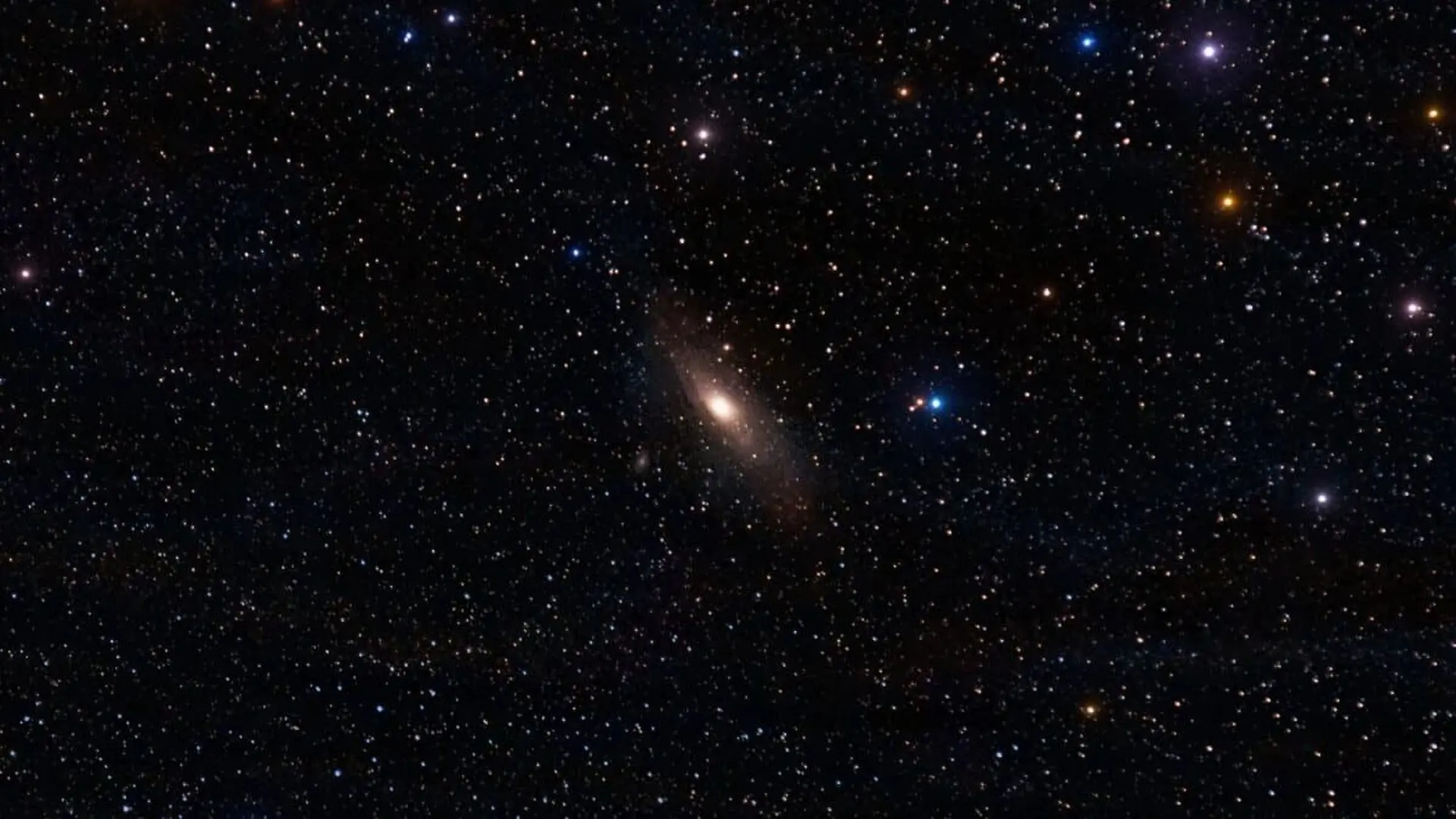
Astronomers using the Atacama Large Millimeter/submillimeter Array (ALMA) have achieved a milestone in early-universe astronomy by directly detecting neutral oxygen emission in four galaxies dating back to the epoch of reionization. The findings, published in The Astrophysical Journal, provide a clearer look at the elusive cold, neutral gas that serves as the raw material for star formation during the cosmic dawn.
Tracking the Hidden Ingredients of Star Formation
While space telescopes like the James Webb Space Telescope (JWST) and Hubble have been instrumental in mapping stars and ionized gas in the distant universe, identifying the cold, neutral gas reservoir has historically been a significant challenge. By targeting the [O I] 145-micrometer emission line, researchers were able to bypass these visibility issues, identifying the signal with high statistical significance across the target galaxies: REBELS-38, A1689-zD1, REBELS-25, and REBELS-18. These galaxies, which exist at redshifts between 6.58 and 7.68, were selected for the study due to their previously observed, intense [C II] emission.
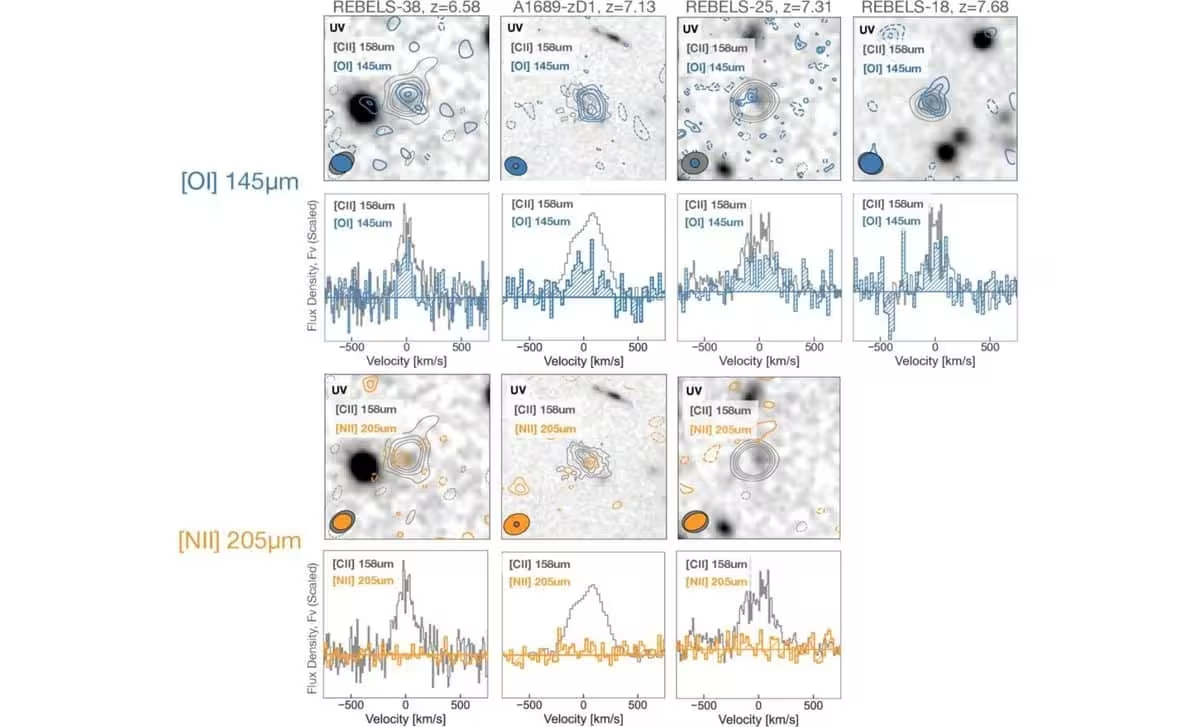
The team also investigated the [N II] 205-micrometer line to track ionized gas, but the signal remained largely absent, with only a marginal detection in A1689-zD1. By comparing the luminosity ratios of [C II] to [N II], researchers concluded that the vast majority—between 74% and 96%—of the observed [C II] emission originates from neutral gas rather than ionized regions. This validates the use of [C II] as a reliable probe for the neutral interstellar medium in the early universe.
“Our results represent the most distant direct detection of neutral gas in typical star-forming galaxies to date,” explained lead author Yoshinobu Fudamoto. “This analysis unlocks the wealth of existing [C II] observations as a probe of neutral gas in the early Universe.”
Modeling the Early Cosmic Environment
To interpret these findings, the team utilized the CLOUDY spectral synthesis code, integrating their ALMA data with infrared observations to model the physical conditions within these galaxies. The analysis indicated gas densities reaching up to 10⁶ hydrogen atoms per cubic centimeter, mirroring the conditions of high-redshift starburst galaxies, even though the ultraviolet radiation fields appeared comparatively modest.
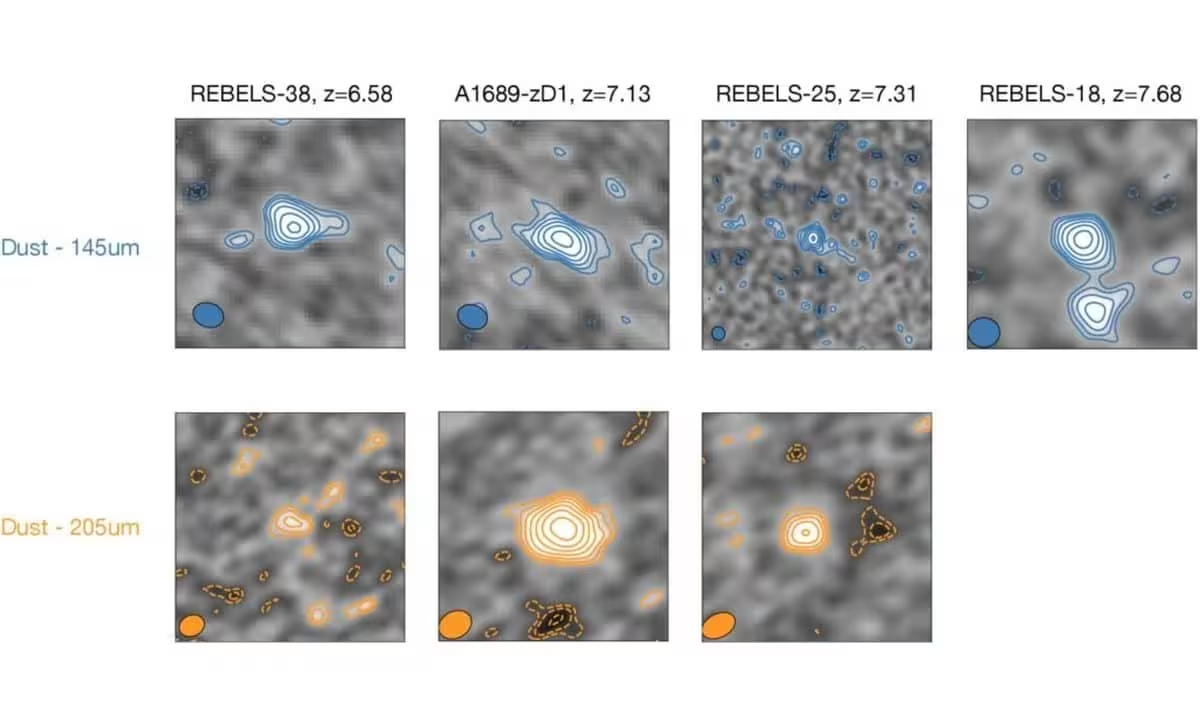
By combining estimated neutral atomic oxygen masses with data on oxygen abundance from recent JWST studies, the researchers calculated that these galaxies harbor warm neutral hydrogen masses ranging from approximately 0.9 billion to 3.0 billion solar masses. While these figures provide a vital snapshot of the fuel available for star formation, the team cautions that they may not represent the entire, colder gas reservoir, noting that different diagnostic methods can lead to varying estimates.
Looking ahead, the research team aims to broaden their scope. Future studies will leverage larger sample sizes and coordinate ALMA’s unique millimeter-wave capabilities with the deep-space sensitivity of the JWST to trace the evolution of galaxies from the cosmic dawn through to the modern era.
“Our work establishes the [O I] emission line as an effective tool for studying an elusive gas component in the early Universe, opening a new window onto the ’fuel’ behind star formation,” said co-author Akio K. Inoue.
This article has been fact checked for accuracy, with information verified against reputable sources. Learn more about us and our editorial process.
Last reviewed on .
Article history
- Latest version
Reference(s)
- Fudamoto, Yoshinobu., et al. “ALMA Observations of [O
i ] 145 μ m and [Nii ] 205 μ m Emission Lines from Star-forming Galaxies at z ∼ 7.” The Astrophysical Journal, vol. 1004, no. 2, June 15, 2026, pp. 194 American Astronomical Society, doi: 10.3847/1538-4357/ae5bad. <https://iopscience.iop.org/article/10.3847/1538-4357/ae5bad>. - <https://www.researchgate.net/scientific-contributions/Akio-K-Inoue-14334294>.
Cite this page:
- Posted by Aisha Ahmed