Rare Nanotyrannus Fossil Sells for a Staggering 47 Million After Bidding War
A rare 67-million-year-old dinosaur fossil has sparked a fierce bidding war, leaving scientists to question the future of this debated prehistoric treasure.
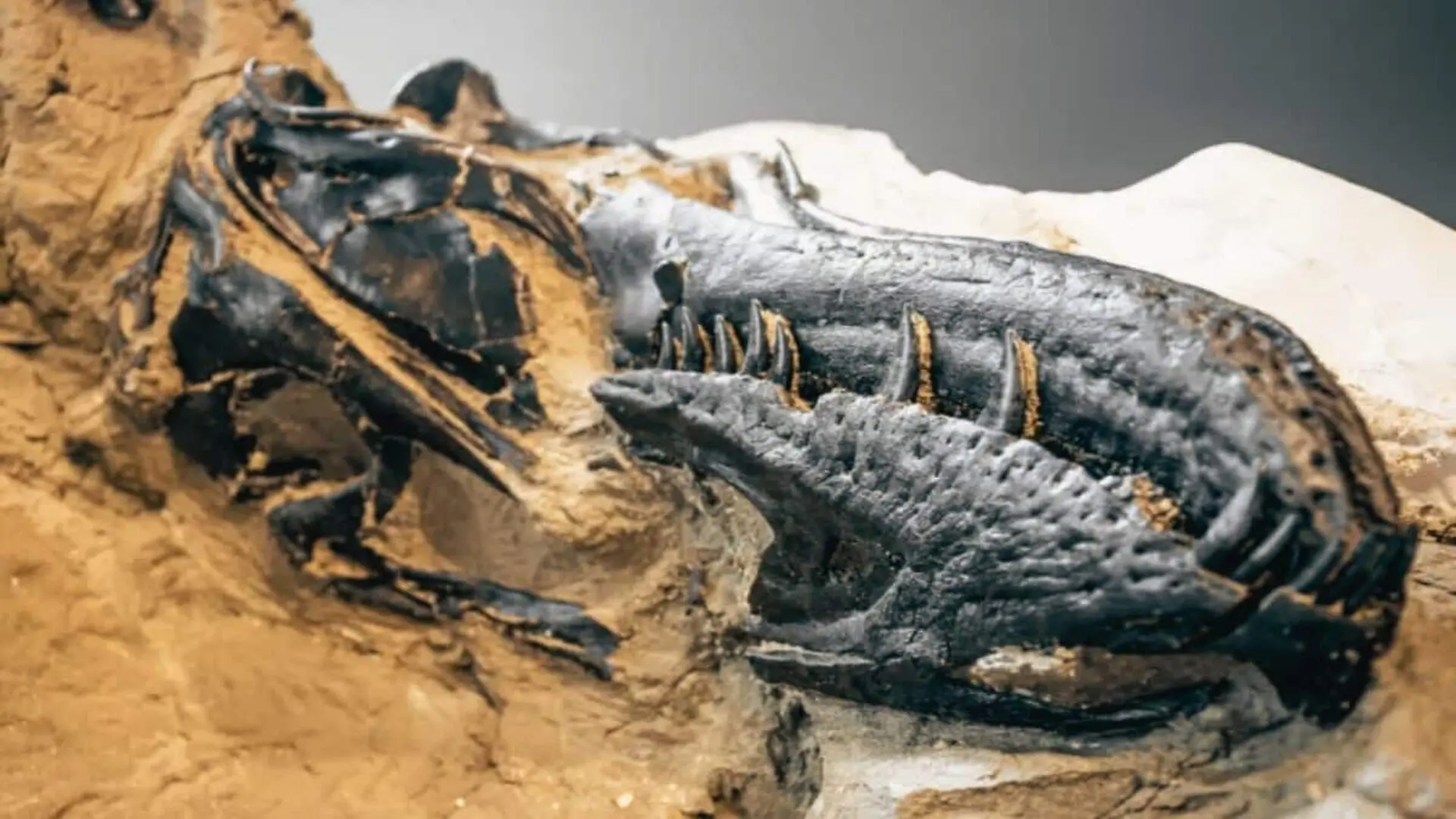
A rare skeleton of the prehistoric predator Nanotyrannus, affectionately nicknamed “Jodi,” has fetched a staggering $47.3 million at a Sotheby’s auction in New York. The sale, which concluded on Tuesday, October 27, 2026, saw the fossil command a price nearly six times higher than the auction house’s initial estimate of $6 million to $9 million.
The intense bidding war, which lasted approximately 12 minutes, involved six competitors vying for the specimen via telephone and online platforms. The auction concluded with an anonymous buyer securing the prehistoric remains, marking the fossil as the second-most expensive ever sold at auction, trailing only the $50.1 million paid for a Tyrannosaurus rex named “Gus” earlier in 2026.
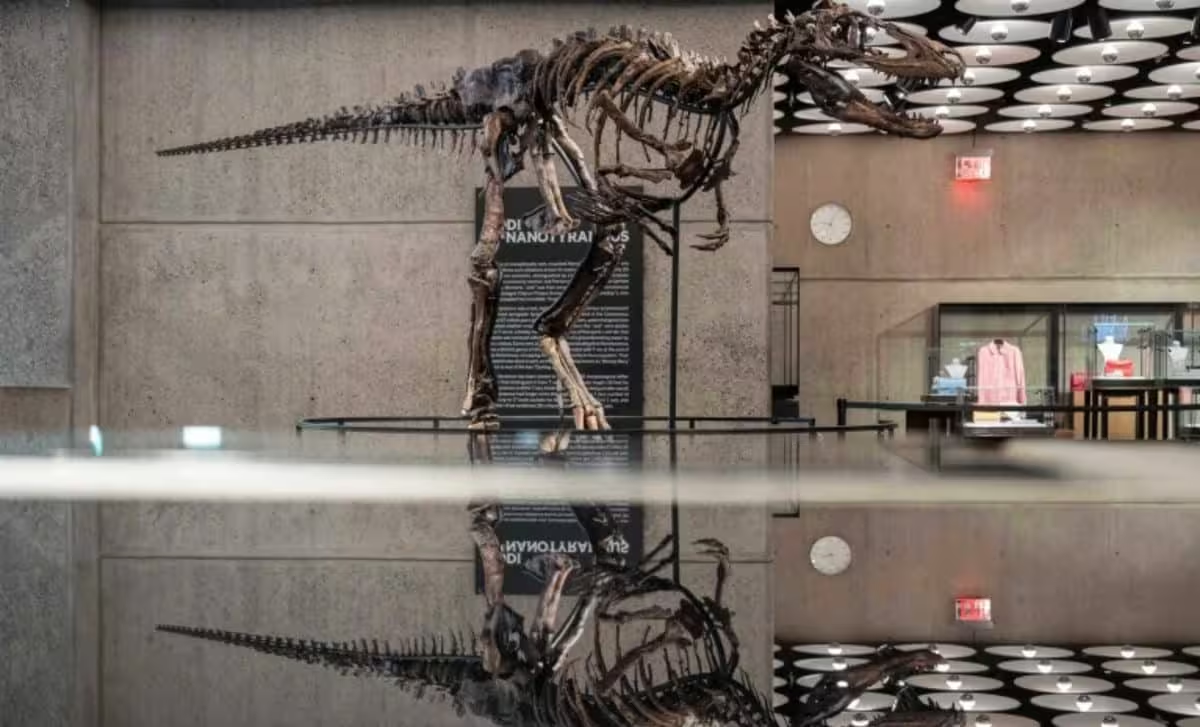
Anatomy of a Cretaceous Discovery
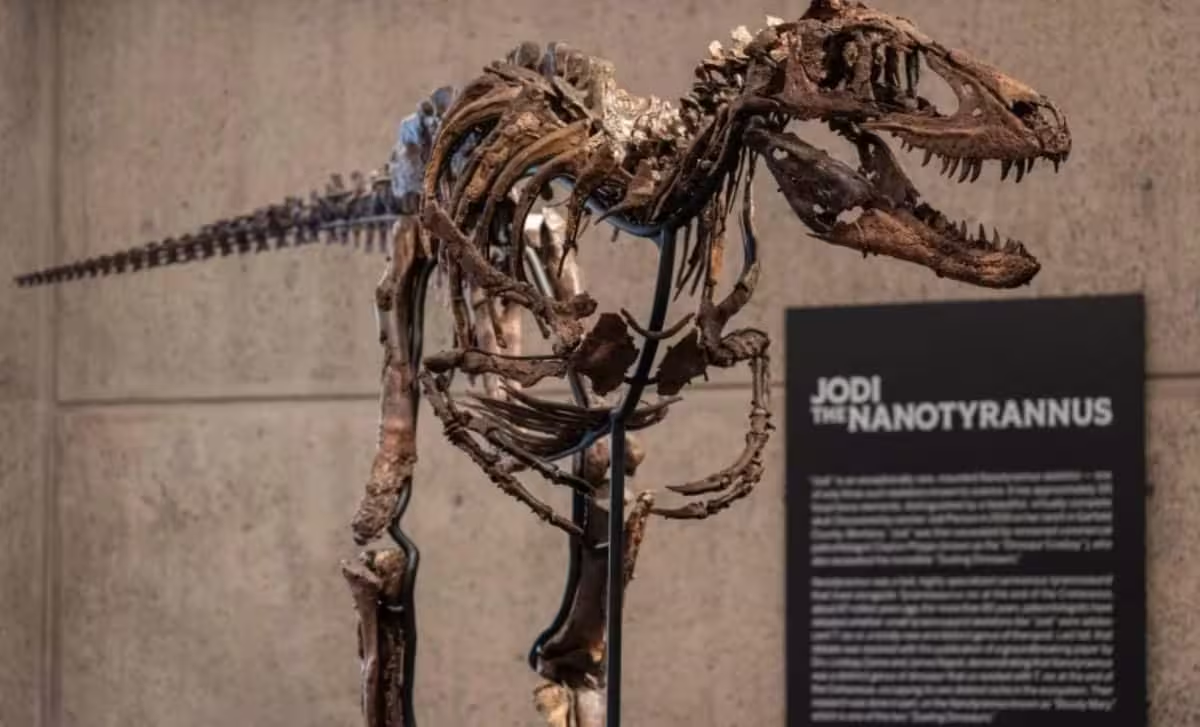
The skeleton was unearthed in 2019 by Montana rancher Jodi Pierson on her private property. Recovered from the fossil-rich Hell Creek Formation in Garfield County, the specimen is one of only three known skeletons of its kind. The mounted remains measure roughly 19.6 feet (6 meters) in length and stand 9 feet 6 inches (2.9 meters) tall. Comprising approximately 191 fossilized bone elements, the skeleton is estimated to be about 70% complete.
The excavation process was documented in the 2020 Discovery Channel series Dino Hunters, highlighting the professional efforts required to bring the specimen to light. Cassandra Hatton, Sotheby’s head of science and natural history, noted that the discovery underscores how diverse contributions can significantly advance our scientific understanding of the natural world.
Resolving the Taxonomic Debate
The high-profile sale coincides with a significant shift in paleontological consensus regarding Nanotyrannus. For decades, the scientific community debated whether the smaller tyrannosaur was a distinct genus or merely a juvenile Tyrannosaurus rex. However, a major study published in the journal Nature in 2025 by Lindsay E. Zanno and James G. Napoli provided compelling evidence for the former.
By analyzing a well-preserved skeleton known as NCSM 40000 alongside other specimens, the researchers identified distinct anatomical features that separated Nanotyrannus from the Tyrannosauridae family. Their findings suggest the genus includes at least two species: Nanotyrannus lancensis and the newly described Nanotyrannus lethaeus. Physically, these creatures differed from their larger relative by having longer forelimbs, larger hand claws, and narrower, blade-like teeth.
Concerns Regarding Private Ownership
Despite the excitement surrounding the specimen, the sale has ignited a broader discussion regarding the accessibility of scientifically significant fossils. Experts in the field argue that the privatization of such rare finds often hinders academic research.
Thomas R. Holtz Jr., a vertebrate paleontology lecturer at the University of Maryland, expressed apprehension that “Jodi” might disappear into a private collection, removed from the scrutiny of the scientific community. He emphasized that the ideal outcome would be for the anonymous purchaser to donate the skeleton to a public museum, ensuring that both researchers and the public can continue to study this rare piece of evolutionary history.
This article has been fact checked for accuracy, with information verified against reputable sources. Learn more about us and our editorial process.
Last reviewed on .
Article history
- Latest version
Reference(s)
- Zanno, Lindsay. “Nanotyrannus and Tyrannosaurus coexisted at the close of the Cretaceous - Nature.”, vol. 648, no. 8093, pp. 357-367. Nature, doi: 10.1038/s41586-025-09801-6. <https://www.nature.com/articles/s41586-025-09801-6>.
Cite this page:
- Posted by Hassan Raza