Archaeologists Finally Date Mysterious 4,000 Year Old Sahara Tomb With Strange Stone Antennae
Archaeologists have finally unearthed the secrets hidden beneath a massive, ancient stone monument standing in the heart of the Sahara desert.
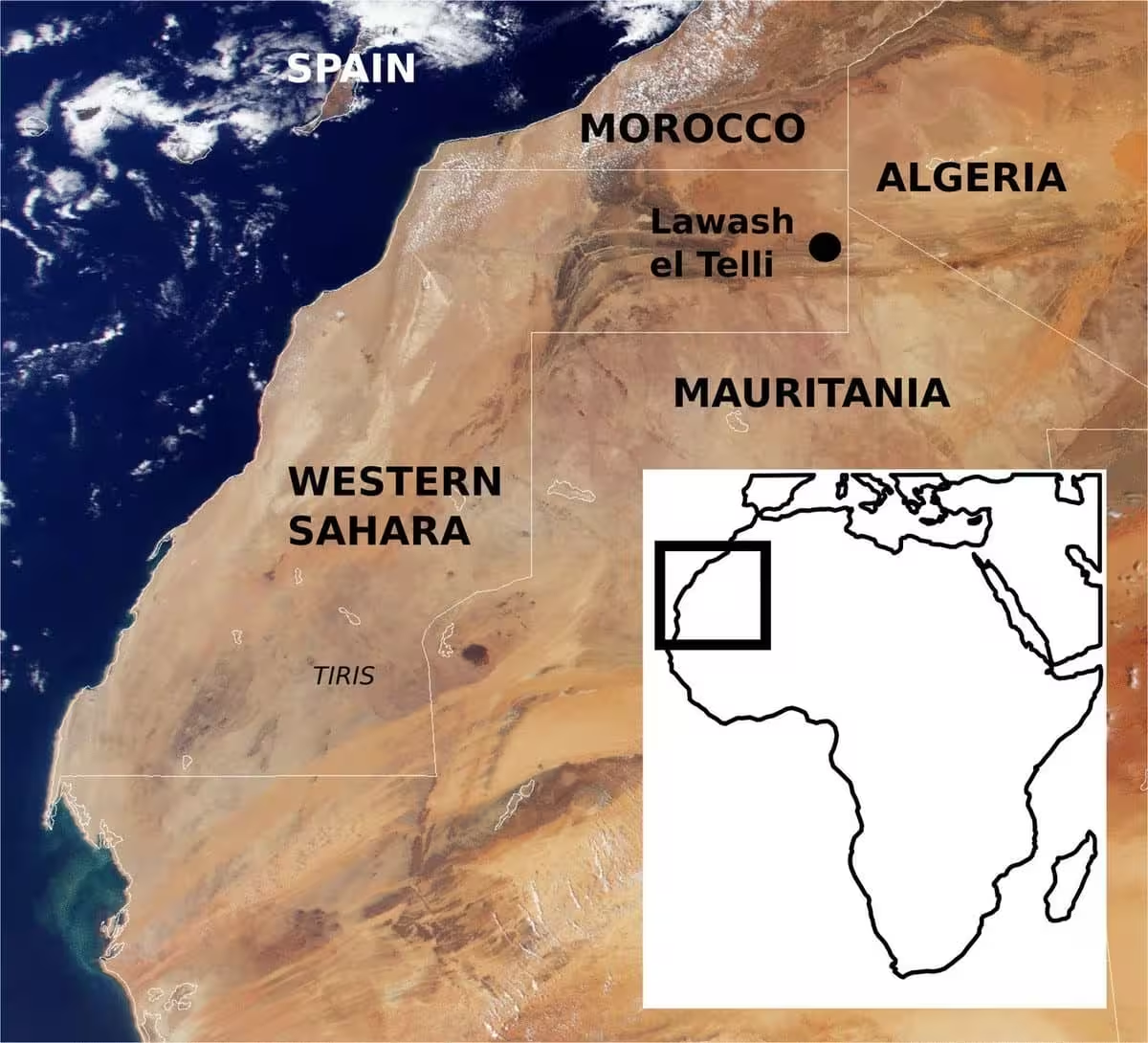
Archaeologists have finally pinned a date on a mysterious, 180-foot-long stone tomb situated on a remote gravel plain in northern Western Sahara. The site, located near the dry riverbed of Wadi Lawash el Telli, holds the remains of a young adult buried over 4,000 years ago, accompanied by four delicate ostrich eggshell beads. The discovery offers a rare, datable glimpse into ancient Atlantic Sahara burial practices, which have historically proven difficult to analyze.
The findings, detailed in the African Archaeological Review on October 20, 2026, mark the first time researchers have successfully performed direct dating on an “antennae” tomb in this region.
Architecture of the Desert Monument
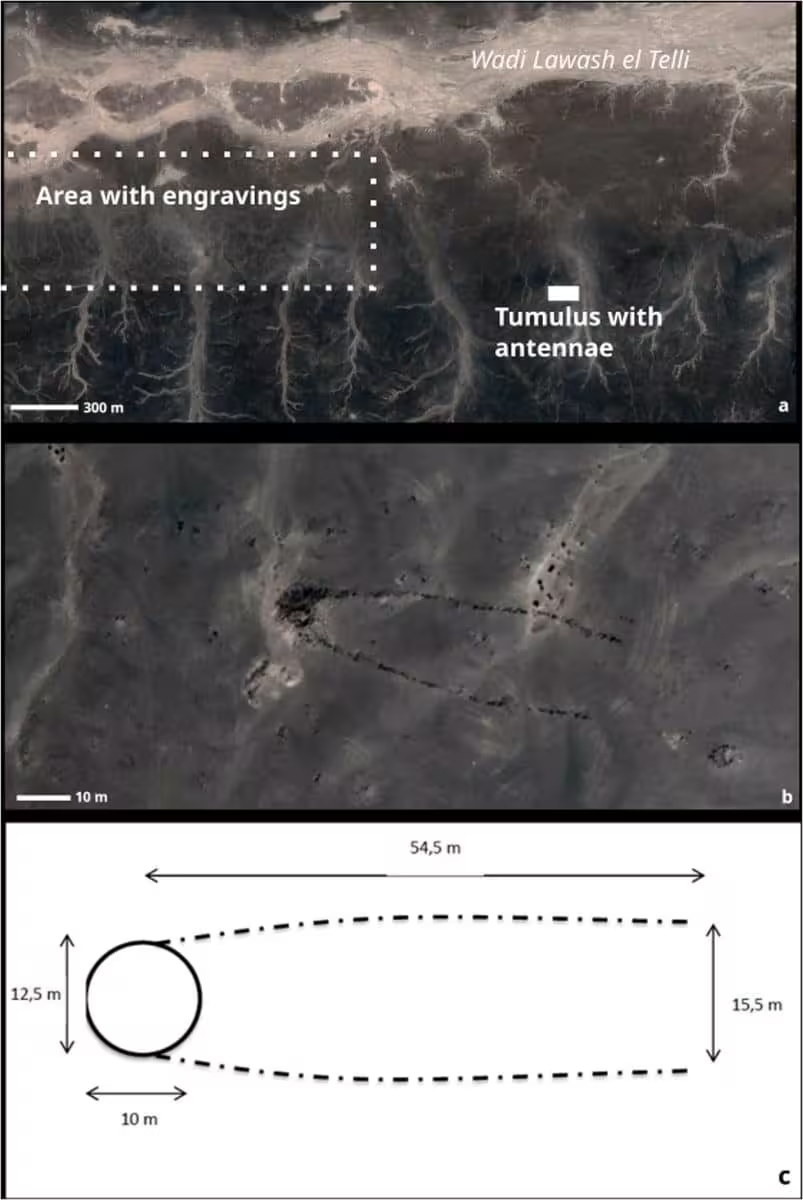
The structure spans 54.5 meters (179 feet) and is defined by an oval mound of dry-stacked limestone slabs that rises less than three meters from the desert floor. Extending from this central mound, two distinct rows of stone—the “antennae”—stretch eastward to form an open V-shaped configuration. These extensions point toward 102 degrees from geographic north.
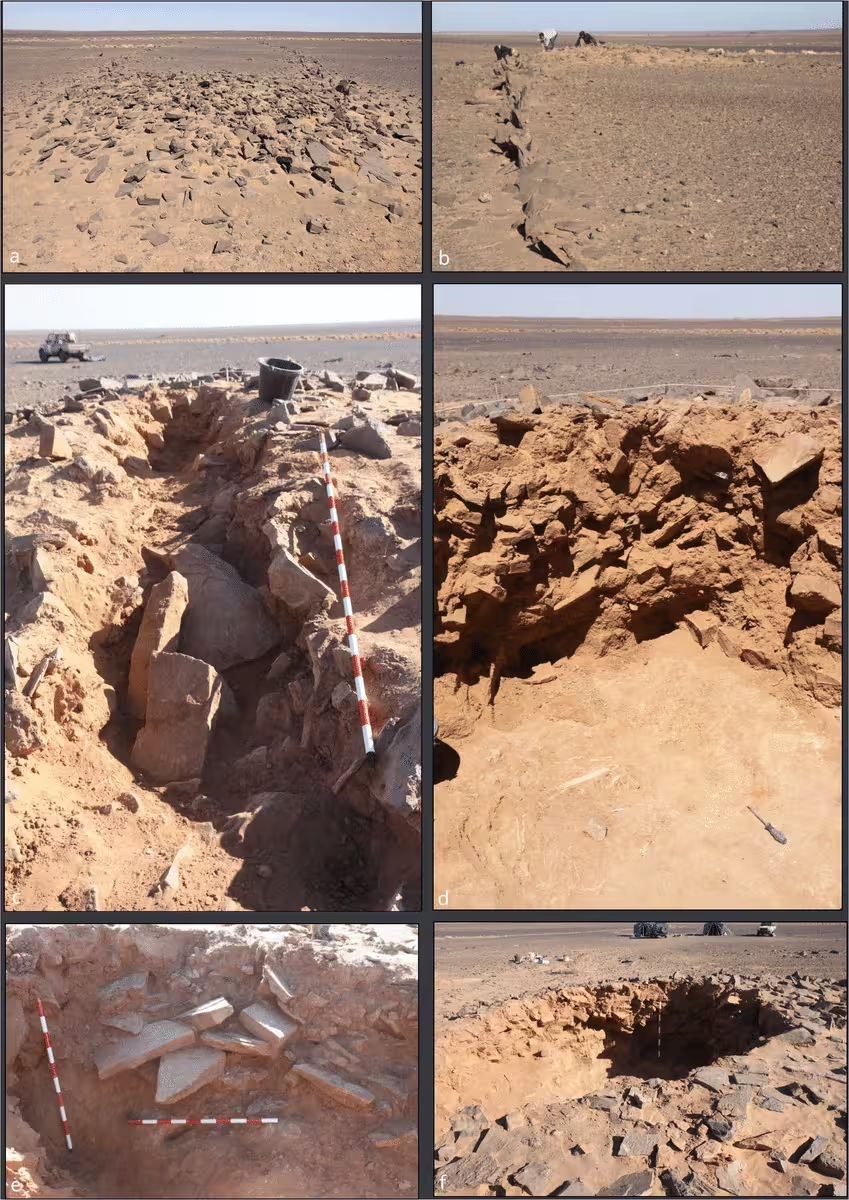
The construction technique appears relatively straightforward, utilizing local limestone that required no mortar. Researchers suggest the scale of the labor involved indicates that a modest group of individuals could have successfully erected the monument.
Insights From the Burial Site
Excavations conducted in April 2018 revealed the skeleton of a young adult, aged between 25 and 35 at the time of death. The individual was placed directly on the desert surface beneath the limestone slabs, positioned with their head facing south and legs flexed toward the west. While the skeletal remains were in a degraded state, the individual’s teeth provided key biological data. The only burial goods recovered were four ring-shaped beads fashioned from ostrich eggshell, a common decorative choice in prehistoric North African cultures.
Establishing the age of the burial proved technically challenging. Initial attempts in 2018 failed because the bones lacked sufficient collagen for traditional radiocarbon dating. However, a 2025 analysis of the mineral component of the bones successfully established a timeline between 2467 and 2150 BC.
A Window Into Ancient Sahara
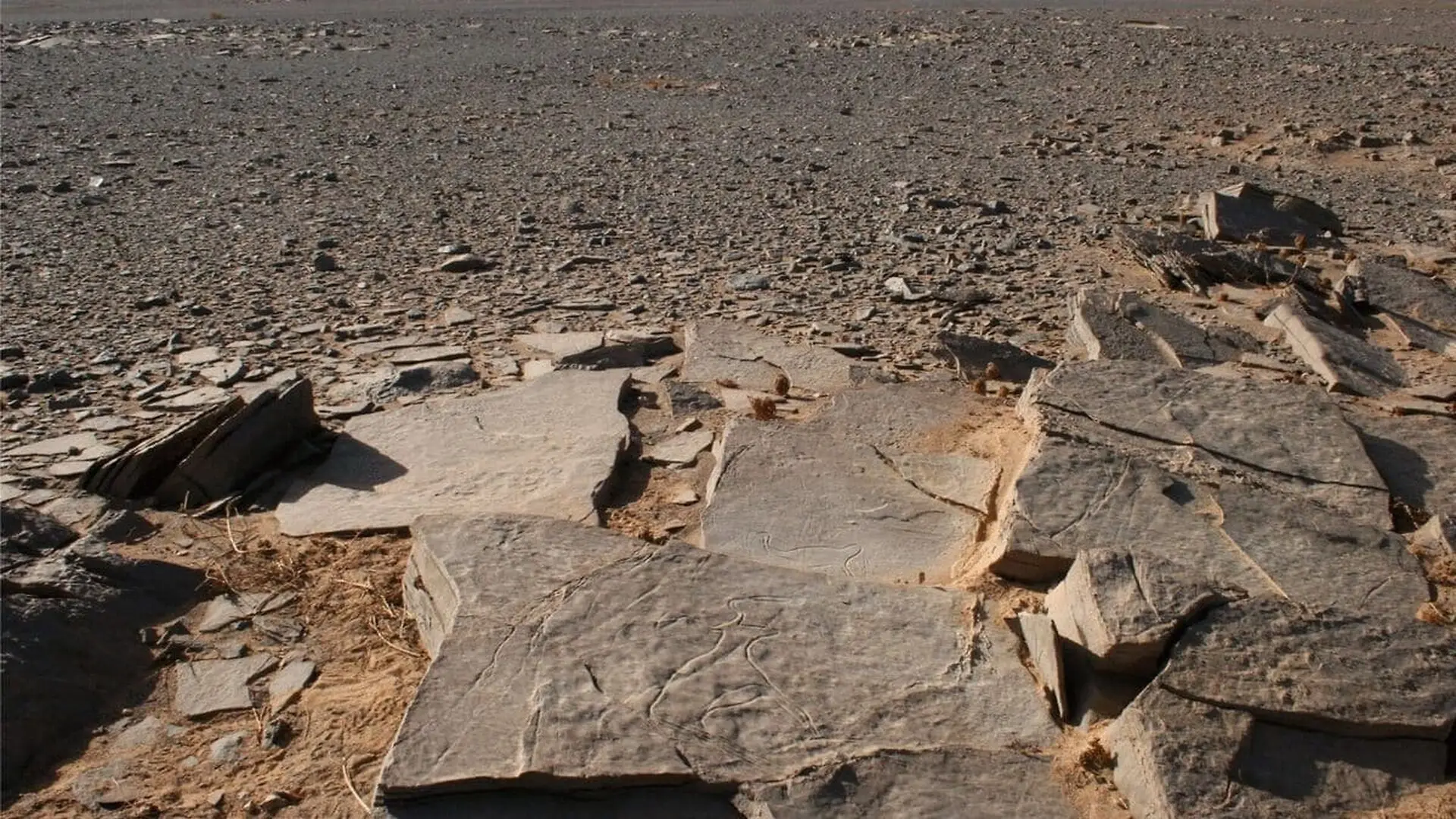
The tomb is situated in a landscape rich with prehistoric history. Nearby, the Sluguilla Lawash site features over 1,100 engraved rocks depicting a diverse range of megafauna, including giraffes, rhinoceroses, and elephants. These carvings, which may date back as far as 6,500 years, serve as a stark reminder of the region’s greener past.
While the transition from simple subterranean graves to elaborate stone monuments marks a clear shift in burial customs, the specific purpose of the “antennae” and the social drivers behind these monumental constructions remain subjects of ongoing investigation. Despite these lingering questions, the Lawash el Telli site provides a firm anchor point for understanding how early societies in the Atlantic Sahara honored their dead.
This article has been fact checked for accuracy, with information verified against reputable sources. Learn more about us and our editorial process.
Last reviewed on .
Article history
- Latest version
Reference(s)
- Soler, Joaquim., et al. “Chronology and Funerary Practices Associated with Antennae Tumuli in Western Sahara.” African Archaeological Review, October 20, 2026 Springer Science and Business Media LLC, doi: 10.1007/s10437-026-09666-8. <https://link.springer.com/article/10.1007/s10437-026-09666-8>.
Cite this page:
- Posted by Hassan Raza