Scientists Finally Name Massive Eyeless Cave Creature Hidden in Japan for 70 Years
A mysterious, eyeless cave dweller discovered in Japan with six legs and two long tails is challenging existing scientific records.
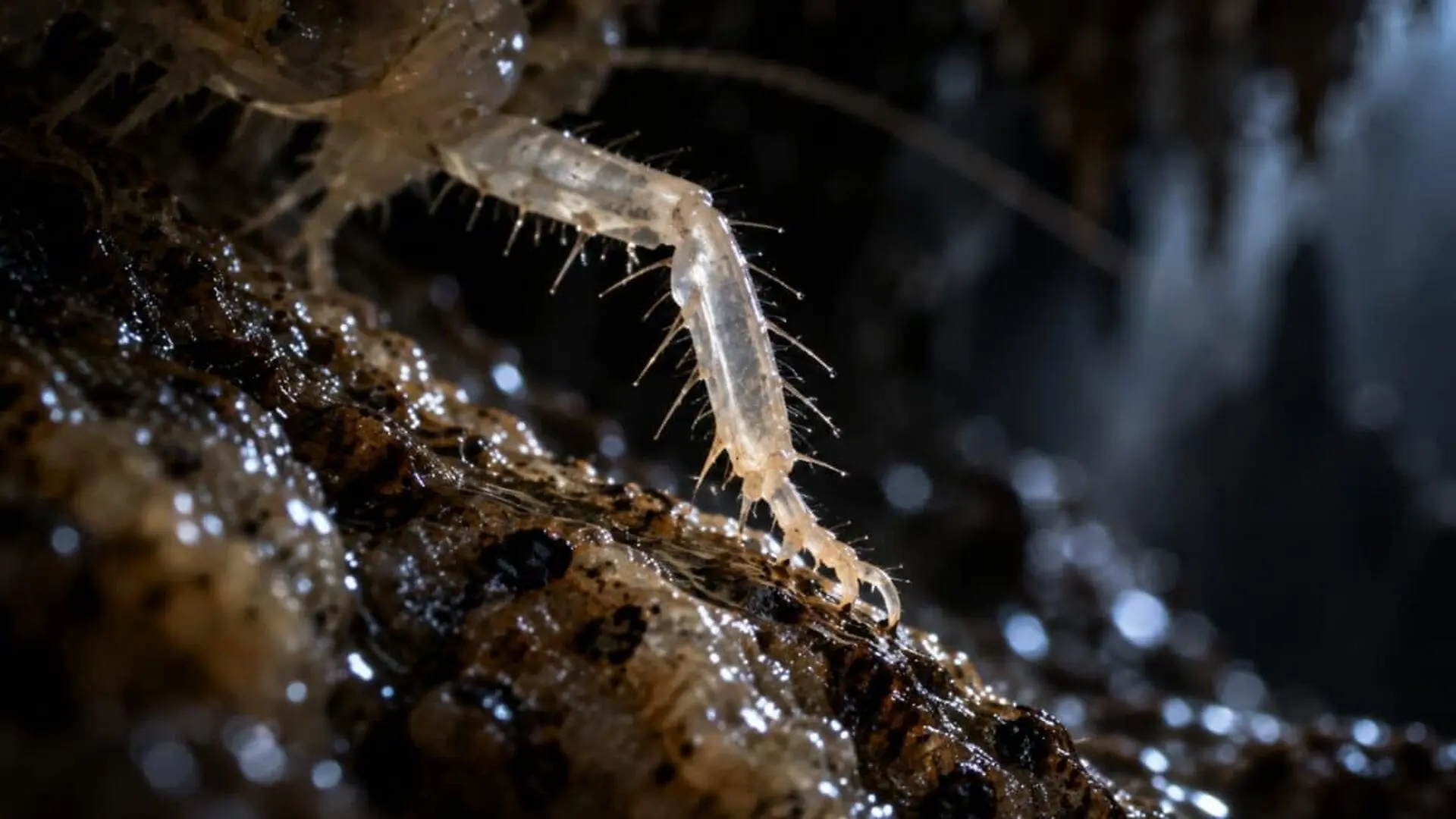
Hidden deep within the labyrinthine limestone caverns of the Akiyoshidai plateau in western Japan, researchers have finally classified a mysterious, blind inhabitant that has eluded formal recognition for over seven decades. First documented by cave explorers in 1953, the pale, six-legged creature is now officially known as Pacificampa dodecas, following a comprehensive description published by biologists at Kyoto University.
The discovery identifies P. dodecas as a member of the Campodeidae family, a group of small, soft-bodied organisms that thrive in soil and subterranean environments. At 13 millimeters in length, this species officially claims the title of the largest campodeid ever recorded, surpassing the previous record holder—the 10.1-millimeter Pacificampa daidarabotchi—by nearly 30 percent. Both species, which share a surprising proximity of less than 70 kilometers, suggest that “oversized” bodies may be a hallmark characteristic of this genus.
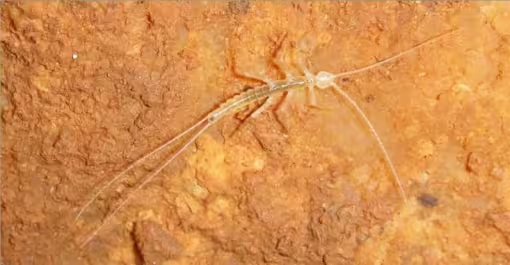
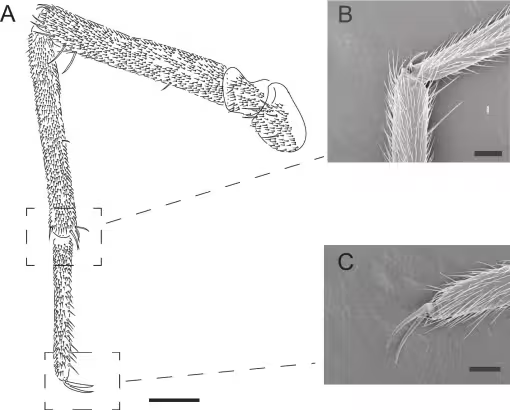
The name dodecas is a nod to the specific arrangement of hairs on the creature’s back, a critical diagnostic feature for taxonomists. However, for researcher Tomoyuki Yokogawa, the name also captures a more personal reaction to his first encounter with the animal. “I still vividly remember the first time I encountered this species, how surprised I was by its size and how excited I felt looking through the microscope,” Yokogawa said. The name also echoes the Japanese expression “Dekka!”, or “It’s huge!”, reflecting the astonishment of those who first cataloged it.
As true troglobites, these creatures have evolved specifically for life in total darkness, having lost their sight and pigmentation in favor of highly sensitive antennae and bristles. While members of the Pacificampa genus are distributed throughout East Asia, P. dodecas represents the first formal record of the group on Honshu, Japan’s main island. Genetic analysis confirmed that the specimens gathered from the Akiyoshidai caves did not match any known species, necessitating a fresh taxonomic classification.
Rewriting the Evolutionary Family Tree
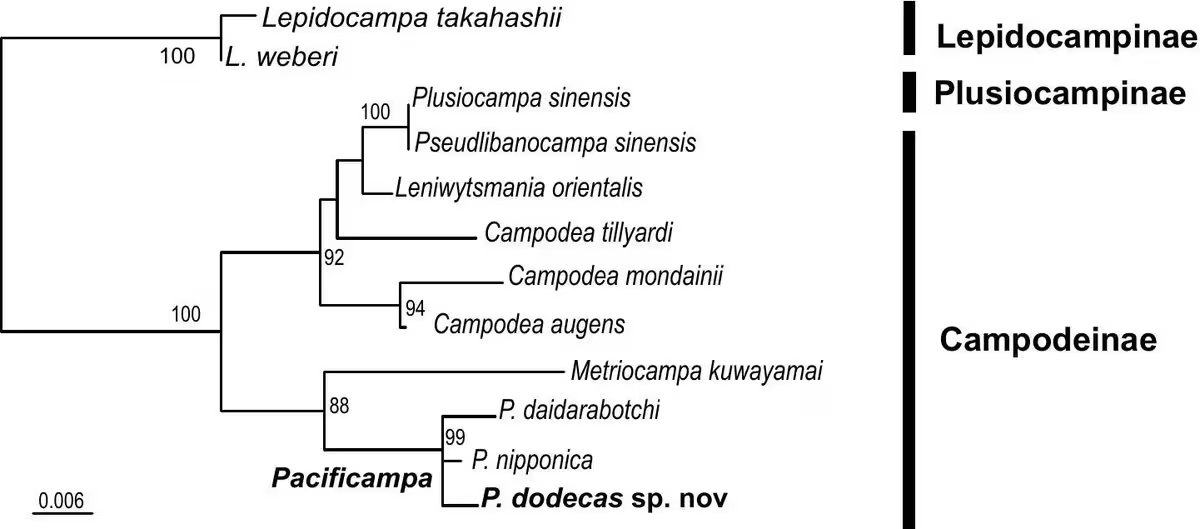
The addition of P. dodecas to the scientific record has broader implications for evolutionary biology. Genetic sequencing has prompted researchers to reconsider the structure of the Campodeinae subfamily, which appears to contain multiple distinct lineages previously lumped together. Findings suggest that Pacificampa is more closely related to the soil-dwelling Metriocampa than to the North American genus Eumesocampa, as was previously suspected based solely on physical characteristics.
Diplurans, the group to which these animals belong, represent an ancient lineage of six-legged hexapods that diverged from true insects long ago. Their evolutionary history is illuminated by recent finds like Sinojapyx giganteus, a 165-million-year-old fossil unearthed in China that measured over 5 centimeters, dwarfing its modern-day relatives.
The Akiyoshidai plateau, where P. dodecas was discovered, is a geological treasure trove. Originating as a coral reef 350 million years ago, the region has been sculpted by water into a vast karst network containing more than 450 caves. Now recognized as a UNESCO Global Geopark, the area continues to provide a refuge for specialized species, proving that even after decades of exploration, the darkness beneath the surface still holds significant biological surprises.
This article has been fact checked for accuracy, with information verified against reputable sources. Learn more about us and our editorial process.
Last reviewed on .
Article history
- Latest version
Reference(s)
- “Mine-Akiyoshidai Karst Plateau Geopark.” <https://en.mine-geo.com/news/20260423.html>.
Cite this page:
- Posted by Hassan Raza