Ancient Giant Bristletail Fossil Challenges Everything We Knew About Insect Evolution
A 20-year-old fossil discovery in China has unveiled jaw characteristics that challenge long-standing scientific theories about early evolutionary history.
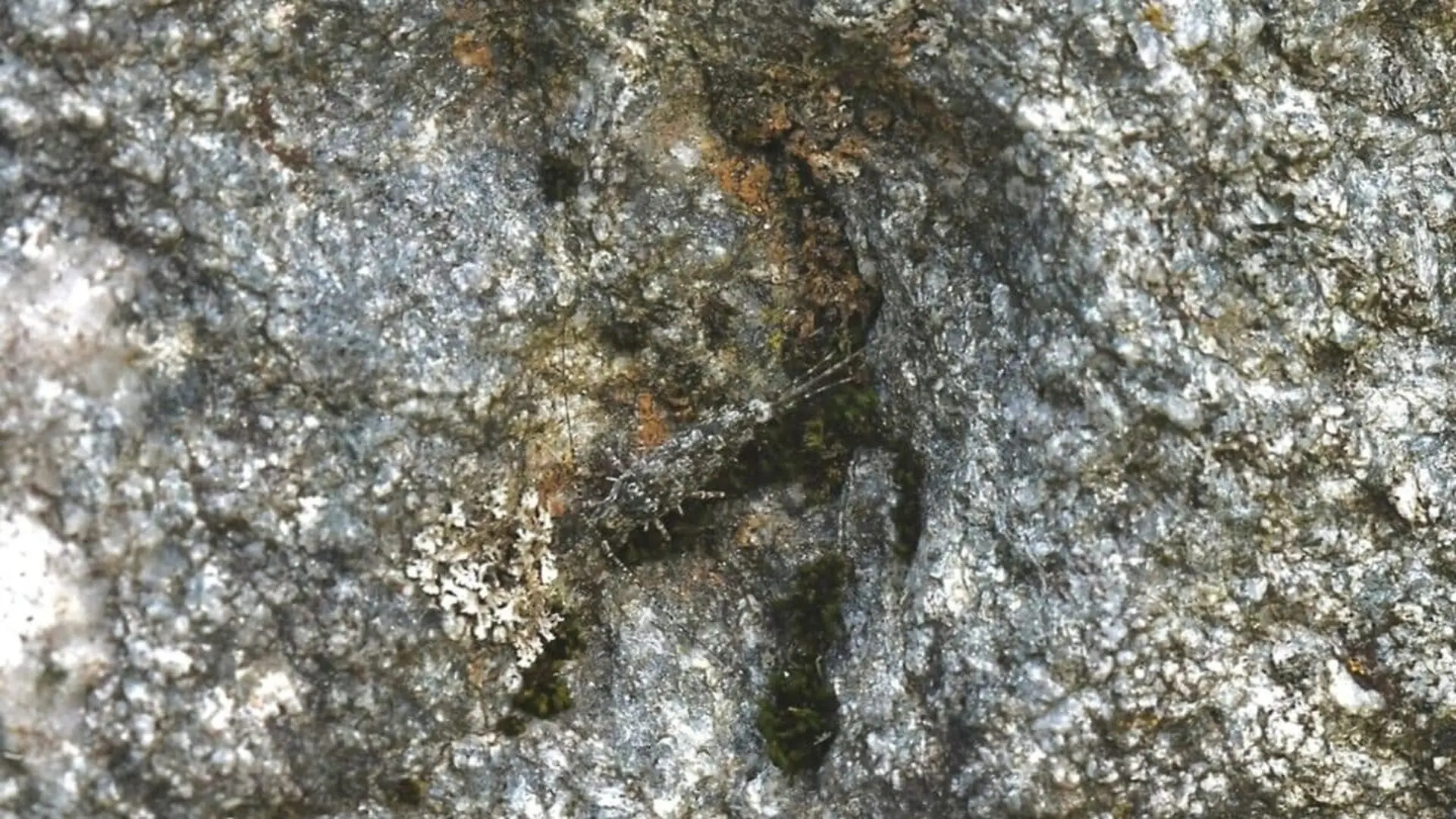
A remarkable discovery in northeastern China is forcing paleontologists to rethink the evolutionary history of hexapods. The fossil, a 165-million-year-old specimen of a creature named Sinojapyx giganteus, is the largest dipluran ever recorded, measuring more than 5 centimeters in length. This discovery provides a rare glimpse into the lineage of two-pronged bristletails, wingless hexapods that act as distant relatives to modern insects.
The findings, detailed in the journal Proceedings of the Royal Society B: Biological Sciences, were made by an international team from the Chinese Academy of Sciences and the University of Valencia. Despite the Daohugou region of Inner Mongolia yielding hundreds of thousands of insect fossils over the last two decades, this specimen represents the only dipluran ever found at the site, highlighting just how elusive these creatures are in the fossil record.
Uncovering a New Evolutionary Path
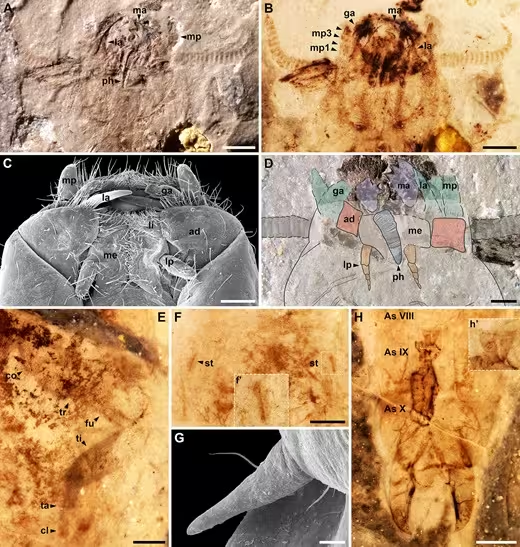
To understand the creature’s place in the evolutionary tree, researchers utilized high-resolution microscopy to analyze its anatomical structure. They identified the fossil as a member of a new family, which they have named Sinojapygidae. However, the most significant revelation lies in the creature’s mouthparts.
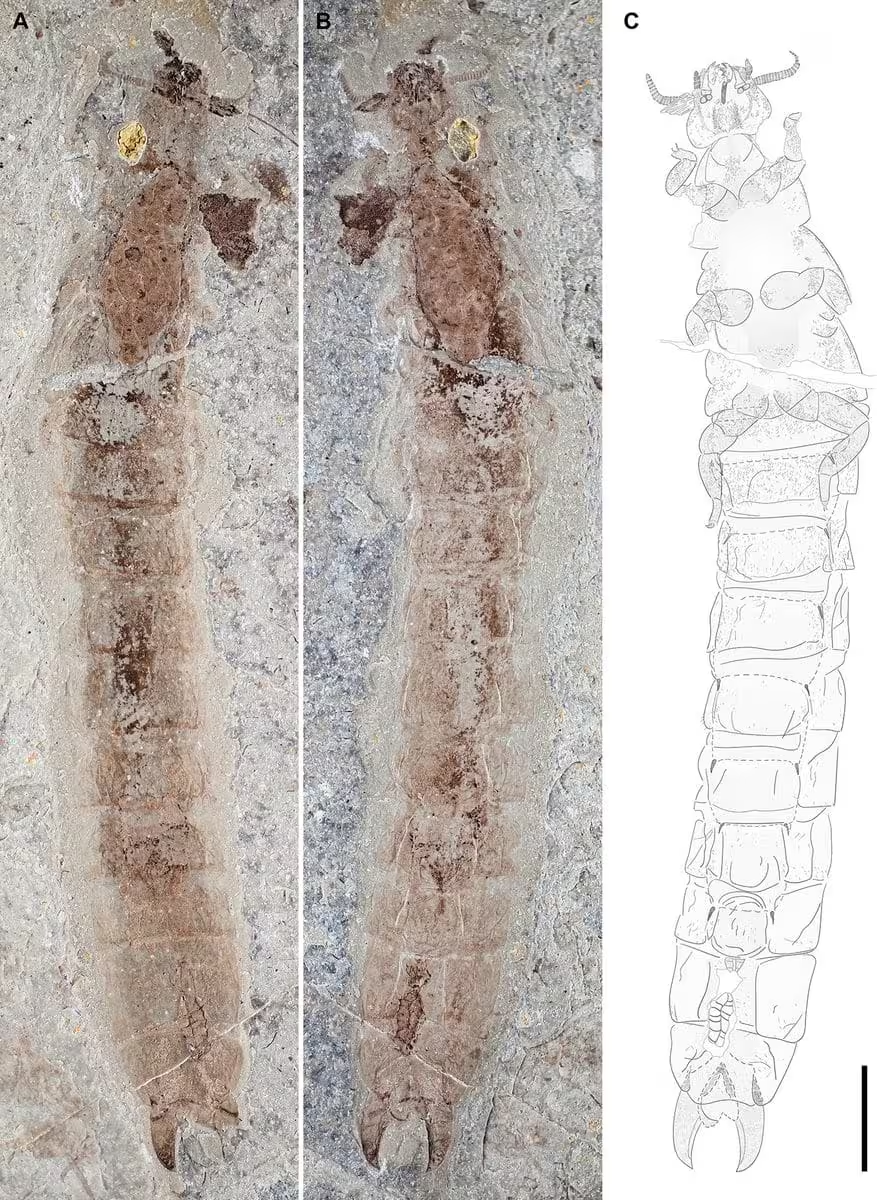
Unlike modern diplurans, which possess mouthparts tucked away inside their heads, Sinojapyx giganteus displayed exposed jaws. This anatomical detail challenges the long-held assumption that external mouthparts were a feature unique to insects. Instead, the researchers propose a new model: the common ancestor of all hexapods likely possessed exposed mouthparts, with the internal, “hidden” configuration evolving independently among different groups, such as springtails and modern bristletails.
A Jurassic Soil Predator
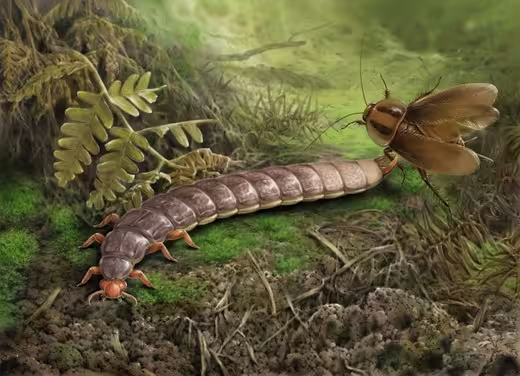
The specimen offers further insight into how specialized features evolved in early hexapods. Its rear pincers, or cerci, show a transitional state that suggests these structures began as sensory appendages before adapting into the formidable hunting tools seen in later groups. With its robust jawline and significant size, experts believe Sinojapyx giganteus functioned as an apex predator within the Jurassic-era soil ecosystems.
Lead researcher Diying Huang of the Nanjing Institute of Geology and Paleontology noted that this discovery is part of a broader effort to map the origins of modern ecological systems. The team hopes that future fieldwork will uncover more specimens to further refine their understanding of how these early hexapod body plans diverged and diversified over millions of years.
This article has been fact checked for accuracy, with information verified against reputable sources. Learn more about us and our editorial process.
Last reviewed on .
Article history
- Latest version
Reference(s)
- Wang, Yehao., et al. “A giant Jurassic hunter: the earliest dipluran and its implications for hexapod body pattern evolution.” Proceedings of the Royal Society B: Biological Sciences, vol. 293, no. 2080, October 7, 2026 The Royal Society, doi: 10.1098/rspb.2026.1207. <https://dx.doi.org/10.1098/rspb.2026.1207>.
- <https://www.researchgate.net/profile/Diying-Huang>.
Cite this page:
- Posted by Hassan Raza