Why Scientists Are Searching for Ancient Alien Tech Hidden in Moon Dust
Could the biggest discovery in the search for alien life be hidden in a handful of moon dust? New theories suggest lunar samples may hold the answer.
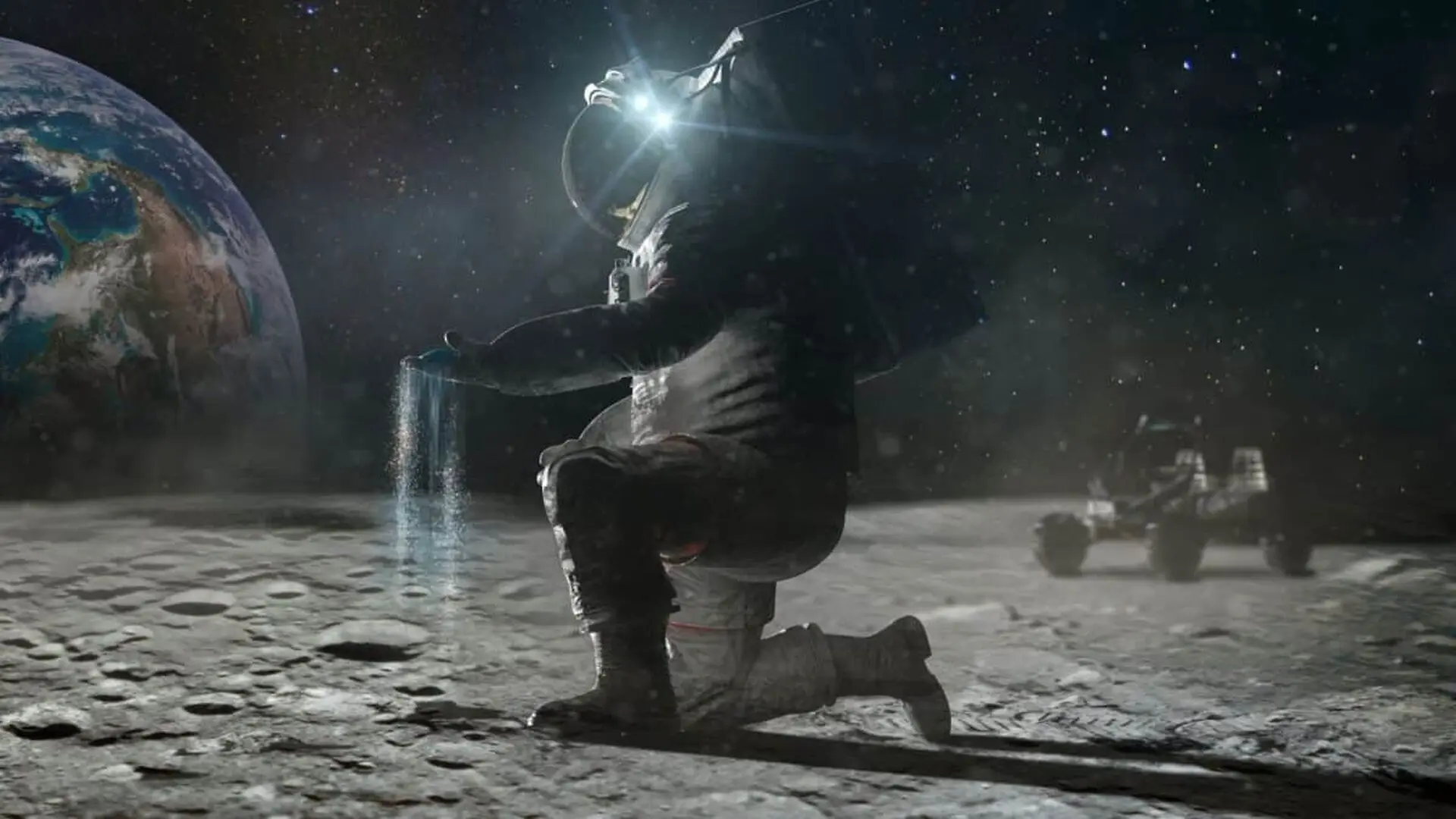
The quest to find evidence of advanced extraterrestrial life has traditionally been synonymous with scanning the stars for radio signals. However, a fresh approach suggests that humanity might be looking in the wrong place. Instead of listening for electromagnetic whispers from across the galaxy, scientists are proposing that we search for physical remnants of alien technology buried right beneath our feet, preserved within the moon’s ancient, dusty surface.
In a recent study led by Lewis J. Pinault of the SETI Institute, researchers argue that lunar regolith could act as a stable, long-term archive for microscopic technosignatures. The paper, which appears as a preprint on arXiv and has been submitted to the International Journal of Astrobiology, suggests that the moon’s lack of geological activity provides a unique, undisturbed environment where debris from other star systems could remain intact for eons.
A Potential Cache of Cosmic Artifacts
The research categorizes potential alien debris into two distinct types. The first, dubbed Arkhipov particles—named after astronomer Alexei Arkhipov—represents accidental industrial waste. Such material could be generated by large-scale engineering projects, such as a Dyson swarm, where fragments resulting from collisions or structural degradation might drift into interstellar space.
The second category, Bracewell particles, named for physicist Ronald Bracewell, refers to objects intentionally deployed by an extraterrestrial civilization. These would be autonomous probes or advanced “smart dust” sent to monitor or explore new solar systems.
Why the Moon Serves as a Galactic Time Capsule
Earth is constantly reshaped by tectonic activity, erosion, and atmospheric weathering, all of which would destroy fragile interstellar fragments. The moon, however, is geologically quiet. Its lack of an atmosphere and the absence of a water cycle mean that objects deposited on the surface remain largely in place, subject only to “impact gardening,” where micrometeorite strikes gradually churn and bury material beneath the regolith.
Durable materials such as ceramics, graphene, or titanium-tungsten superalloys could theoretically withstand the harsh environment of space and survive a high-velocity landing on the moon, potentially remaining identifiable for up to a billion years. While the high speeds involved in inter-system travel—approaching 42 km/s—pose a significant challenge to the survival of these objects, the team notes that solar radiation pressure might act as a braking mechanism for certain materials, increasing the likelihood of a soft landing.
Leveraging AI to Scan the Lunar Grains
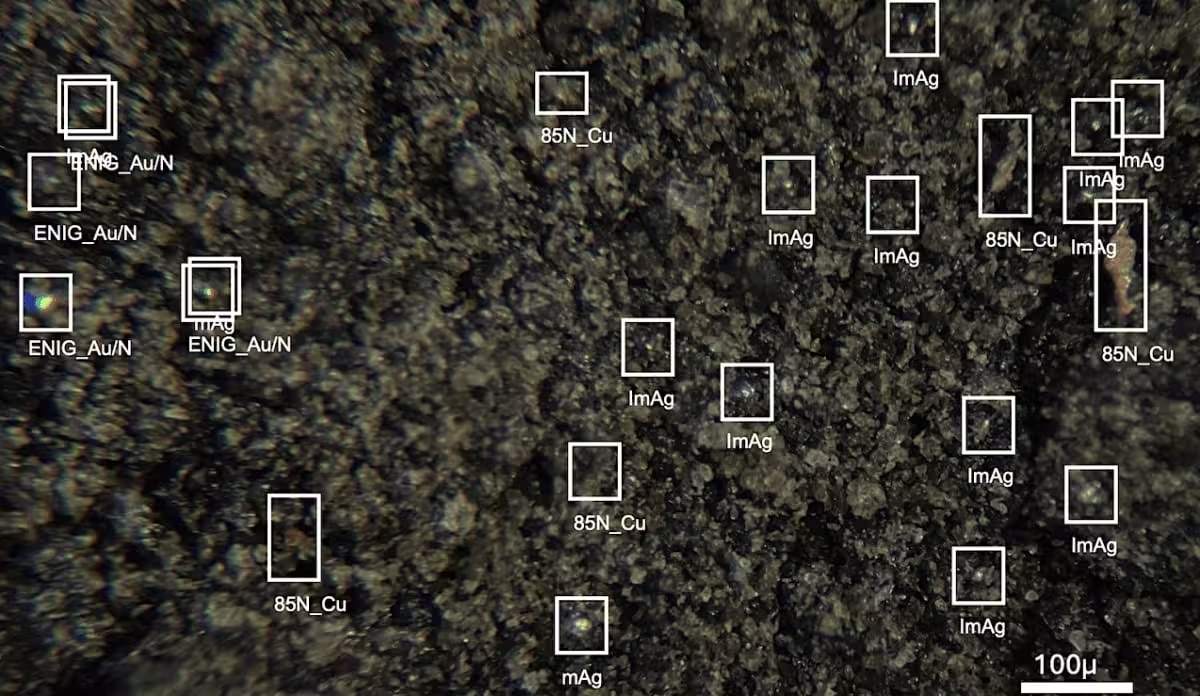
Sifting through the lunar surface is a monumental task. A single cubic meter of regolith weighs approximately 1.5 metric tons and contains more than a trillion individual grains. To make this search feasible, the research team proposes the use of artificial intelligence and high-resolution automated microscopy.
By employing computer vision models—such as the previously developed YOLO-ET—researchers could identify anomalies among the vast collection of natural lunar particles. Any samples flagged as potentially technological could then be subjected to rigorous analysis using nano-CT scanners or focused ion beam facilities. Even if a search concludes without a discovery, the authors suggest that the effort would still yield significant scientific value by establishing the first meaningful constraints on the abundance of artificial materials left by technological civilizations within our local cosmic neighborhood.
This article has been fact checked for accuracy, with information verified against reputable sources. Learn more about us and our editorial process.
Last reviewed on .
Article history
- Latest version
Reference(s)
- Pinault, Lewis. “Micron-Scale Technosignatures: How a Cubic Metre of Lunar Regolith May Begin to Constrain the Number of Past Technological Civilisations in the Galaxy.” arXiv.org <https://arxiv.org/abs/2606.24028>.
- “SETI League Regional Coordinator Alexy Arkhipov.” <http://www.setileague.org/admin/alexey.htm>.
- projects, Contributors. “Australian scientist (1921–2007).”, October 24, 2003 Wikimedia Foundation, Inc. <https://en.wikipedia.org/wiki/Ronald_N._Bracewell>.
Cite this page:
- Posted by Hassan Raza