Scientists Discover New Species Of Tiny Wild Cat Hiding In The Forests Of Bolivia
Scientists have uncovered a long-hidden evolutionary secret within the DNA of a small South American cat, revealing a discovery kept invisible for generations.
For more than a century, the diverse populations of small, spotted felines roaming the forests of South and Central America have been lumped together under a single, simplified classification. Now, a comprehensive genetic investigation published in the journal Current Biology has shattered that consensus, revealing that these animals actually represent five distinct species. The findings mark the first identification of a new wild cat species in over 100 years.
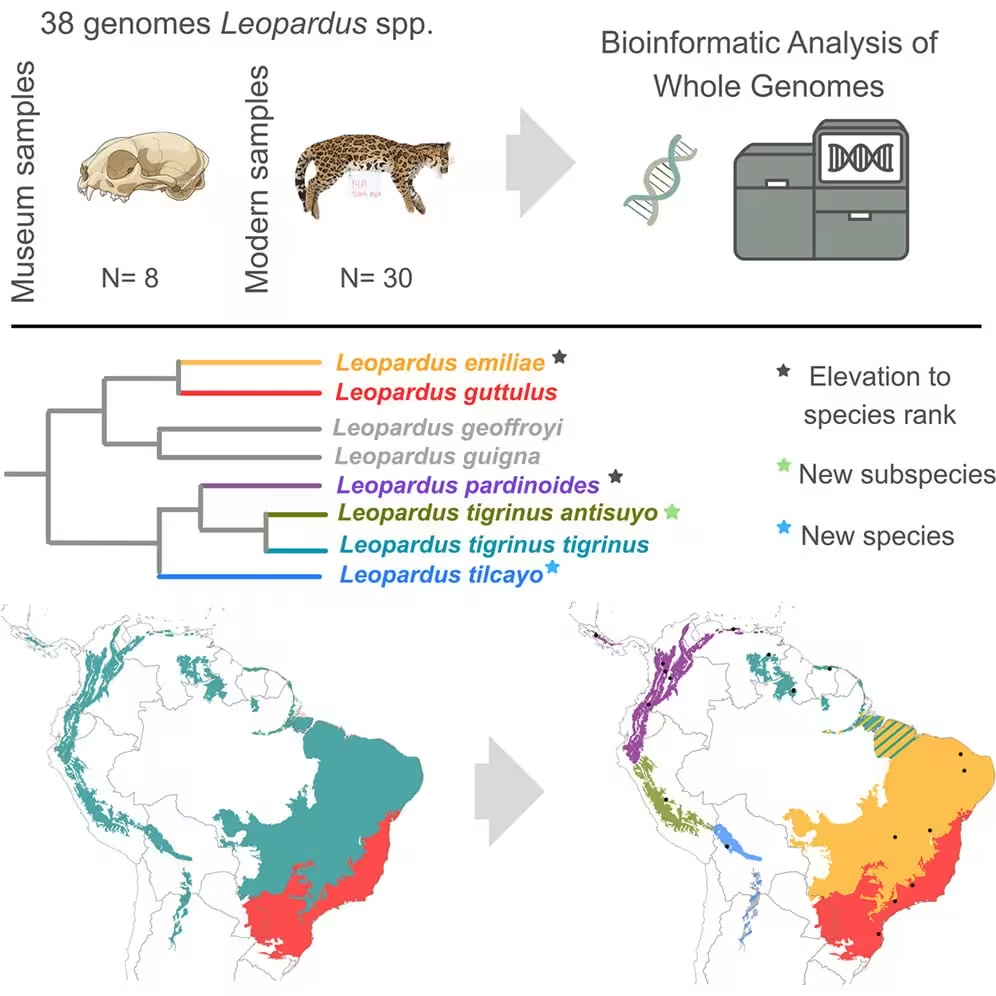
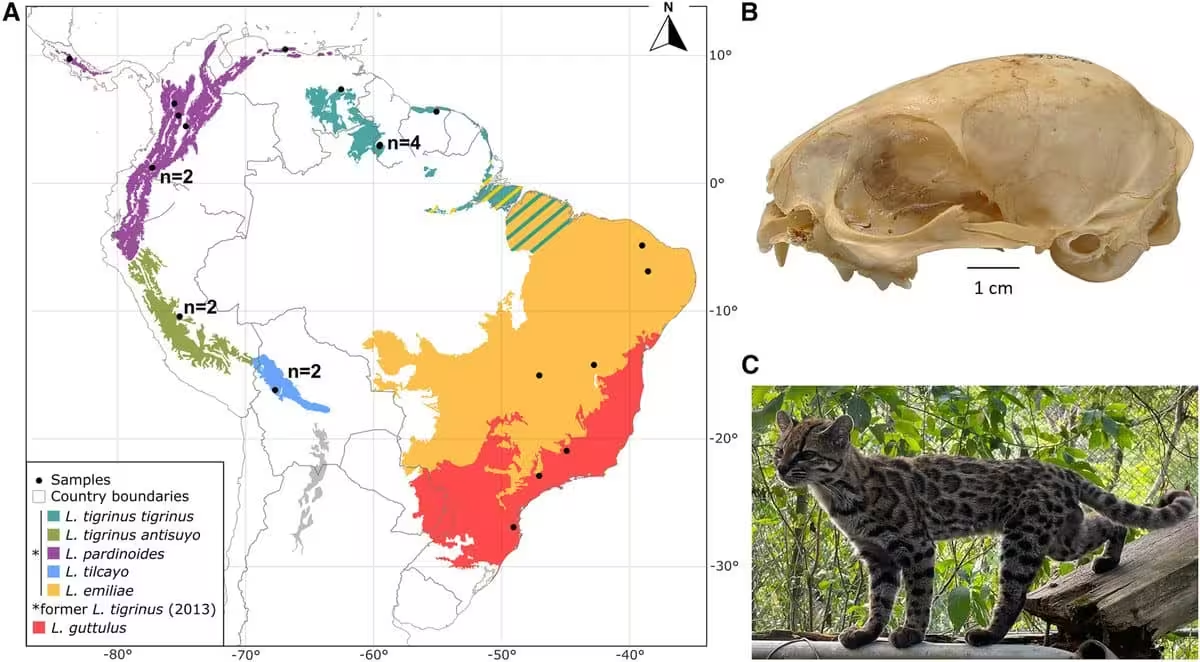
The most notable discovery is Leopardus tilcayo, a small feline native to the cloud forests of the Bolivian Yungas. Long obscured by its physical resemblance to the northern tiger cat (Leopardus tigrinus), genetic analysis confirms that L. tilcayo diverged into its own evolutionary lineage approximately 1.4 million years ago.
Decoding a Hidden Evolutionary History
To untangle this complex taxonomy, researchers examined the genomes of 38 tiger cat specimens collected across a wide swath of the continent, including samples from Brazil, Colombia, Peru, and Venezuela. By analyzing DNA extracted from bone, teeth, fur, and muscle tissue, the team confirmed four previously proposed species—Leopardus guttulus, Leopardus emiliae, Leopardus pardinoides, and Leopardus tigrinus—while formally adding L. tilcayo and identifying a new subspecies in Peru, Leopardus tigrinus antisuyo.
The formal description of L. tilcayo is grounded in data from two specific individuals, including a captive male nicknamed “Tigrino” at the Senda Verde wildlife refuge, which serves as the official type specimen for the species. Paola Nogales-Ascarrunz, a biologist and co-author of the study, noted that while the cat’s small stature—weighing roughly 1.5 to 2 kilograms—was apparent to observers, researchers were surprised to find the genetic evidence of a distinct species.
Conservation Implications for Endangered Felines
The taxonomic revision carries significant weight for conservation efforts. As noted by study co-author Jonas Lescroart, splitting these populations into distinct species forces a re-evaluation of their survival status. Currently, the International Union for Conservation of Nature (IUCN) categorizes tiger cats as vulnerable, but localized threats—such as habitat loss, illegal wildlife trade, and diseases carried by domestic dogs—may now require more specific, targeted interventions.
“It’s smaller than a house cat,” Nogales-Ascarrunz said, noting that Tigrino “didn’t look like the other cats,” though the team initially approached the specimen with no expectation that it would redefine the group’s family tree.
For experts like Fabio Oliveira do Nascimento of the University of São Paulo, who was not involved in the research, the study serves as a long-awaited resolution to a confusing chapter in South American zoology. By clarifying the evolutionary paths of these elusive creatures, scientists hope to provide a more accurate framework for protecting the continent’s hidden biodiversity before it disappears.
This article has been fact checked for accuracy, with information verified against reputable sources. Learn more about us and our editorial process.
Last reviewed on .
Article history
- Latest version
Reference(s)
- “Living Species - Northern Tiger Cat | IUCN CatSG.” IUCN CatSG <https://www.catsg.org/living-species-northerntigercat>.
Cite this page:
- Posted by Hassan Raza