Earth Is Becoming Rounder and the Process Is Speeding Up According to New Data
Scientists have discovered a new way to measure Earth’s hidden internal shifts, revealing surprising results that depend on how we track planetary movement.
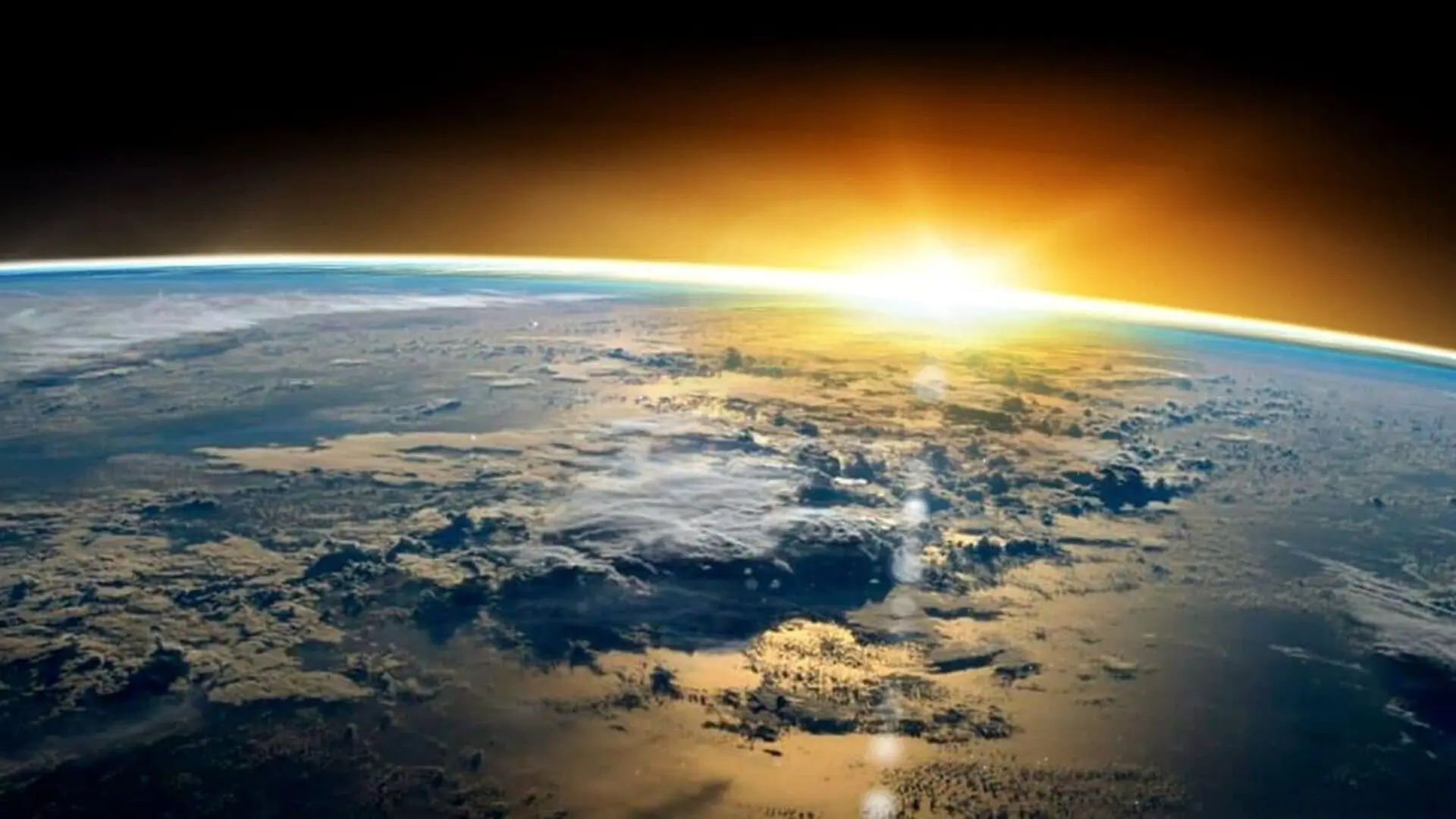
Our planet is subtly reshaping itself, undergoing a transformation that is gradually rounding out its profile. A recent analysis reveals that the Earth’s poles are slowly rising while the pronounced bulge around its equator is receding, a shift that is currently accelerating at a rate of approximately one millimetre per year—doubling the pace observed in the late 1990s.
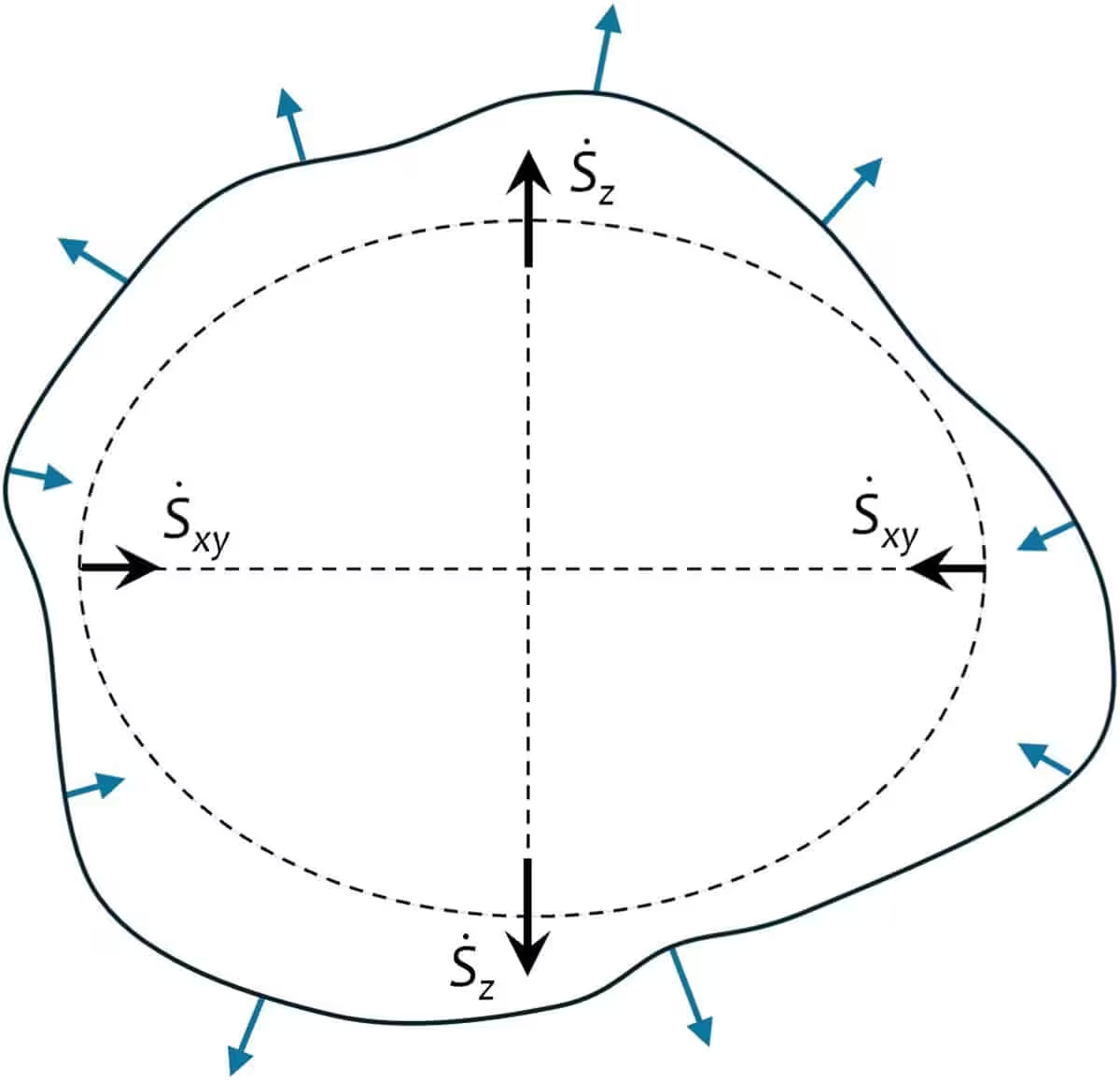
While often visualized as a sphere, Earth is actually an oblate spheroid, flattened at the poles and wider at the equator due to its constant rotation. This geometry is not static; it is in a state of perpetual flux, responding to the dynamic environmental upheavals occurring across the globe.
Refining Global Geodetic Measurements
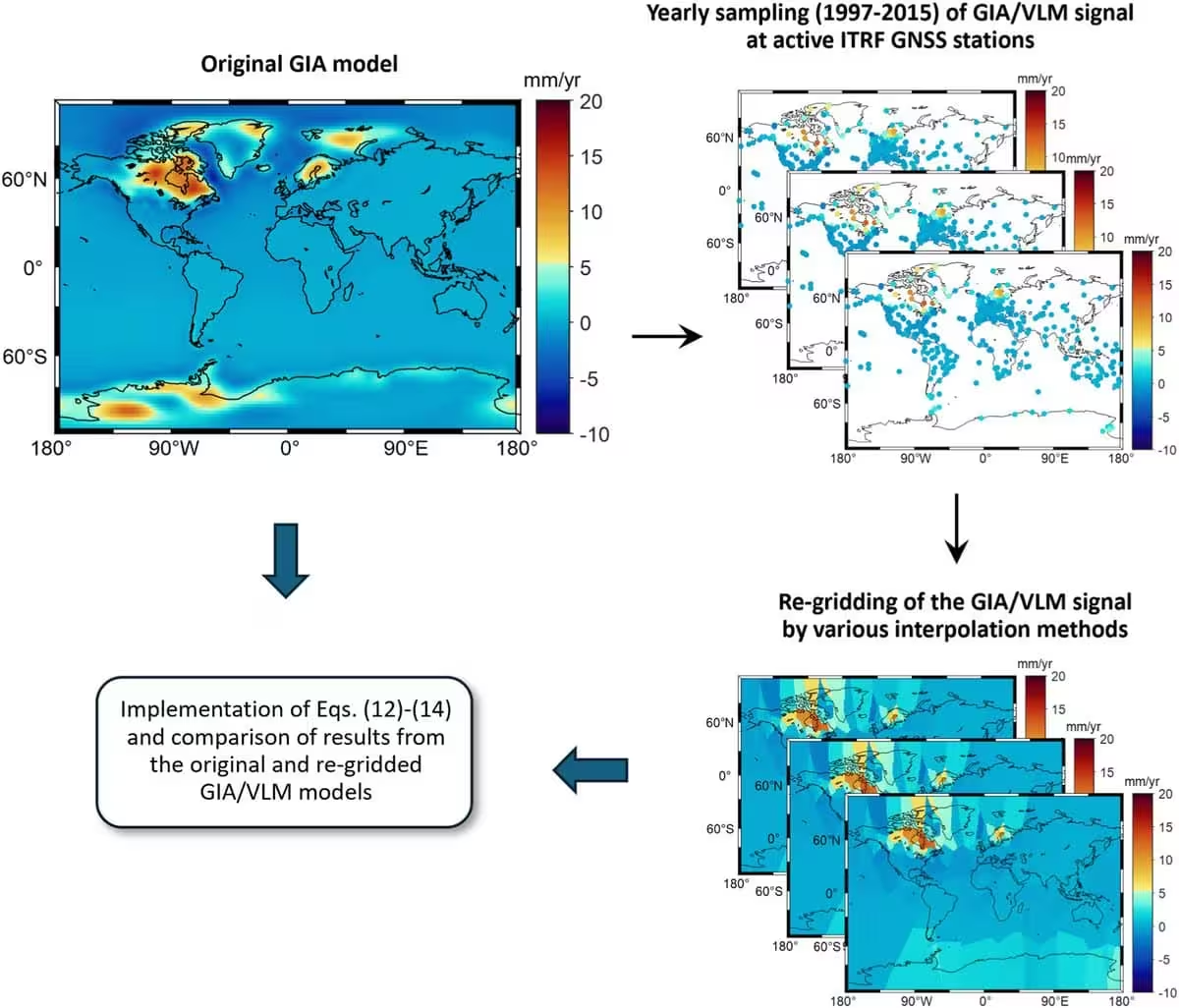
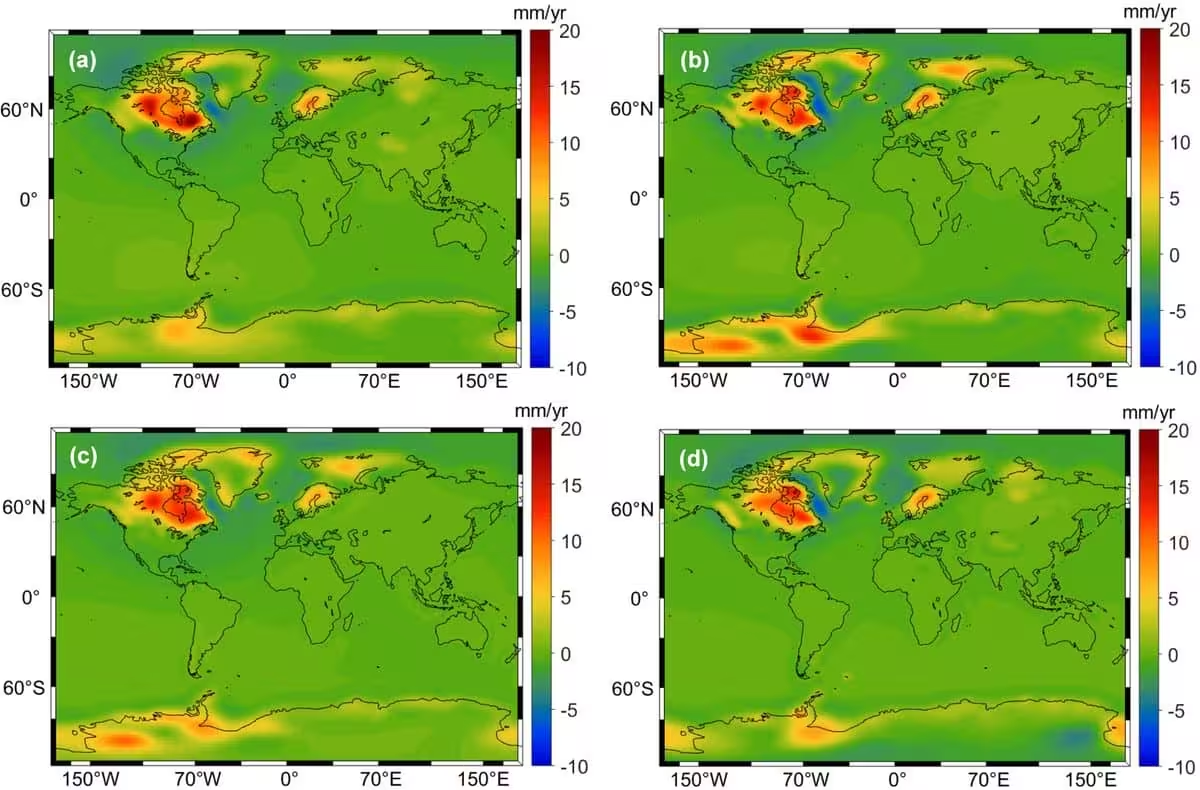
The findings, detailed in a study published on 9 September in the journal JGR Solid Earth, indicate a consistent trend toward a more spherical solid planet. Christoforos Kotsakis, a professor of geodesy at the Aristotle University of Thessaloniki, utilized an innovative methodology to process data from global navigation satellite systems (GNSS). By isolating surface deformations, Kotsakis was able to overcome traditional limitations caused by the sparse distribution of monitoring stations in polar regions and across the oceans.
The scale of this change is minimal relative to the Earth’s total equatorial diameter of 12,756 kilometres, yet the statistical acceleration is clear. Between 2011 and 2015, the rate of this rounding effect reached approximately one millimetre annually, an increase from the 0.5 millimetre per year measured between 1997 and 2000. This represents a significant trend of 0.4 millimetres of additional rounding per decade.
The Complex Interplay of Ice and Ocean
The primary driver behind this phenomenon is the ongoing loss of polar ice sheets. As massive ice deposits melt, the reduction in weight allows the underlying Earth’s crust to rebound, causing the polar regions to rise. Conversely, the equatorial region experiences a slight reduction in its bulge as the redistribution of global mass shifts.
However, the definition of Earth becoming “rounder” depends on whether the oceans are included in the calculation. When ocean volume is accounted for, the planet appears to flatten by approximately 0.8 millimetres per year as water migrates toward the equator, highlighting that the Earth’s shape is a delicate balance of multiple moving parts.
Improving Environmental Monitoring
Beyond its geodetic implications, this research offers a sophisticated new method for monitoring environmental changes. By comparing GNSS data with observations of the Earth’s gravitational field, researchers can identify discrepancies that provide deeper insight into how mass is distributed across the planet. Although the two data sets do not match perfectly, they are inherently complementary.
Integrated analysis of shape deformation and gravity variations could significantly improve the ability to track large-scale climate impacts, such as ice loss in Greenland and Antarctica, alongside the fluctuating distribution of global ocean water.
This article has been fact checked for accuracy, with information verified against reputable sources. Learn more about us and our editorial process.
Last reviewed on .
Article history
- Latest version
Reference(s)
- Kotsakis, C.. “Mapping Global GNSS Vertical Velocities to Solid Earth Figure Change.” Journal of Geophysical Research: Solid Earth, vol. 131, no. 9, September 9, 2026 American Geophysical Union (AGU), doi: 10.1029/2026JB034224. <https://agupubs.onlinelibrary.wiley.com/doi/10.1029/2026JB034224>.
- “GNSS.” <https://www.unoosa.org/oosa/en/ourwork/psa/gnss/gnss.html>.
- Breton, Cécile. “La Terre change de forme, et de plus en plus vite : ce que les scientifiques viennent de découvrir.”, October 26, 2026 Futura <https://www.futura-sciences.com/planete/actualites/terre-terre-change-forme-plus-plus-vite-ce-scientifiques-viennent-decouvrir-138835/>.
Cite this page:
- Posted by William Moore