Future Climate Projections Reveal Traditional Windows Will Soon Cost Urban Buildings Dearly
New research shows unshaded architectural glass becomes a financial liability by 2050, making solar-integrated building envelopes essential for future urban centers.
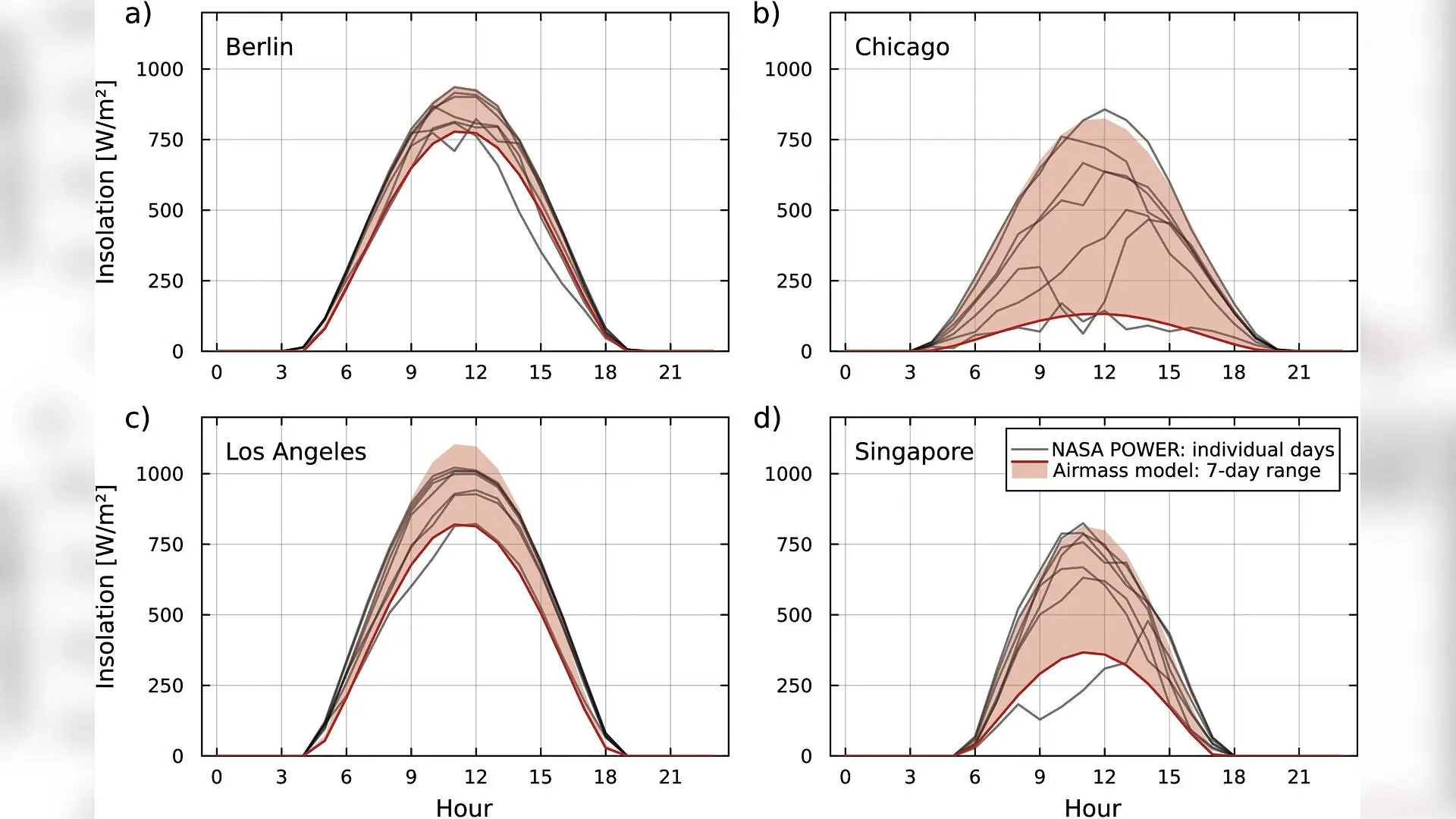
Urban buildings across four diverse global climates could see unshaded windows transform from modest thermal liabilities into severe energy drains by the middle of the century, according to new research evaluating climate-adaptive architectural materials. The study reveals that traditional meteorological datasets commonly used by architects significantly under-predict the economic and energy value of building-integrated photovoltaics under warming conditions. By replacing standard glass with electricity-generating surfaces, urban centers can offset mounting cooling costs while maintaining indoor comfort.
Future Climate Projections Shift Architectural Economics
To understand how shifting weather patterns will impact building energy performance, researchers developed a computational framework to analyze photovoltaic awning shades and absorptive window coatings. The study, published in PLOS Climate, utilized high-resolution future climate projections from the CanESM5 model under the high-emissions SSP3-7.0 scenario. The simulations focused on south-facing windows in Berlin, Chicago, Los Angeles, and Singapore, comparing historical reference files against projected conditions for the years 2046 through 2050.
The analysis uncovered a striking trend: unshaded windows in all four cities shift into negative net value by 2050. This means traditional architectural designs will impose substantial financial and energy penalties as temperatures rise. While historical weather files often suggest that standard windows provide manageable performance in colder regions, recent historical data and future projections indicate that heating demands drop while cooling and glare penalties climb.
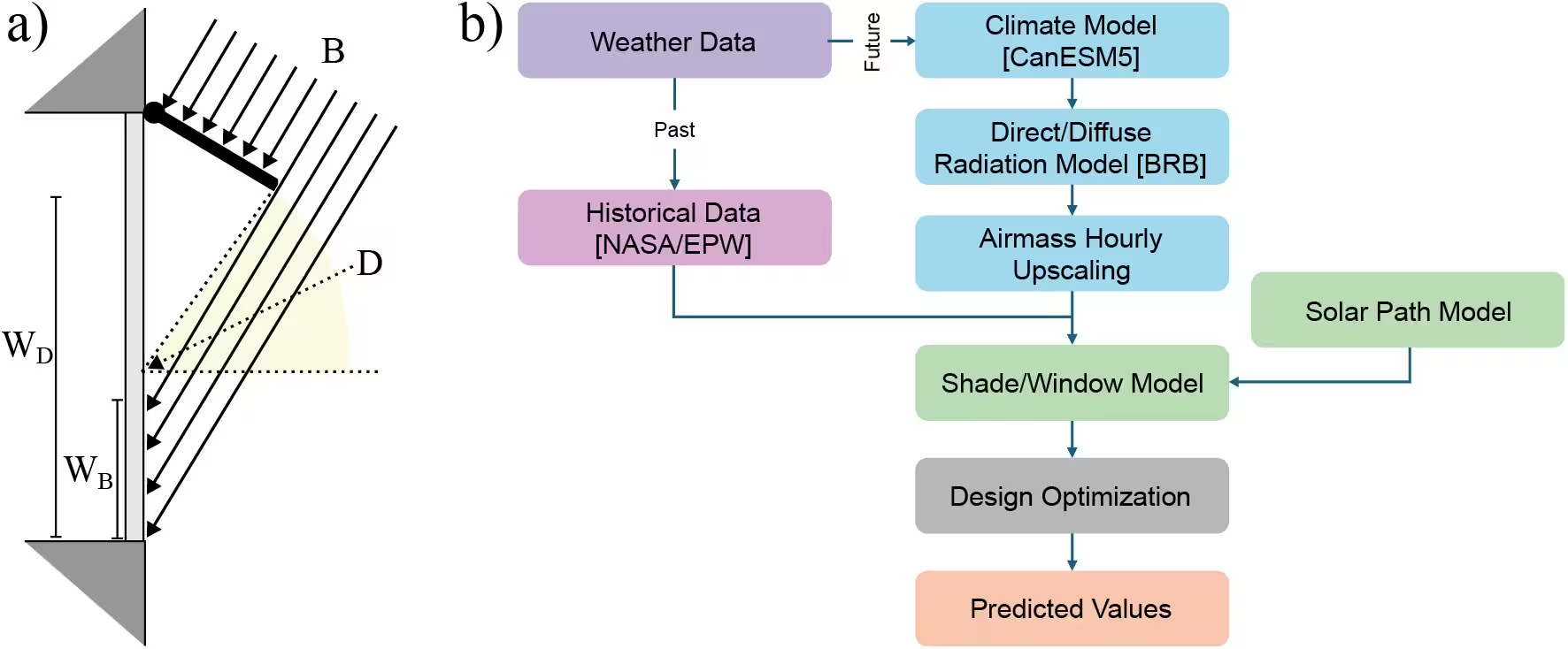
In response to these pressures, building-integrated photovoltaics consistently deliver positive net value across all tested future scenarios. Total system value increases substantially by 2050 in Berlin, Chicago, and Los Angeles, jumping by roughly 39 to 83 percent compared to baseline estimates. Singapore experiences only marginal gains of about 3 percent, because its tropical climate remains firmly cooling-dominated across all datasets, meaning rising temperatures do not cross the threshold that alters heating and cooling seasonal trade-offs.
Optimal Geometries for Awning Shades and Thin-Film Coatings
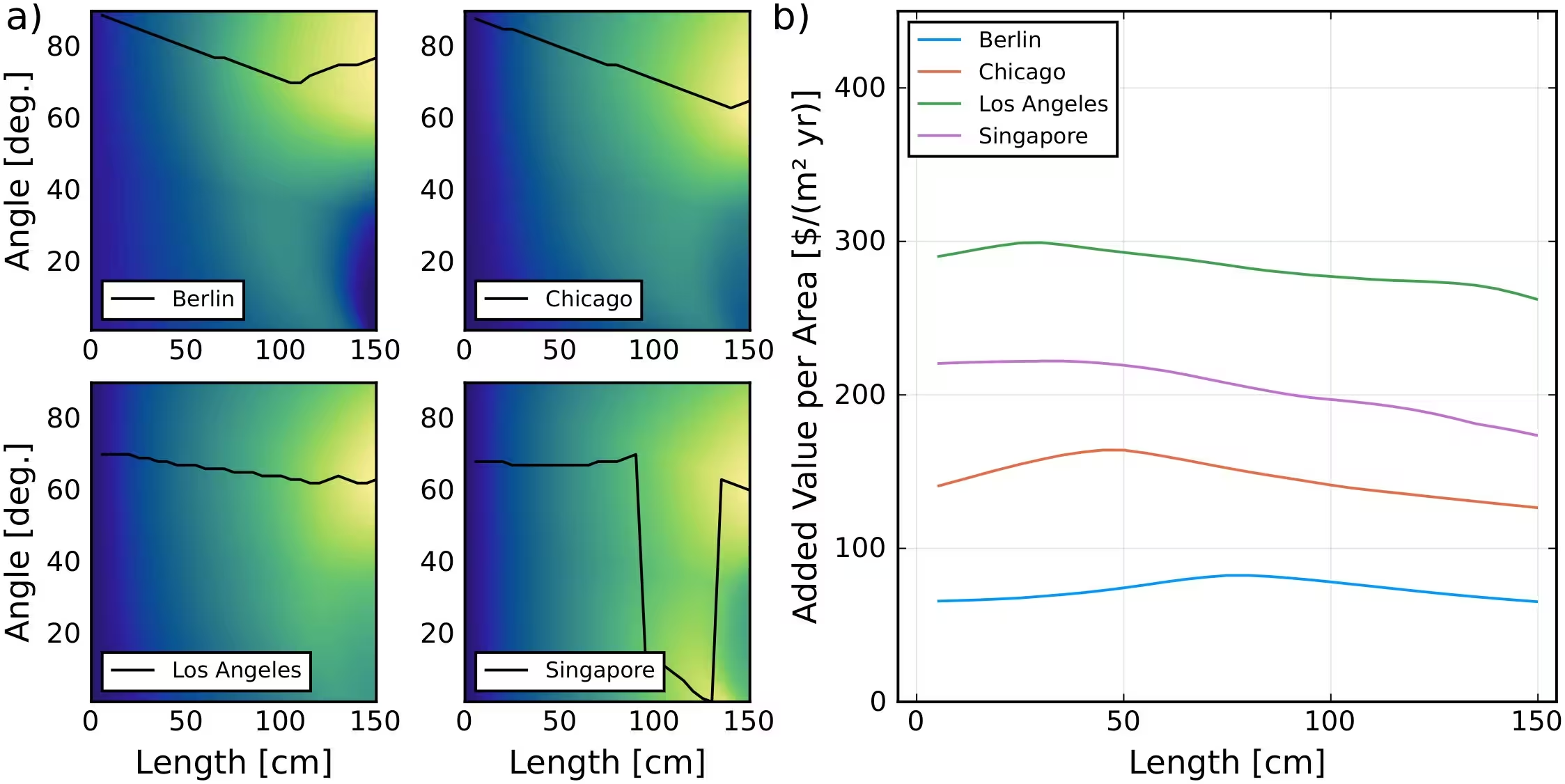
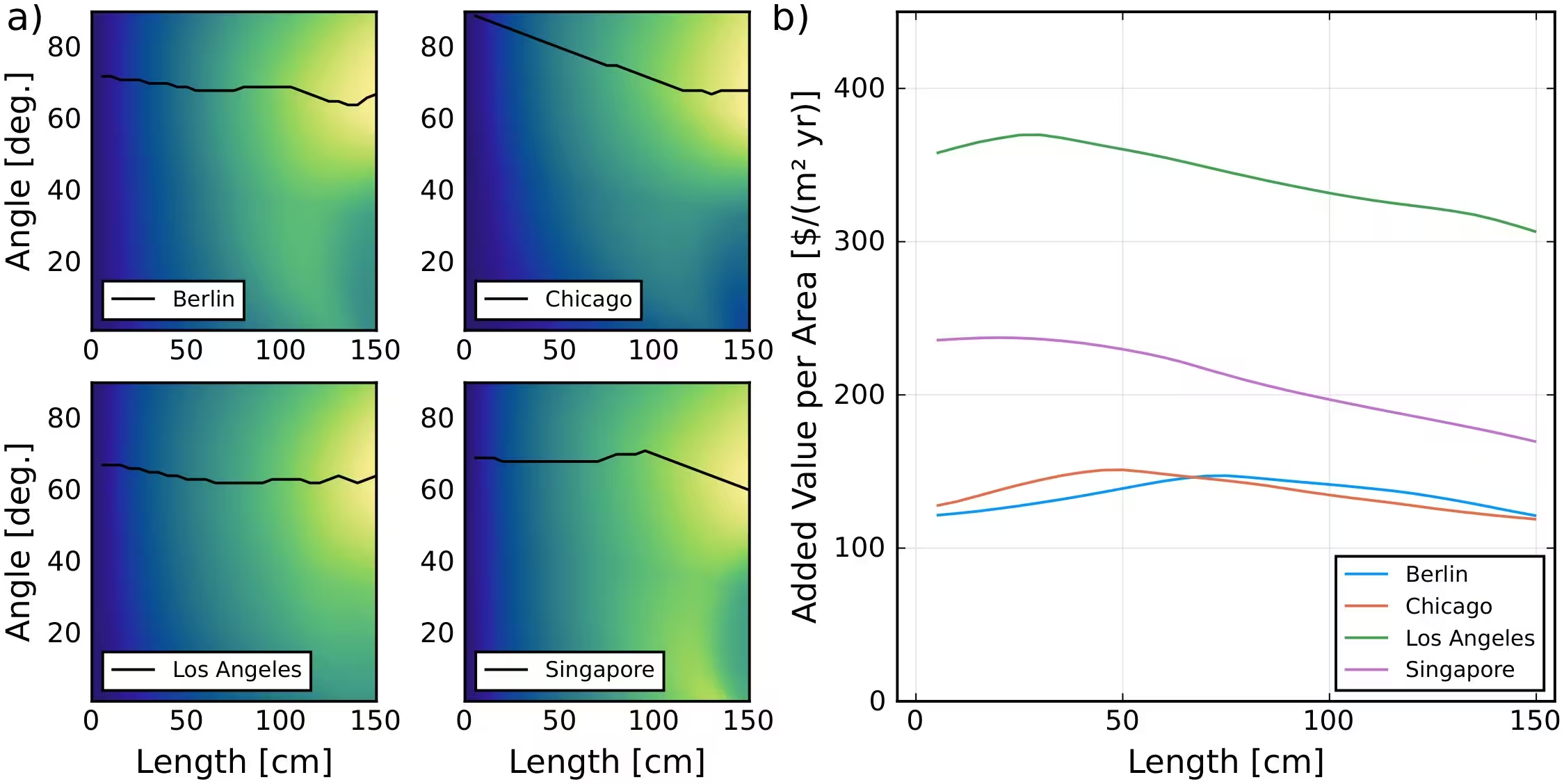
The researchers evaluated two distinct photovoltaic configurations, namely adjustable awning shades mounted above windows and absorptive thin-film window coatings spanning the glazing. For awning systems, the optimal angle and length depend heavily on regional climate needs. Colder cities like Berlin and Chicago favor steeper awning angles near 72 to 75 degrees for a 75-centimeter shade, balancing solar heat gain with electricity generation.
When examining thin-film window coatings, the study found that high light absorption rates between 80 and 90 percent yield the greatest overall value. Although lower transparency reduces natural daylighting, the combined benefits of electricity generation and aggressive solar heat rejection outweigh the loss in natural light for south-facing installations. This high-absorption range is roughly comparable to category 3 sunglasses, suggesting that while the energy benefits are clear, architects must carefully balance these coatings with occupant aesthetic preferences and view clarity.
Key Findings on Regional Performance Contrasts
The comparative performance of awnings versus thin-film coatings highlights distinct regional strategies for urban planners. Awnings generally deliver superior economic value in moderate climates like Los Angeles, where physical shading structures effectively manage seasonal sun angles. Conversely, thin-film window coatings demonstrate highly competitive performance in tropical environments like Singapore, where passive shading and integrated solar capture nearly match the total value generated by physical awning structures.
Furthermore, the analysis demonstrates that passive shading benefits alone can sustain much of the installation value even if organic photovoltaic materials experience efficiency degradation over time. This durability of passive performance reinforces the long-term viability of retrofitting existing urban facades with solar window technologies.
Limitations and Future Urban Planning Considerations
The authors note several important limitations to their model. The future climate simulations rely on a single global climate model realization and emissions pathway, meaning they do not capture the full ensemble spread of alternative climate models. Additionally, the building model is deliberately simplified to a south-facing reference room and does not account for complex urban contexts, surrounding architectural obstructions, varying window-to-wall ratios, or full multi-zone thermodynamic envelope interactions.
Despite these constraints, the findings carry significant implications for modern building codes and urban climate adaptation. As shifting weather patterns render traditional unshaded glazing increasingly costly, integrating solar-harvesting architectural elements transitions from an optional sustainability upgrade into a fundamental necessity for sustainable urban development.
The research was published in PLOS Climate on October 27, 2026.
This article has been fact checked for accuracy, with information verified against reputable sources. Learn more about us and our editorial process.
Last reviewed on .
Article history
- Latest version
Reference(s)
- Hannoufa, Elyas., et al. “Climate change impacts on the predicted performance of optimized building-integrated photovoltaics.” PLOS Climate, vol. 5, no. 10, October 27, 2026, pp. e0001087 Public Library of Science (PLoS), doi: 10.1371/journal.pclm.0001087. <https://doi.org/10.1371/journal.pclm.0001087>.
Cite this page:
- Posted by Raj Joshi