Typhoid Booster Vaccine Triggers Massive Antibody Surge Years After Infant Immunization
A mixed-vaccine schedule administered to school-aged children in Burkina Faso drove antibody levels past 5,000 units per milliliter without serious side effects.
Children in urban Ouagadougou who received a second typhoid vaccine dose five to six years after their initial immunization experienced a strong antibody surge, according to a 2026 follow-up analysis. The research team evaluated a mixed-vaccine schedule, tracking how young participants responded when boosted with a different brand of typhoid conjugate vaccine than the one they received as infants.
Typhoid fever remains a persistent health threat in low- and middle-income regions, driven by limited access to clean water and the spread of drug-resistant bacterial strains. While a single childhood dose offers protection, health agencies continue to study whether booster shots are necessary to maintain immunity as children age. The new investigation, published in PLOS Global Public Health, provides rare long-term data from school-aged children in Burkina Faso.
How the Follow-Up Study Tracked Immune Persistence
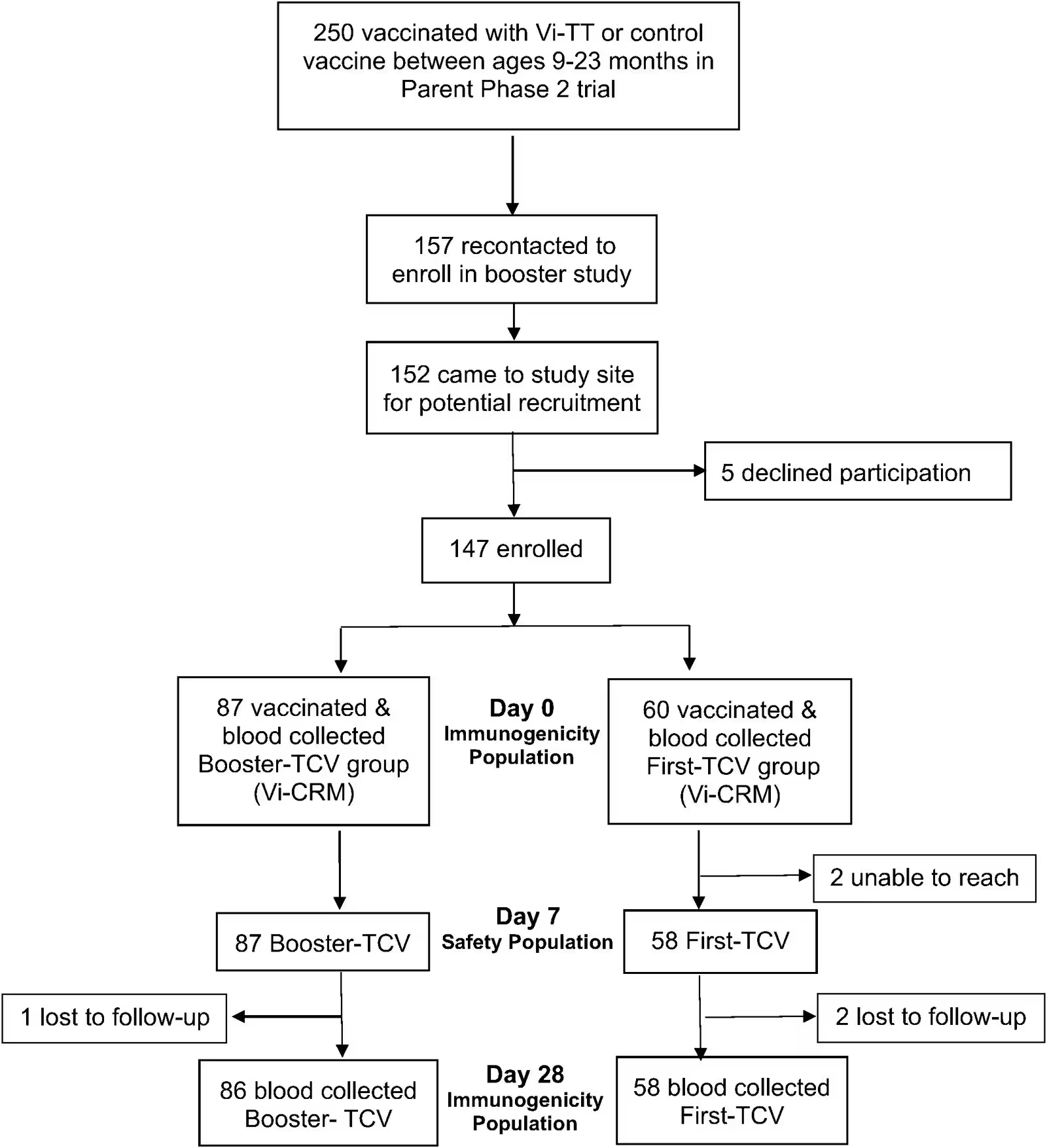
The investigators re-enrolled 147 children who had participated in a phase 2 randomized trial years earlier in Ouagadougou. Among these participants, 87 children who previously received the Vi polysaccharide tetanus toxoid vaccine (known as Vi-TT) were given a booster shot using a different formulation called TYPHIBEV Vi-CRM at six to seven years of age. Meanwhile, 60 children who had never received a typhoid vaccine served as a control group and received their first dose of the Vi-CRM product.
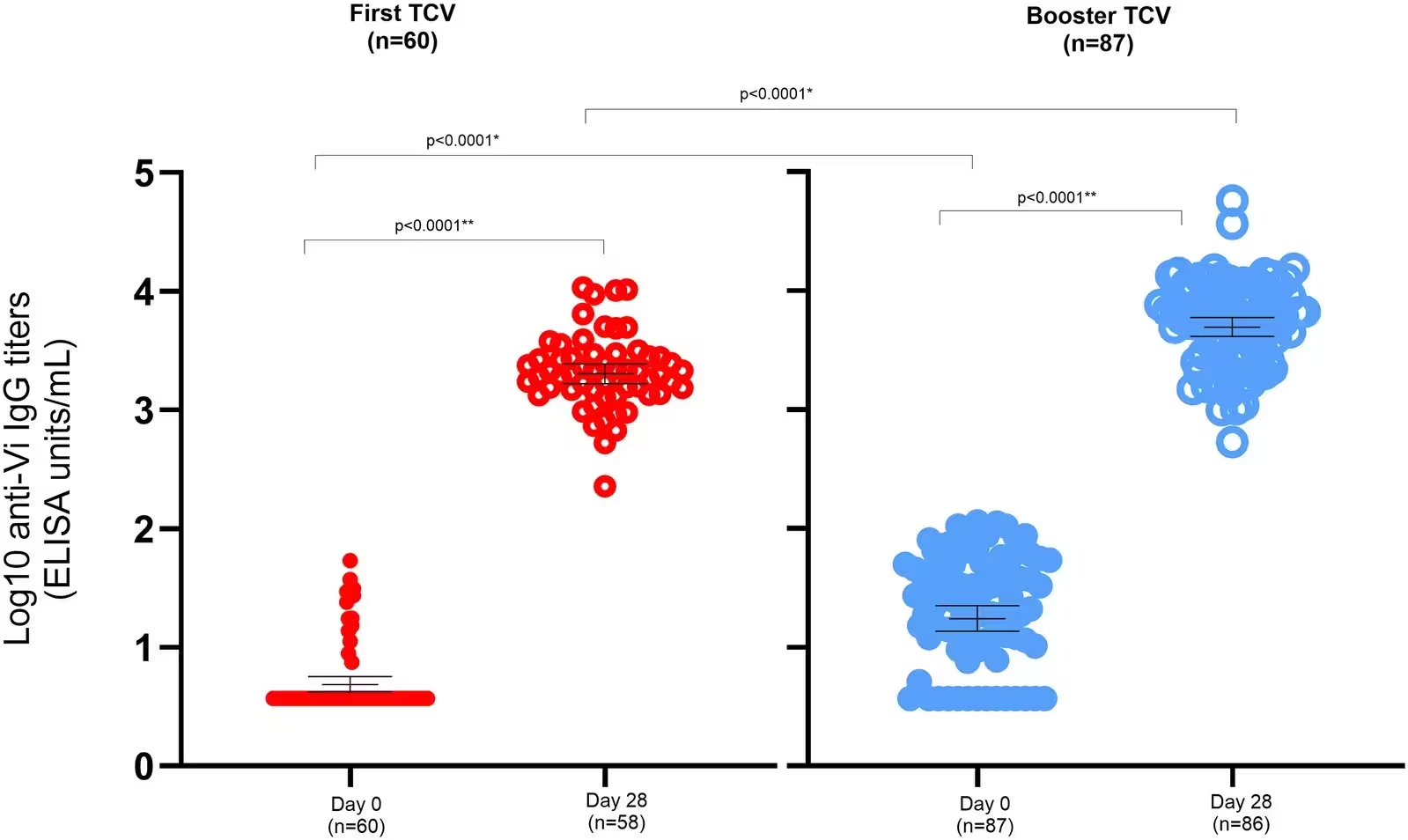
Before receiving the booster dose, children in the previously vaccinated group retained higher levels of anti-Vi immunoglobulin G antibodies, measuring a geometric mean titer of 21.5 ELISA units per milliliter. This compared to 5.5 units per milliliter in the unvaccinated control group. These numbers suggest that antibody levels persist for years after early childhood vaccination, though natural exposure to the bacteria in the region may have also contributed.
What Happened After the Booster Dose Was Administered
Twenty-eight days after receiving the Vi-CRM vaccine, antibody levels in the booster group jumped dramatically to 5,140 units per milliliter. The control group, receiving their first vaccination, saw their titers rise to 2,084.8 units per milliliter. Every single participant with evaluable samples achieved seroconversion, defined as a fourfold or greater increase in antibody concentration from their pre-booster baseline.
The researchers noted that the safety profile was favorable across both groups. Local injection site reactions, such as mild pain or tenderness, occurred in only about 4.6 percent of the booster group and resolved quickly. Systemic reactions like fever were infrequent, and no serious adverse events were recorded during the 28-day follow-up window.
What Are the Limitations and Next Steps
Despite the strong immune response, the study authors emphasize that these findings measure antibody concentrations rather than direct clinical protection. Because scientists have not yet established a definitive serologic correlate of protection for typhoid conjugate vaccines, high antibody titers cannot be automatically equated with long-term prevention of disease. Furthermore, the study lacked a homologous booster group receiving the same vaccine brand twice, preventing direct comparisons between mixed and matched booster schedules.
The work adds important data to ongoing global discussions about immunization schedules, aligning with recent World Health Organization guidance on booster doses in high-incidence settings. Future research will need to determine whether these heightened antibody levels translate into extended clinical efficacy over longer follow-up periods.
The research was published in PLOS global public health on January 1, 2026.
This article has been fact checked for accuracy, with information verified against reputable sources. Learn more about us and our editorial process.
Last reviewed on .
Article history
- Latest version
Reference(s)
- Sawadogo, Jean W.., et al. “Immunogenicity and tolerability of a heterologous booster typhoid conjugate vaccine (TCV) five to six years after primary vaccination in Burkinabe Children: An open-label, non-randomized follow-up of a phase 2 trial cohort.” PLOS Global Public Health, vol. 6, no. 11, November 13, 2026, pp. e0006855 Public Library of Science (PLoS), doi: 10.1371/journal.pgph.0006855. <https://doi.org/10.1371/journal.pgph.0006855>.
Cite this page:
- Posted by William Moore