Ancient Insect Named After Teletubbies Character Had a Bizarre Flexible Feeding Straw
Scientists have discovered a 99-million-year-old insect in amber with specialized, extendable mouthparts evolved to reach hidden plant fluids in tree bark.
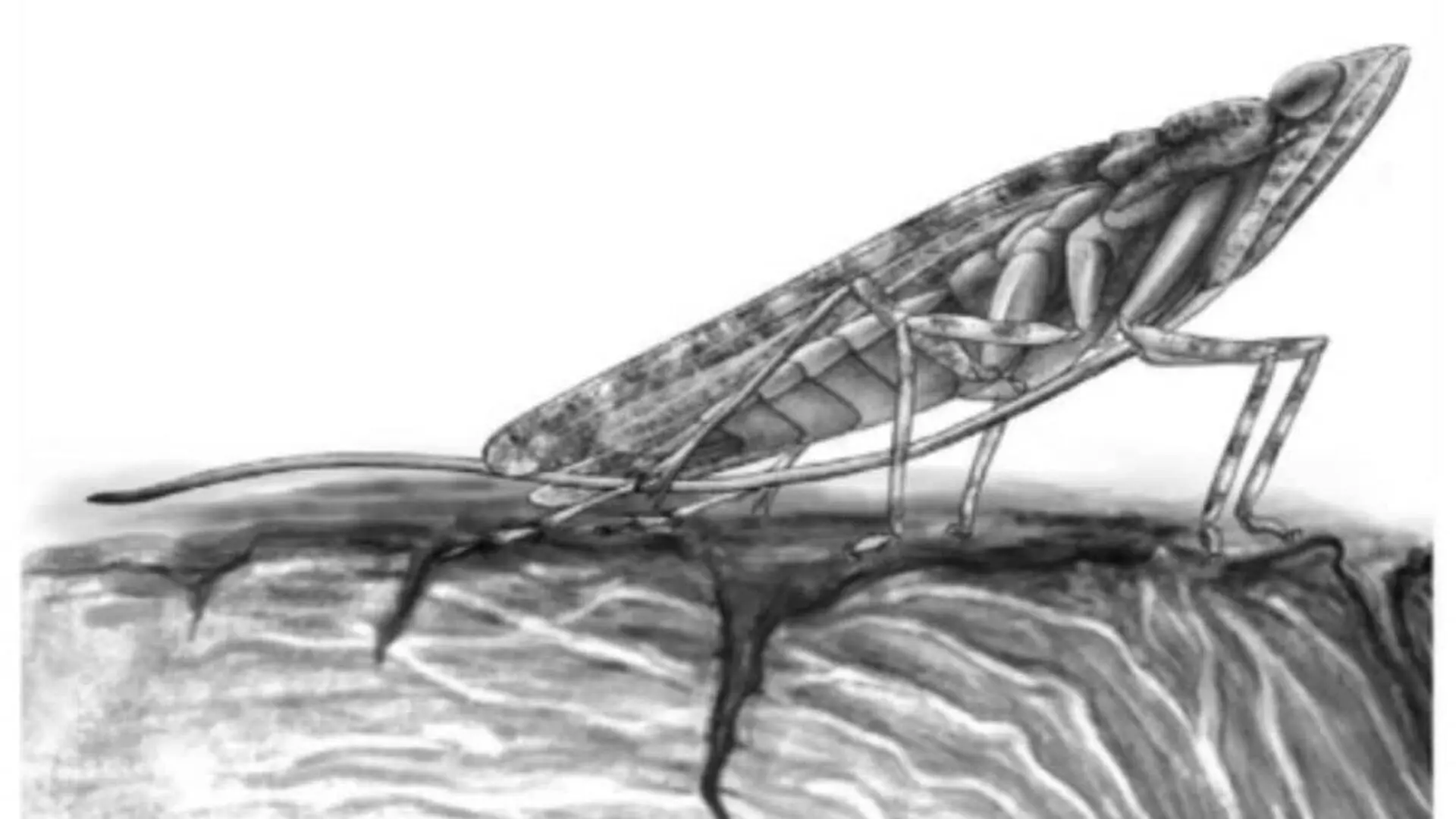
A newly identified species of ancient planthopper has shed light on a remarkable, forgotten feeding strategy that dominated Cretaceous forests nearly 100 million years ago. Named Cretodorus noonoo—a nod to the flexible-hosed vacuum character from the children’s show Teletubbies—the insect belonged to the now-extinct family Neazoniidae. Unlike the rigid, needle-like mouthparts seen in modern planthoppers, this prehistoric insect utilized a highly specialized, corrugated structure that allowed for unprecedented flexibility.
Evolutionary Innovation in the Cretaceous Period
The discovery, detailed in the journal Insects on July 28, 2026, relies on 13 specimens perfectly preserved in Kachin amber from Myanmar. By employing high-resolution X-ray micro-computed tomography, researchers from Tel Aviv University and the Chinese Academy of Sciences analyzed the internal anatomy of these specimens. They discovered that the mouthparts were covered in transverse folds, essentially functioning like a bendable drinking straw. These folds were not merely surface markings but were integrated into the insect’s outer cuticle, preventing the long organ from kinking or collapsing during use.
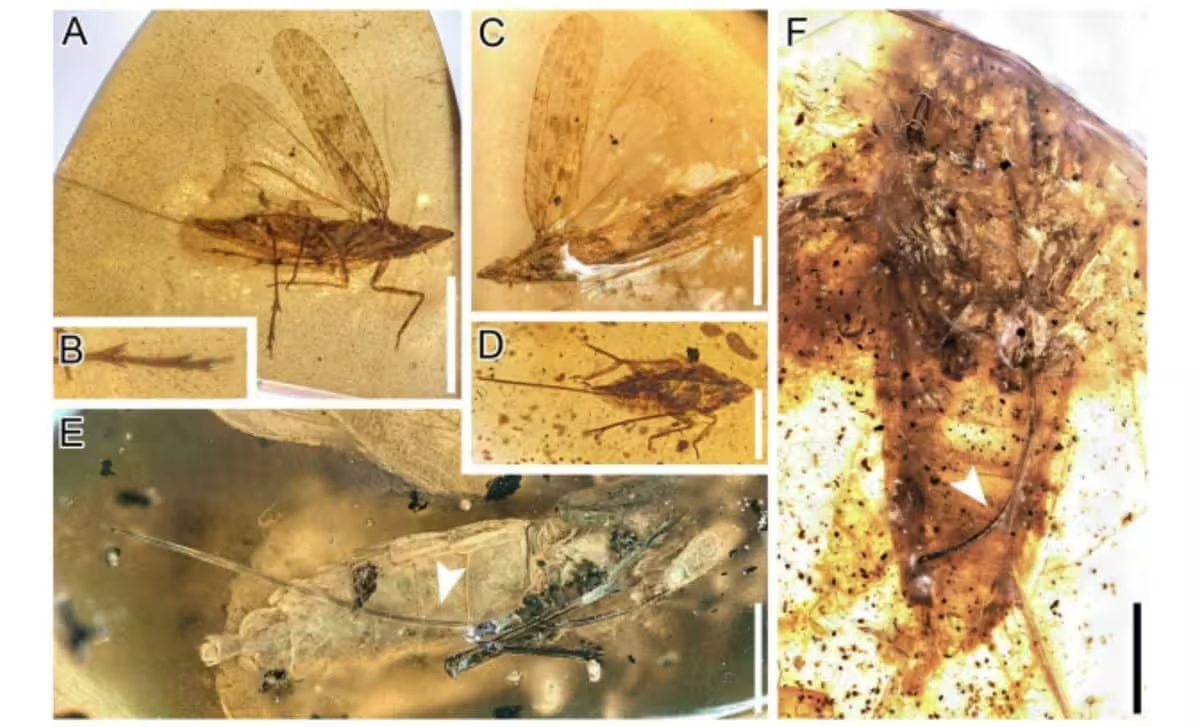
The Cretodorus noonoo adult boasted a body length of 8.7 millimeters, but its feeding apparatus was exceptionally long, with the third segment alone measuring 9.6 millimeters. When fully extended, the organ could reach roughly twice the length of the insect’s body. Scientists also noted two ribbed lobes at the tip of the organ, which likely served as an anchoring mechanism to stabilize the piercing action against tough plant surfaces.
Feeding Strategies in Prehistoric Forests
The research team suggests that this unique anatomy evolved to exploit specific niches within ancient ecosystems. While some might assume these structures were designed for sipping nectar, the anatomical evidence points toward a different purpose: piercing into deep plant tissues. The flexibility of the mouthpart allowed the insects to bend the organ forward under their bodies, maneuvering the tip into narrow cracks in tree bark to reach sap that would otherwise be inaccessible.
This feeding strategy may have been an adaptation to the unique conditions of Cretaceous forests, which were frequently altered by wildfires. The presence of charcoal in proximity to the amber suggests a landscape where trees often developed thicker, more resilient bark. Insects capable of navigating these deep, woody fissures would have had a distinct advantage.
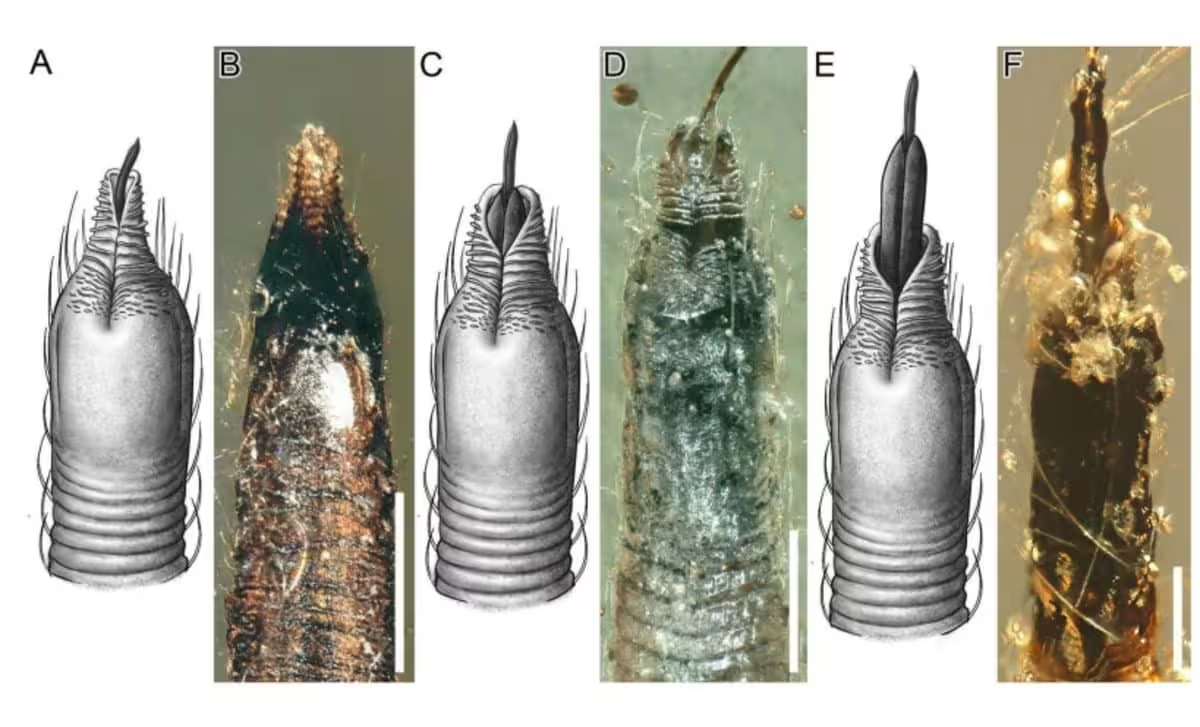
The study also proposes a taxonomic consolidation, suggesting that the fossil families Mimarachnidae and Neazoniidae should be merged, given their shared reliance on these complex mouthpart structures. By highlighting these mechanical adaptations, the study underscores how drastically the ecological roles and insects themselves have changed over millions of years, providing a vital window into the evolutionary history of plant-insect interactions.
This article has been fact checked for accuracy, with information verified against reputable sources. Learn more about us and our editorial process.
Last reviewed on .
Article history
- Latest version
Cite this page:
- Posted by Zara Tariq