Man Cracks Open Cheap 20TB Hard Drive and Finds Car Tire Weights Inside
When a father thought he had discovered an incredible storage deal, he uncovered a surprising secret that quickly turned the situation into a viral story.
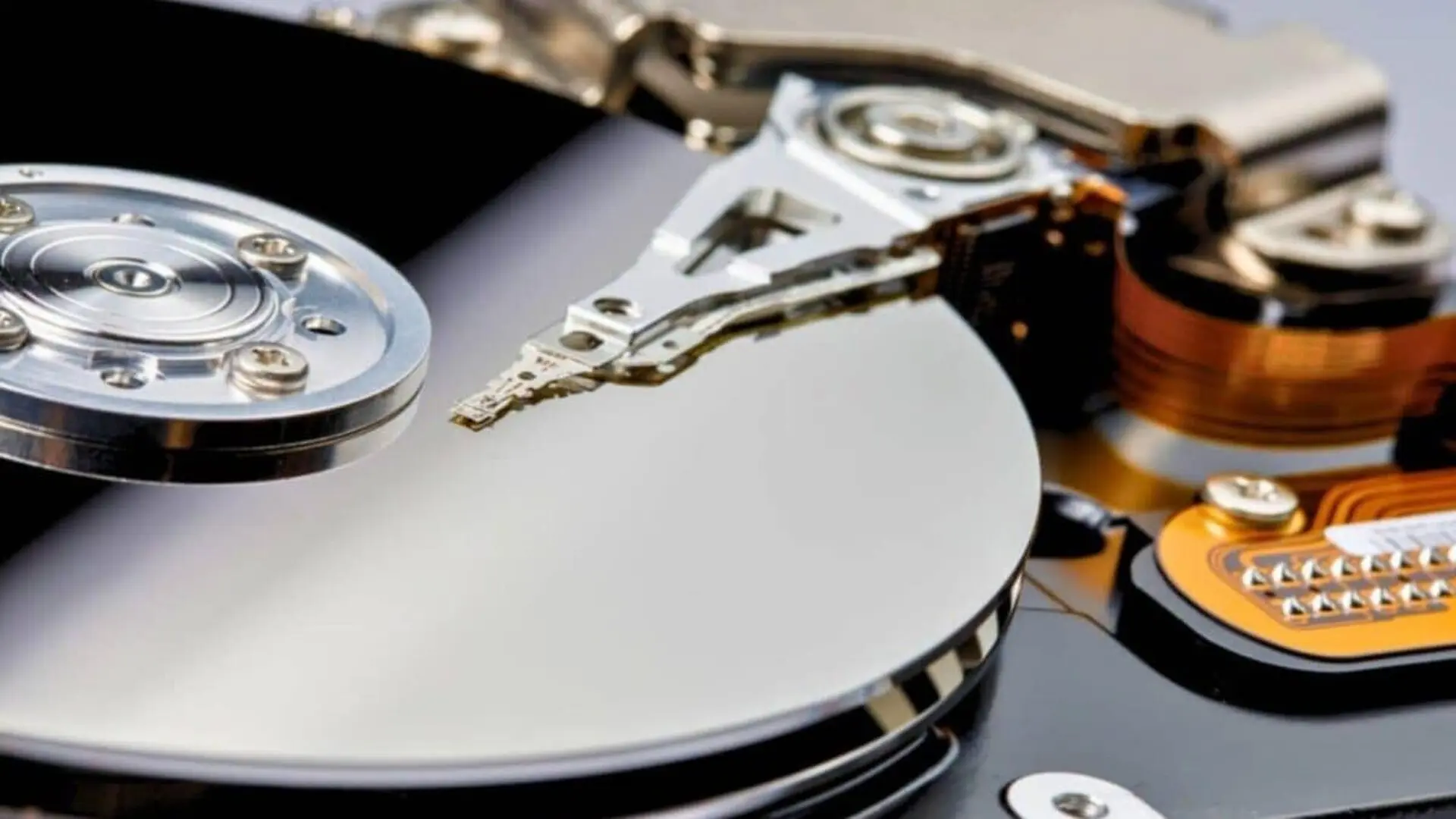
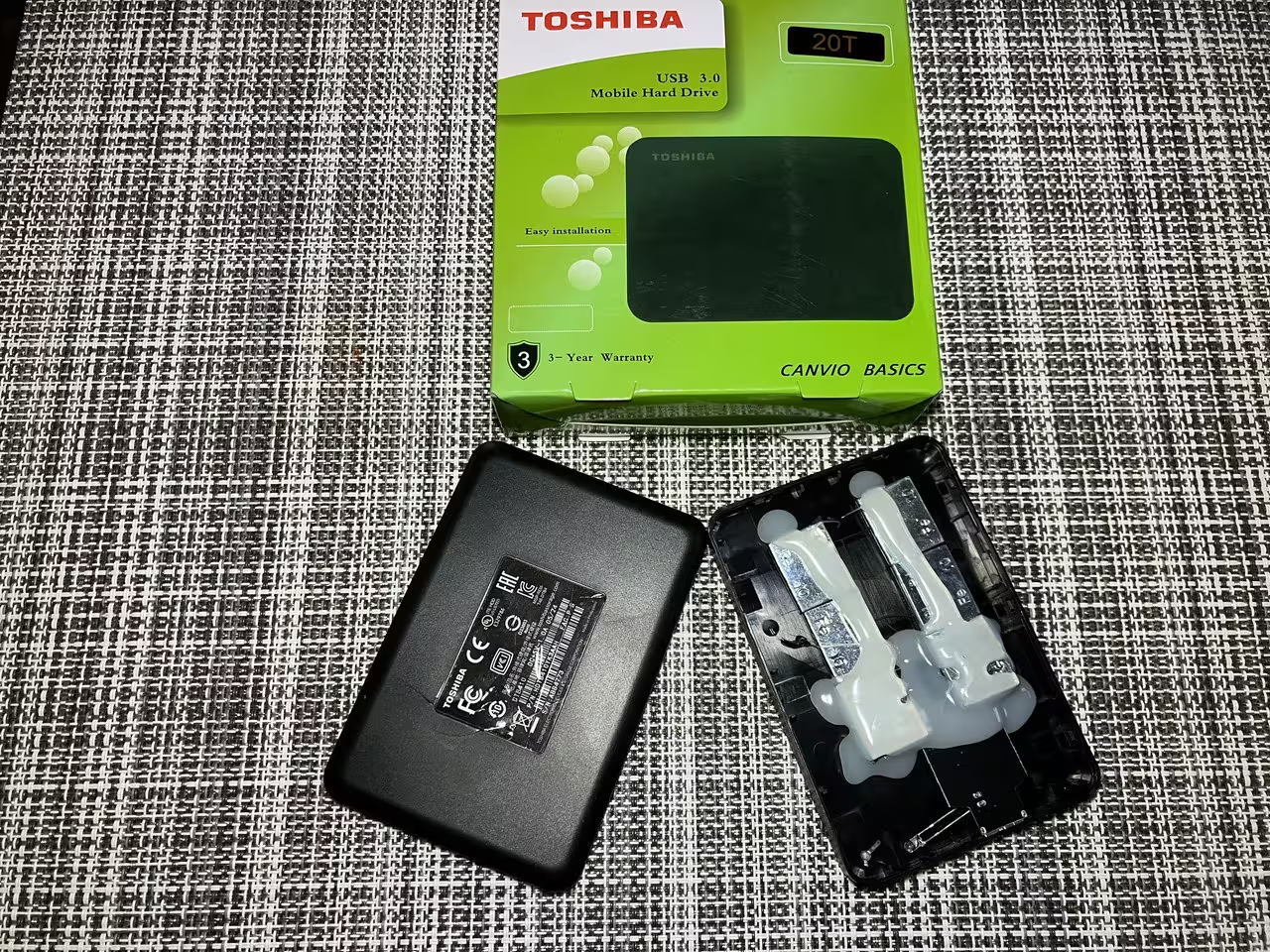
A bargain-priced 20TB portable hard drive has exposed the brazen tactics of online scammers after a consumer discovered the device was nothing more than a hollow plastic shell filled with scrap metal. The drive, marketed as a Toshiba Canvio, was purchased for approximately £38 ($51) from an obscure online retailer, only to fail immediately upon being put to use.
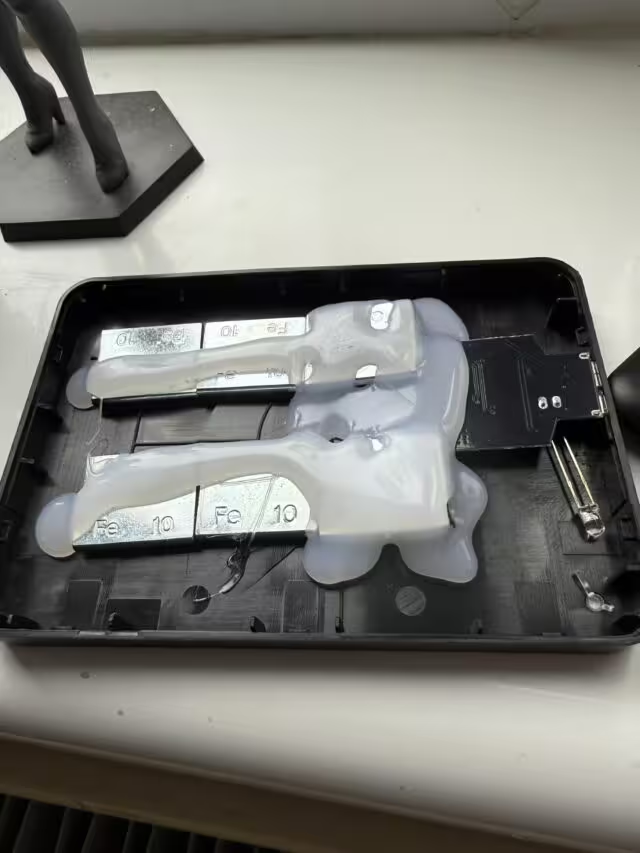
When the owner’s son, identified as Martin, investigated why the drive refused to open files, he performed a physical teardown of the unit. Instead of the expected spinning platters or mechanical read heads, he found two steel wheel weights—typically used for balancing car tires—glued inside the chassis to simulate the heft of a genuine piece of hardware. A rudimentary circuit board with a USB connector was the only electronic component present.
The scam relies on modified firmware that tricks the operating system into displaying a massive, false storage capacity. While Windows recognized the device as a 19TB drive, software developer Steve Gibson, who created the diagnostic tool ValiDrive to expose such fraud, explains that these devices typically contain only a tiny fraction of the advertised memory—often around 64GB. The drive will accept data until that small limit is reached, after which it silently discards any new information, leading to corrupted or unreadable files.
Discrepancies in how computers read storage provided an early warning sign. Because of the difference between decimal terabytes used by manufacturers and binary tebibytes used by Windows, a legitimate 20TB drive should report approximately 18.2TB. The fraudulent device’s claim of 19TB was technically impossible for a drive of that nominal size. Furthermore, Toshiba’s actual Canvio line has never reached a 20TB capacity, with the product range topping out at 4TB since 2018.
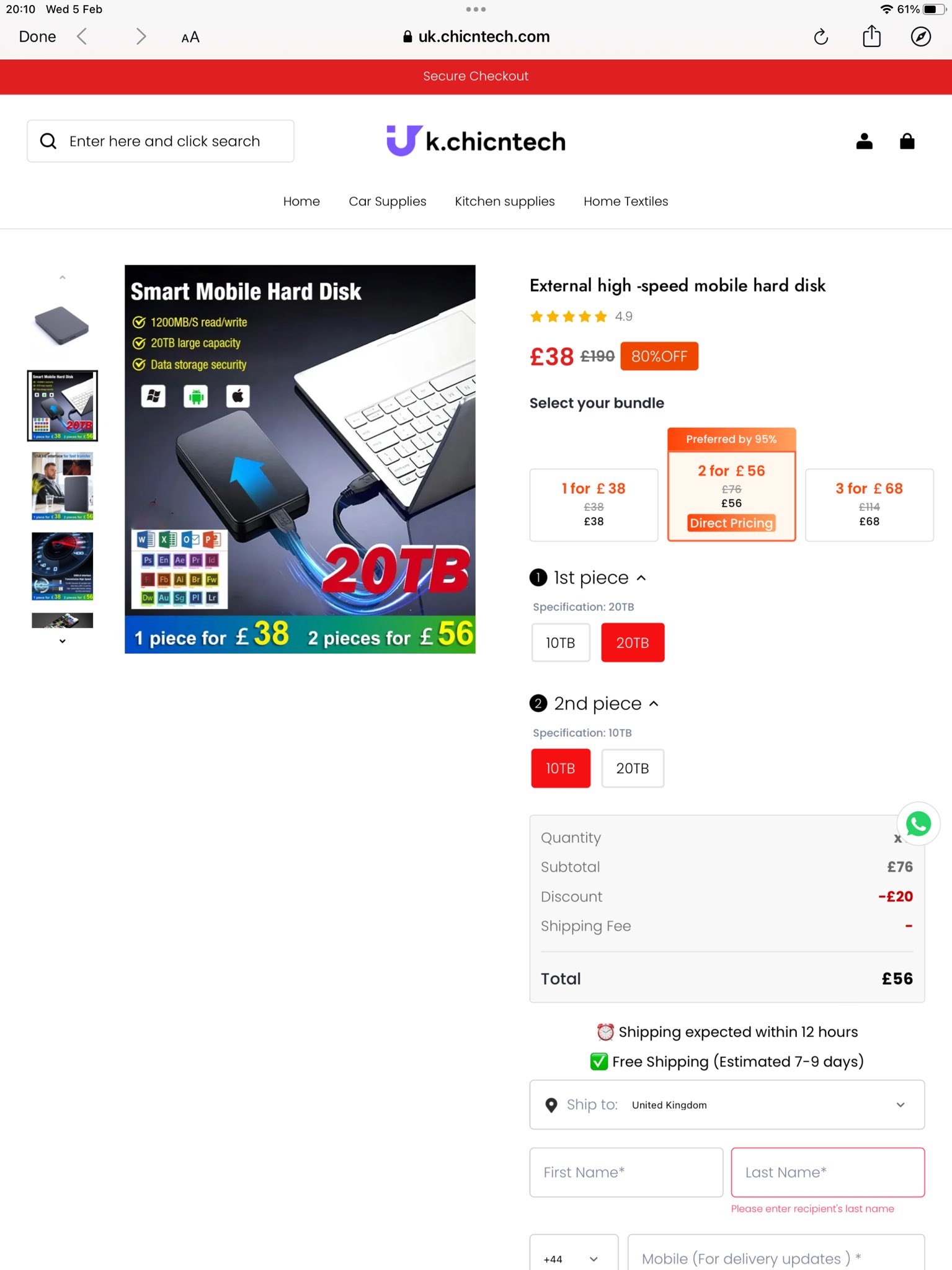
The purchase was made through a site called UK.Chicntech, which primarily lists automotive and home goods. When Martin attempted to secure a refund, the company allegedly downplayed the issue, claiming the presence of lead weights did not impact performance. The retailer eventually offered only a 30% refund alongside a gift certificate for another obscure site. Martin eventually bypassed the merchant, filing a chargeback dispute through his credit card provider as reported by Ars Technica.
This type of fraud is becoming increasingly sophisticated and widespread. In a previous testing run, Gibson purchased 12 separate high-capacity thumb drives from Amazon, discovering that every single one was fraudulent. As consumers hunt for massive storage at cut-rate prices, these counterfeit devices continue to proliferate, using stolen branding and weighted casings to maintain the illusion of high-end hardware.
This article has been fact checked for accuracy, with information verified against reputable sources. Learn more about us and our editorial process.
Last reviewed on .
Article history
- Latest version
Reference(s)
- “GRC | ValiDrive .” <https://www.grc.com/validrive.htm>.
- Harding, Scharon. “Shopper denied $51 refund for 20TB HDD that’s mostly a weighted plastic box - Ars Technica.”, June 3, 2025 Ars Technica <https://arstechnica.com/gadgets/2025/06/man-buys-20tb-portable-hdd-for-51-son-breaks-the-news-that-its-a-fake/>.
- “Screenshot.” <https://cdn.arstechnica.net/wp-content/uploads/2025/06/Screenshot.jpg>.
- “Backpacks Rotated.” <https://cdn.arstechnica.net/wp-content/uploads/2025/06/backpacks-rotated.jpg>.
Cite this page:
- Posted by Zara Tariq