SpaceX Just Launched Another Batch of Satellites for the Pentagon’s Secret Space Mesh Network
SpaceX is launching a new generation of military satellites designed to enhance global communications and bolster critical missile tracking capabilities.
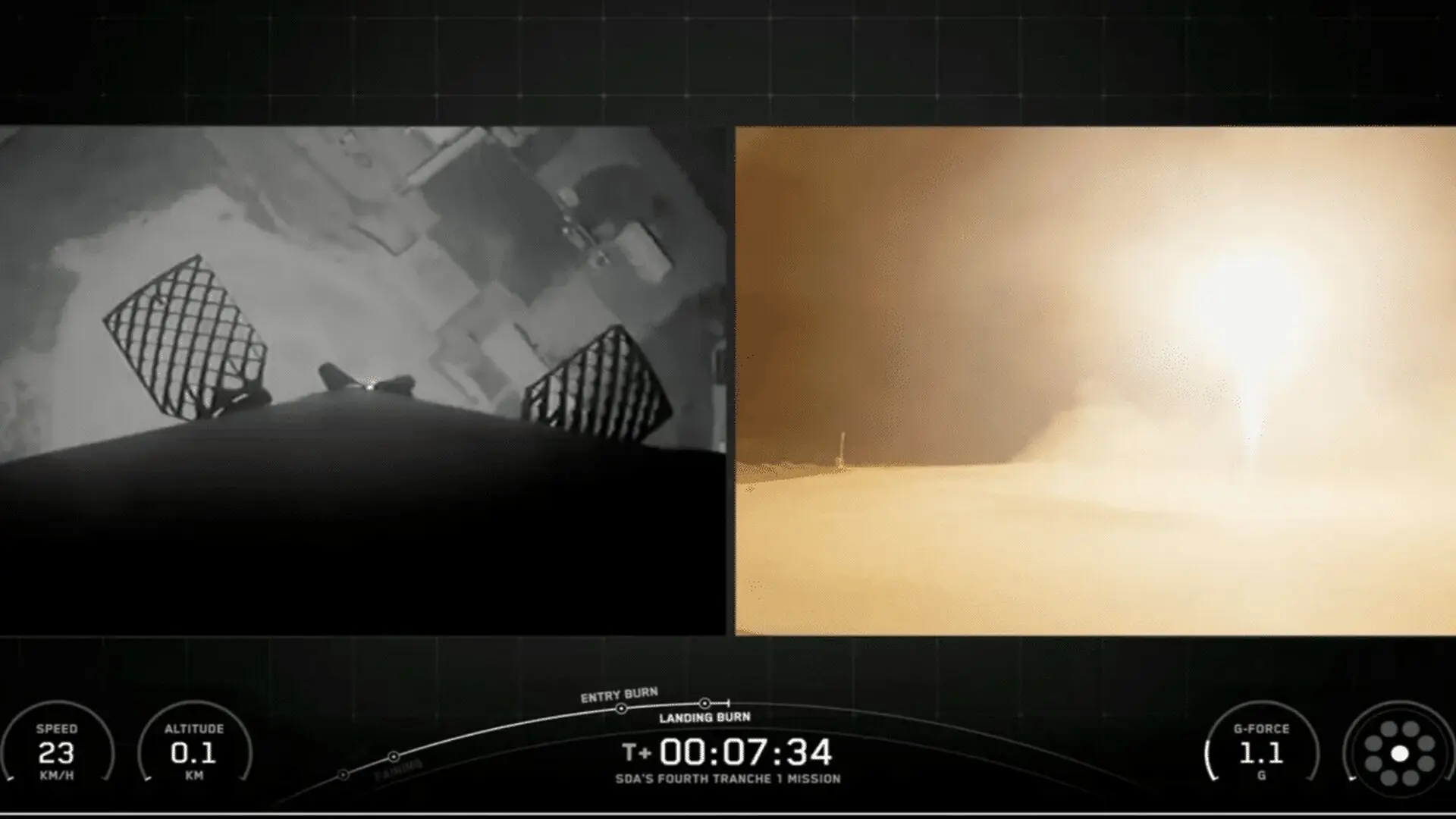
The U.S. Space Force has bolstered its orbital infrastructure with the successful launch of 21 communications satellites, marking a significant step in the construction of the Pentagon’s Proliferated Warfighter Space Architecture (PWSA). A SpaceX Falcon 9 rocket carried the payload into low Earth orbit (LEO) after lifting off from Vandenberg Space Force Base in California at 3:39 a.m. EDT on October 10, 2026.
The mission followed a brief delay after an aborted attempt on October 5, when the rocket’s automated systems triggered a hold during the final minute of the countdown. While SpaceX has not released specific details regarding that interruption, the vehicle performed as expected during the October 10 flight. Following the successful delivery of the spacecraft to orbit, the Falcon 9’s first-stage booster—a veteran of five previous missions—returned to the base for a controlled landing.
Liftoff! https://t.co/U1JgK60VXM
— SpaceX (@SpaceX) October 10, 2026
Redefining Military Connectivity from Orbit
The PWSA represents a fundamental shift in how the military manages space-based assets. Unlike traditional defense constellations that rely on a small number of large, high-cost satellites, the SDA is building a distributed network of smaller, interconnected spacecraft. This approach prioritizes resilience and speed, utilizing optical intersatellite links—effectively lasers—to create a dynamic mesh network in space.
By operating in LEO, these satellites significantly reduce the latency often associated with communications from higher altitudes. The mesh architecture allows data to be routed across multiple paths, ensuring that if one node fails or experiences interference, information can be rerouted instantly. This setup is designed to integrate two primary functions: the rapid transport of tactical military data and the sophisticated tracking of missile threats. By combining these capabilities, the Pentagon aims to close the gap between identifying a potential strike and delivering that intelligence to frontline commanders.
Scaling the Tranche 1 Network
The October 10 launch serves as the fourth of nine missions dedicated to the deployment of “Tranche 1,” the SDA’s initiative to establish initial operational warfighting capabilities. The completed Tranche 1 constellation is slated to comprise 154 satellites, consisting of 126 data-transport units and 28 missile-tracking platforms. Additionally, the project includes four experimental satellites equipped with advanced infrared sensors intended to test high-fidelity tracking technologies.
With this latest deployment, the Pentagon has now placed 84 of its planned 126 transport satellites into orbit. The effort has relied heavily on consistent launch cadences from Vandenberg, with missions occurring in September 2025, October 2025, July 2026, and the recent October 2026 flight. As reported by Space.com, the mission webcast concluded shortly after the booster landing per the SDA’s instructions, reflecting the sensitive nature of these integrated military operations.
This article has been fact checked for accuracy, with information verified against reputable sources. Learn more about us and our editorial process.
Last reviewed on .
Article history
- Latest version
Reference(s)
- Wall, Mike. “SpaceX launches 21 satellites to orbit for the US military after 5-day delay (video).”, October 10, 2026 Space <https://www.space.com/space-exploration/launches-spacecraft/spacex-falcon-9-rocket-launch-data-transport-satellites-military-proliferated-architecture>.
- “Tranche 1 Factsheet FINAL 06.10.2024.” <https://www.sda.mil/wp-content/uploads/2024/06/Tranche-1-Factsheet_FINAL_06.10.2024.pdf>.
Cite this page:
- Posted by Zara Tariq